Category Archives: microbial contamination

Research – Cooked rice safety: A review of status and potential of radiative pasteurization

Wiley Online

Abstract

Microbial contamination in cooked rice-based foods poses a global concern due to rice’s widespread consumption. This review aims to consolidate information on harmful microorganisms associated with such foods from various countries and their adverse effects on consumers. Additionally, it explores the reported causes of microbial contamination in cooked rice-based dishes and proposes an intervention strategy for safer consumption. The findings highlight that ready-to-eat cooked rice-based foods may harbor unsafe levels of microorganisms like Bacillus cereus, Staphylococcus aureus, and Aspergillus spp. A recommended solution is the application of microwave pasteurization. This method involves cooking rice in pasteurized packaging, minimizing human contact, and effectively controlling harmful microorganisms. Microwave pasteurization emerges as a promising approach to ensure the safe consumption of cooked rice-based foods by reducing microbial contamination levels.

USA – CDC Solves Norovirus Mystery On The Pacific Crest Trail

Weather.Com

Eurofins

Although the REDCap survey identified only 27 ill hikers, social media reports indicated that the true size of the outbreak was likely substantially larger, with 27 reports with a date of onset, and numerous others without further chronologic information apart from the year (2022). Norovirus prevention in remote areas is difficult because of a lack of easily available clean water and soap for handwashing, and inability to routinely disinfect shared surfaces (e.g., cabins and restrooms). Moreover, alcohol-based hand sanitizers, commonly used in hiking, are not effective against norovirus (5). Preventing future outbreaks will require fostering increased awareness of the importance of handwashing and lack of effectiveness of alcohol-based hand sanitizers against norovirus, and more frequent cleaning of public facilities; early outbreak detection might be facilitated by social media surveillance.

CDC

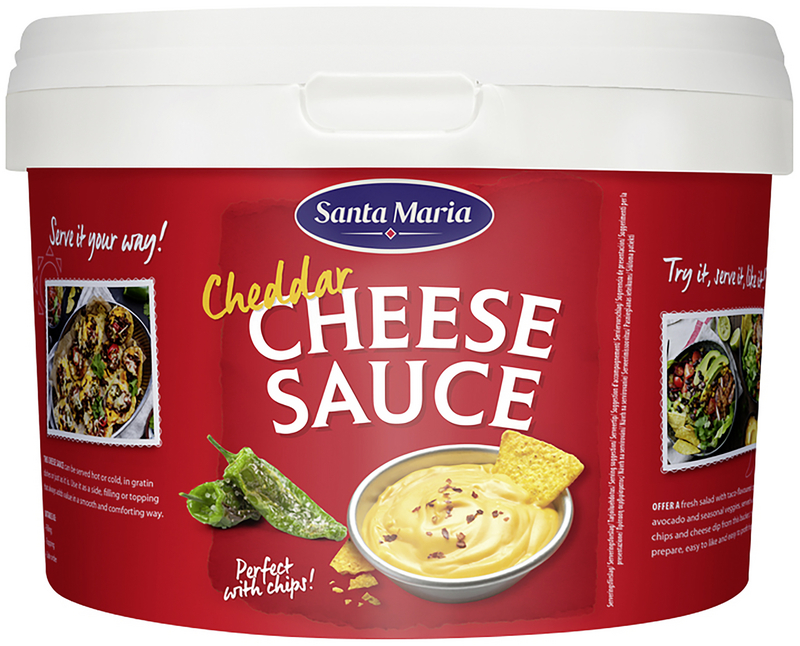
Austria – Another batch of Santa Maria Cheddar Cheese Sauce 3kg – Microbial Contamination

AGES

AGES informs about a recall from Maresi Austria GmbH. The company issued a recall of another batch of the product Santa Maria Cheddar Cheese Sauce 3kg on September 27, 2023:
 © Maresi Austria GmbH
Reason for recall
microbiological contamination
Marketed by
Maresi Austria GmbH
Expiry Date
June 8, 2024
Batch number
2329020

Extended product recall: Santa Maria Cheddar Cheese Sauce 3kg
Maresi Austria GmbH is recalling the product “Santa Maria Cheddar Cheese Sauce 3kg” with the batch number “2329020” and the best-before date June 7th, 2024 and June 8th, 2024.
In addition to the recall started on September 22nd, 2023, according to current information from the manufacturer, the recall must also be extended to the best before date of June 8th, 2024 with the batch number “2329020”.

As part of internal quality controls, bacteria were detected in the designated batch of the product “Santa Maria Cheddar Cheese Sauce 3kg”.

There is therefore the possibility of microbiological contamination in individual packages of the product. For reasons of precautionary consumer protection, Maresi Austria is recalling this article. Health impairments cannot be ruled out 100 percent. We therefore advise against consuming the following product.

Santa Maria Cheddar Cheese Sauce 3kg

Batch number: 2329020

Best before date: June 7th, 2024 and June 8th, 2024

GTIN: 7311312007759

Products with the best before date mentioned above can be returned to the stores where they were purchased. Customers will receive a refund of the purchase price even without proof of purchase. This warning does not indicate that the hazard was caused by the producer, manufacturer, importer or distributor.

Other Santa Maria batches and products are not affected and can be consumed safely.

For more information, a Maresi hotline has been set up on +43 664 45 63 206 .

Original recall

USA – CrackleMi Café Salmonella Outbreak in Seattle, WA Sickens Three

Food Poisoning Bulletin

A CrackleMi Café Salmonella outbreak in Seattle, Washington has sickened at least three people, according to the King County Public Health Department. The illnesses occurred in August, but the investigation into the outbreak was announced on September 21, 2023. That restaurant is located at 709 North 35th Street in Seattle.

UK – CFA responds to ACMSF Report on Botulinum Neurotoxin-Producing Clostridia

CFA

UK Government’s Advisory Committee on the Microbiological Safety of Food (ACMSF), has been reviewing the risk basis of the FSA’s guidance on the control of non-proteolytic Clostridium botulinum (npcb) in vacuum packed and modified atmosphere packed (VP/MAP) chilled foods. In June 2022 CFA Director Karin Goodburn presented evidence to the group (CFA News #58 & #59). ACMSF has now published its report on Botulinum Neurotoxin-Producing Clostridia. The report is available on on the ACMSF website.

CFA welcomes this Report, which not only updates the risk basis of the guidance but also extends the scope of interest to all Botulinum neurotoxin-producing Clostridia.

The Report reviews botulism incidents globally, noting they have only occurred in very rare occasions in chilled foods and only when not sold or stored chilled, and there is no correlation between the major growth in the chilled prepared food market and botulism.

Read more at the link above

Germany – Saxony Milk Our Freshness 1.5% 1l – Microbial Abnormalities

LMW

Alert type:

Groceries

Date of first publication:

September 21, 2023

Product name:

Saxony Milk Our Freshness 1.5% 1l

Manufacturer (distributor):

Sachsenmilch Leppersdorf GmbH

Reason for warning:

As part of a self-examination, microbiological abnormalities were discovered that could trigger infections. This can potentially be serious, particularly in vulnerable groups of people (infants, small children, pregnant women, seniors and people with a weakened immune system). Therefore, customers should not consume the affected product.

Packaging Unit:

1 liter

Durability:

October 8, 2023

Lot identification:

10/8/23

Additional Information:

The product was sold through EDEKA branches in Saxony and Saxony-Anhalt.

Click to access 2023_09_21_Pressemitteilung_Rueckruf_Sachsenmilch_ESL-Milch_final.pdf

Manufacturer’s homepage:

Research- Salmonella Outbreak Investigation Reinforces Importance of Drain Sanitation

Food Safety Tech

Drains can harbor pathogens and biofilms in facilities and have been cited as the cause of a Salmonella Motevideo outbreak in Quebec, Canada. For “Investigation of a Salmonella Montevideo Outbreak Related to the Environmental Contamination of a Restaurant Kitchen Drainage System, Québec, Canada, 2020–2021,” (Journal of Food Protection, October 2023), researchers André Paradis, Marie-France Beaudet, Marianne Boisvert Moreau and Caroline Huot, documented the investigation into the outbreak that affected at least 67 people between January 1, 2020 and August 13, 2021. An epidemiological investigation that included whole genome sequencing found that 66% of cases were directly linked to a restaurant in the area.

Research – Gotcha! New technology speeds up bacterial testing in food

Science Daily

Researchers have developed a measurement technique that rapidly measures the number of viable bacteria in food products. They have succeeded in drastically reducing the inspection time from 2 days to about 1 hour. With this technology, it will be possible to confirm food safety before shipment from factories and prevent food poisoning.

It is said that haste makes waste, but researchers from Osaka Metropolitan University have proven that doing things rapidly does not necessarily mean working ineffectively. A research group led by Professor Hiroshi Shiigi at the Graduate School of Engineering, Osaka Metropolitan University has developed a technology that can rapidly and accurately determine the number of viable bacteria in food products electrochemically, using tetrazolium salt (MTT), a water-soluble molecule.

One of the most important assessment indicators for ensuring that food is free from contamination is the number of viable bacteria. However, conventional measurement methods take up to 2 days to yield results, and these results are only available after the food has been shipped from the factory — leading to potentially fatal consequences. Therefore, it is imperative to have a testing method that speeds up the process of identifying bacterial contamination before shipment.

Research -Control of the Growth of Listeria monocytogenes in Cooked Ham through Combinations of Natural Ingredients

MDPI

Abstract

In the ready-to-eat food industry, Listeria control is mandatory to ensure the food safety of the products since its presence could cause a disease called listeriosis. The objective of the present study was to carry out a challenge test to verify the efficiency of different combinations of natural antimicrobial ingredients against Listeria monocytogenes to be used in ready-to-eat foods. Six different formulations of cooked ham were prepared: a control formulation and five different formulations. An initial inoculation of 2 log cycles was used in the different products, and the growth of Listeria was monitored at different temperatures and times (4 °C for 17 w and 7 °C for 12 w). Control samples showed a progressive growth, reaching 5–6 log after 3 or 4 weeks. The rest of the samples showed constant counts of Listeria during the entire study. Only samples containing 100 ppm nitrite + 250 PPM ascorbic acid + 0.7% PRS-DV-5 did not control the growth of Listeria at 7 °C after 7 w of storage. The results obtained allowed us to classify the cooked ham prepared using natural ingredient combinations as a “Ready-to-eat food unable to support the growth of L. monocytogenes other than those intended for infants and for special medical purposes”.

Research – A Bacteriophage Cocktail Reduces Five Relevant Salmonella Serotypes at Low Multiplicities of Infection and Low Temperatures

MDPI

Abstract

Salmonella are important pathogenic bacteria and, following Campylobacter, they are the second most common cause of bacterial foodborne infections worldwide. To reduce the presence of bacteria along the food chain, the application of bacteriophages (phages) may be a promising tool. In this study, the lytic properties of six phages against five relevant Salmonella serotypes (S. Enteritidis, S. Typhimurium, S. Infantis, S. Paratyphi B and S. Indiana) were analyzed. Three phages were able to lyse all five serotypes. We determined the lytic potential of each phage on indicator strains in vitro at room temperature (RT) and at 37 °C using low multiplicities of infection (MOIs). Most phages reduced their host more efficiently at RT than at 37 °C, even at the lowest MOI of 0.001. Following this, the lytic activity of a cocktail comprising five phages (MOI = 0.1) was examined with each of the five serotypes and a mix of them at RT, 15, 12, 10, 8 and 6 °C. All cultures of single serotypes as well as the mixture of strains were significantly reduced at temperatures as low as 8 °C. For single serotypes, reductions of up to 5 log10 units and up to 2.3 log10 units were determined after 6 h (RT) and 40 h (8 °C), respectively. The mixture of strains was reduced by 1.7 log10 units at 8 °C. The data clearly suggest that these phages are suitable candidates for biocontrol of various Salmonella serotypes under food manufacturing conditions