Category Archives: Lactobacillus

Research – Lactic Acid Bacteria as Antimicrobial Agents: Food Safety and Microbial Food Spoilage Prevention

MDPI

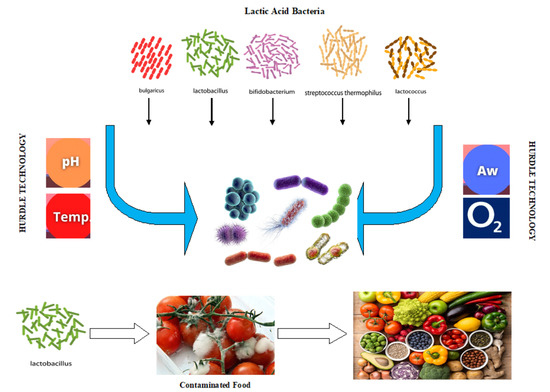
In the wake of continual foodborne disease outbreaks in recent years, it is critical to focus on strategies that protect public health and reduce the incidence of foodborne pathogens and spoilage microorganisms. Currently, there are limitations associated with conventional microbial control methods, such as the use of chemical preservatives and heat treatments. For example, such conventional treatments adversely impact the sensorial properties of food, resulting in undesirable organoleptic characteristics. Moreover, the growing consumer advocacy for safe and healthy food products, and the resultant paradigm shift toward clean labels, have caused an increased interest in natural and effective antimicrobial alternatives. For instance, natural antimicrobial elements synthesized by lactic acid bacteria (LAB) are generally inhibitory to pathogens and significantly impede the action of food spoilage organisms. Bacteriocins and other LAB metabolites have been commercially exploited for their antimicrobial properties and used in many applications in the dairy industry to prevent the growth of undesirable microorganisms. In this review, we summarized the natural antimicrobial compounds produced by LAB, with a specific focus on the mechanisms of action and applications for microbial food spoilage prevention and disease control. In addition, we provide support in the review for our recommendation for the application of LAB as a potential alternative antimicrobial strategy for addressing the challenges posed by antibiotic resistance among pathogens. View Full-Text

Research – Characterization of bacteria and antibiotic resistance in commercially-produced cheeses sold in China

Journal of Food Protection

The consumption of cheese in China is increasing rapidly. Little is known about the microbiota, the presence of antibiotic-resistant bacteria, or the distribution of antibiotic resistance genes (ARGs) in commercially-produced cheeses sold in China. These are important criteria for evaluating quality and safety. Thus, this study assessed the metagenomics of fifteen types of cheese using 16S rRNA gene sequencing. Fourteen bacterial genera were detected. Lactococcus , Lactobacillus , and Streptococcus were dominant based on numbers of sequence reads. Multidrug-resistant lactic acid bacteria were isolated from most of the types of cheese. The isolates showed 100% and 91.7% resistance to streptomycin and sulfamethoxazole, respectively, and genes involved in acquired resistance to streptomycin ( strB) and sulfonamides ( sul2) were detected with high frequency. To analyze the distribution of ARGs in the cheeses in overall, 309 ARGs from eight categories of ARG and nine transposase genes were profiled. A total of 169 ARGs were detected in the 15 cheeses; their occurrence and abundance varied significantly between cheeses. Our study demonstrates that there is various diversity of the bacteria and ARGs in cheeses sold in China. The risks associated with multidrug resistance of dominant lactic acid bacteria are of great concern.

Research – Microbial Growth Study on Pork Loins as Influenced by the Application of Different Antimicrobials

MDPI

The use of antimicrobials in the pork industry is critical in order to ensure food safety and, at the same time, extend shelf life. The objective of the study was to determine the impact of antimicrobials on indicator bacteria on pork loins under long, dark, refrigerated storage conditions. Fresh boneless pork loins (n = 36) were split in five sections and treated with antimicrobials: Water (WAT), Bovibrom 225 ppm (BB225), Bovibrom 500 ppm (BB500), Fit Fresh 3 ppm (FF3), or Washing Solution 750 ppm (WS750). Sections were stored for 1, 14, 28, and 42 days at 2–4 °C. Mesophilic and psychrotrophic aerobic bacteria (APC-M, APC-P), lactic acid bacteria (LAB-M), coliforms, and Escherichia coli were enumerated before intervention, after intervention, and at each storage time. All bacterial enumeration data were converted into log10 for statistical analysis, and the Kruskal–Wallis test was used to find statistical differences (p < 0.05). Initial counts did not differ between treatments, while, after treatment interventions, treatment WS750 did not effectively reduce counts for APC-M, APC-P, and coliforms (p < 0.01). BB500, FF3, and WS750 performed better at inhibiting the growth of indicator bacteria when compared with water until 14 days of dark storage. View Full-Text

Research – Effect of the Dry-Cured Fermented Sausage “Salchichón” Processing with a Selected Lactobacillus sakei in Listeria monocytogenes and Microbial Population

MDPI

In the present work, the effect of processing of dry-cured fermented sausage “salchichón” spiked with the selected Lactobacillus sakei 205 was challenge-tested with low and high levels of L. monocytogenes. The evolution of the natural microbial population throughout the “salchichón” ripening was also evaluated. For this, a total of 150 “salchichón” were elaborated and divided into six equal cases which were inoculated with different levels of L. monocytogenes, and L. sakei 205. Afterwards, sausages were ripened for 90 days according to a typical industrial process. Moisture content (%) and water activity (aw) decreased throughout the ripening up to values around 26% and 0.78, respectively. No differences for moisture content, aw, pH, NaCl and nitrite concentration were observed between the analyzed cases. Lactic acid bacteria counts in the L. sakei 205 inoculated cases were always higher than 6 log CFU g−1 during ripening. Enterobacteriaceae counts were reduced during ripening until non-detectable levels at the end of processing. Reductions in L. monocytogenes counts ranged from 1.6 to 2.2 log CFU g−1; therefore, the processing of “salchichón” itself did not allow the growth of this pathogen. Reduction in L. monocytogenes was significantly higher in the cases inoculated with L. sakei 205. View Full-Text

Research – In Vitro Screening of Chicken-Derived Lactobacillus Strains That Effectively Inhibit Salmonella Colonization and Adhesion

MDPI

nhibition of Salmonella by Lactobacillus has been a popular research topic for decades; however, the inhibition potential of chicken-derived Salmonella by chicken-derived Lactobacillus has not yet been studied. In this study, 89 strains of Lactobacillus from chicken intestines were isolated by national standard method, Gram staining, physiological, and biochemical experiments and molecular sequencing; The inhibition characteristics of 89 strains of chicken derived Lactobacillus against 10 strains Salmonella (S. Enteritidis SE05, SC31, SC21, SC72 SC74, SC79, SC83, SC87; S. bongori SE47; S. Typhimurium, SC85) were detected by agar inhibition zone, The results showed that the inhibition zone of 24 strains of chicken derived Lactobacillus was more than 10 mm, which indicated that the isolated chicken derived Lactobacillus could effectively inhibit the growth of Salmonella; The drug resistance and bile salt tolerance of these 24 strains were analyzed, The results showed that the standard strains LG and L76 were not resistant, and the other 22 Lactobacillus strains showed different degrees of resistance. The strains LAB24, LAB26, LAB53, LAB69, and L76 showed good tolerance at the concentration of 3 g/L bile salt; Caco-2 cell experiment and flow cytometry were used to analyze the inhibitory effect of chicken derived Lactobacillus on the adhesion of Salmonella to Caco-2 cells, The results showed that 16 probiotics could effectively inhibit the adhesion of Salmonella to Caco-2 cells. Twelve probiotics were identified by molecular biology. The results showed that L76 was Enterococcus faecalis, and the other 11 strains were Lactobacillus. View Full-Text

Research – Bioengineered probiotic could prevent Listeria infections

Purdue

WEST LAFAYETTE, Ind. — For pregnant women, the elderly and those with weakened immune systems, listeriosis is a serious foodborne illness often linked to deli meats, fresh produce and dairy products. Even with antibiotic treatment, listeriosis is fatal for about 20 percent of patients, resulting in thousands of deaths annually.

Purdue University’s Arun Bhunia, a professor of food science, and postdoctoral researcher Rishi Drolia have developed a probiotic that could prevent infections in at-risk populations. A bioengineered version of Lactobacillus, a bacterium common in the human gut, can block the pathway the Listeria monocytogenes bacteria use to cross intestinal wall cells into the bloodstream, his team reports in the journal Nature Communications.

“The Lactobacillus bacteria we developed seeks out the same proteins as Listeria monocytogenes in the gut. When it attaches, it blocks the roadway for Listeria,” Bhunia said. “This could be included in probiotic yogurts, capsules or gummies and used as a preventive measure to treat people who are at high risk of infection.”

RASFF Alert- Animal Feed – unauthorised ingredients in fish feed

European Food Alerts

RASFF

unauthorised ingredients (Lactobacillus plantarum, Enterococcus faecalis, Pediococcus lactis) in fish feed from China in the UK

Research – Modeling the interactions among Salmonella enteritidis, Pseudomonas aeruginosa , and Lactobacillus plantarum

Wiley Online

This paper was to investigate the interactions among Salmonella enteritidis, Lactobacillus plantarum , and Pseudomonas aeruginosa at four combinations of initial concentration. Firstly, fitting the growth curves to obtain growth parameters—lag time (λ ), maximal growth rate ( μ max), initial concentration (0), and maximum population density (max) for each strain in monocultures or cocultures. Then interactions among S. enteritidis, P. aeruginosa , and L. plantarum in cocultures at four combinations of initial concentration were quantified by the Lotka–Volterra model with six interaction coefficients. Results indicated that there were no interactions between S. enteritidis and P. aeruginosa S. enteritidis and P. aeruginosa had an inhibitory effect on L. plantarum , but L. plantarum had no effects on another two. Besides, the higher the initial concentrations of S. enteritidis or P. aeruginosa , the lower the growth potential of L. plantarum . This study provided more accurate predictions for the growth of bacteria under actual food contamination conditions.

Research – Interaction and inactivation of Listeria and Lactobacillus cells in single and mixed species biofilms exposed to different disinfectants

Wiley Online

Abstract

Listeria spp. are ubiquitously found in both the natural and the food processing environment, of which Listeria monocytogenes is of an important health risk. Here, we report on the formation of single and mixed species biofilms of L. monocytogenes/Listeria innocua and Lactobacillus plantarum strains in 24‐well polystyrene microtiter plates and on the inactivation of 24‐hr and 72‐hr biofilms using quaternary ammonium compound‐, tertiary alkyl amine‐, and chlorine‐based disinfectants. Fluorescent in situ hybridization (FISH) and LIVE/DEAD BacLight staining were applied for 72‐hr L. innocuaL. plantarum mixed biofilms in the LabTek system for the species identification and the reaction of biofilm cells to disinfectants, respectively. L. monocytogenes/L. innocua were more resistant to disinfectants in 72‐hr than in 24‐hr biofilms, whereas L. plantarum strains did not show any significant differences between 72‐hr and 24‐hr biofilms. Furthermore, L. innocua when grown with L. plantarum was more resistant to all disinfection treatments, indicating a protective effect from lactobacilli in the mixed species biofilm. The biofilm formation and reaction to disinfectants, microscopically verified using fluorescence in situ hybridization and LIVE/DEAD staining, showed that L. innocua and L. plantarum form a dense mixed biofilm and also suggested the shielding effect of L. plantarum on L. innocua in the mixed species biofilm.

Research -Searching potential candidates for development of protective cultures: Evaluation of two Lactobacillus strains to reduce Listeria monocytogenes in artificially contaminated milk

Wiley Online

Abstract

The aims of this work were (a) to select the minimum concentrations of two bacteriocin‐producing lactobacilli strains to reduce Listeria monocytogenes growth in whole milk, (b) to evaluate the individual and combined application of these chosen lactobacilli concentrations as protective culture in this food and, (c) to estimate if lactobacilli growth caused undesirable changes in the visible characteristics of milk. The selected minimum lactobacilli concentration with antilisterial activity was 106 CFU ml−1 for both lactobacilli. Although a high initial concentration of L. monocytogenes (104 CFU ml−1) was added to milk, a notable reduction on listerial counts (2–4 log CFU ml−1) was achieved in comparison to the control. These lactobacilli showed a good adaptability in milk reaching optimal counts and not causing undesirable visible changes. In conclusion, the use of these lactobacilli could be considered as a bio‐strategy potentially effective to limit the contamination by L. monocytogenes in certain milk‐derived products.