Category Archives: Illness

USA – Norovirus outbreak linked to $1 burrito special for Northwestern University students

CBS News

The Evanston Health and Human Services Department warned Wednesday that it was tracking a norovirus outbreak linked to the burrito special.

The department is investigating the outbreak along with Northwestern University. Investigators have learned that people reported stomach cramps, vomiting, and diarrhea after eating at Big Wig Tacos & Burritos during an event on Saturday, Nov. 18, at which the restaurant offered $1 burritos to students from the university.

The event was held between 1 p.m. and 8 p.m. this past Saturday. Big Wig Tacos & Burritos has a location at 950 Church St. in downtown Evanston.

USA – Crown Jewels Produce Recalls “Malichita / Z Farms” Label of Whole Cantaloupes Because of Possible Health Risk Due to Salmonella

FDA

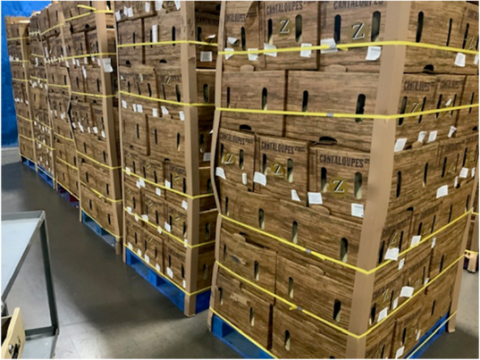
Cantaloupes in boxes

Summary
Company Announcement Date:
November 22, 2023
FDA Publish Date:
November 22, 2023
Product Type:
Food & Beverages
Foodborne Illness
Reason for Announcement:
Potential Salmonella contamination
Company Name:
Crown Jewel Produce Company
Brand Name:
Malichita/ Z Farms
Product Description:
Cantaloupes
Company Announcement
Jewel Marketing and Agribusiness LLC. (dba Crown Jewels Produce) of Fresno, CA is recalling all sizes of 1960 boxes of Malichita / Z Farms Cantaloupes sold between October 31, 2023 and November 9, 2023, because it has the potential to be contaminated with Salmonella

Product was distributed to Ohio, and California through retail and wholesale outlets.

Product was in boxes with a “wood-like” cardboard cartons with the Label “Malichita / Z Farms. The Price Lookup Sticker on the individual fruit is labeled “Malichita”.

This is an ongoing outbreak, and a number of illness have been reported throughout the United States, and Canada.

The company has ceased sales and distribution of the product as FDA and the company continue their investigation as to what caused the problem.” Information on what consumers should do with the product and where they can get additional information. Consumers who have purchased ‘Malichita / Z Farms” Brand Cantaloupes are urged to return it to the place of purchase for a full refund.

USA – Sofia Produce, LLC DBA Trufresh Expands Recall to Include all “Malichita” Brand and “Rudy” Brand Fresh Cantaloupe Because of Possible Health Risk Due to Salmonella

FDA

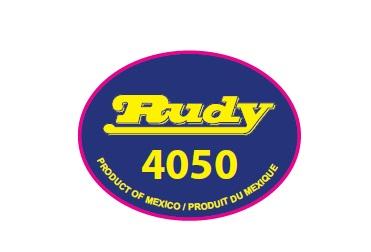
Rudy PLU 4050

Summary

Company Announcement Date:
FDA Publish Date:
Product Type:
Food & Beverages
Reason for Announcement:
Potential Foodborne Illness, Salmonella
Company Name:
SOFIA PRODUCE, LLC dba Trufresh
Brand Name:
Malichita, Rudy
Product Description:
Cantaloupes

Company Announcement

For Immediate Release, November 22, 2023 SOFIA PRODUCE, LLC, of Nogales, Arizona which does business under the name “Trufresh” (“Trufresh”) has expanded its recall of all sizes of fresh cantaloupes packaged in cardboard containers labeled with the “Malichita” label, and also labeled with the “Rudy” label to include all cantaloupes sold between the dates of October 10, 2023 and November 3, 2023, because they have the potential to be contaminated with Salmonella.

The cantaloupes were distributed directly to the following States in the United States: Arizona, California. Connecticut, Maryland, Missouri, Montana, Nevada, New Jersey, New York, Oregon, Pennsylvania, Tennessee, Utah, Illinois, Michigan, Wisconsin, Texas, Florida and Canada. The cantaloupes would have reached consumers through retail produce markets which may be located in states other than those listed above.

Trufresh has been advised that there are 97 illnesses reported to date that have been associated with this strain of Salmonella.

USA – FDA- Investigations of Foodborne Illness Outbreaks

FDA

What’s New

  • The outbreak of Listeria monocytogenes (ref #989) has been linked to peaches, plums, and nectarines. FDA issued an advisory on this outbreak. FDA’s investigation is ongoing.
  • A new outbreak of Salmonella Sundsvall (ref #1203) linked to cantaloupe has been added to the table. FDA issued an advisory on this outbreak. FDA’s investigation is ongoing.
  • A new outbreak of Salmonella Newport in a not yet identified food had been added to the table. FDA has initiated a traceback investigation. FDA’s investigation is ongoing.
Date
Posted
Ref Pathogen
or
Cause of
Illness
Product(s)
Linked to
Illnesses

(if any)
Total
Case
Count

Status
11/22/

2023

1201 Salmonella
Newport
Not Yet
Identified
40 Active
11/22/

2023

1203 Salmonella
Sundsvall
Cantaloupe See

Advisory

Active
11/15/

2023

989 Listeria
monocytogenes
Peaches, Plums,
and Nectarines
See

Advisory

Active
11/15/

2023

1192 E. coli
0103
Not Yet
Identified
12 Active
11/8/

2023

1198 Elevated Lead
Levels
Apple
Cinnamon
Puree
See

Advisory

Active
11/1/

2023

1195 E. coli
O121:H19
Not Yet
Identified
37 Active
10/4/

2023

1190 Salmonella
Thompson
Onions See

Advisory

Active

USA- CDC – Salmonella Outbreak Linked to Cantaloupes

CDC

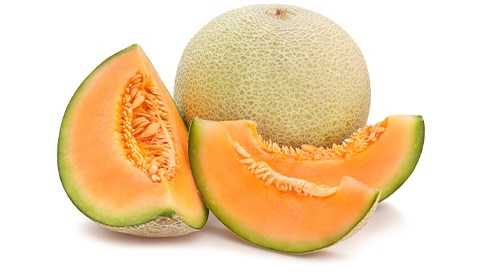
Cantaloupe on a white background.

Fast Facts
  • Illnesses: 43
  • Hospitalizations: 17
  • Deaths: 0
  • States: 15
  • Recall: Yes
  • Investigation status: Active   (first posted on November 17, 2023)
Recalled Food

Whole cantaloupes

  • Might have a sticker that says “Malichita”, “4050”, and “Product of Mexico/produit du Mexique”
  • See recall notice and expanded recall for more details

Vinyard brand pre-cut cantaloupes

  • Includes cantaloupe cubes, melon medleys, and fruit medleys
  • Sold in Oklahoma stores between October 30 and November 10, 2023
  • Most have a yellow label with “Vinyard,” and some have a red label with “Fresh”
  • See recall notice for product photos and more details

ALDI whole cantaloupe and pre-cut fruit products

  • Includes whole cantaloupes, cantaloupe chunks in clamshell packaging, and pineapple spears in clamshell packaging
  • Best-by dates between October 27 and October 31, 2023
  • Sold in ALDI stores in Illinois, Indiana, Iowa, Kentucky, Michigan, and Wisconsin
  • See recall notice [PDF – 2 pages] for more details

Investigators are working to identify any additional cantaloupe products that may be contaminated.

USA – CDC – Persistent Strain of Salmonella Newport (REPJJP01) Linked to Travel to Mexico, Beef, and Soft Cheese

CDC

REPJJP01

REPJJP01 is a persistent, multidrug-resistant strain of Salmonella Newport bacteria that has caused illnesses and outbreaks in the United States and globally.

Illness caused by this strain was first reported to PulseNet in late 2015. As of March 31, 2023, information from 2,423 people infected with REPJJP01 was reported to PulseNet. Among 1,378 people interviewed, 31% were hospitalized. Among 1,175 people with information on the outcome of infection, fewer than 1% died. Among 1,312 ill people, 63% self-identified as Hispanic/Latino, 33% self-identified as non-Hispanic/Latino White, and 4% self-identified as being non-Hispanic/Latino and another race. The median age of ill people was 38 years (interquartile range, 22–55 years) and 55% were female. Illnesses caused by this strain happen throughout the year but are less common in winter.

Almost half (49%) of 1,383 people with information reported traveling to Mexico before their illness began. People with illness caused by REPJJP01 also have reported consuming contaminated beef products from the United States and Mexico and consuming contaminated cheese (including queso fresco and Oaxaca cheese) obtained in Mexico.

This strain of Salmonella Newport is relatively diverse genetically. Bacteria in this strain are within 21 allele differences of one another by core genome multilocus sequence typing (cgMLST). This is more genetically diverse than typical multistate foodborne outbreaks in which bacteria generally fall within 10 allele differences of one another.

World – Nearly 150 sick in Salmonella outbreak affecting 11 countries

Food Safety News

Eleven countries, including the United States, have recorded almost 150 Salmonella infections that could be linked to tomatoes.

Since January 2023, 149 cases of Salmonella Strathcona have been reported. Germany has the most patients, with 47, while Italy has 34. Most people fell sick between August and October.

The U.S. has eight cases. Six interviewed sick people had been to Spain, Italy, Croatia, France, and Slovenia. Four patients reported travel to Italy.

Austria has 17 cases, the Czech Republic and the United Kingdom have 13, and France has nine. Other affected countries are Finland, Denmark, Luxembourg, and Norway.

Read more at the link above

USA – FDA jumps in on Listeria Outbreak linked to HMC Peaches, Plums and Nectarines after 10 sick and 1 dead

Food Poison Journal

The FDA and CDC, in collaboration with state and local partners, are investigating a multistate outbreak of Listeria monocytogenes infections linked to peaches, plums, and nectarines (stone fruit).

Total Illnesses: 11
Hospitalizations: 10
Deaths: 1
Last Sample Collection: August 16, 2023
States with Cases: California, Colorado, Florida, Illinois, Kansas, Michigan, Ohio
Product Distribution: Nationwide

FDA – Outbreak Investigation of Listeria monocytogenes: Peaches, Plums, & Nectarines (November 2023)

FDA

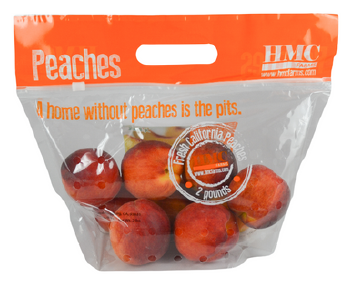
HMC Peaches

Product

Recalled conventional (non-organic) peaches, plums, and nectarines sold in retail stores from May 1, 2022 through November 15, 2022 and from May 1, 2023 through November 15, 2023. The recalled fruit was sold at retail stores nationwide in bags or as individual pieces of fruit with PLU stickers, under multiple brand names, including HMC Farms and Signature Farms. Additionally, the recalled fruit was sold to other manufacturers who may have frozen and/or relabelled the recalled fruit for resale under another brand. The firm has directly notified their customers who received recalled product and this advisory will be updated as more information becomes available.

Recalled fruit is past expiration and no longer available for sale in retail stores but could have been frozen by consumers. Fresh whole peaches, plums, and nectarines currently available for sale at retail are not included in this recall.

Stores Affected

The recalled fruit was distributed nationwide and sold at retail stores in bags or as individual pieces of fruit bearing PLU stickers, under multiple brand names, including HMC Farms and Signature Farms.

Symptoms of Listeriosis (Listeria Infection)

Symptoms usually start within 2 weeks after eating food contaminated with Listeria, but may start as early as the same day or as late as 10 weeks after. Mild symptoms may include a fever, muscle aches, nausea, tiredness, vomiting, and diarrhea. If the more severe form of listeriosis develops, symptoms may include headache, stiff neck, confusion, loss of balance, and convulsions.

Status

Ongoing: Updates to this advisory will be provided as they become available.

Recommendation

  • Do not eat, sell, or serve recalled peaches, plums, or nectarines. The recalled fruit is no longer available for sale and any previously purchased fruit should be past shelf life.
  • If you previously purchased fresh peaches, plums, and nectarines and then froze them, you should throw them away if they are part of the recall or if you cannot tell if they are part of the recall.
  • Anyone who received or purchased recalled peaches, plums and nectarines should use extra vigilance in cleaning and sanitizing any surfaces and containers that may have come in contact with the recalled fruit to reduce the risk of cross-contamination. This includes baking or canning tools, cutting boards, knives, countertops, refrigerators, freezers, and storage bins.
  • If you have symptoms of listeriosis you should contact your health care provider to report your symptoms and receive care.

Recommendations for At-Risk Groups

  • Listeria is most likely to sicken pregnant people and newborns, adults aged 65 or older, and people with weakened immune systems. Other people can be infected with Listeria, but they rarely become seriously ill.
  • Pregnant people typically experience only fever, fatigue, and muscle aches. However, Listeria infection during pregnancy can lead to miscarriage, stillbirth, premature delivery, or life-threatening infection of the newborn.
  • Call your healthcare provider right away if you have symptoms of a Listeria infection.

UK -FSA assesses risk of Norovirus from oysters

Food Safety News

Scientists at the Food Standards Agency (FSA) have looked at the key topics to consider when dealing with norovirus outbreaks linked to oysters.

Microbiological experts at the FSA assessed the public health risk of raw oysters, to help with development of risk management options during outbreaks.

Work was done in response to recurring norovirus outbreaks linked to consumption of raw oysters. In England, between 2013 and 2022, there were 1,307 cases of norovirus linked to oysters. In Scotland, from 2017 to 2023, there were 259 reported cases. In the same periods, there were 28 outbreaks in England and eight in Scotland caused by oysters.

Earlier this month, two incidents of norovirus in oysters from France were reported to have sickened six people in Norway and 14 in Sweden.