Category Archives: Hygiene

UK – Petting Farms and Crytosporidium

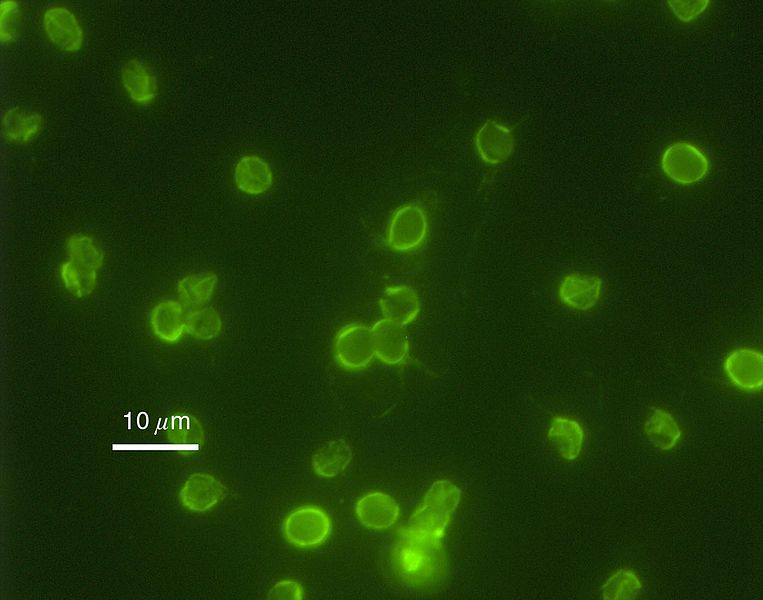
Westmorland Gazette 763px-Cryptosporidium_parvum_01

A CUMBRIA and north Lancashire public health chief is urging parents to be aware of potential infections that can be caught at farm attractions.

Dr Ken Lamden says everyone should practice good hand hygiene when visiting petting farms where animals can be handled.

Over the past 20 years, an average of around 80 cases of cryptosporidium infection linked to visits to petting farms have been reported to Public Health England each year. This is out of a total of around two million visits to the 1,000 plus farm attractions in the UK, with peak visitor times during school and public holidays.

RASFF Alerts – Salmonella -Dog Chew – Aflatoxin – Popcorn – Norovirus – Clams – STEC E.coli – Raw Milk

RASFF-Logo

RASFF – Salmonella spp. (presence /25g) and high count of Enterobacteriaceae (1.5*10² CFU/g) in dog chew from Thailand in Spain

RASFF – aflatoxins (B1 = 1937; Tot. = 2569 µg/kg – ppb) in popcorn from Argentina in Italy

RASFF -norovirus in frozen blanched clams (Meretrix Lyrata) from Vietnam in Spain

RASFF -shigatoxin-producing Escherichia coli (stx+ ; eae+ /25g) in raw milk from Belgium in Belgium


Canada – CFIA – Recall – Chicken Breast – Listeria monocytogenes

CFIA Eurofins Food Testing UK

Freshouse Foods Ltd. is recalling Kirkland Signature brand Grilled Chicken Breast Strips from the marketplace due to possible Listeria contamination. Consumers should not consume the recalled product described below.

The following product is known to have been sold in Ontario, Quebec, New Brunswick, Nova Scotia, Newfoundland and Labrador, but may also have been sold in other provinces.

 Recalled products

Brand Name Common Name Size Code(s) on Product UPC
Kirkland Signature Grilled Chicken Breast Strips 2 x 500 g Best Before APR13-APR26, inclusive 0 96619 70787 4

RASFF Alert – Listeria monocytogenes – Enoki Mushrooms – Raw Milk Cheese – Cheese

Food Testing - Eurofins

RASFF -Listeria monocytogenes (1 out of 5 subsamples /25g) in chilled enoki mushrooms from South Korea, via the Netherlands in Greece

RASFF-Listeria monocytogenes (positive) in sheep’s milk to produce raw milk cheese from Spain in Portugal

RASFF -Listeria monocytogenes (–> 80 CFU/g) in chilled pasteurised sheep’s milk cheese from France

RASFF -Listeria monocytogenes (brie: 1200, 1810, 156000, 10000; camembert: 4700, 237000, 4000, 519000 CFU/g) in frozen brie and camembert from Germany

RASFF Alerts – Listeria monocytogenes – Raw Milk Cheese – Tuna Salad- E.coli – Razor Clams – Beef – Staphylococcus – Raw Ham

Food Testing - Eurofins

RASFF -Listeria monocytogenes (510 CFU/g) in raw milk cheese from Italy in Austria

RASFF – Listeria monocytogenes in chilled spicy tuna salad from Belgium

RASFF -shigatoxin-producing Escherichia coli in boneless beef meat (Bos taurus) from Brazil in the Netherlands

RASFF -too high count of Escherichia coli (490 MPN/100g) in live razor clams from Ireland

RASFF -coagulase-positive Staphylococcus (400 000 /g) in raw ham from Spain in France

Research – Levels of microbial contamination of domestic refrigerators in Italy

Science Direct iStock_000012710183Small

Aim

According to the EFSA Report 2013, 32.7% of outbreaks of foodborne illness registered in Europe occurs within the home, due to inadequate hygienic behaviour of consumers when preparing foods in the kitchen. The efficacy of proper cleaning of cutting boards, dishes and cutlery in limiting microbial cross-contaminations in the kitchen has been documented many times, whereas few researches have been performed to determine the microbial load of the internal walls of domestic refrigerators, in Italy. The aim of this investigation is to ascertain the role played by internal surfaces of home refrigerators as possible sources of microbial contamination of foods.

Material and methods

We analyzed 293 domestic refrigerators of students or workers at the university campus of Agripolis (Legnaro, Italy). For each refrigerator, 2 internal surfaces were sampled using sponge-bags. The amounts of total viable count (TVC), Gram-negative spoiling bacteria, moulds and yeasts and the main pathogenic bacterial species were determined.

Results

TVCs greater than 1 log CFU cm−2 are in a little over 50% of the samples analyzed and are found mainly on the bottom of the refrigerator (61%) compared to the walls (39%) (P < 0.001). Even for other microbial counts the risk ratio of finding them on the bottom of the refrigerator is significantly higher than on the walls; the possibility of there being a finding on the bottom with respect to the walls varies from 2.5 to 8.5 times respectively for moulds and Aeromonas spp. Salmonella spp. was found in 1.7% of the samples, Bacillus cereus in 5.6%, Coagulase-positive staphylococci (CPS) in 4%, the prevalence of which is always higher on the bottom of the refrigerator. Listeria monocytogenes and Yersinia enterocolitica were never found.

Conclusions

It is necessary to better educate consumers to clean their appliances more frequently.

Research Netherlands – Microbial Risk in Produce

Ingentaconnect

The objective of this study was to evaluate the microbial hazard associated with the consumption of mixed salads produced under standard conditions. The presence of Salmonella, Campylobacter spp., and Escherichia coli O157 in the Dutch production chain of mixed salads was determined. Microbial prevalence and concentration data from a microbiological surveillance study were used as inputs for the quantitative microbial risk assessment. Chain logistics, production figures, and consumption patterns were combined with the survey data for the risk assessment chain approach. The results of the sample analysis were used to track events from contamination through human illness. Wide 95% confidence intervals around the mean were found for estimated annual numbers of illnesses resulting from the consumption of mixed salads contaminated with Salmonella Typhimurium DT104 (0 to 10,300 cases), Campylobacter spp. (0 to 92,000 cases), or E. coli (0 to 800 cases). The main sources of uncertainty are the lack of decontamination data (i.e., produce washing during processing) and an appropriate dose-response relationship.

Ingentaconnect

Recent outbreaks with vegetable or fruits as vehicles have raised interest in the characterization of the public health risk due to microbial contamination of these commodities. Because qualitative and quantitative data regarding prevalence and concentration of various microbes are lacking, we conducted a survey to estimate the prevalence and contamination level of raw produce and the resulting minimally processed packaged salads as sold in The Netherlands. A dedicated sampling plan accounted for the amount of processed produce in relation to the amount of products, laboratory capacity, and seasonal influences. Over 1,800 samples of produce and over 1,900 samples of ready-to-eat mixed salads were investigated for Salmonella enterica serovars, Campylobacter spp., Escherichia coli O157, and Listeria monocytogenes. The overall prevalence in raw produce varied between 0.11% for E. coli O157 and L. monocytogenes and 0.38% for Salmonella. Prevalence point estimates for specific produce/pathogen combinations ranged for Salmonella from 0.53% in iceberg lettuce to 5.1% in cucumber. For Campylobacter, this ranged from 0.83% in endive to 2.7% in oak tree lettuce. These data will be used to determine the public health risk posed by the consumption of ready-to-eat mixed salads in The Netherlands.

RASFF Alerts – Listeria in Mushrooms – Norovirus in Clams – Salmonella in Chicken and Sesame

RASFF-Logo

RASFF – Listeria monocytogenes in mushrooms from Ireland

RASFF -norovirus (GII) in frozen clams (Venus gallina) from Vietnam in Italy

RASFF -Salmonella spp. (presence /25g) in frozen salted chicken breast fillet from Thailand in Denmark

RASFF -Salmonella spp. (present /25g) in hulled sesame seeds from India in Italy

RASFF Alerts – Animal Feed – Salmonella – Soybean – Dog Food – Dog Chews – Raw Rabbit

RASFF-Logo

RASFF -Salmonella Tennessee (present /25g) in soybean meal from Italy in Austria

RASFF– Salmonella spp. in dry dog food from China in Germany

RASFF-Salmonella spp. in dried pet food from China in Germany

RASFF– Salmonella spp. (presence /25g) in dried dog chews from India in Germany

RASFF– Salmonella (presence /25g) in frozen raw rabbit by-products from Spain, via Denmark in Sweden

Research – Poultry Food Safety Control Interventions in the Domestic Kitchen

Wiley Online Library imagesCAYZ5I84

Research was undertaken to investigate cross-contamination of the domestic kitchen environment during poultry fillet preparation using a streptomycin-resistant strain of Pseudomonas fluorescens as a model organism. The potential role of a cook-in-the-bag technology to control this cross-contamination was also investigated. Poultry fillets were inoculated with P. fluorescens (6.06 log10 CFU/cm2). Six people were challenged to unpack, defrost, cut and cook without contaminating the preparation environment. After preparation, the chopping board, knife blade, dishcloth, refrigerator handle, oven handle, oven buttons, draining board, tap, microwave handle, microwave buttons, plate, tinfoil and press handle were tested for the presence of the P. fluorescens strain, before and after washing. The experiment was then repeated with a precut cook-in-the-bag product. In a separate experiment, the effect of freezing and frozen storage (−20C) on Campylobacter and the sensory attributes of chicken fillets were investigated. The cook-in-the-bag approach considerably reduced the incidence and levels of cross-contamination in the domestic kitchen. Freezing significantly (P < 0.05) reduced the Campylobacter counts on inoculated fillets after 7 days at −20C (1.73 log10 CFU/g). While there was no adverse effect on taste, fillets that had been frozen were significantly more “firm” and “less moist” as compared with fresh product.