Category Archives: Hepatitis E

Research – Austria reveals results showing pathogens in raw milk and meat

Food Safety News

Recent controls in Austria have found Campylobacter in raw milk, Salmonella in chicken, and Hepatitis E in raw pork liver.

Earlier this year, a campaign checked raw milk from vending machines for germs and residues of cleaning agents.

The Austria Agency for Health and Food Safety (AGES) said that raw milk could contain pathogens despite hygiene measures during milking. The advice is to boil it before drinking. For products sold directly to consumers via vending machines or in the farm shop, the note: “Raw milk, boil before consumption” must be present.

Sixty samples from across Austria were examined and 23 were rejected. Overall, 21 did not comply because the total bacterial count was too high. One sample was contaminated with Campylobacter. Two samples were non-compliant because of a lack of information on the vending machine about boiling the product.

Raw milk from vending machines had been examined for microbiological quality in two previous campaigns in 2017 and 2020. In these actions, milk from 112 different farms was checked. Samples from 40 companies were non-compliant, including five firms on two occasions.
USA – California Splendor, Inc. Recalls Kirkland Brand Bags of Frozen Organic Whole Strawberries Distributed by Costco in Los Angeles, Hawaii, and in Two San Diego Business Centers Because of Possible Health Risk – Hepatitis A

FDA

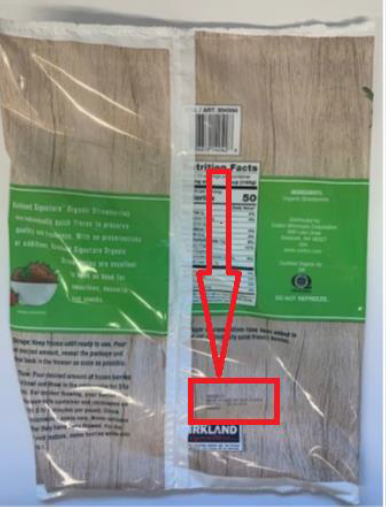
Kirkland Signature Frozen Organic Strawberries, back of bag label

California Splendor, Inc. of San Diego, California is recalling certain lots of 4-lb. bags of Kirkland Signature Frozen Organic Strawberries that were sold at Costco stores in Los Angeles, Hawaii and two San Diego business centers, due to an outbreak of Hepatitis A illnesses. Although, Hepatitis A has not been detected on this product, out of an abundance of caution, consumers should stop consuming the food and return it to their local Costco store for a refund.

Hepatitis A is a contagious liver disease that results from exposure to the Hepatitis A virus, including from food. It can range from a mild illness lasting a few weeks to a serious illness lasting several months. Illness generally occurs within 15 to 50 days of exposure and includes fatigue, abdominal pain, jaundice, abnormal liver tests, dark urine and pale stool. In rare cases, particularly consumers who have a pre-existing severe illness or are immune compromised, Hepatitis A infection can progress to liver failure.

Illness occurs within 15 to 50 days of exposure and includes fatigue, abdominal pain, jaundice, abnormal liver tests, dark urine and pale stool. Hepatitis A vaccination can prevent illness if given within two weeks of exposure to a contaminated food. Persons who may have consumed affected product should consult with their health care professional or local health department to determine if a vaccination is appropriate, and consumers with symptoms of Hepatitis A should contact their health care professionals or the local health department immediately.

The lots subject to this recall are as follows:

140962-08 142222-23 142792-54 142862-57 142912-59
142162-20 142202-21 142782-53 142852-56 142902-58
142212-22 142232-24 142842-55

The lot number can be identified on the back of the bag as shown below:

The company has ceased the production and distribution of the affected product as FDA and the company continue their investigation as to what caused the problem.

Consumers with questions may email the company at consumerinformation@calsplendor.com.


Company Contact Information

Consumers:
California Splendor, Inc.
 consumerinformation@calsplendor.com

Research- Development of an Extraction Method to Detect Hepatitis A Virus, Hepatitis E Virus, and Noroviruses in Fish Products

MDPI

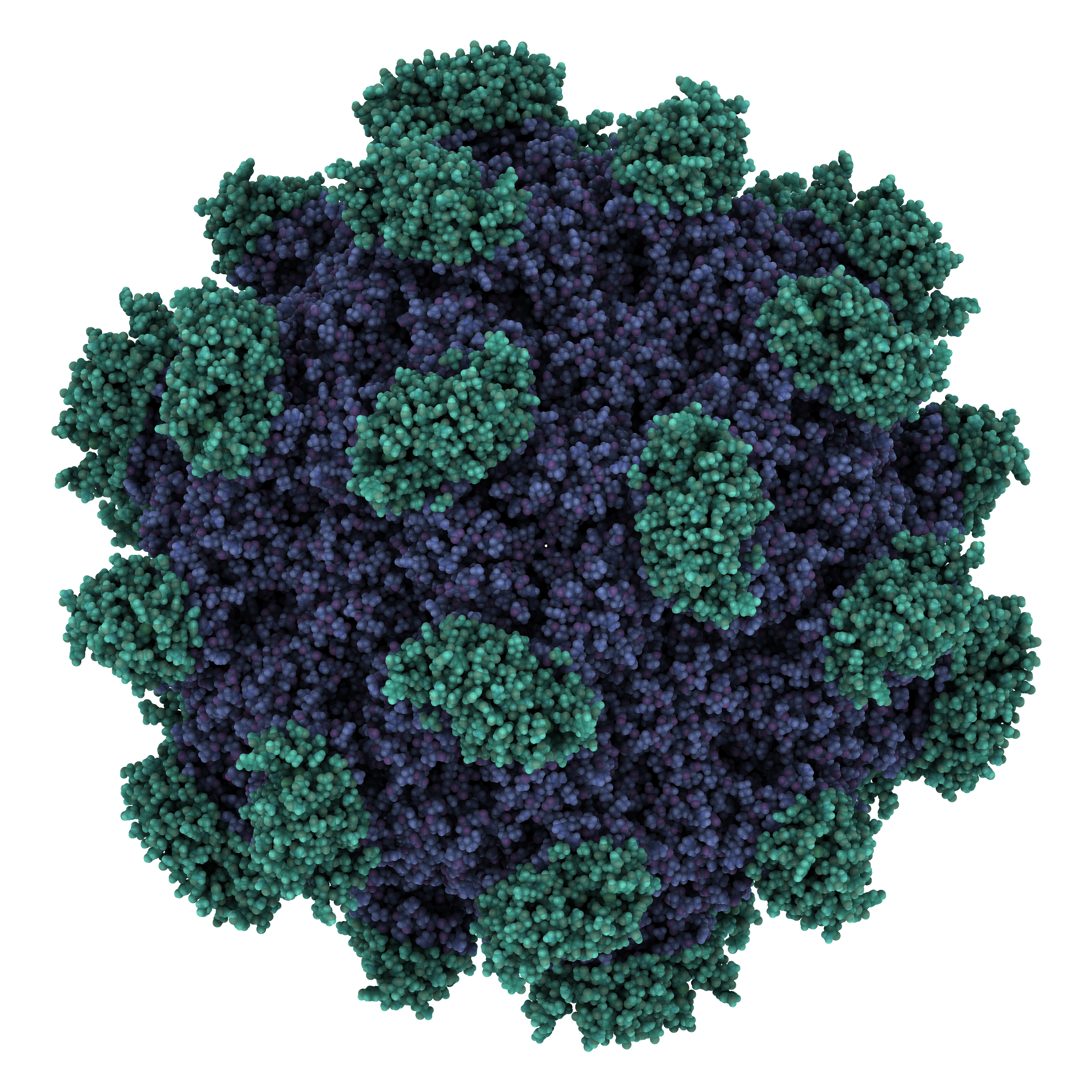
Hepatitis E virus capsid structure. HEV infection causes viral hepatitis. Atomic-level structure.

Abstract

Viruses are a leading cause of foodborne disease worldwide. Hepatitis viruses (hepatitis A (HAV) and hepatitis E (HEV)) and human norovirus are recognized as the main viruses of public health concern in food hygiene. ISO 15216 approved procedures are not validated for detection of HAV and human norovirus in foodstuffs, such as fishes, leading to an inability to ensure the safety of these products. This study aimed to provide a rapid and sensitive method for detecting these targets in fish products. An existing method that includes proteinase K treatment was selected for further validation using artificially contaminated fish products, according to the recent international standard ISO 16140-4. Recovery efficiencies in pure RNA extracts of viruses ranged from 0.2% to 66.2% for HAV, 4.0% to 100.0% for HEV, 2.2% to 100.0% for norovirus GI, and 0.2% to 12.5% for norovirus GII. LOD50 values were between 144 and 8.4 × 10⁴ genome copies/g for HAV and HEV, and 104 and 2.0 × 10³ copies/g for norovirus GI and norovirus GII, respectively. LOD95 values were between 3.2 × 10³ and 3.6 × 10⁵ genome copies/g for HAV and HEV, and between 8.8 × 10³ and 4.4 × 10⁴ genome copies/g for norovirus GI and norovirus GII, respectively. The method developed here was successfully validated in various fish products and can be applied for routine diagnostic needs.

Research – Prevalence of Foodborne Viruses in Berries Harvested in Canada

MDPI

Abstract

It is known that the transmission of different foodborne viruses can occur either via discharge of contaminated water close to the production environment or via close contact with animal feces. Cranberries are intimately associated with water throughout their production cycle, and blueberries grow close to the ground which could lead to contact with wildlife. The aim of this study was to evaluate the prevalence of human norovirus (HuNoV GI and GII), hepatitis A virus (HAV) and hepatitis E virus (HEV) in two berries produced commercially in Canada. The detection of HuNoV and HAV on RTE cranberries and of HEV on wild blueberries was evaluated using the ISO method 15216-1:2017. Only 3 of 234 cranberry samples tested positive for HuNoV GI (3.6, 7.4, 5.3 genome copies/g, respectively) and all were negative for HuNoV GII and HAV. PMA pre-treatment and sequencing confirmed the absence of potential intact HuNoV GI particles on cranberries. None of the 150 blueberry samples tested positive for HEV. Overall, the prevalence of foodborne viruses in RTE cranberries and wild blueberries harvested in Canada is low, making these products relatively safe for consumers.

France – Wakame Salad- Hepatitis E

Gov france

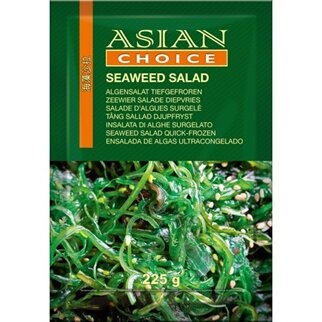
Identification information of the recalled product

  • Product category Feed
  • Product subcategory Others
  • Product brand name asian choice
  • Model names or referencesDV8010 225g Expiry date:25-07-2023
  • Identification of products
    GTIN Batch Date
    8717677865734 2111040038 Use-by date 07/25/2023
  • Marketing start/end date From 06/12/2021 to 15/02/2022
  • Storage temperature Product to keep in the freezer
  • Geographic area of ​​sale Saint Etienne
  • Distributors international store

Practical information regarding the recall

  • Reason for recall Presence of type E hepatitis
  • Risks incurred by the consumer Hepatitis E virus
  • Additional description of the risk there is a limited health risk of contamination by the virus.

Research – Examining the Effect of Organic Acids on Inactivation of Hepatitis E Virus

Journal of Food Protection

Infection with hepatitis E virus genotype 3 (HEV-3) is an emerging cause of illness in developed countries. In North America and Europe, HEV-3 has been increasingly detected in swine, and exposure to pigs and pork products is considered the primary source of infection. We have previously demonstrated the prevalence of the HEV-3 genome in commercial pork products in Canada. In this study, we investigated the application of citric acid and acetic acid to inactivate HEV-3 on food and on food-contact surfaces. For this purpose, plastic, stainless steel and pork pâté surfaces were inoculated with HEV-3 and were treated with acetic acid or citric acid at 1%, 3%, or 5%. The infectivity of post treatment viral particles was determined by cell culture. A greater than 2-log reduction in viral infectivity was observed on plastic and stainless steel treated with the organic acids, but the treatment was much less effective on HEV infectivity on pork pâté (average reductions of 0.47 log citric acid, and 0.63 log acetic acid). Therefore, we conclude that citric acid and acetic acid have potential application to control HEV-3 on food contact surfaces, but are not suitable for food.

RASFF Alert – Hepatitis E – Seaweed Salad

RASFF

Hepatitis E in Wakame Salad (seeweed salad) from the Netherlands in Denmark

Luxembourg – RECALL: ASIAN CHOICE BRAND SEAWEED SALAD (FROZEN SEAWEED SALAD)

SAP

Last name Algensalat tiefgefroren / frozen seaweed salad Seaweed Salad
Mark AsianChoice
Unity 225g
bar code 8717677865734
Date of minimum durability (MDD) 07/25/2023
Batch 2111040038

Danger  : Possible presence of Hepatitis type E

Sale in Luxembourg by: Dafa Supermarket Luxembourg and Edens sa

A sale by other operators cannot be excluded.

Communicated by: Government Commission for Quality, Fraud and Food Safety

Belgium – Seaweed Salad (frozen) “Seaweed Salad” (225g) from Asian Choice brand.

AFSCA

Mali Asian Market bv recall
Product: Seaweed Salad (frozen) “Seaweed Salad” (225g) from Asian Choice brand.
Problem: Possible presence of type E hepatitis.

In agreement with the AFSCA MALI ASIAN MARKET bv withdraws the seaweed salad (frozen) “Seaweed Salad” of the brand Asian Choice, from sale and recalls it from consumers because of the possible presence of Hepatitis type E MALI

ASIAN MARKET bv asks its customers not to consume this product and to return it to the point of sale in which it was purchased, where they will be reimbursed.

Product Description:

Name: Seaweed Salad (Frozen)
Brand: ASIAN CHOICE Best Before
Date (BDD): 25/07/2023
Item Number: DV8010
Sale Period: 16/01/2022 to 04/08/2022
Weight: 225g

The product was distributed by:
MALI ASIAN MARKET (Brugsesteenweg 161; 8500 KORTRIJK).

More information via MALI ASIAN MARKET: HIMPE THIERRY, tel 0478 78 11 36.

Denmark – Risk of Hepatitis E in seaweed salad

DVFA

The Chinese Merchant and Asian Market are recalling a lot of seaweed salad, as there is a risk that the product is contaminated with Hepatitis E (updated 09-08-2022 with new points of sale)

Recalled Foods , Published: August 5, 2022

Modified August 9, 2022

​​Which product:
ASIAN CHOICE Seaweed salad ( see picture )
Net weight: 225g
Valid until 25.07.2023

Sold in:
The Chinese Merchant in Copenhagen
Asian Market in Grenaa
KFT Jutland
Far-East-Trading in Aarhus
Company that revokes:
DKK Wholesale – The Chinese Merchant, KFT Jylland, Far-East-Trading​ and Asian Market
Cause:
There is a risk that the product is contaminated with Hepatitis E, which is unacceptable in terms of health.
Risk:
There is a risk of infection with Hepatitis E. If you have any questions about symptoms, contact your own doctor or the doctor on call.
Advice for consumers:
The Danish Veterinary and Food Administration advises consumers to return the product to the store where it was purchased, or to discard it