Category Archives: Foodborne Illness

USA- Iowa Salmonella Case Counts Associated with Chicken Salad Sold at Fareway – Salmonella

Iowa.gov

*Confirmed Case Definition:

Persons with Salmonella Typhimurium (confirmed or visual match to Pattern JPXX01.0275) with illness onset since January 1, 2018 reporting consumption of chicken salad from Fareway (any store) in the 7 days prior to illness onset.

Probable Case Definition:

Persons that are epi linked to a confirmed case (all confirmed cases are laboratory confirmed)

OR

Persons who test positive by CIDT or culture (with serotype and PFGE pending) with illness onset since January 1, 2018 reporting consumption of chicken salad from Fareway (any store) in the 7 days prior to illness onset.

January 1, 2018 – February 16, 2018* Confirmed 28
Probable 66

South Africa – Listeriosis flare-up now seen as worst documented outbreak in global history

Times Live

In the past month‚ another 167 people have contracted deadly listeriosis‚ bringing the total number of confirmed cases in South Africa to 717.

Food scientists are now calling it the worst documented listeriosis outbreak in global history.

In its latest listeriosis update‚ dated January 3‚ the National Institute for Communicable Diseases (NICD) – which has been tracking the listeriosis outbreak for an entire year – said 61 deaths had been reported.

Listeriosis has a relatively high mortality rate – 20-25% compared to illnesses caused by most other food-borne pathogens. Less than 1% of people who get Salmonella or E. coli O157 die as a result.

Neonates – babies less than 28 days old – remain the most affected by listeriosis.

Foods that have caused outbreaks are typically contaminated from the environment during manufacturing‚ processing or packing.

Foods most often implicated in food-borne outbreaks globally‚ are deli meats (polonies‚ ham products‚ etc) and hot dogs; refrigerated pâtés or meat spreads; unpasteurised (raw) milk and dairy products; soft cheese made with unpasteurised milk‚ such as feta‚ brie and camembert‚ refrigerated smoked seafood‚ raw sprouts and pre-packaged salads.

USA- Springfield Smoked Fish Expands their Recall of Smoked Salmon Because of Possible Health Risk

FDA

Springfield Smoked Fish of Springfield, MA is expanding their voluntary recall of smoked fish products because they have the potential to be contaminated with Listeria monocytogenes.

Recalled products were distributed and sold at retail stores and wholesale establishments in Massachusetts, Connecticut, New York, Rhode Island, Colorado, Ohio, Pennsylvania from May 2017 through December 2017. Product was also sold nationwide through online sales.

The initial recall was limited to 1lb pre-sliced Nova Salmon produced on 11/24/17. The recall expansion includes product produced between May 22, 2017 and December 12, 2017, the date the facility ceased production of the products.

These products were sold under the brand names Springfield Smoked Fish and Rachael’s Springfield Smoked Fish.

Product Description Sizes Lot #’s UPC#
Smoked Salmon – all species 4 oz. 15171 through 45172 045049113342, 045049113250, 045049113359
8 oz. 045049113083, 045049113274, 045049113304
1 lb. 045049112086, 811907018018
5lb. 045049112079
1 1/4.lb n/a
3 lb. 045049150613, 045049111065
Sliced sides (catch weight) n/a
unsliced sides (catch weight) n/a
trimmings/chips 045049113212
wings and bellies 045049111256
ground/spreadable 045049113236, 045049112413
Whitefish Meat 5 lb. bag 18171 through 43171 045049117111
Belly Lox  4 oz. and sliced sides 13171 through 33171 045049113311
Smoked Chubs  Catch weight 34171 through 46171 n/a
Smoked Bluefish  Catch weight 34171 045049117357
Smoked Trout  6 oz. 17171 through 42171 045049117258
Smoked Whole Whitefish  Catch weight 17171 through 46171 n/a
Smoked Sable  Catch weight 20171 through 33171 n/a
Kippered Salmon  Catch weights 22171 through 41171 045049117012
Hot Smoked Salmon Steaks Catch weights 43471 n/a
Smoked Whitefish Spread  8 oz. & 4lb 25171 through 46171 045049117432
25171 through 46171 045049117418
Cream Cheese Spreads 8 oz. & 5lb Use by 12/15/17  through 2/9/18
Spreadable Plain 045049117708
Lox 045049117760
Scallion 045049117746
Veggie 045049117739
Strawberry 045049117784
Hot and Spicy 045049117920
Whitefish Salad 8 oz. & 5lb use by 12/15/17 through 2/9/18 045049117425
045049117425

Boston Salads – Private Label

Scallion Cream Cheese Spread  5lb use by 12/15/17 through 2/9/18 611140151721
Veggie Cream Cheese Spread 5lb use by 12/15/17 through 2/9/18 611140151714

No illnesses have been reported to date in connection with this problem.


Australia/New Zealand – Proposal P1017 – Criteria for Listeria monocytogenes – Microbiological Limits for Foods

FSANZ FSANZ3

This Proposal seeks to update Standard 1.6.1 with regards to criteria for Listeria monocytogenes limits in ready-to-eat foods; aligning with international (Codex) standards, Food Safety and Primary Production and Processing Standards and associated FSANZ guidance material.

Full information and documents from the link above.

UK – Petting Farms and Crytosporidium

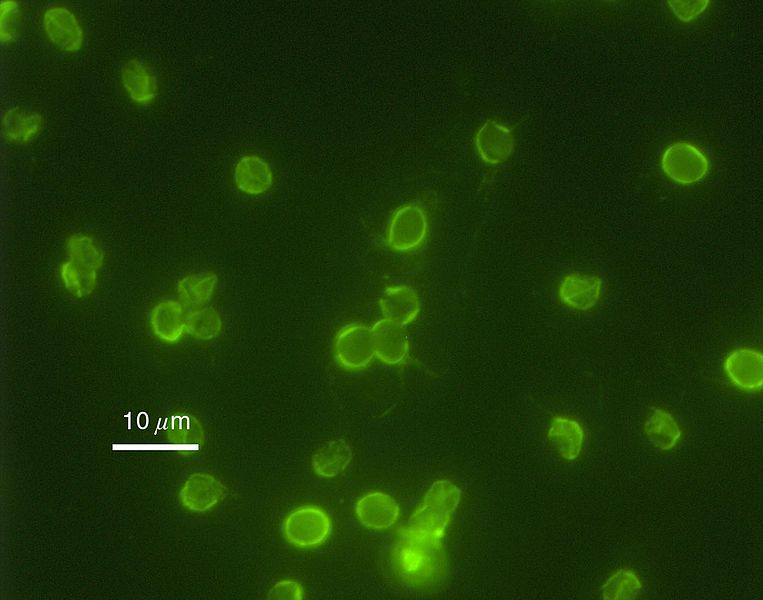
Westmorland Gazette 763px-Cryptosporidium_parvum_01

A CUMBRIA and north Lancashire public health chief is urging parents to be aware of potential infections that can be caught at farm attractions.

Dr Ken Lamden says everyone should practice good hand hygiene when visiting petting farms where animals can be handled.

Over the past 20 years, an average of around 80 cases of cryptosporidium infection linked to visits to petting farms have been reported to Public Health England each year. This is out of a total of around two million visits to the 1,000 plus farm attractions in the UK, with peak visitor times during school and public holidays.

Europe – German 2012 – Norovirus Oubreak Report

Eurosurveillance Norwalk_Caspid

From 20 September through 5 October 2012, the largest recorded food-borne outbreak in Germany occurred. Norovirus was identified as the causative agent. We conducted four analytical epidemiological studies, two case–control studies and two surveys (in total 150 cases) in secondary schools in three different federal states. Overall, 390 institutions in five federal states reported nearly 11,000 cases of gastroenteritis. They were predominantly schools and childcare facilities and were supplied almost exclusively by one large catering company. The analytical epidemiological studies consistently identified dishes containing strawberries as the most likely vehicle, with estimated odds ratios ranging from 2.6 to 45.4. The dishes had been prepared in different regional kitchens of the catering company and were served in the schools two days before the peaks of the respective outbreaks. All affected institutions had received strawberries of one lot, imported frozen from China. The outbreak vehicle was identified within a week, which led to a timely recall and prevented more than half of the lot from reaching the consumer. This outbreak exemplifies the risk of large outbreaks in the era of global food trade. It underlines the importance of timely surveillance and epidemiological outbreak investigations for food safety.

UK -Four more E.coli O157 Cases in Scotland Linked to Burgers

STV NewsBurger

Four more cases of E coli have been linked to the SSE Hydro in Glasgow, health bosses said.

The new cases bring the total number to 15 and are all linked to events at the venue on January 17, 18 and 19.

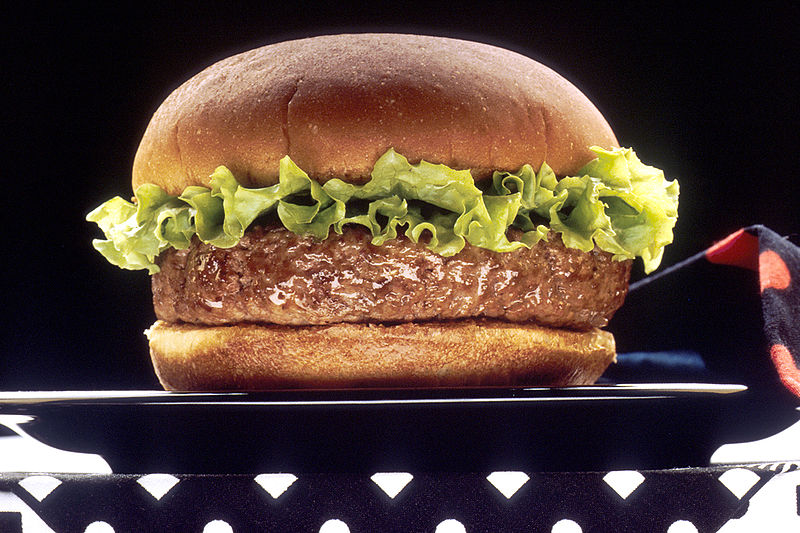
An investigation by NHS Greater Glasgow and Clyde (NHSGGC) alongside other public health bodies has indicated that burgers sold at the Hydro could have been the cause of the outbreak.

Australia/Bali – Two Die from Scomboid Poisoning and Secondary Illness

The Australian File:Coryphaena hippurus.png

NOELENE Bischoff and her teenage daughter Yvana died after eating toxic fish while on holidays in Bali, preliminary autopsy results reveal.

But the Sunshine Coast pair may have survived the rare poisoning, called Scombroid Syndrome Toxicity, had they not both been asthma sufferers which accelerated and intensified their reaction.

A spokesman for the Queensland Coroner Terry Ryan told The Australian the Bischoff family met with forensic pathologists in Brisbane yesterday and had been told the possible causes of death. However, autopsy testing has not been finalised.

Bischoff, 54, and her 14-year-old daughter died violently and mysteriously in Bali last month, hours after enjoying a final meal at the Padang Bai Beach resort restaurant.

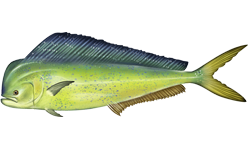
They had eaten grilled mahi mahi fish, vegetarian pizza and chicken curry, before succumbing to vomiting and breathlessness.

USA – Chicken Livers – Campylobacter

Orgeon Food Safety AlertsCampylobacter_jejuni_01

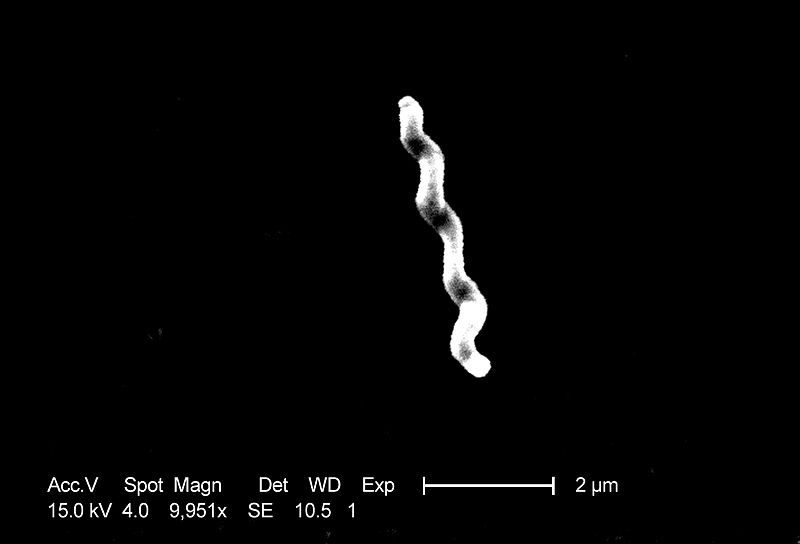
Since December 2013, Oregon health officials have been looking into the source of Campylobacteriosis that has sickened five individuals in Oregon and Ohio. All cases report eating undercooked or raw chicken livers; most cases consumed chicken livers prepared as pâté. The cases in Ohio ate chicken liver pâté while visiting Oregon. The Oregon Health Authority is working with USDA and CDC.

This is the second reported multistate outbreak of campylobacteriosis associated with consumption of undercooked chicken liver in the United States.

Oregon Live

A high-end chicken product enjoyed in high-end restaurants in Portland is part of a small food poisoning outbreak in Oregon.

Health officials issued a public health alert Tuesday, saying six people who consumed undercooked or raw chicken livers were infected with campylobacter, a common foodborne pathogen. Three people live in Oregon and two others were visiting the state from Ohio. The outbreak includes one person in Washington state who got sick after consuming chicken liver pills. Most of the others ate chicken liver pate.


Research – Growth of Escherichia coli O157:H7 and Listeria monocytogenes in Packaged Fresh-Cut Romaine Mix at Fluctuating Temperatures during Commercial Transport, Retail Storage, and Display

Ingentaconnect

Temperature abuse during commercial transport and retail sale of leafy greens negatively impacts both microbial safety and product quality. Consequently, the effect of fluctuating temperatures on Escherichia coli O157:H7 and Listeria monocytogenes growth in commercially-bagged salad greens was assessed during transport, retail storage, and display. Over a 16-month period, a series of time-temperature profiles for bagged salads were obtained from five transportation routes covering four geographic regions (432 profiles), as well as during retail storage (4,867 profiles) and display (3,799 profiles). Five different time-temperature profiles collected during 2 to 3 days of transport, 1 and 3 days of retail storage, and 3 days of retail display were then duplicated in a programmable incubator to assess E. coli O157:H7 and L. monocytogenes growth in commercial bags of romaine lettuce mix. Microbial growth predictions using the Koseki-Isobe and McKellar-Delaquis models were validated by comparing the root mean square error (RMSE), bias, and the acceptable prediction zone between the laboratory growth data and model predictions. Monte Carlo simulations were performed to calculate the probability distribution of microbial growth from 8,122,127,472 scenarios during transport, cold room storage, and retail display. Using inoculated bags of retail salad, E. coli O157:H7 and L. monocytogenes populations increased a maximum of 3.1 and 3.0 log CFU/g at retail storage. Both models yielded acceptable RMSEs and biases within the acceptable prediction zone for E. coli O157:H7. Based on the simulation, both pathogens generally increased <2 log CFU/g during transport, storage, and display. However, retail storage duration can significantly impact pathogen growth. This large-scale U.S. study—the first using commercial time/temperature profiles to assess the microbial risk of leafy greens—should be useful in filling some of the data gaps in current risk assessments for leafy greens.