Category Archives: Food Technology

Research – Preservation of ready-to-eat salad: A study with combination of sanitizers, ultrasound, and essential oil-containing β-cyclodextrin inclusion complex

Science Direct

Highlights

Peracetic acid is a good alternative to chlorine for fresh produce sanitization.

Ultrasound enhanced peracetic acid efficiency.

Sachet with essential oil did not contribute to salad preservation.

Complexation with β-CD did not attenuate EO odor.

EO in vitro antimicrobial activity does not imply preservative property in food.

Abstract

The microbiological quality of a ready-to-eat salad treated with different sanitizers (sodium dichloroisocyanurate (SD), peracetic acid (PA) or isolated or combined with ultrasound (US)), and packaged alongside sachets containing β-cyclodextrin/Pimenta dioica essential oil inclusion complex was evaluated. Consumer acceptability was also assessed. Furthermore, treatments were investigated against Listeria monocytogenes intentionally inoculated. SD, SD + US, and PA treatments showed similar efficiency against psychrotrophic (log reduction < 1) and lactic acid bacteria (log reductions of 1.18 ± 0.25, 1.28 ± 0.19 and 1.03 ± 0.22 for SD, SD + US, and PA, respectively). Concerning yeasts and molds, SD and SD + US reached the greatest log reduction (counts < 4 log CFU g−1), whereas PA + US was more efficient than PA. Against L. monocytogenes, SD, SD + US and PA + US led to the best results. The presence of sachet, however, did not contribute to salad preservation. Sensory evaluation showed that salads stored alongside sachets were the least accepted by consumers with scores between 5 and 6 for overall impression attribute, while samples without sachets received average scores >7. These findings are of great importance since they demonstrate the need for studies that evaluate the properties of EO when applied in a food system.

Research – Prediction of Persistence of Listeria monocytogenes ST451 in a Rabbit Meat Processing Plant in the Czech Republic

Journal of Food Protection

ABSTRACT

This study was focused on characterization of the genetic diversity of Listeria monocytogenes isolated from packed fresh rabbit meat obtained from one producer via retail outlets. The partial aim was to compare the characteristics of a suspect persistent strain with strains from human cases. The occurrence of L. monocytogenes in vacuum-packed rabbit meat was monitored during 2013 to 2016. All strains were characterized by serotyping, pulsed-field gel electrophoresis, and multilocus sequence typing (MLST). Selected strains, which represented each year, were analyzed using the whole genome sequencing method. L. monocytogenes was detected in 21 (38%) of 56 originally packed rabbit meat samples from one food producer during the whole monitored period. All strains showed the identical serotype (1/2a), AscI/ApaI pulsotype (735/2), and sequence type (ST451). The clonal similarity of strains from rabbit meat was also confirmed on the basis of core genome MLST (on 1,701 loci). This fact suggests the occurrence of a suspect persistent strain in the meat processing plant. Results of core genome MLST enabled us to unambiguously exclude rabbit meat as a source of listeriosis in humans caused by the indistinguishable AscI/ApaI pulsotype and sequence type, although all strains carried all genes important for the virulence of L. monocytogenes. No specific genes that may be associated with its persistence in the food processing environment were detected among the tested strains of ST451.

HIGHLIGHTS
  • Rabbit meat is not often reported as a source of L. monocytogenes.

  • Rare ST451 was detected as a suspect persistent strain for the first time.

  • Genetic factors linked to persistence of L. monocytogenes ST451 were not found.

  • PMSC mutations in inlA, inlB, and LIPI-1 genes were not detected in tested strains.

Denmark -WGS project helps Denmark uncover Campylobacter outbreak

Food Safety News

Fifty people are ill in Denmark from Campylobacter after eating chicken meat but authorities believe the actual number of patients may be much higher.

Statens Serum Institut (SSI), Danish Veterinary and Food Administration (Fødevarestyrelsen) and DTU Food – National Food Institute are investigating the Campylobacter jejuni outbreak.

Campylobacter is the main cause of bacterial intestinal infections in Denmark and more than 4,500 cases were registered in 2018.

The same type of Campylobacter, sequence type 122, identified in patients by whole genome sequencing has also been found in chicken meat from one slaughterhouse, named as HKScan in Vinderup, a town in Northwestern Jutland.

Research – Effects of metal oxide nanoparticles with plant extract on viability of foodborne pathogens

Wiley Online

Abstract

The present study tested the antibacterial activity, expressed as minimum bactericidal concentration (MBC), of zinc oxide nanoparticles (ZnO‐NPs), copper oxide nanoparticles (CuO‐NPs) and their combination with or without rosemary, clove or cinnamon extract against Escherichia coli O157:H7 and Listeria monocytogenes. The NPs were characterized by scanning electron microscopy. The sizes of ZnO‐NPs and CuO‐NPs were in the range of 56–71 and 171–204 nm, respectively. Results showed that ZnO‐NPs had a greater inhibitory effect against both E. coli O157:H7 and L. monocytogenes than CuO‐NPs. The MBC of ZnO‐NPs against E. coli O157:H7 and L. monocytogenes was 300 and 350 μg/mL, respectively, while the MBC of CuO‐NPs was >1,000 and 400 μg/mL, respectively. When combined, ZnO‐NPs and CuO‐NPs had additional inhibitory effects against L. monocytogenes, but not against E. coli O157:H7. In general, the antibacterial activity of the NPs against E. coli O157:H7 and L. monocytogenes was enhanced by rosemary or cinnamon extract. Incorporation of clove extract into the NPs improved the antibacterial effect against E. coli O157:H7, but not against L. monocytogenes. Thus, plant extracts may be useful adjuncts for the synthesis of ZnO‐NPs or CuO‐NPs which can be used to control foodborne pathogens.

Practical Application

Incorporation of plant extracts in the synthesis of metal oxide nanoparticles (NPs) can be applied to improve the antimicrobial activity of NPs against foodborne pathogens.

Hong Kong – Test results of targeted surveillance on coagulase-positive staphylococci organisms in ready-to-eat food all satisfactory

CFS

Staph

Image CDC

The Centre for Food Safety (CFS) of the Food and Environmental Hygiene Department today (July 8) announced the results of a recently completed targeted food surveillance project on coagulase-positive staphylococci organisms (including Staphylococcus aureus) in ready-to-eat food. All samples passed the test.

A spokesman for the CFS said that a total of 300 ready-to-eat food samples were collected from different retail outlets (including online retailers) and food factories for testing of coagulase-positive staphylococci organisms this year. The samples included meat, poultry and their products (for example shredded chicken, siu mei and lo mei), salad, sashimi and sushi, dessert, Chinese cold dishes, sandwiches and steamed rice rolls.

The spokesman pointed out that Staphylococcus aureus is a common bacterium that can cause food poisoning. It exists widely in the environment and is commonly found in the nasal cavity, throat, hair and skin of healthy individuals. It is also present in large numbers in wounds and infected regions. If food handlers do not observe good personal hygiene, Staphylococcus aureus can pass to foods from them. Foods stored at ambient temperature for a prolonged period will allow the toxin-producing Staphylococcus aureus to multiply and form elaborate enterotoxins which can cause food poisoning. Although most cases of infection are caused by Staphylococcus aureus, other coagulase-positive staphylococci species can also produce enterotoxins which can lead to food poisoning.

Food poisoning caused by coagulase-positive staphylococci organisms is usually associated with foods that require considerable manual handling during preparation and no subsequent cooking is required before consumption. The poisoning risk cannot be eliminated by reheating as enterotoxins produced by coagulase-positive staphylococci organisms cannot be destroyed under normal cooking temperatures. Common symptoms of food poisoning caused by coagulase-positive staphylococci organisms include nausea, vomiting and abdominal pain, often accompanied by diarrhoea.

“Despite the fact that test results of the samples were all satisfactory, the trade and the public should not take the risk lightly. They should always maintain good personal, environmental and food hygiene to ensure food safety. To prevent food poisoning caused by coagulase-positive staphylococci organisms, members of the public are reminded to keep perishable foods or leftovers at or below 4 degrees Celsius or above 60 degrees C. The trade should adhere to the Good Manufacturing Practice that cooked food should be cooled from 60 degrees C to 20 degrees C as quickly as possible (within two hours), and from 20 degrees C to 4 degrees C within four hours or less,” the spokesman said.
 

Ireland- Campylobacter Incidence Data

HPSC

Campylobacter 2018

Research – Tamoxifen May Fight Lethality of Shiga Toxin-Producing E. coli Bacteria

Food Poisoning Bulletin

According to new research from the University of Texas at Austin’s College of Pharmacy the drug tamoxifen may help fight the lethality of Shiga toxin-producing E. coli (STEC) bacteria. That drug is already approved by the FDA for treatment of diseases such as breast cancer.

Research – Survival and growth of Listeria monocytogenes and Staphylococcus aureus on conventional and low‐sodium bacon—A short communication

Wiley Online

Abstract

This study was focused on determining survival and growth characteristics of Listeria monocytogenes and Staphylococcus aureus on conventional (16.7 mg of sodium/g) and low‐sodium (10.7 mg of sodium/g) bacon. The two types of bacon were inoculated with the either L. monocytogenes or S. aureus stored at 4, 12, or 25°C for up to 7 days. Populations of L. monocytogenes and S. aureus did not change significantly on bacon stored at 4 and 12°C, regardless of sodium content. L. monocytogenes remained at 1.0–1.5 log cfu/g of conventional bacon stored at 25°C for 7 days but increased to 3.5 log cfu/g on low‐sodium bacon stored for 4 days. Within 1 and 3 days at 25°C, S. aureus increased, respectively, to 4.5 log cfu/g and 7.3 log cfu/g of low‐sodium bacon. Within 7 days at 25°C, populations increased to 8.1 log cfu/g of low‐sodium bacon and 3.7 log cfu/g of conventional bacon. This study shows that L. monocytogenes can grow on low‐sodium bacon stored at 25°C. S. aureus can grow on bacon stored at 25°C, regardless of sodium content, but the presence of 16.7 mg of sodium/g, compared to 10.7 mg/g, retards the rate of growth.

Practical applications

At 25°C, L. monocytogenes and S. aureus grew more rapidly on low‐sodium bacon than on conventional bacon. Low‐sodium bacons increase concern for microbiological safety.

  • Storage of conventional and low‐sodium bacon at 25°C enables growth of both pathogens.
  • Appropriate temperature for storage is more critical to enhance the microbiological safety of bacons rather than amount of sodium added.

Research – Take two E. coli and call me in the morning

Science Daily

Millions of people take capsules of probiotics with the goal of improving their digestion, but what if those bacteria were also able to detect diseases in the gut and indicate when something is awry? New research from the Wyss Institute at Harvard University and Harvard Medical School (HMS) has created an effective, non-invasive way to quickly identify new bacterial biosensors that can recognize and report the presence of various disease triggers in the gut, helping set the stage for a new frontier of digestive health monitoring and treatment. The paper is published in mSystems.

“Our understanding of how the human gut microbiome behaves is still in its early stages, which has hindered large-scale research into creating biosensors out of living bacteria,” said David Riglar, Ph.D., a former postdoc at the Wyss Institute and HMS who now leads a research group as a Sir Henry Dale Fellow at Imperial College London. “This work provides a high-throughput platform for identifying genetic elements in bacteria that respond to different signals in the gut, putting us one step closer to engineering complex signaling pathways in bacteria that allow them to detect and even treat diseases long-term.”


Information – FDA issues new draft guidance to improve the safety of seeds for sprouting

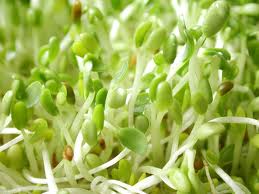
FDA alfalfa

“Over the past 22 years, the FDA has investigated 50 reported outbreaks of foodborne illness associated with contaminated sprouts. Together, these outbreaks resulted in more than an estimated 2,600 cases of illness. Last year, there were two reported outbreaks associated with sprouts, resulting in more than an estimated 100 illnesses. Studies indicate that contaminated seed is the likely source of most sprout-related outbreaks, as this commodity is inherently more susceptible to these issues because they are grown in warm and humid conditions that are favorable for bacteria like Salmonella, Listeria and E. coli,” said FDA Deputy Commissioner for Food Policy and Response Frank Yiannas. “The FDA is committed to taking swift action to respond to outbreaks related to sprouts and keep our food supply safe, but we also know that measures to prevent issues from happening in the first place are an important element of protecting consumers. By studying outbreaks related to sprouts over the years, we have been able to recommend changes in the industry to help lower the incidence of sprout-related outbreaks. Today’s new draft guidance is another critical step, like the Sprout Safety Alliance or sprout-specific requirements of the Produce Safety Rule, the agency is taking to prevent illnesses related to sprouts.”

The U.S. Food and Drug Administration today released a proposed draft guidance, “Reducing Microbial Food Safety Hazards in the Production of Seed for Sprouting,” intended to make the sprout seed industry (seed growers, conditioners, packers, holders, suppliers, and distributors) aware of the agency’s serious concerns with the continuing outbreaks of foodborne illness associated with the consumption of raw and lightly-cooked sprouts.

Incorporating aspects of the Codex Code of Hygienic Practice for Fresh Fruits and Vegetables Annex II, Annex for Sprout Production; the International Sprout Growers Association-Institute for Food Safety and Health’s “U.S. Sprout Production Best Practices”; and Good Agricultural Practices, the FDA’s draft guidance issued today provides the agency’s recommendations to firms throughout the production chain of seed for sprouting. It states that if a grower, holder, conditioner, or distributor reasonably believes that its seeds are expected to be used for sprouting, we recommend that the grower, holder, conditioner, or distributor take steps that are reasonably necessary to prevent those seeds from becoming contaminated. We also recommend that firms throughout the supply chain – from seed production and distribution through sprouting – review their current operations related to seeds for sprouting.

During the 60-day comment period for this draft guidance, stakeholders will be able to provide comments on the draft provisions. For more information on this guidance, as well as instructions on how to submit your comments, please visit Draft Guidance for Industry: Reducing Microbial Food Safety Hazards in the Production of Seed for Sprouting.