Category Archives: Food Technology

Research – Pulsed light technology effectively kills harmful pathogens in new study

Science Daily

Novel food decontamination method inactivates pathogens like E. coli and Salmonella

A light-based, food sanitization technique successfully eliminated multiple harmful pathogens in a new study. The pulsed light technique shows promise as an effective alternative to the chemical, heat and water-based antimicrobial technologies commonly used in the food industry — and could be applicable more generally in sanitized environments such as hospitals, water treatment facilities and pharmaceutical plants, according to the researchers.

Researchers introduce rapid diagnostic test for Listeria

Phys Org

Researchers in the University of Georgia College of Engineering are developing a new way to detect potentially deadly Listeria contamination in food.

Listeriosis, an infection caused by eating food contaminated by the bacterium Listeria monocytogenes, can cause severe illness in pregnant women, newborns, the elderly and people with compromised immune systems. Listeria is the third leading cause of death from foodborne illness, or food poisoning, in the United States. An estimated 1,600 people get sick each year and about 260 die, according to the Centers for Disease Control and Prevention.

Currently, Listeria contamination in food products is identified only through molecular tests conducted in diagnostic laboratories on samples taken at specific control points during the manufacturing and distribution process. Although very accurate, this method requires significant processing time, transportation of samples, and expensive skilled labour and equipment.

In a new study published in the Journal of The Electrochemical Society, UGA researchers introduce a rapid diagnostic method based on electrochemical biosensing principles. Electrochemical biosensors are promising alternatives to molecular detection methods because of their ease of use, high specificity, sensitivity and low cost, according to the researchers.

The UGA researchers use bacteriophages, viruses that infect and replicate within bacteria, as bioreceptors to identify L. monocytogenes using an electrochemical sensor.

Research – Terpenes Combinations Inhibit Biofilm Formation in Staphyloccocus aureus by Interfering with Initial Adhesion

MDPI

Staph

The biofilm is a conglomerate of cells surrounded by an extracellular matrix, which contributes to the persistence of infections. The difficulty in removing the biofilm drives the research for new therapeutic options. In this work, the effect of terpenes (−)-trans-Caryophyllene, (S)-cis-Verbenol, (S)-(−)-Limonene, (R)-(+)-Limonene, and Linalool was evaluated, individually and in combinations on bacterial growth, by assay with resazurin; the formation of biofilm, by assay with violet crystal; and the expression of associated genes, by real-time PCR, in two clinical isolates of Staphyloccocus aureus, ST30-t019 and ST5-t311, responsible for more than 90% of pediatric infections by this pathogen in Paraguay. All combinations of terpenes can inhibit biofilm formation in more than 50% without affecting bacterial growth. The most effective combination was (−)-trans-Caryophyllene and Linalool at a 500 μg/mL concentration for each, with an inhibition percentage of 88%. This combination decreased the expression levels of the sdrD, spa, agr, and hld genes associated with the initial cell adhesion stage and quorum sensing. At the same time, it increased the expression levels of the cap5B and cap5C genes related to the production of capsular polysaccharides. The combinations of compounds tested are promising alternatives to inhibit biofilm formation in S. aureus. View Full-Text

Research – Efficacy of 405 nm Light-Emitting Diode Illumination and Citral Used Alone and in Combination for Inactivation of Vibrio parahaemolyticus on Shrimp

MDPI

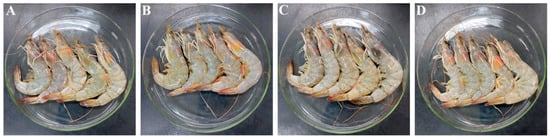
Vibrio parahaemolyticus is a widely distributed pathogen, which is frequently the lead cause of infections related to seafood consumption. The objective of the present study was to investigate the antimicrobial effect of the combination of 405 nm light-emitting diode (LED) and citral on V. parahaemolyticus. The antimicrobial effect of LED illumination and citral was evaluated on V. parahaemolyticus not only in phosphate-buffered saline (PBS) but also on shrimp. Quality changes of shrimp were determined by sensory evaluation. Changes in bacteria cell membrane morphology, cell membrane permeability, cell lipid oxidation level, and DNA degradation were examined to provide insights into the antimicrobial mechanism. The combination of LED treatments and citral had better antimicrobial effects than either treatment alone. LED combined with 0.1 mg/mL of citral effectively reduced V. parahaemolyticus from 6.5 log CFU/mL to below the detection limit in PBS. Combined treatment caused a 3.5 log reduction of the pathogen on shrimp within 20 min and a 6 log reduction within 2 h without significant changes in the sensory score. Furthermore, combined LED and citral treatment affected V. parahaemolyticus cellular morphology and outer membrane integrity. The profile of the comet assay and DNA fragmentation analysis revealed that combination treatment did not cause a breakdown of bacterial genomic DNA. In conclusion, LED may act synergistically with citral. They have the potential to be developed as novel microbial intervention strategies. View Full-Text

Research – Source of 7-year Listeria outbreak found in Germany

Food Safety News

German officials believe they have solved a seven-year Listeria outbreak that included the death of one man.

Using next generation sequencing (NGS) methods, the Bavarian State Office for Health and Food Safety (LGL) helped identify a likely connection between Listeria infections in Lower Bavaria and in the district of Altötting since 2015 and a food company.

The company was not named by authorities but they described it as a small businesses in the district of Passau that had various customers in the region. Local media reported it was a produce company that supplied canteens and care homes but not retailers.

Alongside the results from the NGS analysis, there are indications of an epidemiological connection to those sick based on the sales area.

Research – Impact of Industrial Practices on the Microbial and Quality Attributes of Fresh Vacuum-Packed Lamb Joints

MDPI

The impact of different industrial practices at lamb export abattoirs in Ireland on the microbial and quality attributes of fresh vacuum-packed (VP) lamb leg joints, including Clean Livestock Policy (CLP), fleece clipping, carcass chilling times and vacuum pack storage, at typical chill and retail display temperatures was investigated. Five separate slaughter batches of lamb (ranging in size from 38 to 60 lambs) were followed at two lamb export plants over a two-year period, accounting for seasonal variation. In general, fleece clipping resulted in significantly lower microbial contamination on the fleece than the use of CLP alone. Lamb from carcasses chilled for 24 h had significantly lower psychrophilic total viable counts and Brochothrix thermosphacta and pseudomonad counts than carcasses chilled for 72 h. Following vacuum-packed (VP) storage of meat from these carcasses at 1.7 ± 1.6 °C for 23 days in the meat plant followed by retail display at 3.9 ± 1.7 °C (up to day 50), the dominant microorganisms were lactic acid bacteria, Br. thermosphacta, Enterobacteriaceae and pseudomonads, and all had reached maximum population density by storage day 34. Aligned with this, after day 34, the quality of the raw meat samples also continued to deteriorate, with off-odours and colour changes developing. While the mean values for cooked meat eating quality attributes did not change significantly over the VP storage period, high variability in many attributes, including off-flavours and off-odours, were noted for lamb meat from all storage times, highlighting inconsistences in lamb quality within and between slaughter batches. View Full-Text

Research – Growth inhibition of Listeria monocytogenes in fresh white cheese by mustard oil microemulsion

Journal of Food Protection

Although essential oils (EOs) exhibit antimicrobial properties, its application is limited owing to their strong volatility and poor water solubility. Emulsification is a valid strategy for improving chemical stability. In this study, we prepared a mustard essential oil (MO) emulsion with egg yolk lecithin and evaluated its antimicrobial activity against Listeria monocytogenes in vitro and in cheese curd. The particle size of the MO emulsion was approximately 0.19 µmand remained stable for 30 days of storage. The MO emulsion showed strong antimicrobial activity against L. monocytogenes in vitro. Moreover, 40 ppm of MO was sufficient to inhibit the growth of L. monocytogenes in culture, and the addition of 160 ppm MO decreased the population of L. monocytogenes. Meanwhile, when 50 ppm of emulsified MO was added to milk during cheese curd production and it was stored at 10°C for 10 days, the growth of L. monocytogenes was suppressed. When the cheese curd with MO emulsion was stored at 4 °C, the bacterial count was significantly decreased (p<0.05), and no bacterial growth was observed after 14 days of storage. Furthermore, the sensory characteristics of cheese curd with the MO emulsion were acceptable. These results indicate that MO emulsions may be a possible way of controlling the growth of L. monocytogenes in fresh cheese.

Research – PDIA, an Iminosugar Compound with a Wide Biofilm Inhibitory Spectrum Covering Both Gram-Positive and Gram-Negative Human Bacterial Pathogens

MDPI

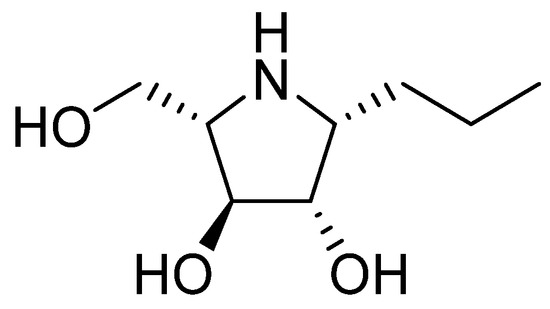
Many difficult-to-treat human infections related to catheters and other indwelling devices are caused by bacteria residing in biofilms. One of the key properties of microorganisms residing in a biofilm is decreased susceptibility towards antimicrobial agents. Therefore, many different approaches have been researched to destroy or inhibit biofilm production by bacteria. Different iminosugars (IS) were reported to inhibit biofilm formation in S. mutansS. aureus, and P. aeruginosa. The aim of this study was to look for a spectrum of the activity in one of these IS. The iminosugar PDIA beta-1-C-propyl-1,4-dideoxy-1,4-imino-L-arabinitol was tested in vitro at the same concentration against 30 different strains of the most important Gram-negative and Gram-positive human pathogens looking for their biofilm production and viability at different time intervals. It appeared that PDIA inhibited biofilm production of Enterobacter spp., P. aeruginosaEnterococcus spp. and S. aureus in 8 h, and Klebsiella spp., Acinetobacter spp. and S.epidermidis in 24 h. PDIA caused no growth inhibition of the tested bacteria at a concentration of 0.9 mM. Our results indicate a broad-spectrum biofilm inhibitory activity of PDIA. which may be the basis for future application studies that will help in control of the associated device and biofilm-related infections caused by a wide spectrum of the causative agents. View Full-Text

Research – A Machine Learning Model for Food Source Attribution of Listeria monocytogenes

MDPI

Despite its low morbidity, listeriosis has a high mortality rate due to the severity of its clinical manifestations. The source of human listeriosis is often unclear. In this study, we investigate the ability of machine learning to predict the food source from which clinical Listeria monocytogenes isolates originated. Four machine learning classification algorithms were trained on core genome multilocus sequence typing data of 1212 L. monocytogenes isolates from various food sources. The average accuracies of random forest, support vector machine radial kernel, stochastic gradient boosting, and logit boost were found to be 0.72, 0.61, 0.7, and 0.73, respectively. Logit boost showed the best performance and was used in model testing on 154 L. monocytogenes clinical isolates. The model attributed 17.5 % of human clinical cases to dairy, 32.5% to fruits, 14.3% to leafy greens, 9.7% to meat, 4.6% to poultry, and 18.8% to vegetables. The final model also provided us with genetic features that were predictive of specific sources. Thus, this combination of genomic data and machine learning-based models can greatly enhance our ability to track L. monocytogenes from different food sources. View Full-Text

Research – Impact of chlorinated water on pathogen inactivation during wheat tempering and resulting flour quality

Journal of Food Protection

Outbreaks of enteric pathogens linked to wheat flour have led the wheat milling industry to seek solutions addressing this food safety concern. Chlorinated water at 400-700ppm has been used in the flour milling industry as a tempering aid to control growth of yeast and mold in tempering bins. However, the effectiveness of chlorinated water for inactivating enteric pathogens on wheat kernels remained unknown. Five strains of Shiga-toxin producing Escherichia coli (STEC) and two strains of Salmonella were inoculated onto hard red spring wheat at 7 log CFU/g and stored at room temperature for 1-month. Inoculated wheat was tempered with four concentrations (0, 400, 800, 1200ppm) of chlorinated water (pH 6.5). The reduction due to chlorine was determined by calculating change in cell density at each chlorine level using the response at 0ppm as a reference. Uninoculated wheat tempered with chlorinated water was used to measure flour quality parameters. Changes in pathogen density over 18 hours ranged from -2.35 to -0.30 log CFU/g with 800ppm chlorinated water and were not significantly different from changes at 400ppm and 1200ppm. Significant (p< 0.05) differences in the extent of reduction were observed among strains. However, the effect of chlorinated water at reducing native microbes on wheat kernels was minimal, with an average reduction of 0.39 log CFU/g for all concentrations. No significant (p>0.05) changes occurred in flour quality and gluten functionality, or during breadmaking for grains tempered at 400 and 800ppm chlorinated water. There were small but significant (p<0.05) changes in flour protein content, final viscosity, and water absorption when tempered with 1200ppm chlorinated water. The data showed that the level of chlorinated water currently used in industry for tempering could reduce enteric pathogen numbers by 1.22 log CFU/g for STEC and 2.29 log CFU/g for Salmonella, with no significant effects on flour quality and gluten functionality.