Category Archives: food safety training

USA – Keep Risky Habits Out of the Kitchen this Thanksgiving

USDA

Here are seven dangerous habits USDA would like consumers to drop:

#1 Not washing your hands or kitchen surfaces before, during and after food prep: Handwashing is the first step to avoiding foodborne illness. Wash your hands for at least 20 seconds with soap and water before, during and after handling food.

  • Clean and sanitize any surfaces that have touched raw turkey and its juices and will later touch food, such as kitchen counters, sinks, stoves, tabletops, etc. Cleaning with soap and water physically removes the germs, and sanitizing kills any remaining. Many different sanitizers can be used: an easy homemade version is to make a solution of one tablespoon of liquid chlorine bleach per gallon of water, or you can use a commercial sanitizer or sanitizing wipe.
  • Thorough handwashing remains a concern for the USDA. The most recent USDA study shows that 87% of participants self-reported they washed their hands before starting to cook in the test kitchen. However, only 44% of participants were observed doing so before meal preparation. Additionally, handwashing was not attempted 83% of the time when it should have been done (after handling raw meat or touching contaminated surfaces). Throughout the study, 96% of handwashing attempts did not contain all necessary steps.

#2 Using the same cutting boards and utensils for raw and ready-to-eat foods: Cross-contamination is the spread of bacteria from raw meat and poultry onto ready-to-eat food, surfaces, and utensils. Avoid this by using separate cutting boards — one for raw meat and poultry and another for ready-to-eat foods like fruits and vegetables that will be served raw.

#3 Defrosting your turkey on the kitchen counter: Leaving any frozen package of meat or poultry for more than two hours on the counter at room temperature is dangerous. Even though the center of the package may still be frozen, the outer layer of the food is in the “Danger Zone” between 40 and 140 F — a temperature where foodborne bacteria multiply rapidly. You can safely thaw a turkey using the following methods:

  • Refrigerator Thawing: When thawing in a fridge, allow roughly 24 hours for every four to five pounds of turkey. After thawing, a turkey is safe in a refrigerator for one to two days.
  • Cold Water Thawing: When thawing in a cold-water bath, allow 30 minutes per pound and submerge the turkey in its original wrapping to avoid cross-contamination. Change the water every half hour until the turkey is thawed. Cook it immediately after thawing.

#4 Cooking your turkey overnight at a low temperature: It is not safe to cook any meat or poultry in an oven set lower than 325 F. At lower temperatures, meat stays in the Danger Zone for too long. Cook your turkey at 325 F or above and ensure all parts of the turkey reach a safe internal temperature of 165 F.

#5 Relying only on a pop-up temperature indicator: While the pop-up timers found in many turkeys tend to be fairly accurate, they only check the internal temperature in one spot when we recommend three. Always use a food thermometer to ensure your turkey has reached a safe internal temperature of 165 F in the thickest part of the breast, the innermost part of the wing, and the innermost part of the thigh to check its internal temperature.

#6 Stuffing your turkey the night before: USDA recommends against stuffing your turkey since this often leads to bacteria growth. If you plan to stuff your turkey, follow these steps:

  • Prepare the wet and dry ingredients for the stuffing separately from each other and refrigerate until ready to use. Mixing the dry and the wet ingredients produce an environment that bacteria can thrive in hours before being placed in the oven. Mix wet and dry ingredients just before filling the cavity of the turkey.
  • Stuff the turkey loosely — about 3/4 cup of stuffing per pound.
  • Never stuff a whole turkey and store in the refrigerator before cooking. Immediately place the stuffed, raw turkey in an oven set no lower than 325 F.
  • A stuffed turkey will take 50% longer to cook. Once it has finished cooking, place a food thermometer in the center of the stuffing to ensure it has reached a safe internal temperature of 165 F.

#7 Keeping leftovers for more than a week: Store leftovers in small shallow containers and put them in the refrigerator. Thanksgiving leftovers are safe to eat for up to four days when stored in the refrigerator. In the freezer, leftovers are safely frozen indefinitely but will keep the best quality for two to six months.

UK – FSA- Kitchen Life 2

FSA

Kitchen Life 2 (KL2) used motion-sensitive cameras to explore food safety behaviours in 70 households and 31 food business operator (FBO) kitchens. It also captured data using surveys, interviews, and fridge and freezer thermometers. KL2 was commissioned in February 2021 and completed in June 2023. The aim of KL2 was to identify the key food safety behaviours that occur in household and business kitchens and understand the factors influencing these behaviours.

The findings from this study are detailed across seven separate reports, each focusing on a behaviour of interest to the FSA.

Each report explores the behaviour in detail and uses behavioural analysis to identify the factors influencing the behaviour.

The 7 reports are:

  1. Not washing hands with soap after touching meat, fish and poultry
  2. Reusing a chopping board after preparing meat, fish and poultry 
  3. Reusing a tea towel or cloth for multiple purposes
  4. Storing chilled foods at incorrect temperatures 
  5. Not reheating leftovers until steaming hot throughout 
  6. Not checking use-by dates and consuming foods past use-by dates
  7. The creation of food waste

France – Pepper and pepper sheep cheese – Listeria monocytogenes

Gov France

  • Product category Food
  • Product subcategory Milk and dairy products
  • Product brand name Kukulu, Ezpela, Tomme d’Espelette, Kalaka
  • Model names or references Sheep’s cheese pepper chili format 500 -600g
  • Product identification
    Batch Date
    BP52223-600GR Minimum durability date between 11/21/2023 and 03/31/2024
  • Packaging Whole Tomme
  • Start/end date of marketing From 07/31/2023 to 10/03/2023
  • Storage temperature Product to keep in the refrigerator
  • Health mark FR64213100CE
  • Further information Sheep’s Tommette Red Pepper Chili Powder sold self-service packaged, naked, cheese+jam/jelly batch or sold in the cut sections
  • Geographical sales area Whole France
  • Distributors Supermarkets, Wholesales

WHO unveils WGS guides to help tackle foodborne disease

Food Safety News

The World Health Organization (WHO) has released a guide for use of whole genome sequencing (WGS) in food safety.

The guidance comes in three parts. The first explains the minimum capacity requirements in the foodborne disease surveillance and response system prior to considering implementation of WGS.

The second discusses how WGS can help to support outbreak investigations and the third describes the usage of WGS in routine surveillance of foodborne diseases.

A related webinar was organized in June 2023 where lessons learned, opportunities, challenges and national examples were highlighted. The event featured Dr. Eric Brown, from the Center for Food Safety and Applied Nutrition (CFSAN), at the U.S. Food and Drug Administration.

WGS is useful for understanding foodborne diseases through enhancing routine surveillance, outbreak detection and response and for source identification, said WHO. It is hoped the technology will help reduce the burden of foodborne illness.

RASFF Alert – Mould/Mold- Aspergillus niger- Almonds

RASFF

Aspergillus niger mold in almonds from USA in Italy

RASFF

Aspergillus niger mold in almonds from USA in Italy

RASFF

Aspergillus niger mold in almonds from USA in Italy

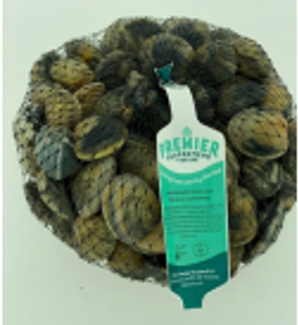
Luxembourg – Vongole from the Premier Seafarmers brand – E.coli

SAP

Name Vongole
Brand First Seafarmers
Product appearance Sold at the Cora fish stand
Unit 1 kg
Use-by date (DLC) 12/10/2023
Sales period 06/10/2023 to 09/10/2023

Danger  : Presence of Escherichia coli

Among  Escherichia coli , some can cause food poisoning which can occur within a week after consumption and result in gastrointestinal disorders often accompanied by cramps. These symptoms may be aggravated in young children, immunocompromised individuals and the elderly. People who have consumed these products and present these symptoms are invited to consult a doctor and report this consumption.

Sale confirmed in Luxembourg by: Cora. A sale by other operators cannot be excluded.

Information Source: Recall Notification

The Kitchen Sink: An Overlooked Place for Food Safety

FSIS USDA

We use the kitchen sink for food preparation – rinsing produce, cleaning pots and pans, washing utensils that touch raw meat, and more. With these activities come the possibility for foodborne illness-causing bacteria to hang out in the sink too. If proper food preparation safety steps are not followed, these bacteria could cross-contaminate your food and make you sick!

In our recent study, participants prepared a breakfast meal with raw sausage, shell eggs, and a fruit salad made with cantaloupe they cut up. Among the surfaces tested, the most often contaminated after they finished preparing their meal was the kitchen sink, with 34% of sinks being contaminated.

Even scarier, 26% of the samples of cut-up cantaloupe from the fruit salad were contaminated after breakfast prep. This can happen when there are bacteria in the sink, and the cantaloupe gets placed in the sink for washing, or if hands weren’t washed properly after touching raw meat or poultry or an unwashed cantaloupe. The bacteria in the sink or on your hands can cross-contaminate from the sink to other items, including those you normally eat raw…this means you’ll be eating that bacteria too.

After using your sink to wash or prepare food, follow a two-step process to fully clean and sanitize your sink:

1) Clean: use warm, soapy water to wash the sink. Wipe it clean with single-use or paper towels.

2) Sanitize: use a sanitizer and let air dry. Sanitizers can be homemade (1 tablespoon of liquid chlorine bleach per gallon of water) or a commercial sanitizer or sanitizing wipe.

Cleaning and sanitizing will help reduce the risk that your foods or other utensils can be cross-contaminated through food preparation in your sink.

For more information about food safety, call the USDA Meat and Poultry Hotline at 1-888-MPHotline (1-888-674-6854) or email MPHotline@usda.gov to reach a food safety specialist or chat live at ask.usda.gov from 10 a.m. to 6 p.m. Eastern Time, Monday through Friday.

France – SUPERIOR HAM WITH 3 WALNUT RIND – Listeria monocytogenes

RASFF

  • Product category Food
  • Product subcategory Meats
  • Product brand name UNBRANDED
  • Model names or references SUPERIOR HAM WITH 3 WALNUT RIND
  • Product identification
    GTIN Batch
    0203238000000 All lots
  • Packaging Traditional charcuterie section in freshness pouch
  • Start/end date of marketing From 09/09/2023 to 09/16/2023
  • Storage temperature Product to keep in the refrigerator
  • Health mark FR22046001CE
  • Geographical sales area Whole France
  • Distributors SAS TESTEDIS

FDA Finalizes Draft Guidance for Sprout Operations under the Produce Safety Rule, Releases Certain Sections as Revised Draft Guidance

FDA

Constituent Update

September 28, 2023

Today, the U.S. Food and Drug Administration (FDA) released two guidance documents that outline recommendations for how sprout operations may comply with the Produce Safety Rule.

The first is a guidance (2023 Final Guidance) that updates and finalizes the following sections of the January 2017 Draft GuidanceExternal Link Disclaimer entitled Compliance with and Recommendations for Implementation of the Standards for the Growing, Harvesting, Packing, and Holding of Produce for Human Consumption for Sprout Operations:

  • Cleaning and Sanitizing
  • Agricultural Water in Sprout Operations
  • Seeds for Sprouting
  • Environmental Monitoring
  • Recordkeeping

The second guidance (2023 Draft Guidance) re-issues certain sections of the January 2017 Draft GuidanceExternal Link Disclaimer and issues one new section for sprout operations as revised draft guidance. The following updated and new sections in the revised draft guidance are now available for comment:

  • Equipment, Tools, and Buildings
  • Sampling and Testing of Spent Sprout Irrigation Water (or In-Process Sprouts)
  • Personnel Qualifications, Training, and Hygienic Practices

These sections have been revised to align with information in other relevant guidance documents, incorporate additional information and comments received by the agency, and better consolidate and organize information within the guidance. The revised draft guidance is available for comment, and we are particularly interested in receiving information about testing of spent sprout irrigation water or in-process sprouts that sprout operations are currently conducting for non-O157:H7 pathogenic E. coli, including test kit names (as applicable).

To Submit Comments

Comments can be submitted at any time at Regulations.gov or to the Dockets Management Staff (HFA-305), Food and Drug Administration, 5630 Fishers Lane, rm. 1061, Rockville, MD 20852. All written comments should be identified with the docket number FDA-2017-D-0175 and with the title of the guidance document. Comments on the revised draft guidance should be submitted to the Federal Register within 180 days to ensure they are considered during development of the final guidance.

Netherlands – SnackDay Zwiebelringe from Lidl -Salmonella

NVWA

Safety warning SnackDay Zwiebelringe from Lidl

Lidl warns against Zwiebelringe from the SnackDay brand. Salmonella was found in this. This bacterium can pose a serious health risk to people with low resistance, such as the sick, pregnant women, young children and the elderly. Do not eat the product!

See Lidl’s website .

Which product is it?

  • Product: Zwiebelringe
  • Brand: SnackDay
  • Expiry date: 16-03-2024
  • Batch number: numbers starting with 193 B
  • Points of sale: Lidl branches