Category Archives: food safety training

Ireland – Recall of Specific Batches of Pat the Baker and Irish Pride Breadcrumbs due to the Possible Presence of Listeria monocytogenes

FSAI

Summary
Category 1: For Action
Alert Notification: 2022.38
Product: Pat the Baker Quality Bread Quality Crumb; pack size: 400g

Pat the Baker Breadcrumb; pack size: 5Kg

Irish Pride Bread Crumbs; pack size: 400g

Irish Pride Catering Bread Crumbs; pack size: 2Kg

Batch Code: All batches with a best before date from 27/05/2022 to 15/06/2022 inclusive
Country Of Origin: Ireland

Message:

Pat the Baker and Irish Pride are recalling the above batches of breadcrumbs due to the possible presence of Listeria monocytogenes.  Point-of-sale recall notices will be displayed in stores supplied with the implicated batches.

Nature Of Danger:

Symptoms of Listeria monocytogenes infection can include mild flu-like symptoms, or gastrointestinal symptoms such as nausea, vomiting and diarrhoea.  In rare cases, the infection can be more severe, causing serious complications. Some people are more vulnerable to Listeria monocytogenes infections, including pregnant women, babies, and people with weakened immune systems, including the elderly.  The incubation period (time between initial infection and first symptoms appearing) is on average 3 weeks but can range between 3 and 70 days.

Action Required:

Manufacturers, wholesalers, distributors, caterers & retailers:

Retailers are requested to remove the implicated batches from sale and to display a point-of-sale recall notice in stores where the affected batches were sold.

Wholesalers/distributors are requested to contact their affected customers and recall the affected batches and provide a point-of-sale recall notice to their retailer customers.

Caterers should not use the implicated batches.

Consumers:

Consumers are advised not to eat the implicated batches.

Pat the Baker 400g
Irish Pride 400g
Pat the Baker 5Kg
Irish Pride 2Kg

UK – UK establishes new food safety network

EFOOD ALERT

The United Kingdom’s Food Standards Agency (FSA) has entered into a partnership with the country’s Biotechnology and Biological Sciences Research Council (BBSRC) and the Quadram Institute, a private non-profit company, to form a new Food Safety Research Network.

The FSA and BBSRC have invested a combined £1.6 million in the network, which will be hosted by Quadram.

Quadram describes itself as a state-of-the-art facility for bioscience and clinical research.

“[T]he network will ensure that the FSA is well-placed to tackle the challenges of foodborne illnesses by bringing together experts from government, industry and academia to address current and emerging issues of food safety in the UK,” said the FSA’s Chief Scientific Adviser, Professor Robin May.

According to the FSA, there are an estimated 2.4 million cases of foodborne illness a year in the UK, or roughly 35 cases per 1000 population. The annual cost of these illnesses is estimated to be £9 billion (with £6 billion from unknown causes).

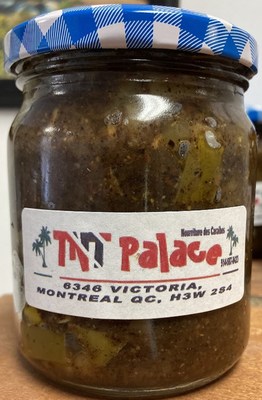
Quebec – Notice not to consume mixed mangoes, packaged in glass jars and sold by the company TNT Palace – Food Safety

Quebec

Mango mix (CNW Group/Ministry of Agriculture, Fisheries and Food)

The Ministry of Agriculture, Fisheries and Food (MAPAQ), in collaboration with the Food Inspection Division of the City of Montreal and the company TNT Palace, located at 6346 Victoria Avenue , Montreal, is warning the public not to consume the product listed in the table below because it has not been packaged in a way to ensure its safety.

Product name     

Format  

Affected batch

 Mix of mangoes      

Unity  

Units sold until
June 9, 2022

The product that is the subject of this warning was offered for sale until June 9, 2022 at the establishment named above. The product was packaged in glass jars with blue and white lids and sold at room temperature. The product label bears the words ‘TNT Palace’ and ‘Caribbean Food’.

The operator is voluntarily recalling the product in question. It has agreed with MAPAQ and the Food Inspection Division of the City of Montreal to distribute this warning as a precautionary measure. In addition, people who have this product in their possession are advised not to consume it. They must return it to the establishment where they bought it or throw it away. Even if the affected product shows no signs of tampering or suspicious odors, its consumption may represent a health risk. It should be noted that no case of illness associated with the consumption of this food has been reported to MAPAQ to date.

Research – Cronobacter Infection and Infants

CDC

Getting sick from Cronobacter does not happen often, but infections in infants can be deadly. Cronobacter infections in infants less than 12 months old are often linked to powdered infant formula. If your baby is fed with powdered infant formula, you can take steps to protect your baby from sickness.

Cronobacter sakazakii is a germ found naturally in the environment.

These germs can live in dry foods, such as:

  • Powdered infant formula
  • Powdered milk
  • Herbal teas
  • Starches

Rare but Serious Illness in Infants

Cronobacter infections are rare, but they can be deadly in newborns. Infections in infants usually occur in the first days or weeks of life. About two to four cases are reported to CDC every year, but this figure may not reflect the true number of illnesses. That’s because most hospitals and laboratories are not required to report Cronobacter infections to health departments.

Cronobacter germs can cause a dangerous blood infection (sepsis). They can also make the linings surrounding the brain and spinal cord swell (meningitis).

Infants who are more likely to get sick include:

  • Infants 2 months and younger. These infants are most likely to develop meningitis if they get sick from Cronobacter.
  • Infants born prematurely.
  • Infants with weakened immune systems. Babies with this condition can’t fight germs as well because of illness or medical treatment, such as chemotherapy for cancer.

Cronobacter illness in infants will usually start with a fever and poor feeding, excessive crying, or very low energy.  Some infants may also have seizures. You should take an infant with these symptoms to a medical provider as soon as possible.

Cronobacter infection can also be serious for:

  • People 65 years and older.
  • People who have immune systems weakened due to illnesses or conditions, such as HIV, organ transplants, or cancer.
Powdered formula is not sterile and might have germs in it.

Powdered infant formula can be contaminated in homes or in processing facilities that make it.

In the home:

You can accidentally get Cronobacter in powdered formula after you open the container. Cronobacter can live on surfaces in your home, such as a kitchen counter or sinks, and in water. Cronobacter could get into powdered formula if you place formula lids or scoops on contaminated surfaces and later touch the formula. It can also get into formula if you mix the formula with contaminated water or in a contaminated bottle.

In a processing facility:

Cronobacter can also get into powdered infant formula in a processing facility in these ways:

  • If the manufacturer uses contaminated ingredients to make the formula.
  • If the formula powder touches a contaminated surface.

Research – France and UK most affected in Ferrero Salmonella outbreak; one case in U.S.

Food Safety News

France and the United Kingdom have the most patients in the Ferrero chocolate Salmonella outbreak that has sickened almost 450 people.

The UK has 122 monophasic Salmonella Typhimurium patients.

Santé publique France reported that as of June 2, there were 118 sick people in the country. This is up from the 81 cases reported on May 4.

French patients have a median age of 4 years old and includes 57 girls and 61 boys. Onset of symptoms occurred between Jan. 20 and April 4, 2022.

Twenty-two people were hospitalized because of salmonellosis but they have since been discharged and no deaths were reported.

Fifty-one cases have been interviewed by Santé publique France and all of them, except one, reported consumption of Kinder chocolates.

Nicolas Neykov, the head of Ferrero France, told the newspaper Le Parisien in May that more than 3,000 tons of Kinder products have been withdrawn and the incident will cost the company “tens of millions of Euros.”

Research – Salmonella Newport Outbreaks Associated with Ground Beef Outbreak Investigation After-Action Report, 2016-2019

FSIS USDA

Outbreaks at a Glance
Illnesses 542 States included 36 Hospitalizations 163 Deaths 1
Response at a Glance
Ill people with 40 documentation to identify foods
Recall or Public Health Alert Yes Process improvement – Yes
•This Salmonella Newport strain associated with ground beef has been characterized as a reoccurring strain because it has caused repeated outbreaks of human illnesses with similar epidemiologic characteristics. Every month, FSIS monitors selected Salmonella serotypes, including Newport, for directional changes and trends, and compares them to a 3-year historical average for that particular serotype.

Highlights

•A strain of Salmonella Newport caused reoccurring human infections and two outbreaks associated with ground beef.

•There were over 100 illnesses for each outbreak (106 in outbreak 1 and 436 in outbreak 2), which is unusual for ground beef outbreaks.

•The investigations prompted a government-industry collaboration on innovative methods of obtaining shopper history. Shopper history best practices and success stories are highlighted in an article on the Association of Food and Drug Officials webpage.

What Happened?

From 2016 to 2019, in collaboration with public health partners, the Food Safety and Inspection Service (FSIS) investigated two Salmonella Newport outbreaks:

•The majority of reported ill people lived in the Southwestern area of the United States.

•The analyzed isolates did not show any predicted antimicrobial resistance.

•At least 80% of the ill people had eaten ground beef in the week before illness. At least one ground beef sample tested positive for Salmonella Newport and was closely related by whole genome sequencing (WGS) to clinical isolates.

•Ill people reported eating or possibly eating undercooked ground beef.

UK -New UK Food Safety Network to tackle £9 billion food poisoning challenge

FSA

Food poisoning is a major health challenge that costs the UK up to £9 billion each year. To help tackle the problem, the Food Standards Agency (FSA) and Biotechnology and Biological Sciences Research Council (BBSRC) have invested £1.6m into a new Food Safety Network, hosted by the Quadram Institute.

  • in the UK, estimates indicate there are 2.4 million cases of foodborne illness a year
  • the estimated annual cost from these illnesses is £9 billion (with £6 billion from unknown causes)
  • research shows that the cause of illness is often a microbial pathogen carried over into food from the environment, or from livestock, or even from people
  • the microbes which cause the greatest economic impact are Campylobacter and Salmonella
  • listeria-related food poisoning is rare, but has a mortality rate of nearly 13 per cent
  • microbes also play a key role in food waste, with Pseudomonas accounting for 25 per cent of food spoilage

FSA Chief Scientific Adviser Professor Robin May, said:

‘We are excited to partner with BBSRC and Quadram Institute for the creation of the UK Food Safety Network. Foodborne disease is a major cause of illness in the UK population and imposes a significant burden on both infected individuals and the economy. The network directly aligns with the core objectives of the FSA Strategy 2022-2027 to ensure food is safe and food is what it says it is. Importantly, the network will ensure that the FSA is well-placed to tackle the challenges of foodborne illnesses by bringing together experts from government, industry and academia to address current and emerging issues of food safety in the UK.’

Quadram Institute group leader and lead for the new network, Dr Matt Gilmour, said:

BBSRC Executive Chair, Professor Melanie Welham said:

Scientists at the Quadram Institute already use advanced genomic sequencing approaches and genomic epidemiology, which has significantly enhanced the UK’s ability to monitor and respond to microbial threats in the food system (also demonstrated by the Quadram team in its work on the SARS-CoV-2 pandemic).

The UK Food Safety Network will connect food industry, food and health policymakers and academia to collaboratively pursue shared research priorities that will protect the UK from foodborne hazards. The Network will serve as an innovation hub to coordinate and fund cross-sectoral research and training activities that address current and emerging challenges.

The Network’s objectives are to:

  • assemble a community of UK food producers, food policy makers and scientific researchers who collectively can take robust actions toward improving food safety
  • identify areas of research need and opportunity that, in the view of food stakeholders and network members, will have meaningful impacts on UK food safety
  • coordinate new collaborative research activities that will promote the application of science towards the food safety challenges identified by our food system community
  • host training promoting skills development, interoperability and relationship-building between our food system community
  • translate the knowledge generated within the Network to food safety stakeholders, and to upcycle existing information and technologies relevant to food safety that have not yet been applied more broadly

Quadram Institute Director, Professor Ian Charles, said:

‘The safety of our food is threatened by both enduring and emerging threats from microbes that contaminate our food. This threat is exemplified by microbes that spread between the environment, animals and humans – with foodborne exposures being a means for the transmission of pathogens and novel antimicrobial resistance genes from agriculture.

‘The challenge is to take an integrated and unified approach to these problems right through from agriculture and the environment, to food production and human health, in what’s termed a ‘One Health’ approach. To do that we need to collaborate with food and other associated industries to share research and innovation and deliver training activities.’

Germany – Alburj – Tahini Sesame Mush 400 g & 800 g Alburj – Tahini Sesame Juice 400 g & 800 g – Salmonella

LMW

Alert type: Food
Date of first publication: 06/03/2022
Product name:

Alburj – Tahini Sesame Mush 400 g & 800 g Alburj – Tahini Sesame Juice 400 g & 800 g

Product images:

Tahina.jpg

customer information

Manufacturer (distributor):

Distributor: Kosebate GmbH Manufacturer: Alburj, Syria

Reason for warning: Based on official test results with positive salmonella findings. Salmonella was detected in the enrichment procedure in 25 g of the sample.
Packaging Unit: 400g and 800g
Durability:

different MHDs

Production date: Date of manufacture from: 01/2021 to: 03/06/2022
Further information:

Recall:
Health hazard from salmonella in the products
Alburj – Tahini Sesame Mush 400g & 800g
Alburj – Tahini Sesame Juice 400g & 800g
For reasons of preventive consumer protection, Kosebate GmbH is recalling the above-mentioned product with a manufacturing date from: 01.2021 to: 03.06.2022.
Therefore we are recalling all goods from 2021 to 06/03/2022.
Reason:
Based on official test results with positive salmonella findings.
Salmonella was detected in 25g of the sample in the enrichment process. Salmonella can cause a dangerous diarrheal disease.
Kosebate GmbH regrets the incident and apologizes to all customers for the inconvenience caused.
Sinzheim, June 3, 2022

Contact to the competent authorities:

Baden-Württemberg:

poststelle@mlr.bwl.de

USA – CDC – Food Safety Materials

CDC

CDC offers many free educational resources about preventing food poisoning. Read feature stories to learn more, share infographics and videos on social media, and syndicate our web pages on your site to help educate others.

Research – Integration of genomics in surveillance and risk assessment for outbreak investigation

EFSA

Keeping food safe is a challenge that needs continuous surveillance for the sake of consumers’ health. The main issue when a food‐borne pathogen outbreak occurs is represented by the identification of the source(s) of contamination. Delivering this information in a timely manner helps to control the problem, with positive outcomes for everyone, especially for the consumers, whose health is in this way preserved, and for the stakeholders involved in food production and distribution, who could face enormous economic losses if recalls or legal issues occur. Whole genome sequencing (WGS) is a tool recently implemented for the characterisation of isolates and the study of outbreaks because of its higher efficiency and faster results, when compared to traditional typing methods. Lower sequencing costs and the development of many bioinformatic tools helped its spread, and much more attention has been given to its use for outbreak investigation. It is important to reach a certain level of standardisation, though, for ensuring result reproducibility and interoperability. Moreover, nowadays it is possible, if not mandatory for Open Science Practices, to share WGS data in publicly available databases, where raw reads, assembled genomes and their corresponding metadata can be easily found and downloaded. The scope of this Fellowship was to provide the Fellow all the training necessary for successfully integrating genomics to surveillance and risk assessment of food‐borne pathogens from farm to fork.