Category Archives: food safety training

France – REBLOCHON 450G – STEC E.coli

Gov France

Product Category
Food
Product subcategory
Milk and dairy products
Product brand name
GOURMET COUNTRY®
Model names or references
REBLOCHON 450G
Product identification
GTIN Batch Date
26065144 KU4225B Minimum durability date 05/12/2024
Start/End of marketing date
From 09/30/2024 to 11/13/2024
Storage temperature
Product to be kept in the refrigerator
Health mark
FR 74.303.050 CE
Geographic area of ​​sale
Regions: Auvergne-Rhône-Alpes, , , , , Grand-Est
Distributors
ALDI

Research – Popular air fryers could be a food safety risk if you don’t ‘Look before you cook’ Australian Food Safety Week 9-16 November 2024

Food Safety Information Council

This Australian Food Safety Week 9 to 16 November, the Food Safety Information Council is advising consumers that air fryers could be a food safety risk if they don’t follow cooking instructions.

Lydia Buchtmann, the Council’s CEO, said that air fryers are becoming very popular with our recent research shows 2 in 3 Australians surveyed have an air fryer in their household, with 54% of those using it weekly and 38% several times a week.

‘Air fryers are convenient and easy to use, but there have been individual foodborne disease cases around the country linked to air fryers, especially when cooking crumbed products that may look cooked on the outside but aren’t fully cooked on the inside.

USA – Product Standards and the Salmonella Framework for Raw Poultry Products

FSIS USDA

FSIS is hosting two virtual public meetings to give stakeholders an opportunity to present their views on the Salmonella Framework for Raw Poultry Products proposed rule and proposed determination. This first meeting will focus on the proposed final product standards under Component Three of the proposed Framework.

FSIS is holding these public meetings to solicit stakeholder views on the proposed Salmonella Framework and to facilitate dialogue among stakeholders.

Attendees must pre-register to attend the meetings. The meetings will hosted on Microsoft Teams. The link to join will be provided by email after you register to attend.

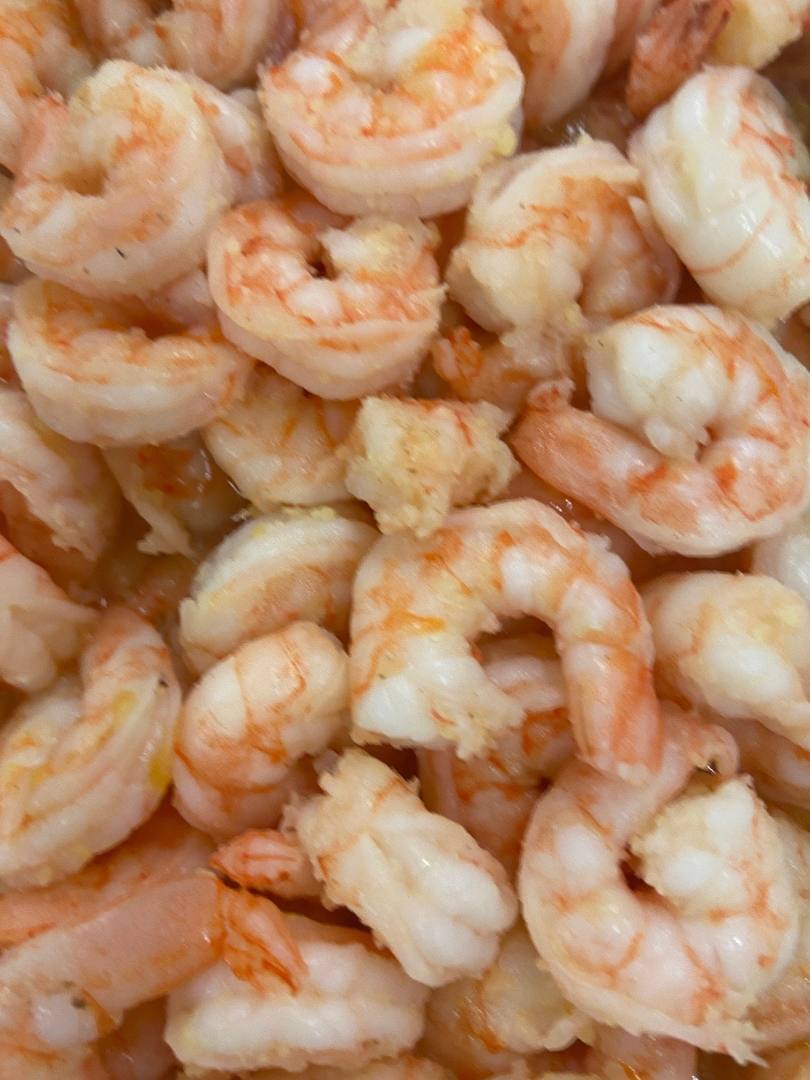
France – Creole shrimp – Listeria monocytogenes

Gov France

Product Category
Food
Product subcategory
Fishery and aquaculture products
Product brand name
Creole flavors
Model names or references
2 kg tray of cooked Creole shrimp, batch 24.292. Best before date: 8/11/2024.
Product identification
GTIN Batch Date
1605290099 24,292 Expiry date 08/11/2024
Packaging
Product sold in Creole events in stores, original packaging in 2 kg trays “packaged in a protective atmosphere”.
Start/End of marketing date
From 10/18/2024 to 10/31/2024
Storage temperature
Product to be kept in the refrigerator
Health mark
Oval mark: FR 80 561 009 CE
Geographic area of ​​sale
Whole France
Distributors
Auchan, Leclerc, Intermarché and “au fil du goût”.

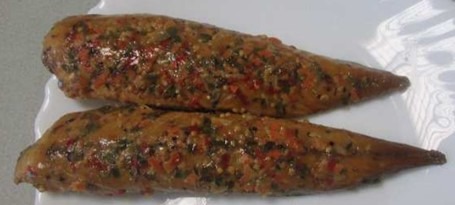
France- SMOKED PROVENCAL-STYLE MACKEREL FILLET – Listeria monocytogenes

Gov France

Product Category
Food
Product subcategory
Fishery and aquaculture products
Product brand name
UNBRANDED
Model names or references
SMOKED PROVENCAL-STYLE MACKEREL FILLET
Product identification
GTIN Date
205684000005 Expiry date between 08/10/2024 and 23/10/2024
Start/End of marketing date
From 09/30/2024 to 10/21/2024
Storage temperature
Product to be kept in the refrigerator
Health mark
FR49 035 001 CE
Geographic area of ​​sale
Super U CIVRAY, Super U MUZILLAC, Hyper U ST AVE, Super U VERTOU, Super U LA TURBALLE, Super U BELZ, Super U TINTENIAC, Super U SANDILLON, Super U MONT ST AIGNAN, Super U LA MADELEINE, Hyper U SAINTES, Hyper U DOUVRES LA DELIVRANDE
Distributors
COOPERATIVE U

Research – Best Practices for Handling Raw Flour: Raw Flour has been Linked to Salmonella and E. coli Outbreaks

Food Poisoning News

A common ingredient found in most kitchens, raw flour is a key ingredient in many delicious recipes. However, that uncooked flour can harbor harmful bacteria such as Escherichia coli (E. coli) and Salmonella, posing significant health risks to consumers.

Contrary to popular belief, most flour is typically a raw agricultural product that has not undergone treatment to eliminate pathogens. The milling process, including grinding and bleaching, does not kill these harmful microorganisms, which can taint grain in the field or during flour production.

Multiple outbreaks linked to raw flour or cake mix have made national news in recent years, including incidents in 2016, 2019, 2021, and 2023. Some of these investigations resulted in product recalls, such as the 2019 recall over E. coli-contaminated raw flour from Pillsbury, King Arthur, and Aldi, highlighting the ongoing potential danger of consuming this food.

According to one food safety expert, “Consumers should be aware that flour has a long shelf life, and products purchased even years ago could still pose a risk. We recommend checking for any recalled flour or baking mixes and discarding them immediately.”

Read more at the link above.

Hong Kong – Safe Food at School

CFS

Safe and nutritious food supports the growth and promotes the wellbeing of children. Therefore, ensuring food safety at schools and childcare facilities is particularly essential, as young children are more vulnerable to food poisoning (foodborne diseases). In busy places like schools and childcare centres, it is imperative that both food handlers and other staff are aware of the specific risks related to those settings. These include the mass preparation and distribution of meals, food allergens and choking hazards of food in young children. Maintaining high food hygiene and safety standards can help to prevent food hazards and contamination and therefore, subsequent illness. People who work with food should receive appropriate food safety training. By learning about potential hazards and practising proper hygiene, food handlers, teachers and caregivers at schools and childcare facilities can prevent foodborne diseases and even threats to life.

The Safe Food at School thematic website is intended to help schools and childcare facilities to coordinate all aspects of food safety to build a safe and healthy eating environment for students and young children. It provides information and training resources related to basic food safety requirements for schools and childcare facilities, as well as other important areas that should be addressed in order to have a comprehensive food safety programme.

Hong Kong – Five Keys to Food Safety

CFS

Preventing foodborne diseases (food poisoning) requires cooperation among all members of the food chain. Many cases of foodborne illness occur sporadically and are often caused by preventable behaviours such as consuming raw or undercooked foods and engaging in unsafe practices of food preparation. Domestic food handlers and caregivers have a critical role in reducing the risk of foodborne diseases and preventing infections with ‘superbugs’.

Five Keys to Food Safety

By adopting the Five Keys to Food Safety, most foodborne diseases can be prevented.

The Five Keys to Food Safety include:
1.     Choose: Choose safe raw materials
2.     Clean: Keep hands and utensils clean
3.     Separate: Separate raw and cooked food
4.     Cook: Cook thoroughly
5.     Safe temperature: Keep food at safe temperature

Research – Antibacterial Effects of Thermosonication Technology on Salmonella typhimurium Strains Identified from Swine Food Chain: An In Vitro Study

MDPI

Among innovative food technologies, ultrasounds have demonstrated physical damages (provided by frequency and intensity factors) on bacterial structures while determining the microbiological stabilization of many foodstuffs. This study tested the efficacy of the thermosonication process on 16 Salmonella typhimurium strains belonging to the academic biobank (isolated from swine slaughterhouses). All strains were exposed to focused ultrasounds, generated by the Waveco® system (Milan, Italy), with the following settings: 40 KHz coupled with 80 W at different 5 min intervals starting from 5 to 15 ones, and focusing on two different temperatures: 40 °C and 50 °C. After each treatment, all strains were directly plated onto count agars immediately (t0) and after 24 h (t24) of storage at refrigerated temperature. The results showed bacterial reductions by prolonging the sonication treatments until 15 min (i.e., 50 °C for 15 min reduced of 2.16 log CFU/gr the initial loads). In the present in vitro study, the most considerable decrease was observed after 24 h. It meant that Salmonella strains were lethally damaged at the wall level, confirming the ultrasound bactericidal effect on loads. The present in vitro scientific investigation demonstrates the practical bactericidal effects of thermosonication, highlighting promising applications at the industry level for food microbial stabilization and shelf-life prolongation.

CDC – Keep Food Safe After a Disaster or Emergency

CDC

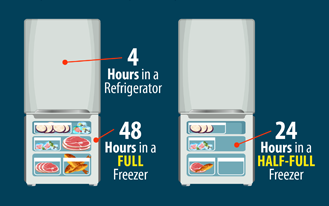
image of refrigerator and freezer with text saying "4 hours in a refrigerator" and text by freezer saying "48 hours in a full freezer and 24 hours in a half-full freezer."

Foods may be unsafe to eat after a disaster or emergency. To prevent foodborne illness, prepare for emergencies and take key steps during and after power outages, floods, and other emergencies.