Category Archives: Food Poisoning

USA – Campylobacter in Raw Milk Outbreak

Food Poisoning JournalimagesCAZ9J1WP

The Alaska Section of Epidemiology is investigating another outbreak of Campylobacter infection associated with the consumption of raw milk. This new outbreak is associated with raw milk distributed by the same Kenai Peninsula cow-share program that was linked to a Campylobacter outbreak sickened at least 31 people in February 2013.

In the current investigation, five cases of Campylobacter infection have been identified to date. Two of the five people sought medical attention. Testing by the Alaska State Public Health Laboratory identified the bacteria strain as Campylobacter jejuni. The exact same strain of C. jejuni was found in cow manure obtained earlier this year at the cow-share farm that distributed the raw milk. “The genetic fingerprint of the bacteria isolated from these two people and the cow is unique. It has never been seen before in the United States,” said Dr. Joe McLaughlin, State Epidemiologist. “These outbreaks are an unfortunate reminder of the inherent risks associated with raw milk consumption, and underscore the importance of pasteurization.”
Research – Retrospective Analysis of Salmonella, Campylobacter, Escherichia coli, and Enterococcus in Animal Feed Ingredients

Liebert Online

The presence and antimicrobial susceptibility of foodborne pathogens and indicator organisms in animal feed are not well understood. In this study, a total of 201 feed ingredient samples (animal byproducts, n=122; plant byproducts, n=79) were collected in 2002 and 2003 from representative rendering plants and the oilseed (or cereal grain) industry across the United States. The occurrence and antimicrobial susceptibility of four bacterial genera (Salmonella, Campylobacter, Escherichia coli, and Enterococcus) were determined. Salmonella isolates were further characterized by serotyping and pulsed-field gel electrophoresis (PFGE). None of the samples yielded Campylobacter or E. coli O157:H7, whereas Salmonella, generic E. coli, and Enterococcus were present in 22.9%, 39.3%, and 86.6% of samples, respectively. A large percentage (47.8%) of Salmonella-positive samples harbored two serovars, and the vast majority (88.4%) of Enterococcus isolates were E. faecium. Animal byproducts had a significantly higher Salmonella contamination rate (34.4%) than plant byproducts (5.1%) (p<0.05). Among 74 Salmonella isolates recovered, 27 serovars and 55 PFGE patterns were identified; all were pan-susceptible to 17 antimicrobials tested. E. coli isolates (n=131) demonstrated similar susceptibility to these antimicrobials except for tetracycline (15.3% resistance), sulfamethoxazole (7.6%), streptomycin (4.6%), ampicillin (3.8%), and nalidixic acid (1.5%). Enterococcus isolates (n=362) were also resistant to five of 17 antimicrobials tested, ranging from 1.1% to penicillin to 14.6% to tetracycline. Resistance rates were generally higher among isolates recovered from animal byproducts. Taken together, our findings suggest that diverse populations of Salmonella, E. coli, and Enterococcus are commonly present in animal feed ingredients, but antimicrobial resistance is not common. Future large-scale studies to monitor these pathogenic and indicator organisms in feed commodities is warranted.

Malaysia – Pupils Ill from Free Milk

Borneo PostimagesCAZ9J1WP

MELAKA: Eighteen pupils of a school in Telok Mas here were rushed to a health  clinic for suspected food poisoning after having consumed milk provided free  under a school milk programme.

The pupils, from standards one and three of Sekolah Kebangsaan Bukit Lintang,  complained of stomachache and vomitted after taking the milk at about 9 am and  were taken to the Umbai Health Clinic.


RASFF Alerts – Aflatoxin – Listeria monocytogenes – Peanuts – Smoked Trout

RASFF – Aflatoxins (B1 = 9.22; Tot. = 12.54 µg/kg – ppb) in blanched peanuts kernels from China in Romania

RASFF – Listeria monocytogenes (<10 CFU/g) in chilled smoked trout from Spain in France

RASSF Alerts – Salmonella Beef – Pork Sausage – Chicken – Cotton Seeds – Soyabean Meal -Feed

RASFF – Salmonella infantis (presence /25g) in beef trimmings from Poland, via Germany in Sweden

RASSF – Salmonella (presence /25g) in dry pork sausage from France

RASSF – Salmonella spp. (present /25g) in frozen chicken (Gallus domesticus) from Brazil in the Netherlands

RASSF – Salmonella spp. (present in 3 out of 5 samples /25g) in cotton seeds from Ghana in Italy

RASSF – Salmonella Derby (presence /25g) in soybean meal from India, via Italy in Austria

RASFF – Salmonella Livingstone (presence /25g) in supplementary feed for dogs and cats from Germany

RASFF – Salmonella (present /25g) in soybean meal from Argentina in Poland

USA – USDA Expanded Recall – Listeria monocytogenes

USDA

Manda Packing Company, a Baker, La., establishment, is expanding its recall to
include approximately 468,000 pounds of roast beef, ham, turkey breast, tasso
pork, ham shanks, hog head cheese, corned beef, and pastrami due to possible
contamination with Listeria monocytogenes, the U.S. Department of
Agriculture’s Food Safety and Inspection Service (FSIS) announced today.

China – 548 Students Food Poisoned

Global Times

A total of 548 students from multiple elementary and high schools have been affected by food poisoning in Northwest China’s Qinghai Province, local authorities said Wednesday.

Dozens of students from three schools in the Hui and Tu Autonomous County of Datong started to show symptoms of food poisoning such as vomiting and diarrhea after eating lunch at their schools on Wednesday.

The source that caused the mass food poisoning has been discovered, Wang Yubo, mayor of Xining, the provincial capital, said.

Local authorities added that the remaining lunch has been sealed for tests.

An investigation into the cause of the accident is under way.

Research – Campylobacter in Chicken Embryo’s

Poultry SiteEGGS

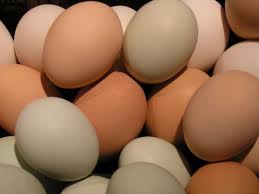
US – Evidence of Campylobacter has been found in all the seven-day-old chick embryos tested by researchers with the USDA Agricultural Research Service (ARS).

Campylobacter, a foodborne pathogen closely associated with poultry, is recognised as a leading bacterial aetiological agent of human gastroenteritis in the United States.

In a paper published in Poultry Science, Kelli Hiett and colleagues at USDA ARS Richard B. Russell Research Center in Athens, Georgia, report two trials in which tissues from seven-, 14/15- and 19-day-old commercial broiler chicken embryos were tested for the presence of Campylobacter using both culturing methodology and PCR.

Conventional culturing methods failed to detect Campylobacter from any samples tested during this investigation.

Canada – Hazlenuts Recall – Salmonella

CFIAEurofins

The public warning issued on May 16, 2013  has been updated to include additional product and distribution information.

The Canadian Food Inspection  Agency (CFIA) is warning the public not to consume certain in shell hazelnuts or  mixed nuts in shell described below because the  products may be contaminated with Salmonella.#

There have been no reported  illnesses associated with the consumption of these products.

These recalls are part of an  on-going food safety investigation associated with a recall of bulk hazelnuts  from USA. The CFIA is working with the recalling firms and distributors to  identify all affected products.

Research – Natural Gut Flora Protection Against E.coli O157

Science Daily

A cocktail of non-pathogenic bacteria naturally occurring in the digestive tract of healthy humans can protect against a potentially lethal E. coli infection in animal models according to research presented today at the 113th General Meeting of the American Society for Microbiology. The research, conducted by scientists at the University of Michigan Medical School in Ann Arbor, could have important implications for the prevention or even treatment of this disease.