Category Archives: Food Poisoning

USA – FDA Investigating Multistate Outbreak of E. coli O157:H7 Infections Likely Linked to Chopped Romaine from Yuma Growing Region

FDA

Fast Facts

  • The FDA is investigating a multistate outbreak of E. coli O157:H7 illnesses likely linked to chopped romaine lettuce sourced from the winter growing areas in Yuma, Arizona.
  • The CDC reports that 35 people in 11 states have become ill. These people reported becoming ill in the time period of March 22, 2018 to March 31, 2018. Twenty-six (93%) of 28 people interviewed reported consuming romaine lettuce in the week before their illness started. Most people reported eating a salad at a restaurant, and romaine lettuce was the only common ingredient identified among the salads eaten. The restaurants reported using bagged, chopped romaine lettuce to make salads. At this time, ill people are not reporting whole heads or hearts of romaine.
  • Preliminary information collected by FDA, in conjunction with federal, state, and local partners, indicates that the chopped romaine lettuce that ill people ate was likely grown or originated from the winter growing areas in Yuma, Arizona. No specific grower, supplier, distributor, or brand has been identified at this time.
  • The FDA recommends that consumers ask restaurants and other food service establishments where their romaine lettuce originated, and avoid chopped romaine lettuce that originated from Yuma, Arizona. If you cannot confirm the source of the romaine lettuce, do not buy it or eat it. If you have already purchased products containing chopped romaine lettuce, including bagged salads, salad mixes, or prepared salads, throw them away.
  • The FDA is continuing to investigate this outbreak and will share more information as it becomes available.
  • Consumers who have symptoms of STEC infection should contact their health care provider to report their symptoms and receive care. Although many infections resolve in 5-7 days, they can result in serious illness, including a potentially serious condition called hemolytic uremic syndrome.
  • The current outbreak is not related to a recent multistate outbreak of E. coli O157:H7 infections from November to December 2017 linked to leafy greens consumption. People in the previous outbreak were infected with a different DNA fingerprint of E. coli O157:H7 bacteria.

France- Morbier and Mont d’Or cheese behind 10 deaths in France – 2015-2016 – Salmonella

Ten people died and another 80 fell ill in France after eating contaminated Morbier and Mont d’Or cheese in a salmonella outbreak that health authorities knew about, a new report has revealed.

An investigation by France Inter radio said the two cheeses made in the Franche-Comté region in the east of the country from unpasteurised milk were at the root of the outbreak in late 2015 and early 2016.

The investigation produced a document which showed that in January 2016 national health authorities had discovered an unusually high number of salmonella contaminations in France that was centred on Franche-Comté.

Five cheese making companies in the region, between them making 60 different brands, were later identified as being at the source of the contaminations that began in November 2015 and continued until April the following year.

Those who died in the outbreak were old people who were physically weak or who suffered from another illness.

USA – Fresh Foods Manufacturing Co. Recalls Ready-To-Eat Salad Products Due to Possible E. coli O157:H7 Contamination

FSIS USDA USDA

WASHINGTON, April 14, 2018 – Fresh Foods Manufacturing Co., a Freedom, Pa., establishment, is voluntarily recalling approximately 8,757 pounds of ready-to-eat salad products that may be contaminated with E. coli O157:H7, the U.S. Department of Agriculture’s Food Safety and Inspection Service (FSIS) announced today.

The ready-to-eat salad products were produced from April 9, 2018 to April 12, 2018 and have a shelf life of four days. The following products are subject to recall: [View Labels (PDF Only)]

  • 11.5 oz., clear plastic containers of ready-to-eat “CAESAR SALAD WITH CHICKEN.”  The product label is marked “Great to Go” by Market District and has a sell by date of 04/13/18-04/16/18.  The case code is 81571201542.
  • 14.4 oz., clear plastic containers of ready-to-eat “CHICKEN AND BACON” salad.  The product label is marked “Great to Go” by Market District and has a sell by date of 04/13/18 – 04/16/18.  The case code is 81571201541.
  • 14.1 oz., clear plastic containers of ready-to-eat “CHEF SALAD WITH HAM, TURKEY, & HARD-BOILED EGG.”  The product label is marked “Great to Go” by Market District and has a sell by date of 04/13/18 – 04/16/18.  The case code is 81571201543.
  • 13.1 oz., clear plastic containers of ready-to-eat “CHEF SALAD WITH HAM, TURKEY, & HARD-BOILED EGG.” The product label is marked “Great to Go” by Market District and has a sell by date of 04/13/18 – 04/16/18.  The case code is 81571201545.

The products subject to recall bear establishment number “P-40211” inside the USDA mark of inspection. These items were shipped to retail locations in Indiana, Ohio, Pennsylvania, and West Virginia.

The problem was discovered on April 13, 2018 when Fresh Foods Manufacturing Co., received notification from their romaine lettuce supplier that the romaine lettuce used by the establishment in the products was being recalled due to E. coli O157:H7 concerns. There have been no confirmed reports of adverse reactions due to consumption of these products.

RASFF Alert – Foodborne Uutbreak Scombroid Syndrome – Histamine- Frozen Sailfish

kswfoodworld food safety poisoning

RASFF-foodborne outbreak suspected (scombroid syndrome) to be caused by frozen salifish (Istiophorus albicans) from Spain in Italy.

Scombroid poisoning is a disease due to the ingestion of contaminated food (mainly fish). In scombroid poisoning, bacteria have grown during improper storage of the dark meat of the fish and the bacteria produce scombroid toxin. Scombroid toxin, or poison, is probably a combination of histamine and histamine-like chemicals. The toxin or poison does not affect everyone who ingests it.

No test is 100% reliable for assessing fish for this toxin or poison. Cooking kills the bacteria, but toxins remain in the tissues and can be absorbed after the food is ingested.

Susceptible fish include albacore, amberjack, anchovy, Australian salmon, bluefish, bonito, kahawai, herring, mackerel, mahi-mahi, needlefish, saury, sardine, skipjack, wahoo, and yellowfin tuna. Other fish and foods probably will be added to the list if testing systems for the poison improve. Affected fish may have a metallic or peppery taste.

RASFF Alert – Ochratoxin A – Breakfast Cereals

kswfoodworld food safety poisoning

RASFF-ochratoxin A (7.5 µg/kg – ppb) in breakfast cereals from Belgium in Belgium

India – Engineering students succumb to food poisoning

Udaipur Times

An incident of food poisoning occurred in the mess of Aravali Institute of Technical Studies. Affected students were rushed to various hospitals on early Monday morning.

As per students of Aravali Institute, many of them felt severe pain, nausea and upset stomach as early as 3:30 a.m. on Monday 9th April. By 5 a.m. 300 out of 400 students hailing from various states gathered in college campus. 105 students reportedly faced the symptoms mentioned above. 40 students were admitted to different hospitals, though college administration has mentioned the affected number as 25.

Students were rushed to Pacific Medical College and Hospital-Umarda, Geetanjali Medical College and Hospital, Hiranmagri Satellite Hospital and Kanak Hospital. Hiranmagri police has started investigations.

As per reports, students got extremely agitated over the issue of poor quality of food. To this, SI Yashwant Singh said that a student committee would be formed for the mess and food will be cooked as required by students. Food samples have been sent to the lab for investigation.

Thailand – 600 Student Campers Poisoned by Krapao Gai

Khaoso

BANGKOK — Nearly two dozen students were hospitalized for severe food poisoning Tuesday after hundreds were sickened by meals served at a high school camp.

More than 600 high school students woke to nausea and diarrhea this morning at Satriwithaya School, where they had all dined on krapao gai the night before.

“Maybe the cafeteria stalls didn’t have the aptitude to prepare meals for a large number of people,” said Apeem Phupitak, a spokesman for the foundation which organized the event. “Maybe some food wasn’t cooked thoroughly, or it was stored at the wrong temperature.”

The food poisoning is being blamed on possibly undercooked chicken the students ate Monday night. Twenty-two students were taken to hospitals; four remained in hospital care as late Tuesday afternoon.


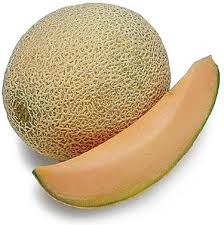
Australia – WHO Listeriosis Rockmelon (Cantaloupe Melon)

WHO catalopue

On 2 March 2018, the Australian National Focal Point (NFP) notified WHO of an outbreak of Listeria monocytogenes infection (listeriosis) associated with the consumption of rockmelons (cantaloupe) from a single grower.

From 17 January 2018 through to 6 April 2018, 20 outbreak cases (19 confirmed and 1 probable) of listeriosis were reported. All of the cases were hospitalized and there have been seven deaths and one miscarriage associated with the outbreak. All of the outbreak cases have had illness onset since 17 January 2018.

Epidemiological investigations suggested that the source of the outbreak was rockmelon (cantaloupe melons) from a single grower in Australia. Epidemiological and environmental investigations were undertaken, which led to the recall of rockmelons produced by the single grower on 27 February 2018.

On 1 March 2018, the Australian NFP was notified that international distribution of the affected product had occurred. Australian authorities received information from trace forward investigations on 2 March 2018 that the rockmelons from this grower were exported to eight countries; Hong Kong Special Administrative Region (China), Japan, Kuwait, Malaysia, Oman, Qatar, Singapore, and United Arab Emirates. The Australian NFP directly advised these countries on 3 March 2018 about the export of rockmelons from Australia to their country. In parallel, a notification via the International Food Safety Authorities Network (INFOSAN) was also sent on 3 March 2018.

Further trace forward investigations on 7 March 2018 identified that Bahrain also received an export of the rockmelons from this grower and on 8 March 2018, investigations further identified that the affected rockmelons may have been included in a consignment to the Seychelles. The Australian NFP advised the Bahrain NFP directly on 8 March 2018 and the Seychelles NFP directly on 9 March 2018. As of 8 March, trace forward activities have been concluded.

The INFOSAN emergency contact points in the importing countries were provided with specific distribution details of the rockmelons to their respective countries by the INFOSAN emergency contact point in Australia, as they became available.


USA – Investigation Notice: Multistate Outbreak of E. coli O157:H7 Infections

CDC 


CDC, several states, the U.S. Food and Drug Administration, and the U.S. Department of Agriculture’s Food Safety and Inspection Service are investigating a multistate outbreak of Shiga toxin-producing E. coli O157:H7 infections. This investigation includes E. coli O157:H7 infections recently reported by the New Jersey Department of Health.

Public health investigators are using the PulseNet(https://www.cdc.gov/pulsenet/index.html) system to identify illnesses that may be part of this outbreak. PulseNet is the national subtyping network of public health and food regulatory agency laboratories coordinated by CDC. DNA fingerprinting is performed on E. coli bacteria isolated from ill people using techniques called pulsed-field gel electrophoresis(https://www.cdc.gov/pulsenet/pathogens/pfge.html) (PFGE) and whole genome sequencing(https://www.cdc.gov/ncezid/dfwed/keyprograms/tracking-foodborne-illness-wgs.html) (WGS). CDC PulseNet manages a national database of these DNA fingerprints to identify possible outbreaks. WGS gives a more detailed DNA fingerprint than PFGE.

Illnesses reported by investigators in New Jersey also included ill people who had a diagnostic test(https://www.cdc.gov/foodsafety/challenges/cidt.html) showing they were infected with E. coli bacteria. Laboratory testing is ongoing to link their illnesses to the outbreak using DNA fingerprinting. Some people may not be included in CDC’s case count because no bacterial isolates are available for the DNA fingerprinting needed to link them to the outbreak.

As of April 9, 2018, 17 people infected with the outbreak strain of E. coli O157:H7 have been reported from 7 states. A list of the states and the number of cases in each can be found on the Case Count Map page(https://www.cdc.gov/ecoli/2018/o157h7-04-18/map.html). Illnesses started on dates ranging from March 22, 2018 to March 31, 2018(https://www.cdc.gov/ecoli/2018/o157h7-04-18/epi.html). Ill people range in age from 12 to 84 years, with a median age of 41. Among ill people, 65% are female. Six ill people have been hospitalized, including one person who developed hemolytic uremic syndrome, a type of kidney failure. No deaths have been reported.

The investigation is still ongoing and a specific food item, grocery store, or restaurant chain has not been identified as the source of infections.  State and local public health officials are interviewing ill people to determine what they ate and other exposures in the week before their illness started.

CDC will provide more information as it becomes available.

South Africa – NICD – now 999 with Listeria and 191 Dead

Food Poisoning Journal

As of 03 April 2018, a total of 999 laboratory-confirmed listeriosis cases has been reported to NICD since 01 January 2017 (Figure 1). Where age was reported (n=973), ages range from birth to 93 years (median 18 years) and 42% (412/973) are neonates aged ≤28 days (Figure 2). Of neonatal cases, 96%(396/412) had early-onset disease (birth to ≤6 days). Females account for 56% (542/967) of cases where gender is reported. Most cases have been reported from Gauteng Province (59%, 586/999) followed by Western Cape (12%, 123/999) and KwaZulu-Natal (7%, 72/999) provinces (Figure 3). Cases have been diagnosed in both public (64%, 644/999) and private (36%, 355/999) healthcare sectors.Listeria monocytogenes was most commonly isolated/detected on blood culture (72%, 723/999), followed by CSF (21%, 211/999). Final outcome data is available for 69% (689/999) of cases, of which 28% (191/689) died.