Category Archives: Food Pathogen

Spain – Presence of salmonella in organic food supplements from Germany with raw material from Sri Lanka

asca

The German health authorities have communicated through the European Commission the withdrawal from the market of a food supplement due to the presence of Salmonella spp.

The product involved is:

  • Product name (on the label): Organic Moringa
  • Trademark: VEGAVERO
  • Appearance, weight and packaging: 270 capsules.
  • Batch number and best before date: 44494-1761 (28.02.2024); 44459-1701 (01.31.2024) and 44494-1762 (02.28.2024) .
  • Storage temperature: room.

– The product is marketed online through the Amazon platform and the company’s own website https://www.vegavero.com/ .

This product has been alerted in the Coordinated System for the Rapid Exchange of Information (SCIRI) and the withdrawal from the corresponding market will be supervised by the competent authorities.

With the available information , there is NO record in Spain of any notified case associated with this alert.

Research – Investigation of an international outbreak of multidrug-resistant monophasic Salmonella Typhimurium associated with chocolate products, EU/EEA and United Kingdom, February to April 2022

Eurosurveillance

In February 2022, a small five-single nucleotide polymorphism (SNP) single linkage cluster of eight cases of infection with monophasic  subsp.  serotype Typhimurium (1,4,5,12:i:-) eBG 1, sequence type (ST) 34 was identified in the United Kingdom (UK). The cluster was unusual, with all but one reported case younger than 10 years, and the strain demonstrated genotypic markers of an unusual antimicrobial resistance pattern not commonly seen in livestock, food or human disease cases in the UK. The cluster was not closely related to any other UK strains of monophasic  Typhimurium.

Exploratory interviews using an open-ended, anthropological approach (not binary yes/no questions) were undertaken with the parents/guardians of five cases in England for hypothesis generation. Subsequently, a targeted questionnaire to refine hypotheses identified through the exploratory interviews was used, confirming a strong signal for a specific brand of chocolate products.

Following the UK’s notification on the European Centre for Disease Prevention and Control (ECDC) EpiPulse Food and Waterborne Diseases (FWD) platform on 17 February 2022, and an Early Warning and Response System (EWRS) alert on 25 March, Germany, Sweden, France, the Netherlands and subsequently Luxembourg, Norway, Ireland, Belgium and Spain reported confirmed or probable cases in their respective countries.

Case definitionThe agreed European Union (EU) case definition for confirmed cases was laboratory-confirmed monophasic  Typhimurium with symptom onset on or after 1 October 2021 and belonging to the same five SNP single linkage cluster by SNP typing or cases who clustered within five allelic differences of another confirmed outbreak strain by core genome multilocus sequence typing (cgMLST) analysis or shared the same HC5_296366 by the EnteroBase HierCC scheme [1]. This definition therefore depended on the whole genome sequencing (WGS) methodology used at the national level in each country (i.e SNP typing or cgMLST analysis). Probable cases were those with laboratory confirmation of monophasic  Typhimurium with symptom onset on or after 1 October 2021 and phenotypic antimicrobial resistance (AMR) results consistent with the outbreak strain or a multilocus variable number tandem repeat analysis (MLVA) profile 3–11–14-NA-0211.

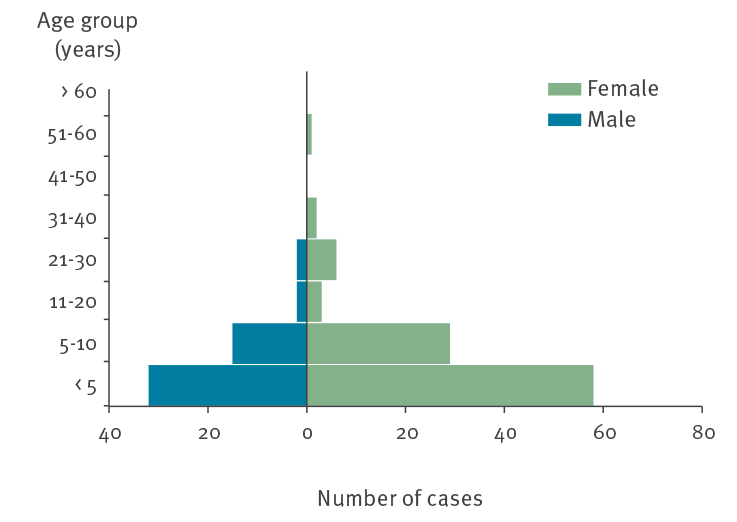
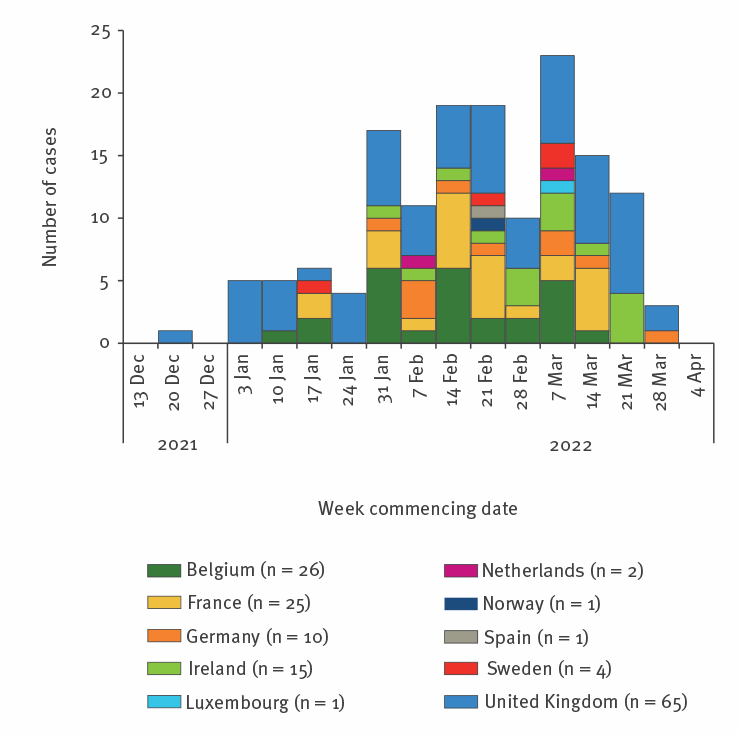
Detected cases in the EU/EEA and United KingdomBy 10 April 2022, a total of 150 confirmed and probable cases were identified across nine EU/European Economic Area (EEA) countries and the UK, with case sampling dates ranging from 21 December 2021 (the first UK case) to 28 March 2022 (Figure 1). Descriptive epidemiological investigations demonstrated cases ranged in age from 8 months to 56 years, but were predominately under the age of 10 years (n = 134; 89%) and disproportionately female (n = 99; 66%) (Figure 2). The hospitalisation rate was 42% of cases for whom information was available (116 cases with 49 hospitalised) – higher than that usually reported in salmonellosis outbreaks [2] and for individual cases of infection with . Typhimurium [3]. While this is probably also influenced by the demographic characteristics of those affected, this is a possible indicator of increased clinical severity of infection in this outbreak.

Figure 1.Distribution of confirmed and probable salmonellosis outbreak cases by week and country and by date of onseta,b, EU/EEA and UK, up to 10 April 2022 (n = 150)
Figure 1EEA: European Economic Area; EU: European Union; UK: United Kingdom.

a Case onset date (n=108) is not consistently available for all reported cases, therefore date of sampling has been used where case onset date is unavailable (n=39) or date of receipt at reference laboratory where both onset and sampling dates are unknown (n=3).

b Probable cases were reported by Belgium (n=19) and Germany (n=2) (data as of 13 April).

Figure 2.Distribution of confirmed and probable salmonellosis outbreak cases, by age group and sex, EU/EEA and UK, up to 10 April 2022 (n = 150)

Figure 2

EEA: European Economic Area; EU: European Union; UK: United Kingdom.

Multi-country collaboration through teleconferences and sharing of information between public health agencies and reference laboratories indicated that cases in affected countries commonly reported consumption of a specific brand of chocolate products. Overall, of 101 case interviews carried out across the 10 affected countries, 88 cases (87%) confirmed consumption of these products. The most commonly consumed product was Product A, marketed primarily for children in the age group 3–10 years, but multiple other product types were also reported.

France – French prosecutors raid Buitoni Fraich’UP pizza factory and Nestlé following E. coli Outbreak

Food Poison Journal

The inspections “revealed a deterioration of food hygiene controls”, the presence of “rodents” and “insufficient measures to prevent pests from contaminating a food production site.”

E. coli O26 and E. coli O103 appear to be serotypes linked to this outbreak.

According to press reports, French prosecutors on Wednesday last week searched a Buitoni frozen pizza factory in northern France, the suspected source of an E. coli outbreak that has left dozens of children sick, as well as the headquarters of its owner Nestle France, authorities told AFP .

An investigation into involuntary manslaughter and deceitful practices was opened on 1 April after authorities learned of more than 70 infections, which may have caused the deaths of a one-year-old and an 18-year-old. Over two dozen have developed hemolytic uremic syndrome (HUS).

The search at the Caudry factory operated by Buitoni, which is owned by the Swiss food conglomerate Nestle, was confirmed by a police source and the Paris prosecutor’s office, which is leading the investigation.

Nestle France, whose headquarters outside Paris were also raided, announced a recall of the affected Fraich’UP pizzas on March 18, and authorities ordered a halt of their production at Caudry after carrying out two hygiene inspections.

Romania – Shellfish meat – Listeria monocytogenes

ANSVSA

Shellfish Meat (Lots 1318 & 1321; Best before 06.12.2023) due to Listeria monocytogenes contamination.

Kinder International Recall -Salmonella

EFOOD ALERT

International recall of Ferrero’s Kinder chocolate products

Ferrero has expanded its international recall of Kinder Surprise chocolate novelty products, linked to a multi-country outbreak of Salmonella Typhimurium illnesses. Click on the country link to navigate to the most recent recall notice for that jurisdiction.

Hong Kong – Not to consume two types of imported chocolate products with possible contamination with Salmonella

CFS

Issue Date 14.4.2022
Source of Information Notification from the Rapid Alert System for Food and Feed of the European Commission
Food Product Chocolate products
Product Name and Description Product name: Kinder Überraschung Maxi Rosa 100g XMAS

Brand: Kinder

Place of origin: Belgium

Net weight: 100 grams per pack

Best-before date: April 20, 2022

Product name: Kinder Überraschung Maxi Classic 100g XMAS

Brand: Kinder

Place of origin: Belgium

Net weight: 100 grams per pack

Best-before date: April 20, 2022

Reason For Issuing Alert The Centre for Food Safety (CFS) received a notification from the Rapid Alert System for Food and Feed of the European Commission that two of the chocolate products that are possibly contaminated with Salmonella have been imported into Hong Kong.

Salmonella infection may cause fever and gastrointestinal upset such as vomiting, abdominal pain and diarrhoea. The effects on infants, young children, the elderly and persons with a weak immune system could be more severe and may even lead to death.

Action Taken by the Centre for Food Safety The CFS has immediately contacted local importers for follow-up. An importer, CIAO International Limited, had imported the affected batches of products. As a precautionary measure, the importer has already stopped sales and removed from shelves the affected products on April 7, and will initiate a recall according to the CFS’s instructions.

The CFS has stepped up testing of related products as well as alerting the trade to the incident, and will continue to follow up, closely liaise with overseas authorities and take appropriate action. An investigation is ongoing.

Advice to the Trade The trade should stop using or selling the affected products immediately if they possess them.
Advice to Consumers Do not consume the affected products.
Further Information The CFS press release

The latest information of affected products can be found at the CFS’s Food Incident Post webpage (www.cfs.gov.hk/english/rc/subject/fi_list.html).

Members of the public may call the hotline of the importer, CIAO International Limited, at 2755 7777 during office hours for enquiries about the recall.

France – International outbreak of salmonellosis in young children linked to the consumption of Kinder brand products. Update on April 12, 2022.

Sante Publique

Following the investigations carried out by the Belgian health authorities, together with their English, European and in particular French counterparts, the company Ferrero proceeded on April 5, 2022 to the recall of several Kinder range products manufactured in a factory in Belgium due to suspected contamination by Salmonella Typhimurium . On April 8, 2022, the recall finally affected all Kinder products from this factory, regardless of their expiry date. 

Case of salmonellosis in France: update on April 12, 2022

In total, as of 04/12/2022: 33 cases have been identified by the National Reference Center (CNR) for salmonella at the Institut Pasteur in France. 

The cases are spread over 11 regions: Ile-de-France (6 cases), Grand-Est (5 cases), Provence-Alpes-Côte d’Azur (4 cases), Hauts-de-France (4 cases), Nouvelle -Aquitaine (3 cases), Auvergne-Rhône-Alpes (3 cases), Normandy (2 cases), Bourgogne-Franche-Comté (2 cases), Brittany (2 cases), Corsica (1 case), and Occitanie (1 case ), with a median age of 4 years, and 17 boys and 16 girls.

Twenty-two cases were able to be questioned by Public Health France. All the cases report, before the onset of their symptoms, the consumption of chocolates of the brand mentioned here. Nine people were hospitalized for their salmonellosis, all since discharged. No deaths were reported.

Public Health France is continuing its investigations with families who have not yet been able to be reached. 

The withdrawal and recall on 05/04 of the concerned products of the Kinder brand, extended on 08/04 to all production by the Belgian factory with closure of the latter by the Belgian authorities, should limit the occurrence in France new cases of salmonellosis in the coming days/weeks. 

To find out the list of products concerned by the withdrawal-recall: https://rappel.conso.gouv.fr/

People who have consumed the products mentioned above and who present symptoms (gastrointestinal disorders, fever within 72 hours of consumption), are invited to consult their doctor without delay, notifying him of this consumption. 

In order to limit person-to-person transmission (especially in households with young children), it is recommended to wash your hands well with soap and water after using the toilet, after changing your child, and before to cook.

France – Investigation of grouped cases of haemolytic-uremic syndrome (HUS) and shiga-toxin-producing E. coli (STEC) infections linked to the consumption of Buitoni® brand Fraîch’Up pizzas. 

Sante Publique

Public Health France and the National Reference Center (CNR) E. coli and its associated laboratory (Institut Pasteur, Paris, and Microbiology Laboratory of the Robert Debré Hospital, Paris), in conjunction with the Directorate General for Food, the Directorate General for Competition, Consumer Affairs and Fraud Prevention, and in coordination with the Directorate General for Health, have been investigating since 02/10/2022 an increase in the number of cases of haemolytic uremic syndrome (HUS) pediatric infections and Shiga toxin-producing Escherichia coli (STEC) infections.

The epidemiological, microbiological and traceability investigations carried out since that date have confirmed a link between the occurrence of these grouped cases and the consumption of frozen pizzas from the Buitoni brand Fraîch’Up range contaminated with STEC bacteria. On 03/18/2022, the company proceeded with the withdrawal-recall of all the pizzas in the Fraîch’Up range, marketed since June 2021 and the authorities asked the people who hold these pizzas not to consume them and to destroy them.

The total number of HUS cases linked to the consumption of these pizzas seems to have stabilized since the withdrawal-recall.

Case of SHU in France: update on 04/13/22

As of 04/13/2022, 53 confirmed cases have been identified, of which 51 are linked to STEC O26 strains, and 2 to STEC O103 strains. For 26 other cases of HUS and STEC infections notified to Public Health France, investigations are ongoing.

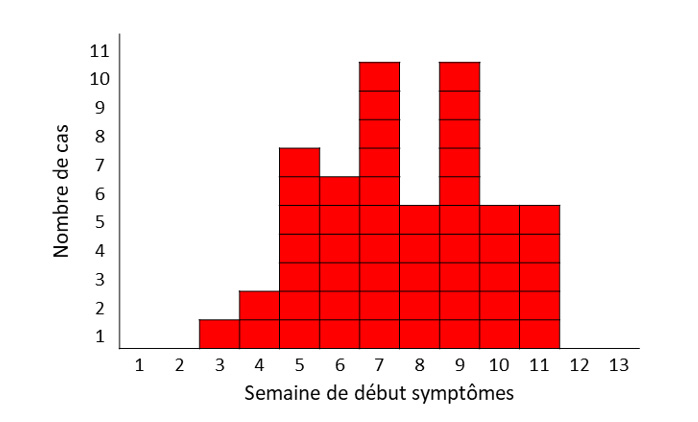
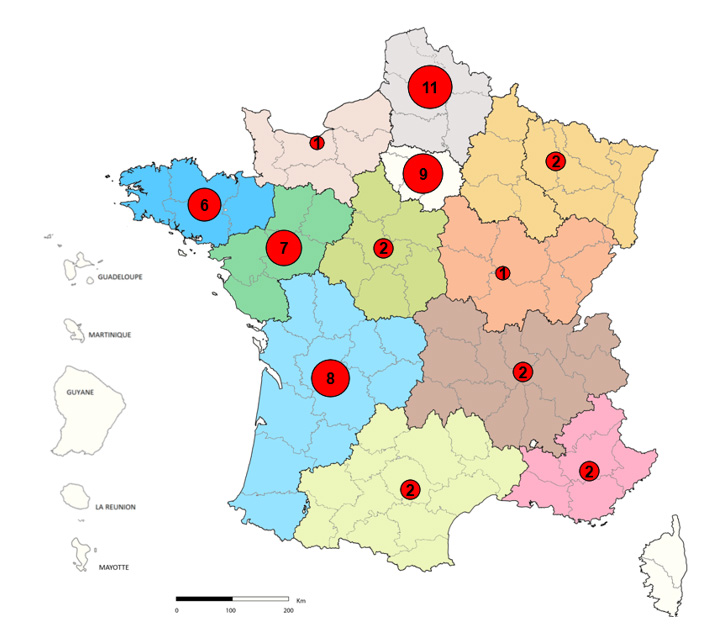
These 53 cases occurred in 52 children and 1 adult, who presented symptoms between 18/01/2022 (week 3) and 16/03/2022 (week 11) (Figure 1). The epidemic peak is in week 7 (14/02 to 20/02) and week 9 (28/02 to 06/03), with 10 cases each of these weeks. These 53 cases occurred in 12 regions of metropolitan France: Hauts-de-France (11 cases), Ile-de-France (9 cases), New Aquitaine (8 cases), Pays de la Loire (7 cases), Brittany ( 6 cases), Auvergne-Rhône-Alpes (2 cases) [-1 case since the situation update of 06/04/2022 after additional result], Grand Est (2 cases), Occitanie (2 cases), Provence-Alpes- Côte d’Azur (2 cases) and Center Val-de-Loire (2 cases), Bourgogne Franche-Comté (1 case) [-1 case since the situation update of 04/06/2022 after additional result], Normandy ( 1 case) (Figure 2).

The 52 sick children are aged from 1 to 17 years with a median age of 7 years; 23 (44%) are female; 46 (88%) presented with HUS, 6 (12%) with STEC gastroenteritis. Two children died. The adult did not present with HUS [an adult previously reported in the situation update of 06/04/2022 was finally invalidated after additional results].

Figure 1: Epidemic curve: number of confirmed cases of HUS and STEC infections (N=51), by week of onset of symptoms – metropolitan France, weeks 3 to 11, 2022
Figure 1: Epidemic curve: number of confirmed cases of HUS and STEC infections (N=51), by week of onset of symptoms - metropolitan France, weeks 3 to 11, 2022
Figure 2: Geographical distribution of confirmed cases of HUS and STEC infections (N=53) linked to the consumption of Buitoni® brand Fraîch’Up pizzas, by region of residence in metropolitan France, weeks 3 to 11, 2022
Figure 2: Geographical distribution of confirmed cases of HUS and STEC infections (N=53) linked to the consumption of Buitoni® brand Fraîch'Up pizzas, by region of residence in metropolitan France, weeks 3 to 11, 2022

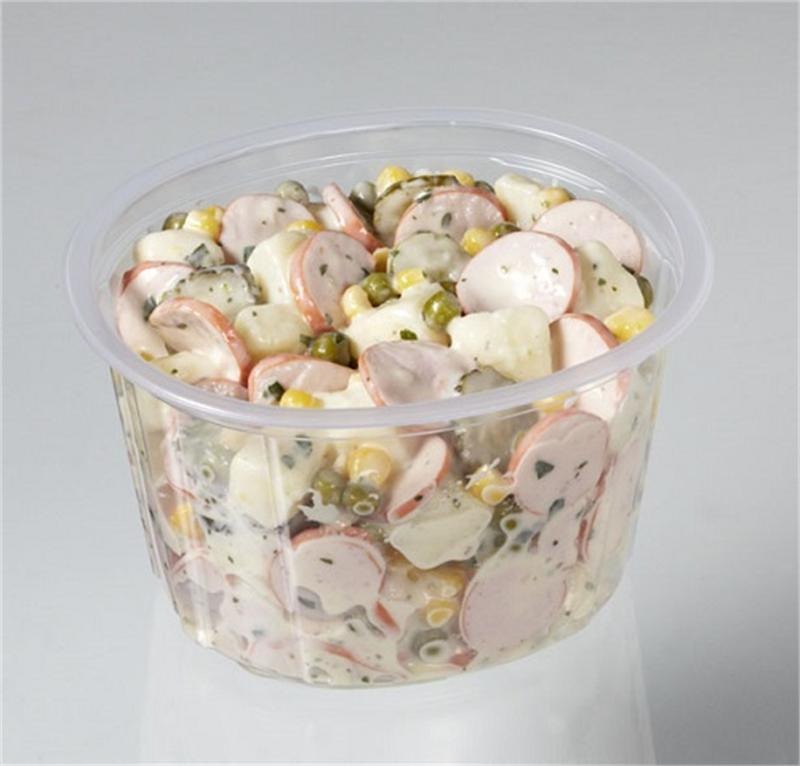
France – PIEDMONTESE SALAD – Listeria monocytogenes

Gov france

Identification information of the recalled product

  • Product category Food
  • Product subcategory Meats
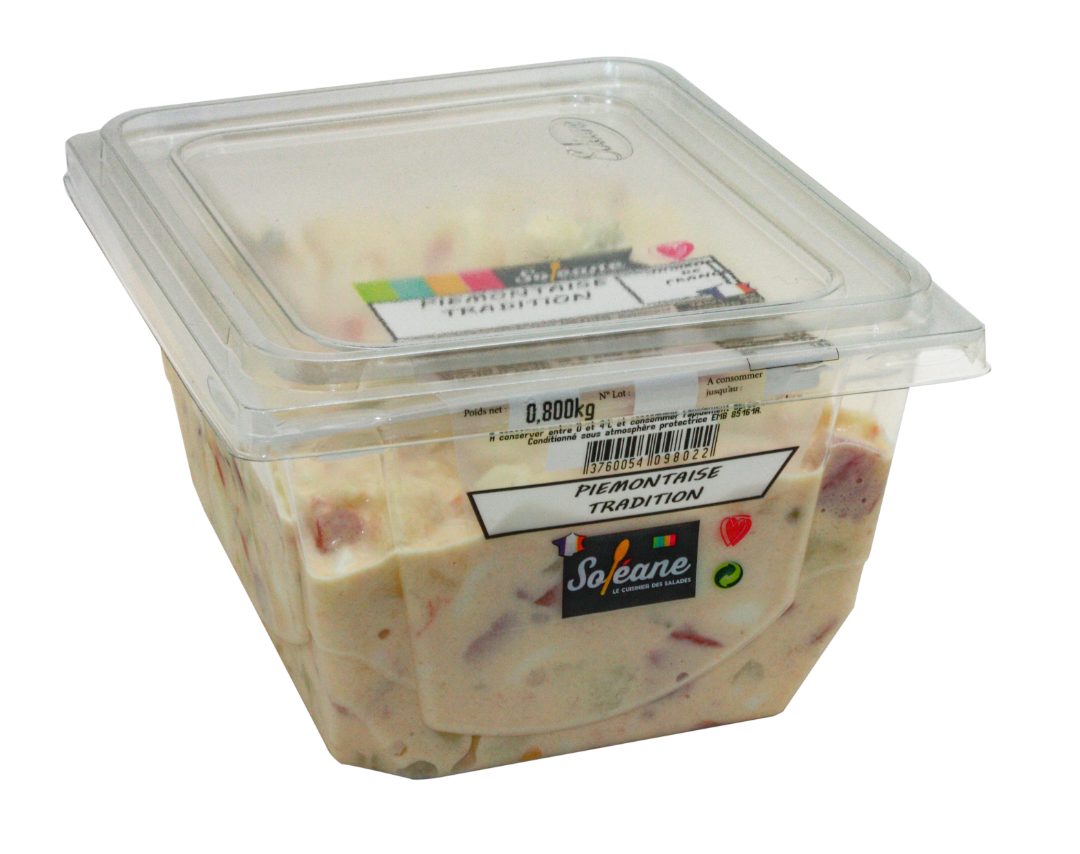
  • Product brand name SOLEANE (SOLEANE MY GARDEN)
  • Model names or references Traditional Piedmontese in: 230g-400g-800g-1.5kg-2.5kg
  • Identification of products
    GTIN Batch Date
    3760054098022 089 Use-by date 04/24/2022
    3760054098718 089 Use-by date 04/24/2022
    3760054090293 089 Use-by date 04/24/2022
    3760054095625 089 Use-by date 04/24/2022
    3760054090071 089 Use-by date 04/24/2022
    3760054096028 089 Use-by date 04/24/2022
    3760054092600 089 Use-by date 04/24/2022
  • Packaging Tray sealed under modified atmosphere. 230g, 400g, 800g, 1.500kg, 2.500kg
  • Marketing start/end date From 31/03/2022 to 25/04/2022
  • Storage temperature Product to be stored in the refrigerator
  • Geographic area of ​​sale Whole France
  • Distributors GMS

Practical information regarding the recall

  • Reason for recall Presence of Listeria (<10ufc/g)
  • Risks incurred by the consumer Listeria monocytogenes (causative agent of listeriosis)

France – Strasbourg salad sold at the stand with service – Listeria monocytogenes

Gov france

Identification information of the recalled product

  • Product category Food
  • Product subcategory Prepared meals and snacks
  • Product brand name unbranded (sold at the stand department with service)
  • Model names or references Strasbourg salad (cooked potato salad and slices of frankfurter sausage seasoned with vinaigrette sauce)
  • Identification of products
    Batch
    product sold from 04/04/2022 to 08/04/2022
  • Marketing start/end date From 04/04/2022 to 08/04/2022
  • Storage temperature Product to be stored in the refrigerator
  • Health mark/
  • Geographic area of ​​sale Store cora Vesoul (70)
  • Distributors Cora Vesoul

Practical information regarding the recall

  • Reason for recall presence of listeria
  • Risks incurred by the consumer Listeria monocytogenes (causative agent of listeriosis)