Category Archives: Food Microbiology Research

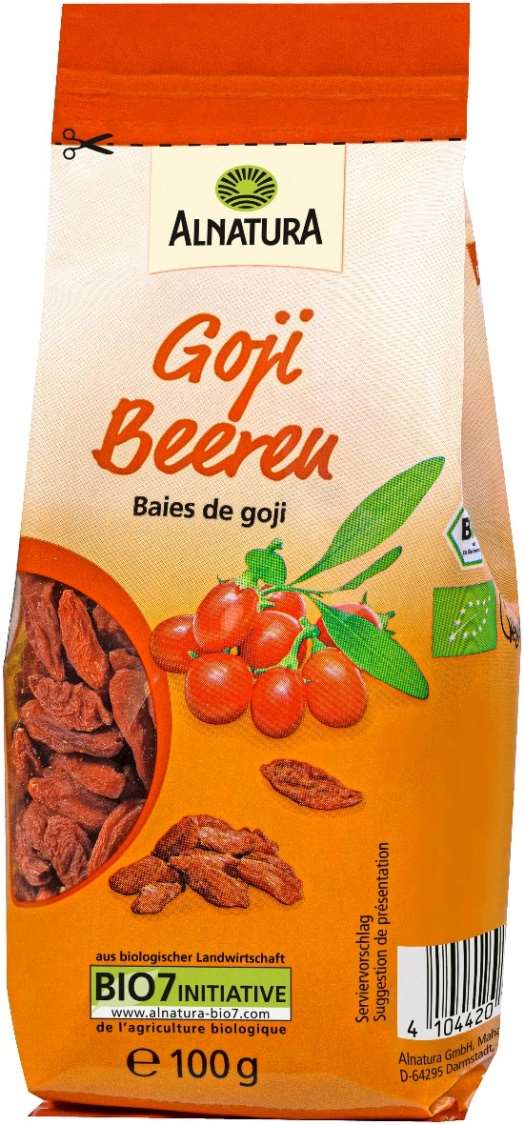
Germany – Alnatura goji berries – Salmonella

Lebensmittelwarnung

Alert type:

Groceries

Date of first publication:

12/22/2023

Product name:

Alnatura goji berries

Product images:

Aushang_Markt_Alnatura_Gojibeeren_final.jpg

Alnatura

Manufacturer (distributor):

Alnatura Production and Trading GmbH Mahatma-Gandhi-Str. 7, 64295 Darmstadt

Reason for warning:

Salmonella

Packaging Unit:

100 g

Durability:

July 4th, 2024 to October 22nd, 2024

Additional Information:

Salmonella infection manifests itself within a few days of infection with diarrhea, abdominal pain and occasionally vomiting and a slight fever. The symptoms usually go away on their own after several days. In particular, infants, small children, seniors and people with weakened immune systems can develop more severe illnesses. People who have eaten this food and develop severe or persistent symptoms should seek medical attention and report a possible salmonella infection. Seeking preventive medical treatment without symptoms does not make sense. Further information about the pathogen can be found here: http://www.kritiksschutz.de/erregersteckbriefe/salmonellen

UK – Update – Route des Terroirs recalls Morbier Maison Monts & Terroirs Chalet De Vevy Cheese because of contamination with E. Coli – STEC

FSA

Route des Terroirs is recalling Morbier Maison Monts & Terroirs Chalet De Vevy Raw Cows’ Milk Cheese because Shiga toxin-producing E. Coli has been found in some batches of this product.
There is no change to the products affected, the update relates to a correction of the symptoms associated with E. Coli STEC.

Product details

Morbier Maison Monts & Terroirs Chalet De Vevy
Batch code all
Best before All dates up to and including 24 January 2024

Risk statement

The presence of Shiga toxin-producing E. coli in some batches of the product listed above.

Symptoms caused by STEC organisms include severe diarrhoea (including bloody diarrhoea), abdominal pain, and sometimes haemolytic uremic syndrome, (HUS), a serious condition that can lead to kidney failure and can be fatal.

Action taken by the company

Route des Terroirs is recalling the above product. Point of sale notices will be displayed where the products were sold. These notices explain to customers why the products are being recalled and tell them what to do if they have bought the products. Please see the attached notice.

Our advice to consumers

If you have bought the above product do not eat it. Instead return it to the store from where it was bought to discuss options for a full refund. The cheese is sometimes sold as a full block or served as individual portions. It may have been provided as part of a hamper you’ve purchased or been gifted. It may not always be clear whether you have purchased an affected product. If in doubt, you are advised to contact the retailer the product was bought from to find out if the cheese you have is from the businesses and batches affected. In the meantime, do not eat the product and ensure it is stored safely, fully wrapped and not in contact with any other foods.

UK – Route des Terroirs recalls Morbier Maison Monts & Terroirs Chalet De Vevy Cheese because of contamination with E. Coli

FSA

Route des Terroirs is recalling Morbier Maison Monts & Terroirs Chalet De Vevy Raw Cows’ Milk Cheese because Shiga toxin-producing E. Coli has been found in some batches of this product.

Product details

Morbier Maison Monts & Terroirs Chalet De Vevy
Batch code all
Best before All dates up to and including 24 January 2024

Risk statement

The presence of Shiga toxin-producing E. coli in some batches of the product listed above.

Symptoms caused by this organism can be similar to flu and include high temperature, muscle ache or pain, chills, feeling or being sick and diarrhoea. However, in rare cases, the infection can be more severe, causing serious complications, such as meningitis.

Some people are more vulnerable to Shiga toxin-producing E. coli infections, including those over 65 years of age, pregnant women and their unborn babies, babies less than one month old and people with weakened immune systems.

Action taken by the company

Route des Terroirs is recalling the above product. Point of sale notices will be displayed where the products were sold. These notices explain to customers why the products are being recalled and tell them what to do if they have bought the products. Please see the attached notice.

Our advice to consumers

If you have bought the above product do not eat it. Instead return it to the store from where it was bought to discuss options for a full refund. The cheese is sometimes sold as a full block or served as individual portions. It may have been provided as part of a hamper you’ve purchased or been gifted. It may not always be clear whether you have purchased an affected product. If in doubt, you are advised to contact the retailer the product was bought from to find out if the cheese you have is from the businesses and batches affected. In the meantime, do not eat the product and ensure it is stored safely, fully wrapped and not in contact with any other foods.

Research – Scientists look into Listeria risk in Costa Rica and Ecuador

Food Safety News

According to researchers, mandatory reporting of Listeria infections in Costa Rica would help improve knowledge of the pathogen in the country.

Listeriosis is not a notifiable disease in the country, so its prevalence is unknown, and the diversity of Listeria monocytogenes circulating is unclear.

Previous studies found Listeria monocytogenes in various foods in Costa Rica, with contamination levels between 5 and 20 percent in processed meat products and fresh cheeses.

Researchers used whole genome sequencing (WGS) to characterize 92 isolates recovered from 2009 to 2019 from 16 clinical, 67 food, and nine production environment samples.

Isolates were from urban areas, including the capital city, San José, and from rural zones where cheese production is prevalent, including Turrialba, which accounts for 70 percent of fresh cheese made in the country.

Research – Foodborne pathogen inactivation in fruit juices utilizing commercial scale high-pressure processing: Effects of acidulants and pH

Research Gate

The effects of juice pH, type of acidulant, and post-treatment refrigeration on the high-pressure processing (HPP) inactivation of Escherichia coli O157:H7, Salmonella enterica, and Listeria monocytogenes in acid beverages were evaluated. Inoculated apple, orange, and grape juices (at their original pH and adjusted to pH 4.00, 4.50, and 5.00) were treated at 550 MPa for 1 min at 5 °C. In addition, inoculated model solutions acidified to a pH of 5.00 with acetic, citric, malic, and tartaric acids were treated at 400 MPa for 1 min at 5 °C. The effect of refrigerated storage for 24 h after treatment on pathogen inactivation in both experiments was also assessed. A greater than 5-log reduction of the three pathogens inoculated was achieved in all juices immediately after HPP at the juices’ original pH, and of L. monocytogenes under all experimental conditions. Refrigerated storage for 24 h after HPP treatment improved the inactivation of E. coli O157:H7, to >5-log reduction, at pH 4.00 in apple juice and of Salmonella in the three juices at pH 4.00. The type of acidulant did not significantly ( p > 0.01) affect E. coli or Salmonella inactivation in acidified model solutions but a greater than 5-log reduction after HPP was only achieved for L. monocytogenes when acetic acid was used. The effectiveness of HPP for pathogen inactivation depended largely on product pH and the target pathogen of concern.

Research – Scientists assess Salmonella risk from insects

Food Safety News

Researchers have evaluated a range of studies focussed on Salmonella in insects to gather data for assessing the safety of insect-based foods.

The systematic review looked at 36 studies investigating Salmonella in insects.

“Data on the persistence of Salmonella can be useful for further analysis by risk assessors and decision-makers involved in the safety of insect-based food, contributing to defining the sanitary requirements and risk mitigation measures along the supply chain,” said researchers in the journal npj Science of Food.

In Europe, insect-based foods are classed as novel foods, while in the United States, insects can be used as food if they have been produced for that specific purpose following relevant rules.

Few studies were conducted on insect species currently relevant for food production, such as the house cricket or migratory locust.

Research -Prevalence of Campylobacter spp., Salmonella spp., and Listeria monocytogenes, and Population Levels of Food Safety Indicator Microorganisms in Retail Raw Chicken Meat and Ready-To-Eat Fresh Leafy Greens Salads Sold in Greece

MDPI

Abstract

The presence of microbial pathogens in foods compromises their safety resulting in foodborne illnesses, public health disorders, product recalls, and economic losses. In this work, 60 samples of chilled raw chicken meat and 40 samples of packaged ready-to-eat (RTE) fresh leafy greens salads, sold in Greek retail stores (butchers and supermarkets), were analyzed for the presence of three important foodborne pathogenic bacteria, i.e., Campylobacter spp., Salmonella spp., and Listeria monocytogenes, following the detection protocols of the International Organization for Standardization (ISO). In parallel, the total aerobic plate count (APC), Enterobacteriaceae, total coliforms, Escherichia coli, and staphylococci were also enumerated as hygiene (safety) indicator organisms. When present, representative typical colonies for each pathogen were biochemically verified, following the ISO guidelines. At the same time, all the Campylobacter isolates from chicken (n = 120) were identified to the species level and further phylogenetically discriminated through multiplex and repetitive sequence-based (rep) polymerase chain reaction (PCR) methods, respectively. Concerning raw chicken, Campylobacter spp. were recovered from 54 samples (90.0%) and Salmonella spp. were recovered from 9 samples (15.0%), while L. monocytogenes was present in 35 samples (58.3%). No Campylobacter was recovered from salads, and Salmonella was present in only one sample (2.5%), while three salads were found to be contaminated with L. monocytogenes (7.5%). The 65% of the Campylobacter chicken isolates belonged to C. jejuni, whereas the rest, 35%, belonged to C. coli. Alarmingly, APC was equal to or above 106 CFU/g in 53.3% and 95.0% of chicken and salad samples, respectively, while the populations of some of the other safety indicators were in some cases also high. In sum, this study unravels high occurrence percentages for some pathogenic and food safety indicator microorganisms in raw chicken meat and RTE fresh leafy greens salads sold in Greek retail, highlighting the need for more extensive microbiological control throughout the food production chain (from the farm/field to the market).

CDC – Protect your pregnancy from Listeria.

CDC

Listeria illness is rare. Every year, 4 in 100,000 pregnant people in the U.S. get sick with Listeria.

Illustration of an unborn baby inside the body.
But it can harm your baby. Sadly, 1 in 4 pregnant people who get this illness lose their pregnancy or their baby shortly after birth. That’s because the germ can spread to your baby and harm them while you are pregnant, even if you don’t feel very sick.

See more information at the link above.

CDC – Listeria and Older Adults

CDC

It rarely affects people who have a strong immune system. Most young, healthy adults won’t get sick from Listeria.

Illustration of a person laying in a hospital bed with an IV.
But it can cause serious illness and even death if you’re 65 or older. This is because your immune system has a harder time recognizing and getting rid of harmful germs like Listeria as you get older. You also have less stomach acid that helps kill germs.

Every year, 1,600 people in the U.S. get sick from Listeria, and more than half are older adults. Older adults with Listeria almost always have to be hospitalized, and, sadly, 1 in 6 die.

See link above for more information.

Belgium – Baked pâté with wild mushrooms from the Saint Alby Selection brand – Listeria monocytogenes

afsca

Recall of LS Fresh
Product: baked pâté with wild mushrooms from the Saint Alby Selection brand
Nature of the problem: possible presence of Listeria monocytogenes
In agreement with the AFSCA, LS Frais is withdrawing the baked pâté with wild mushrooms (+-150g) of the Saint Alby Selection brand from sale and recalling it from consumers due to the possible presence of Listeria monocytogenes.

Lidl Belgium asks its customers not to consume this product and to return it to the point of sale in which it was purchased. You will be reimbursed even without presentation of the receipt.

Product description

– Product name: baked pâté with wild mushrooms
– Brand: Saint Alby Selection
– EAN: 2825200000000 – 2825200000005
– Best before date (Best before): 25/12 /2023, 12/30/2023 and 01/01/2024
– Sales period: from 12/01/2023 to 12/18/2023
– Nature of packaging: plastic container
– Weight: +-150g

The product was sold through Lidl stores in Belgium.

For any further information , contact Lidl customer service (+32 (0)2 320 6000)