Category Archives: Food Microbiology Research

Research – Indoor Particulate Matter From Smoker Homes Induces Bacterial Growth, Biofilm Formation, and Impairs Airway Antimicrobial Activity. A Pilot Study

Frontiers

Background: Particulate matter (PM) air pollution causes deleterious health effects; however, less is known about health effects of indoor air particulate matter (IAP).

Objective: To understand whether IAP influences distinct mechanisms in the development of respiratory tract infections, including bacterial growth, biofilm formation, and innate immunity. Additionally, we tested whether IAP from Iowa houses of subjects with and without recent respiratory exacerbations recapitulated the National Institute of Standards and Technology (NIST) IAP findings.

Methods: To test the effect of NIST and Iowa IAP on bacterial growth and biofilm formation, we assessed Staphylococcus aureus growth and Pseudomonas aeruginosa biofilm formation with and without the presence of IAP. To assess the effect of IAP on innate immunity, we exposed primary human airway surface liquid (ASL) to NIST, and Iowa IAP. Lastly, we tested whether specific metals may be responsible for effects on airway innate immunity.

Results: NIST and Iowa IAP significantly enhanced bacterial growth and biofilm formation. NIST IAP (whole particle and the soluble portion) impaired ASL antimicrobial activity. IAP from one Iowa home significantly impaired ASL antimicrobial activity (p < 0.05), and five other homes demonstrated a trend (p ≤ 0.18) of impaired ASL antimicrobial activity. IAP from homes of subjects with a recent history of respiratory exacerbation tended (p = 0.09) to impair ASL antimicrobial activity more than IAP from homes of those without a history respiratory exacerbation. Aluminum and Magnesium impaired ASL antimicrobial activity, while copper was bactericidal. Combining metals varied their effect on ASL antimicrobial activity.

Conclusions: NIST IAP and Iowa IAP enhanced bacterial growth and biofilm formation. ASL antimicrobial activity was impaired by NIST IAP, and Iowa house IAP from subjects with recent respiratory exacerbation tended to impair ASL antimicrobial activity. Individual metals may explain impaired ASL antimicrobial activity; however, antimicrobial activity in the presence of multiple metals warrants further study.
Research – Assessment of the potential of Arabic gum as an antimicrobial and antioxidant agent in developing vegan “egg‐free” mayonnaise

Wiley Online

The main factors affecting the spoilage of mayonnaise are lipid oxidation and microbial contamination. Therefore, the investigation was carried out to estimate the antimicrobial and antioxidant properties of the aqueous extract of the Arabic gum (AG). The effect of the addition of AG powder on physical–chemical and sensory properties has been evaluated in different percentages of 25, 50, 75, and 100 into mayonnaise. At the highest concentration of AG 20 mg/ml, the DPPH result represented high antioxidant activity at 92.13%. AG had inhibitory effects on gram‐negative and gram‐positive bacteria, with Staphylococcus aureus and Bacillus subtilis being the most susceptible bacteria. The use of AG as an egg substitute in mayonnaise has been shown to have a great effect on physical–chemical properties. All mayonnaise samples were sensory acceptable, particularly vegan mayonnaise (100% AG) and still acceptable for consumption at 5°C for 5 months of storage. AG could be considered an additive with significant emulsifier properties, antioxidant, and antimicrobial activities. Therefore, AG is a good choice to produce new vegetarian products for consumers who are unable to eat egg‐based foods.

Europe -Listeriosis – Annual Epidemiological Report for 2017

ECDC

Listeriosis – Annual Epidemiological Report for 2017

Surveillance report

Publication series: Annual Epidemiological Report on Communicable Diseases in Europe
Time period covered: This report is based on data for 2017 retrieved from The European Surveillance System (TESSy) on 11 September 2018.

For 2017, 30 countries reported 2 502 confirmed listeriosis cases in the EU/EEA. The EU/EEA age-standardised notification rate was 0.42 cases per 100 000 population. The highest rate was detected among people over 64 years of age (1.7 cases per 100 000 population). The annual number of listeriosis cases in the EU/EEA shows an increasing trend.

Europe – Yersiniosis – Annual Epidemiological Report for 2017

ECDC

kswfoodworld.com

Image CDC

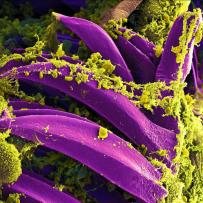
For 2017, 28 countries reported 6 890 confirmed yersiniosis cases in the EU/EEA. The overall notification rate was 1.8 per 100 000 population and remained stable from 2013–2017. The highest rate was detected in 0–4 year-old children (7.7 per 100 000 population). The highest rates were reported by Finland, Lithuania and the Czech Republic.

Download

Europe -Salmonellosis – Annual Epidemiological Report for 2017

ECDC

Salmonellosis is the second most commonly reported gastrointestinal infection and an important cause of foodborne outbreaks in the EU/EEA. In 2017, 92 649 laboratory-confirmed cases were reported of which 156 were fatal. The EU/EEA notification rate was 19.6 cases per 100 000 population. Salmonellosis notification rates have stabilised in the last five years after a long period marked by a declining trend. The notification rate was highest in young children 0−4 years with 94.1 cases per 100 000 population, eight times higher than in adults 25–64 years.

Download

Research -Impacts of broadband and selected infrared wavelength treatments on inactivation of microbes on rough rice.

Wiley Online

This study investigated the effects of broadband and selected infrared (IR) wavelength treatments of rough rice on microbial inactivation. Rough rice was treated at different IR wavelengths and product‐to‐emitter distances (110, 275, and 440 mm) followed by tempering at 60°C for 4 hr. The total mold and aerobic plate counts (APC) on non‐treated and treated samples were determined. Significant total mold reductions of 1.14 and 3.11 log CFU/g were obtained after IR heating using broadband and selected wavelengths, respectively (p < .05). The most significant reduction of APC using selected IR wavelength was 1.09 log CFU/g; the broadband IR wavelength had no effect on the mean APC. The IR treatments followed by tempering step resulted in greater reductions of total mold counts and APC (4.03 and 3.50 log CFU/g) in comparison to IR treatments without tempering (3.11 and 1.09 log CFU/g). Overall, bacteria showed more resistance to IR treatments than molds.

Research – A Study on Prevalence and Characterization of Bacillus cereus in Ready-to-Eat Foods in China

Frontiers in Microbiology

Bacillus cereus is widely distributed in different food products and can cause a variety of symptoms associated with food poisoning. Since ready-to-eat (RTE) foods are not commonly sterilized by heat treatment before consumption, B. cereus contamination may cause severe food safety problems. In this study, we investigated the prevalence of B. cereus in RTE food samples from different regions of China and evaluated the levels of bacterial contamination, antibiotic resistance, virulence gene distribution, and genetic polymorphisms of these isolates. Of the tested retail RTE foods, 35% were positive for B. cereus, with 39 and 83% of the isolated strains harboring the enterotoxin-encoding hblACD and nheABC gene clusters, respectively. The entFM gene was detected in all Bcereus strains. The cytK gene was present in 68% of isolates, but only 7% harbored the emetic toxin-encoding gene cesB. Antimicrobial susceptibility testing revealed that the majority of the isolates were resistant not only to most β-lactam antibiotics, but also to rifamycin. Multilocus sequence typing (MLST) revealed that the 368 isolates belonged to 192 different sequence types (STs) including 93 new STs, the most prevalent of which was ST26. Collectively, our study indicates the prevalence, bacterial contamination levels, and biological characteristics of B. cereus isolated from RTE foods in China and demonstrates the potential hazards of B. cereus in RTE foods.

Research -Researchers report temperature important for controlling Listeria in rakfisk

Food Safety News

Researchers have looked at the effect of different ripening temperatures and salt concentrations on the growth of Listeria monocytogenes in a traditional Norwegian fermented fish product.

Rakfisk is made from lake trout or arctic char by mild-salting and brine maturation at low temperatures for several months and is eaten without heat treatment.

Ripening temperature had the largest impact on Listeria monocytogenes growth during rakfisk production as low ripening temperatures resulted in essentially no growth. However, even freezing temperatures cannot kill Listeria.

Chosen salt concentrations and temperatures reflect the prevailing types of commercial rakfisk production, said researchers in the study published in the journal Foods.

Research -Evaluation of JC9450 and Neutral Electrolyzed Water in Controlling Listeria monocytogenes on Fresh Apples and Preventing Cross-Contamination

Frontiers in Microbiology

Recent multistate outbreaks and recalls of fresh apples due to Listeria monocytogenes contamination have increased consumer concerns regarding fresh and processed apple safety. This study aimed to evaluate the antimicrobial efficacy of two sanitizers, mineral oxychloride (JC9450) and neutral electrolyzed water (NEW), for inactivation of L. monocytogenes on fresh apples. A 2-min treatment of 0.125% (v/v) JC9450 with 100 ppm free available chlorine (FAC) or NEW with 110 ppm FAC caused 0.9–1.2 log10 CFU/apple reduction of L. monocytogenes on both Granny Smith and Fuji apples 24 h post-inoculation. Increasing JC9450 concentration to 0.25 and 0.50% significantly improved its bactericidal effect and reduced L. monocytogenes on Granny Smith apples by ~2.0 and 3.8 log10 CFU/apple, respectively, after a contact time of 2 min. At a shorter contact time of 30 sec, the inactivation efficacy of chlorine and 0.25–0.50% JC9450 against L. monocytogenes on apples was significantly reduced compared with the respective 2-min wash. Furthermore, no L. monocytogenes was recovered in deionized water prepared antimicrobial wash solution or on non-inoculated apples post-NEW with 110 ppm FAC or 0.125–0.5% JC9450 washes, indicating their ability to prevent cross-contamination. In addition, a 2-min exposure to NEW with 110 ppm FAC and 0.50% JC9450 reduced apple native microbiota including total plate count by 0.14 and 0.65 log10 CFU/apple, respectively, and yeast and mold counts by 0.55 and 1.63 log10 CFU/apple, respectively. In summary, L. monocytogenes attached on apples was difficult to eliminate. JC9450 and NEW demonstrated a dose-dependent reduction in L. monocytogenes on apples and successfully prevented cross-contamination, indicating their application potential in post-harvest washes of apples.

Research -Extension of shelf life of pasteurized trim milk using ultraviolet treatment

Wiley Online

The demand for minimally processed foods has increased in the last few years and gains high acceptability among consumers as it has better nutritional value than highly processed foods. Pasteurized milk is minimally processed and consumed largely for its fresh taste and higher nutritional value compared to ultrahigh temperature (UHT) and powdered milk. However, one of the constraints is its limited shelf life under refrigeration, as it cannot retain quality and safety for more than 14 days. Nonthermal technologies can extend the shelf life of milk while using low energy. Ultraviolet (UV‐C) is well known to inactivate spores as well as vegetative cells. In this study, it was shown that 2.64 J/ml of UV‐C treatment applied on pasteurized trim milk can extend shelf life up to 53 days under refrigeration. This finding was also supported by the inactivation of 3.40 ± 0.14 log of thermoresistant Geobacillus stearothermophilus spores (ATCC 7953) in UHT (or sterilized) trim milk with similar UV‐C operating conditions. Therefore, microbial study together with physicochemical properties demonstrated that pasteurization followed by UV‐C can enhance the shelf life of trim milk considerably.