Category Archives: Food Microbiology Research

EFSA – Foodborne Outbreaks – Dashboard

EFSA

The EFSA dashboard on foodborne outbreaks is a graphical user interface that allows for searching and querying the large amount of data on foodborne outbreaks collected by EFSA from the European Union Member States and other reporting countries based on the Zoonoses Directive 2003/99/EC. In the online EFSA dashboard, the foodborne outbreak data (since 2015) and related statistics can be displayed interactively using charts, graphs, and maps. The main statistics can also be visualised (and downloaded) in a tabular format. The present user guide describes the content and functionalities of the dashboard on foodborne outbreaks and provides detailed indications to make full use of this visualisation tool.

Updates on versioning

Version 1 includes the user guide of the foodborne outbreaks dashboard

Version 2 includes user guides both on foodborne outbreaks as well as on zoonotic agents.

Consequently the title of the records has been updated to match the content.
 

EFSA – Salmonella Dashboard

EFSA

The EFSA dashboard on Salmonella is a graphical user interface for searching and querying the large amount of data collected each year by EFSA from EU Member States and other reporting countries based on Zoonoses Directive 2003/99/EC. The Salmonella dashboard shows summary statistics for the monitoring results of the pathogen with regard to major food categories and animal species, Salmonella-positive official samples in the context of food safety criteria and process hygiene criteria, the occurrence of Salmonella in major food categories and the achievement of Salmonella reduction targets in poultry populations. The Salmonella data and related statistics can be displayed interactively using charts, graphs and maps in the online EFSA dashboard. The main statistics can also be viewed and downloaded in tabular format. Detailed information on the use and features of the Salmonella dashboard can be found in the present user guide that can also be downloaded from the online tool.

EFSA – Salmonella – Story Map

EFSA

Salmonella is a genus of highly diverse bacteria that live in the intestinal tract of humans and animals and are widespread in the environment thanks to their ability to survive and adapt even under extreme conditions.

The more than 2,600 Salmonella  serovars  are divided into typhoidal and non-typhoidal serovars and all of them are potentially harmful and can cause diseases in humans with different level of severity. Typhoidal serovars (S. Typhi and S. Paratyphi) are highly adapted to the human host, which constitutes their exclusive reservoir, so they are transmittable only through human-to-human contact, causing a potentially life-threatening syndrome known as typhoid or paratyphoid fever. Their prevalence is very low in high-income countries, and the few European cases that occur generally involve people returning from trips to low- or middle-income countries.

Non-typhoidal serovars are zoonotic agents. They are transmittable from animals and foods to humans, but also through human-to-human contact, and they can cause various syndromes, most of which are gastrointestinal. Due to its adaptability, Salmonella is widely prevalent in the environment and can infect animals and contaminate food.

The majority of circulating serovars are non-typhoidal and are the subject of this story map.

Pathogens dominate Swiss alerts in 2021

Food Safety News

The number of recalls went up in 2021 but public warnings dropped in Switzerland, according to recently published figures.

The Federal Food Safety and Veterinary Office (FSVO) published 18 public warnings and 61 recalls for food in 2021 compared to 28 warnings and 49 recalls the year before. Recalls are published by companies and public warnings are made by Swiss authorities.

Most alerts this past year concerned pathogens such as Listeria nine times, Salmonella on six occasions, and Shiga toxin-producing E. coli (STEC) twice.

EFSA – Listeria monocytogenes – Story Map

EFSA

Listeria bacteria are widespread in the environment and they are worldwide commonly found in soil and water, as well as in animal digestive tracts. There are more than 15  species  of bacteria in this genus, but human cases of Listeria infection are almost always caused by Listeria monocytogenes (L. monocytogenes) while Listeria ivanovii is pathogenic in animals but rarely in humans. The other species are not considered to be pathogenic in humans or animals.

L. monocytogenes are able to form communities of bacteria called biofilms and are therefore resistant to a wide range of stresses. This capacity varies among  genotypes . They can tolerate acidic, dry and salty conditions, in the presence or absence of oxygen. Moreover, unlike most pathogenic bacteria, they are able to survive and multiply in refrigerated foods, making ready-to-eat foods of particular concern.

Specific  strains  (identified by “ serogroups ” and “ serovars ”) are important for human health as they can differ in terms of geographical distribution and their ability to cause disease. Detection and isolation of Listeria strains, both by classic laboratory procedures and molecular and genomic methods, are therefore crucial to evaluate their relative presence in food, the environment and clinical settings, to address the  virulence  and to precisely trace  outbreaks , identifying the source of infection.

Germany – Eggs – Salmonella

LMW

Alert type: Food
Date of first publication: 12/12/2022
Product name:

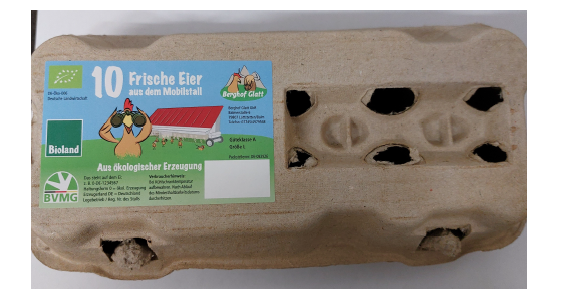
Eggs with a best before date up to and including 21.12.2022

Product images:
Eggs.PNG


press release

Manufacturer (distributor):

Berghof Glatt Balmer Str.6 79807 Lottstetten Sales are limited to Baden-Württemberg

Reason for warning:

Salmonella were found in the eggs as part of regular self-monitoring.

Durability:

Best before date up to and including 21.12.2022

Further information:

Please refer to the company’s press release attached.

Click to access Salmonellen+Pressemitteilung+schwarz.pdf

Image

Food Safety at Christmas

images

USA – Dozens have gotten sick from oysters — including in Florida. Publix issues a warning

Miami Herald

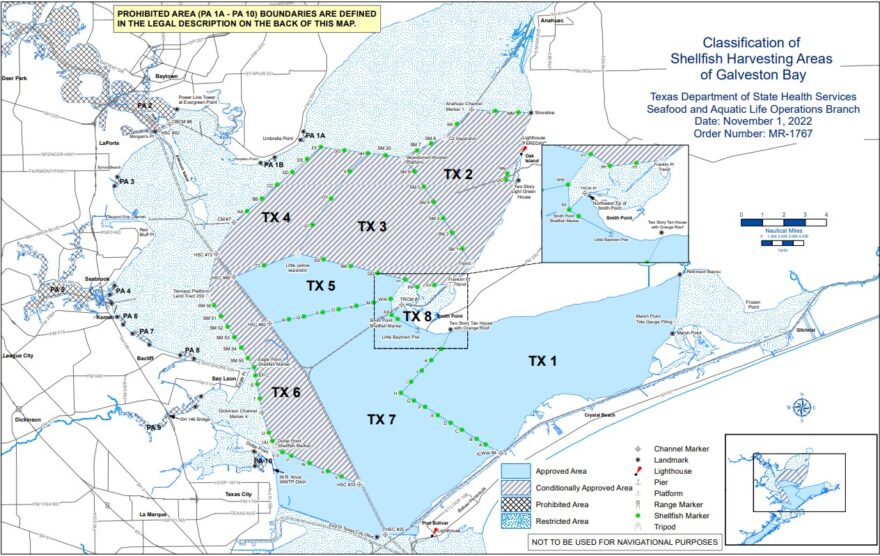
Oysters harvested in Texas are making dozens of people sick to their stomach in Texas and as far as Florida and Louisiana. Health departments and Publix are warning the public. The Texas Department of State Health Services recalled oysters, both in shell and shucked, that were harvested in the southeastern Galveston Bay area from Nov. 17 through Dec. 7. It has caused a few dozen cases of gastrointestinal illness in Texas, Florida and Louisiana among those who’ve eaten them. Symptoms include fever, nausea, diarrhea, vomiting, abdominal cramps, chills and headache. There have been no reports of hospitalization.


USA – Unnamed Pathogen sickens dozens and prompts recall of Galveston Bay Oysters

Food Poison Journal

The Texas Department of State Health Services has ordered a recall of all oysters harvested in the TX 1 area of south eastern Galveston Bay after reports of a few dozen cases of gastrointestinal illness among people who ate oysters from those waters. The recall includes oysters in the shell and shucked oysters harvested in the area from Nov. 17 through Dec. 7.

Consumers who purchased Texas oysters since Nov. 17 should check the packaging to see if they were harvested in TX 1. If the oysters were unpackaged, they should contact the seller to find the source. Restaurants should contact their distributor for information on the source of their oysters. Any oysters from TX 1 should be discarded.

Norway/Sweden – Salmonella outbreak grows and spreads to Sweden

Food Safety News

A Salmonella outbreak initially reported in Norway has grown and now is also affecting Sweden.

The Norwegian Institute of Public Health (FHI) said 58 people are sick in the Salmonella Agona outbreak and 23 had been hospitalized. This is up from 31 sick and 13 hospitalizations.

In Sweden, 26 people have been affected, according to the Public Health Agency of Sweden (Folkhälsomyndigheten).

An investigation to find the source is ongoing with FHI, local officials, the Norwegian Food Safety Authority (Mattilsynet), and the Veterinary Institute. The cause is believed to be an imported food product distributed across the country and also in Sweden.