Category Archives: Food Microbiology Blog

UK – Dogs Choice UK recalls frozen raw dog foods because of the presence of Salmonella

FSA

Dogs Choice UK is recalling a number of frozen raw dog foods because Salmonella has been found in the products.

Product details

Frozen Chicken and Beef
Pack size 500g
Batch code 080222+2
Best before 08 August 2022
Frozen Chicken and Beef Ready Meal
Pack size 500g
Batch code 080222+2
Best before 08 August 2022
Frozen Chicken Liver
Pack size 500g
Batch code 080222+2
Best before 08 August 2022

Risk statement

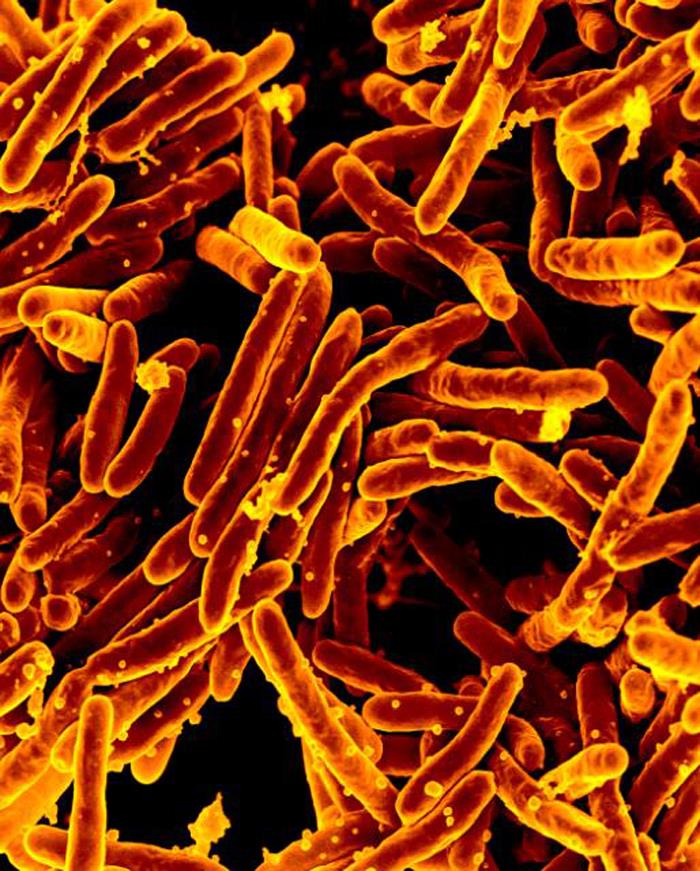
The presence of Salmonella in the products listed above. Salmonella is a bacterium that can cause illness in humans and animals. The product could therefore carry a potential risk, because of the presence of Salmonella, either through direct handling of the pet food, or indirectly, for example from pet feeding bowls, utensils or contact with the faeces of animals. In humans, symptoms caused by Salmonella usually include fever, diarrhoea and abdominal cramps. Infected animals may not necessarily display signs of illness, but symptoms can include diarrhoea.

Action taken by the company

Dogs Choice UK is recalling the above products. Point of sale notices will be displayed in the retail stores that sold these products. The notices explain to customers why the products are being recalled and tell them what to do if they have bought the product.

Our advice to consumers

UK – Freshers Foods Ltd recalls various pork snack products because of the presence of Salmonella

FSA

Fresher Foods Ltd is recalling several products because Salmonella has been found in some of the products. The products are packed in foil packets and glass jars. Where the product is packed in a glass jar, this is indicated in the table below.

Product details

Snaffling Pig Pork Scratchings Perfectly Salted
Pack size All
Best before All dates up to and including 25 June 2022
Snaffling Pig Porky Puffs Low & Slow BBQ
Pack size All
Best before All dates up to and including 25 June 2022
Snaffling Pig Pork Crackling Marvellous Maple
Pack size All
Best before All dates up to and including 23 July 2022
Snaffling Pig Pork Crackling Hot to Trot Habanero
Pack size All
Best before All dates up to and including 23 July 2022
Snaffling Pig BBQ (glass jar)
Pack size All
Best before All dates up to and including 23 September 2022
Snaffling Pig Habanero (glass jar)
Pack size All
Best before All dates up to and including 23 September 2022
Snaffling Pig Marvellous Maple (glass jar)
Pack size All
Best before All dates up to and including 23 September 2022
Snaffling Pig Mustard (glass jar)
Pack size All
Best before All dates up to and including 23 September 2022
Snaffling Pig Salted (glass jar)
Pack size All
Best before All dates up to and including 23 September 2022
Snaffling Pig Pig of Doom (glass jar)
Pack size All
Best before All dates up to and including 23 September 2022
Snaffling Pig Pigs in Blanket (glass jar)
Pack size All
Best before All dates up to and including 23 September 2022
Snaffling Pig Salt and Black Pepper (glass jar)
Pack size All
Best before All dates up to and including 23 September 2022
Snaffling Pig Porky Puffs Marvellous Maple
Pack size All
Best before All dates up to and including 25 June 2022
Snaffling Pig Salt and Vinegar (glass jar)
Pack size All
Best before All dates up to and including 23 September 2022
Awfully Posh Pork Puff Original
Pack size All
Best before All dates up to and including 25 June 2022
Awfully Posh Pork Puff Honey BBQ
Pack size All
Best before All dates up to and including 25 June 2022
Awfully Posh Pork Scratchings Traditional
Pack size All
Best before All dates up to and including 25 June 2022
Awfully Posh Pork Crackling Chili & Garlic
Pack size All
Best before All dates up to and including 23 July 2022
Awfully Posh Pork Crackling Sea Salt
Pack size All
Best before All dates up to and including 23 July 2022
Openshaws Pork Scratching (any 2 for £1)
Pack size All
Best before All Dates up to and including 25 June 2022
Openshaws Pork Scratchings
Pack size All
Best before All dates up to and including 25 June 2022
Openshaws Big Bag Pork Scratchings
Pack size All
Best before All dates up to and including 25 June 2022
Openshaws Pork Crunch
Pack size All
Best before All dates up to and including 25 June 2022
Snaffling Pig Porky Puffs Saucy Sriracha
Pack size All
Best before All dates up to and including 25 June 2022
Pub Original Pork Scratchings
Pack size All
Best before All dates up to and including 25 June 2022
Openshaws Pork Crackling
Pack size All
Best before All dates up to and including 23 July 2022
Pub Original Pork Crackling
Pack size All
Best before All dates up to and including 23 July 2022
Openshaws Scampi Bites
Pack size All
Best before All dates up to and including 15 October 2022
Snaffling Pig Bumper Pack Crackling
Pack size All
Best before All dates up to and including 23 July 2022
Snaffling Pig Pork Crackling Ghost Chili
Pack size All
Best before All dates up to and including 23 July 2022
Snaffling Pig Pork Crackling Mighty Mustard
Pack size All
Best before All dates up to and including 23 July 2022
Snaffling Pig Pork Crackling Low and Slow BBQ
Pack size All
Best before All dates up to and including 23 July 2022
Snaffling Pig Pork Crackling Black Pepper & Sea Salt
Pack size All
Best before All dates up to and including 23 July 2022
Snaffling Pig Pork Crackling Salt ‘N’ Vinegar
Pack size All
Best before All dates up to and including 23 July 2022

Risk statement

The presence of salmonella in the products listed above.

Symptoms caused by salmonella usually include fever, diarrhoea and abdominal cramps

Action taken by the company

Freshers Foods Ltd is recalling the above products. Point of sale notices will be displayed in retail stores that are selling these products. These notices explain to customers why the product is being recalled and tell them what to do if they have bought the product. Please see the attached notice.
Our advice to consumers

If you have bought any of the above products do not eat them. Instead, return them to the store from where they were bought for a full refund. If you require further information, please contact Freshers Foods Ltd at enquiries@openshaws.net or telephone 07968542566.

UK – Abbott recalls two infant formula powders because of the possible presence of Salmonella

FSA

Abbott has taken the precautionary step of recalling various batches of Elecare Similac and Alimentum Similac infant formula powders because they might contain Salmonella. Both products are foods used for special medical purposes for infants, ordinarily to be used under medical supervision.

Risk statement

The presence of Salmonella in the products listed above.

Symptoms caused by Salmonella usually include fever, diarrhoea and abdominal cramps.

Action taken by the company

Abbott is recalling the above products. All stores and pharmacies that are supplying these products are being informed.

Our advice to consumers

If you have purchased or been prescribed any of the above product batches, do not feed it to your baby and return to the place of purchase. If you have additional questions, please contact Abbott on 01795 580303.

Research – Antibacterial Properties of TMA against Escherichia coli and Effect of Temperature and Storage Duration on TMA Content, Lysozyme Activity and Content in Eggs

MDPI

Studies on trimethylamine (TMA) in egg yolk have focused on how it impacts the flavor of eggs, but there has been little focus on its other functions. We designed an in vitro antibacterial test of TMA according to TMA concentrations that covered the TMA contents typically found in egg yolk. The change in TMA content in yolk was analyzed at different storage temperatures and for different storage durations. The known antibacterial components of eggs, including the cuticle quality of the eggshell and the lysozyme activity and content in egg white, were also assessed. The total bacterial count (TBC) of different parts of eggs were detected. The results showed that the inhibitory effect of TMA on Escherichia coli (E. coli) growth increased with increasing TMA concentration, and the yolk TMA content significantly increased with storage duration (p < 0.05). The cuticle quality and lysozyme content and activity significantly decreased with storage time and increasing temperature, accompanied by a significant increase in the TBC on the eggshell surface and in the egg white (p < 0.05). This work reveals a new role for trace TMA in yolks because it reduces the risk of bacterial colonization, especially when the antibacterial function of eggs is gradually weakened during storage.

Research – Scientists identify environmental cue linked to illness caused by Salmonella

Science Daily

To survive in hostile environments, bacteria attach to one another, forming a supportive framework known as a biofilm. In biofilms of Salmonella — a major cause of food-borne diarrheal illness — a key component of this framework is curli amyloid protein.

Now, in new research, scientists at the Lewis Katz School of Medicine at Temple University show that the repression of curli by an environmental factor in the intestine plays a critical role in freeing Salmonella bacteria of strain S. Typhimurium from their biofilms, enabling them to cause active infection. The environmental cue is nitrate, which both represses curli and modulates levels of an intracellular molecule known as cyclic-di-GMP. These events ultimately lead to the activation of S. Typhimurium flagella, which in humans is a critical step in allowing individual S. Typhimurium bacteria to swim toward and infect intestinal cells.

“It had been unclear what factors trigger S. Typhimurium to switch between a sessile, biofilm lifestyle to a motile, free-swimming lifestyle in the intestine,” explained Çagla Tükel, PhD, Director of the Center for Microbiology and Immunology at the Katz School of Medicine and senior investigator on the new study. “Our study shows for the first time that nitrate produced in the intestinal lumen of the host serves as an environmental cue driving this switch.”

Research – Prevalence of Mycobacterium bovis in milk on dairy cattle farms: An international systematic literature review and meta-analysis

Science Direct

Bovine tuberculosis, caused by Mycobacterium bovis (M. bovis), is a globally distributed chronic disease of animals. The bacteria can be transmitted to humans via the consumption of unpasteurised (raw) milk, thus representing an important public health risk. To investigate the risk of zoonotic transmission of M. bovis via raw milk, this study systematically reviewed published studies to estimate the prevalence of M. bovis in on-farm bulk-tank milk (BTM) and individual cow’s milk (IM) by meta-analysis.

In total, 1,339 articles were identified through seven electronic databases and initially screened using titles and abstracts. The quality of 108 potentially relevant articles was assessed using full texts, and 67 articles comprising 83 studies (76 IM and 7 BTM), were included in the meta-analysis. The prevalence of M. bovis in IM and BTM was summarised according to the diagnostic test used, and the tuberculin skin test (TST) infection status of the individual cows (for IM) or herds (for BTM). Heterogeneity was quantified using the I-squared statistic. Prediction intervals (95% PIs) were also estimated.

For IM, the overall prevalence was summarised at 5% (95%CI: 3%–7%). In TST positive cows, prevalence was summarised at 8% (95%CI: 4%–13%). For BTM, the overall prevalence independent of individual herd TST infection status was summarised at 5% (95%CI: 0%–21%).

There was considerable heterogeneity evident among the included studies, while PIs were also wide. Inconsistency in the quality of reporting was also observed resulting in missing information, such as the TST infection status of the individual animal/herd. No study reported the number of M. bovis bacteria in test-positive milk samples. Several studies reported the detection of M. tuberculosis and M. africanum in milk.

Despite international efforts to control tuberculosis, this study highlights the risk of zoonotic transmission of M. bovis via unpasteurised milk and dairy products made using raw milk.

Research – Microbial safety and sanitary quality of strawberry primary production in Belgium: risk factors for Salmonella and Shiga toxin producing Escherichia coli (STEC) contamination.

AEM

Hepatitis A kswfoodworld

Strawberries are an important fruit in Belgium both in production and consumption, but little information is available about the presence of Salmonella and STEC in these berries, the risk factors in agricultural production and possible specific mitigation options. In 2012, a survey was undertaken of three soil and three soilless cultivation systems in Belgium. No Salmonella spp. was isolated. No STEC was detected in the strawberry samples (0 out of 72), but STEC was detected by qPCR in 11 out of 78 irrigation water and 2 out of 24 substrate samples.

Culture isolates were obtained for 2 out of 11 qPCR positive irrigation water samples and 2 out of 2 substrate samples. Multivariable logistic regression analysis revealed elevated generic E. coli numbers (odds ratio (OR) for 1 log increase being 4.6) as the most important risk factor for STEC, together with the berry picking season (elevated risk in summer).

Presence of generic E. coli in the irrigation water (≥ 1 cfu per 100 ml) was mainly influenced by the type of irrigation water (collected rainfall water stored in ponds was more often contaminated than ground water pumped from boreholes (OR = 5.8)) and the lack of prior treatment (untreated water versus water subjected to sand filtration prior to use (OR = 19.2)).

The follow-up study in 2013 at one of the producers indicated cattle as the most likely source of STEC contamination of the irrigation water.

Netherlands – Safety warning Organic Chicken shoarma strips, Organic Chicken stir-fry meat and Organic Chicken thigh skewers Sate Huis Ter Mee – Salmonella

NVWA

Safety warning Organic Chicken shoarma strips, Organic Chicken stir-fry meat and Organic Chicken thigh skewers Sate Huis Ter Mee

Odin Groothandel BV warns against Bio Chicken shoarma bars, Bio Chicken stir-fry meat and Bio Chicken thigh skewers Satay of the Huis Ter Mee brand. The products may contain salmonella. Do not eat these products.

See Odin .’s website

Which products are involved?

  • Organic Chicken shoarma strips 250 grams (brand Huis ter Mee), with batch code B933 M257 42, best before 23-2-22
  • Organic Chicken stir-fry 250 grams (brand Huis ter Mee), batch code B933 M257 41, best before 23-2-22
  • Organic Chicken thigh skewers Sate 200 grams (brand Huis ter Mee), batch code B933 M257 44, best before 18-2-22
  • Organic Chicken thigh skewers Satay 200 grams (brand Huis ter Mee), batch code B933 M257 45, best before 2/19/22
  • Organic Chicken thigh skewers Satay 200 grams (brand Huis ter Mee), batch code B933 M257 41, best before 22-2-22

Sincerely

The Dutch Food and Consumer Product Safety Authority

Netherlands – Safety warning Bio+ chicken thigh fillet 220 grams – Salmonella

NVWA

Safety warning Bio+ chicken thigh fillet 220 grams

Bio+ warns against Bio+ chicken thigh fillet 220 grams. The product may contain salmonella. Do not eat the product.

Which product is it?

  • Organic+ chicken thigh fillet 220 grams
  • Best before date 21-02-2022
  • Barcode: 8710624301569
  • The product was delivered to the Boon, Coop and Poiesz . supermarkets

read more

Sincerely

The Dutch Food and Consumer Product Safety Authority

Netherlands – Safety warning Jumbo organic chicken thighs 220 grams – Salmonella

NVWA

Safety warning Jumbo organic chicken thighs 220 grams

Jumbo is immediately removing the Jumbo organic chicken thighs from the shelves. Salmonella bacteria may be present in this product. Do not eat this product.

See the Jumbo website

Which product is it?

  • Jumbo organic chicken thigh steaks 220 grams
  • Barcode: 2348736000000
  • Best before: 19-02-2022 and 21-02-2022

Sincerely

The Dutch Food and Consumer Product Safety Authority