Category Archives: Food Illness

Europe – Report into Listeria Prevalence in RTE Foods

EFSAefsa

The first part of EFSA’s analysis of an EU-wide baseline survey on Listeria monocytogenes published today provides valuable insights  into the presence of this bacteria in certain ready-to-eat foods (fish, cold  meats and soft cheeses[1]). The proportion of food samples exceeding the legal  food safety limit was low. However, given the popularity of these foods and the  severe implications that Listeria infections (listeriosis) can have on human  health, overall vigilance regarding the possible presence of the bacteria in  food is warranted. To prevent listeriosis,  EU legislation lays down specific rules for  food business operators including the need to follow  good manufacturing practices, appropriate food  hygiene programmes, and effective temperature control throughout the food chain.  Experts highlighted the importance of these  measures as well as proper storage of these foods in the home, keeping  refrigerator temperatures low.

EFSA Report Link

USA – Transatlantic Flight – Suspected Food Poisoning

ABC News

Fifteen people took ill in a possible case of food poisoning during a trans-Atlantic flight Wednesday, officials told ABC News.

Inspectors with the local health department and U.S. Centers for Disease Control and Prevention met Delta Flight 72 as it arrived at Kennedy International Airport in New York around 5 p.m., airport officials said. The flight originated in Istanbul, Turkey.

“They had stomach cramps and were vomiting,” said one source.

The stricken passengers were interviewed and declined offers to be transported to a hospital for further treatment.

USA – Raw Milk Outbreaks -Campylobacter

Food Poisoning Bulletin Campylobacter

A Campylobacter outbreak associated with raw milk produced on a farm in Cambridge, MN is the fourth Campylobacter raw milk outbreak in four months.  The outbreak, which has sickened at least six people,  prompted officials to temporarily halt on-farm sales of raw milk while they investigate and issue a statewide consumer advisory.

Campylobacter is a bacteria that is transfered via the fecal-oral route, meaning those who develop Campylobacter infections have ingested microscopic amounts of animal feces. Pasteurization kills bacteria that cause disease, but raw mik is not pasteurized

USA – Turkish Pomegranate Seeds Seized -Hepatitis A

Food Poisoning BulletinAfghan_pomegranates

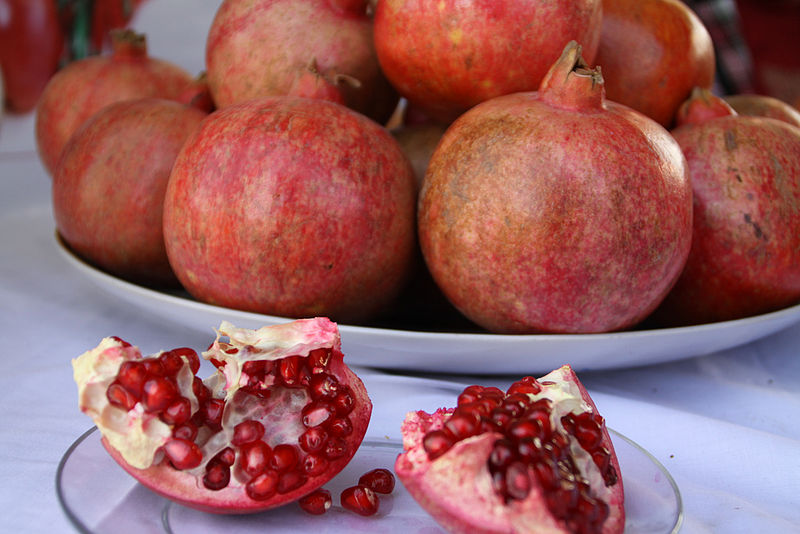
The FDA is detaining shipments of pomegranate seeds from Goknur Gida Maddeleri Ithalat thracat Tic (Goknur Foodstuffs Import Export Trading) of Turkey when they are offered for import into the country. This action is from the investigation into the hepatitis A outbreak linked to Townsend Farms Organic Antioxidant Blend frozen berry and pomegranate mix sold at Costco stores. That outbreak has sickened 127 people in eight states as of June 27, 2013


USA – Townsend Farms – Berry -Hepatitis A

Food Poisoning JournalClose up 3d render of an influenza-like virus isolated on white

Townsend Farms, Inc. of Fairview, Oregon, out of an abundance of caution and in cooperation with the FDA is expanding its voluntary recall efforts and is now recalling Townsend Farms Organic Antioxidant Blend, 3 lb. bag with UPC 0 78414 40444 8. The recall codes are located on the back of the package with the words “BEST BY” followed by the code T122114 sequentially through T053115, followed by a letter. All letter designations are included in the voluntary recall. The voluntary recall is occurring because of a potential hepatitis A contamination. The voluntary recall efforts are based on epidemiological and trace-back evidence resulting from an ongoing outbreak investigation conducted by the FDA and the CDC. Photos of the package are attached.

Hepatitis A is a contagious liver disease that results from exposure to the hepatitis A virus, including from food. It can range from a mild illness lasting a few weeks to a serious illness lasting several months. Illness generally occurs within 15 to 50 days of exposure and includes fatigue, abdominal pain, jaundice, abnormal liver tests, dark urine and pale stool. Hepatitis A vaccination can prevent illness if given within two weeks of exposure to a contaminated food. In rare cases, particularly consumers who have a pre-existing severe illness or are immune-compromised, hepatitis A infection can progress to liver failure.

Food Safety News

The Hepatitis A outbreak linked to frozen mixed berries continues to grow. On Friday, the Centers for Disease Control and Prevention said five more illnesses have been confirmed as part of the outbreak, bringing the total to 127 ill in 8 states, and the U.S. Food and Drug Administration said it thinks it has identified a common shipment of pomegranate seeds from Turkey that may have been to blame.

According to CDC, all of the confirmed victims became ill after eating Townsend Farms Organic Anti-oxidant Blend, a frozen berry blend sold across the country in Costco stores. Harris Teeter also sold the now recalled product, but so far no illnesses have been linked to the retailer.

UK – FSA Annual Food Incidents Report

FSA food_standards_agency_logo

The Food Standards Agency has today published its latest Annual Report of Food Incidents. The report highlights the wide range of incidents managed by the Food Standards Agency during 2012.

Last year, a total of 1,604 food and environmental contamination incidents in the UK were reported to and investigated by the FSA. This figure was 110 down on 2011 but higher than in many previous years. The three largest contributors to these incidents were microbiological contamination (20%), environmental contamination (15%) and natural chemical contamination (13%).

One of the valuable roles played by the report is providing insight into why certain types of incident have increased. For example, FSA investigations show a recent rise in a certain type of salmonella was mostly the result of paan leaves imported from Bangladesh. Similarly, the number of allergen-related incidents appears to have risen by more than half since 2010. Statistics suggest, however, that legislative changes relating to gluten may have been a major contributory factor.

The report also shows a rise in the number of whistleblowers who contacted the FSA during the year. A total of 81 cases originated from whistleblowers during 2012 – up from 54 the previous year.

Catherine Brown, Chief Executive of the Food Standards Agency, said: ‘We hope that this annual report encourages food businesses and consumers to notify us promptly of incidents and of any other potentially-useful intelligence they have. This will enable us to act swiftly to protect the public and the food industry and, in so doing, increase public confidence in food safety.’

The data released today does not include the incidents of horsemeat contamination that came to light in the first half of 2013, as these occurred outside of the scope of the report. All incidents notified to the FSA are reviewed, and in the case of horsemeat the FSA has commissioned an additional independent external review of how it responded. This is due to report shortly.

Catherine Brown said: ‘Although the horsemeat incident occurred outside the scope of this report, I would like to highlight the resolve with which the FSA responded. Working closely with other Government departments and the food industry, the Agency ensured that 6,000 tests of frozen products were carried out within three weeks – far more than any other EU member state. The UK was also the first country to submit a dossier to Europol and the first country to make arrests.

‘By responding so quickly, we were able to reassure the public that more than 99% of the tests undertaken in the UK contained no horse DNA at the level of 1% or above, and that there was no threat to public health.’


Canada – Recalls – Salmonella – Mycotoxin – Clostridium botulinum

CFIA – The Canadian Food Inspection Agency (CFIA) and Wonder Berry North America are warning the public not to consume certain baby cereal products described below because they may contain mycotoxin HT-2.

There has been one reported illness associated with the consumption of these products. The affected products have been distributed in Alberta, Ontario, and Quebec.

The importer, Wonder Berry North America, Toronto, Ontario, is voluntarily recalling the affected products from the marketplace. The CFIA is monitoring the effectiveness of the recall.

CFIA – The public  warning issued on June 24, 2013 has been updated to include additional  product, importer, and distribution information.

The Canadian Food Inspection  Agency (CFIA) and UNFI Canada Inc. are warning the public not to consume the  Prince brand Tahini products described below because they may be contaminated  with Salmonella.

The following Prince brand  products, product of Israel, are affected by the recall. There have been no reported  illnesses associated with the consumption of these products.

The importer, UNFI Canada Inc.,  Concord, ON, is voluntarily recalling the affected products from the  marketplace.  The CFIA is monitoring the  effectiveness of the recall.

CFIA – The Canadian Food Inspection Agency (CFIA)  and Overwaitea Food Group are warning the public not to consume the Prince  brand Tahini described below because it may be contaminated with Salmonella.

The following Prince brand product, product of Israel, is affected by the recall. There have been no reported  illnesses associated with the consumption of these products.

The distributor, Overwaitea  Food Group, Langley, BC, is voluntarily recalling the affected product from the  marketplace.  The CFIA is monitoring the  effectiveness of the recall.

The CFIA is  working with Canadian importers to have these products removed from the  marketplace

CFIA – The Canadian Food Inspection Agency (CFIA) and Ratinaud French Cuisine are warning the public not to consume certain Charcuterie Ratinaud French Cuisine brand Confit Tomatoes because they may be contaminated with Clostridium botulinum. Toxins produced by these bacteria may cause botulism, a life-threatening illness.

There have been no reported illnesses associated with the consumption of this product.

The manufacturer, Ratinaud French Cusine, Halifax, NS, is voluntarily recalling the affected product from the marketplace. The CFIA is monitoring the effectiveness of the recall.

Europe – Laboratory Preparedness for Detection and Monitoring of Shiga Toxin 2-producing Escherichia coli O104:H4 in Europe and Response to the 2011 Outbreak

Eurosurveillance

A hybrid strain of enteroaggregative and Shiga toxin 2-producing Escherichia coli (EAEC-STEC) serotype O104:H4 strain caused a large outbreak of haemolytic uraemic syndrome and bloody diarrhoea in 2011 in Europe. Two surveys were performed in the European Union (EU) and European Economic Area (EEA) countries to assess their laboratory capabilities to detect and characterise this previously uncommon STEC strain. Prior to the outbreak, 11 of the 32 countries in this survey had capacity at national reference laboratory (NRL) level for epidemic case confirmation according to the EU definition. During the outbreak, at primary diagnostic level, nine countries reported that clinical microbiology laboratories routinely used Shiga toxin detection assays suitable for diagnosis of infections with EAEC-STEC O104:H4, while 14 countries had NRL capacity to confirm epidemic cases. Six months after the outbreak, 22 countries reported NRL capacity to confirm such cases following initiatives taken by NRLs and the European Centre for Disease Prevention and Control (ECDC) Food- and Waterborne Disease and Zoonoses laboratory network. These data highlight the challenge of detection and confirmation of epidemic infections caused by atypical STEC strains and the benefits of coordinated EU laboratory networks to strengthen capabilities in response to a major outbreak.

Canada – Chipped Parmesan Cheese – Listeria monocytogenes

CFIAEurofins Food Testing UK

The Canadian Food Inspection Agency (CFIA) and Castle Cheese (West) Inc., are warning the public not to consume the Okanagan’s Choice Cheese brand Chipped Parmesan Cheese described below because it may be contaminated with Listeria monocytogenes.

This product was sold from the following retail locations in British Columbia and Manitoba:

  1. New Apple Farm Market Ltd., 2856 West Broadway, Vancouver, BC
  2. Food Fare #1, 905 Portage Ave., Winnipeg, MB

There have been no reported illnesses associated with the consumption of this product.

The manufacturer, Castle Cheese (West) Inc., Lumby, BC, is voluntarily recalling the affected product from the marketplace.  The CFIA is monitoring the effectiveness of the recall.

Research – Listeria in Cheese and Milk

Wiley Online

According to Codex Alimentarius Commission recommendations, management options applied at the process production level should be based on good hygiene practices, HACCP system, and new risk management metrics such as the food safety objective. To follow this last recommendation, the use of quantitative microbiological risk assessment is an appealing approach to link new risk-based metrics to management options that may be applied by food operators.

Through a specific case study, Listeria monocytogenes in soft cheese made from pasteurized milk, the objective of the present article is to practically show how quantitative risk assessment could be used to direct potential intervention strategies at different food processing steps.

Based on many assumptions, the model developed estimates the risk of listeriosis at the moment of consumption taking into account the entire manufacturing process and potential sources of contamination. From pasteurization to consumption, the amplification of a primo-contamination event of the milk, the fresh cheese or the process environment is simulated, over time, space, and between products, accounting for the impact of management options, such as hygienic operations and sampling plans. A sensitivity analysis of the model will help orientating data to be collected prioritarily for the improvement and the validation of the model.

What-if scenarios were simulated and allowed for the identification of major parameters contributing to the risk of listeriosis and the optimization of preventive and corrective measures.

Dairy Foods

In 1985, the world changed for the dairy industry. The New England Journal of Medicine reported that from Jan. 1 to Aug. 15, there were 142 confirmed cases and 48 deaths associated with listeriosis, a serious infection usually caused by eating food contaminated with the bacterium Listeria monocytogenes.

The cases were centered in the local Hispanic population of Los Angeles. These were “confirmed” cases; however, the actual number is estimated to be significantly higher. The outbreak was eventually linked to Jalisco Mexican Products Inc., commonly known as “Jalisco Cheese.” Investigators determined that an unknown portion of the milk used to make the company’s fresh Mexican-style cheeses was not pasteurized. This was not by mistake. Raw milk added to pasteurized milk enhanced the flavor of the cheese, giving it a slight rancid flavor.

At the time, we knew virtually nothing about Listeria. We were asking:

  • What is it and how pathogenic is it?
  • Where did it come from?
  • How does it grow?
  • Can we control it?

But the most important questions in 1985 were: Will sanitizers destroy it and does it survive pasteurization?