Category Archives: Food Illness

Africa – A look at how Africa is tackling foodborne illness

DW.COM

CDC E.coli

Image CDC


Contaminated food poses a major health and economic threat to sub-Saharan Africa. While efforts are taken to provide safe food for exports, governments are reijigging the system to do more for domestic markets.

Small flies can be seen buzzing around many food markets. But the threat they bring is not visible to the naked eye.

Houseflies, infected with salmonella, E. coli and other bacteria, can contaminate food and cause serious gastro-intestinal illnesses. In Uganda’s popular pork snack bars, for example, one-third of raw pork sampled for a study by the International Livestock Research Institute tested positive for salmonella.

Foodborne diseases, either caused by pests, pesticides or improper storage, pose a major health threat to sub-Saharan Africa, which suffers the highest levels of foodborne illness anywhere in the world.

More than 91 million people in the region fall ill every year from eating contaminated food and 137,000 die as a result, according to the World Health Organization.


India – 19 schoolchildren taken to hospital after alleged food poisoning

The Hindu

A total of 19 children, including 12 girls, from a government-aided primary school in Vellaripatti near Appanthirupathi here were rushed to Government Rajaji Hospital on Tuesday after they developed vomiting and nausea after consuming the midday meals at the school.

Police said a couple of students started vomiting first, following which other students also developed the symptoms. GRH doctors said the children had developed allergy due to possible problem in the food. Stating that the allergy was not serious, doctors expressed hope that the children will be discharged within a day.

Meanwhile, officials from the School education department and Integrated Child Development Services began enquiries into the incident.

Research – Zoonotic Source Attribution of Salmonella enterica Serotype Typhimurium Using Genomic Surveillance Data, United States

CDC

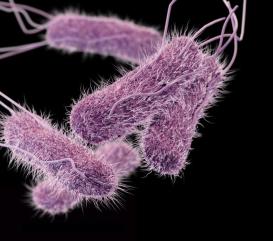
Salmonellaa

Image CDC

Increasingly, routine surveillance and monitoring of foodborne pathogens using whole-genome sequencing is creating opportunities to study foodborne illness epidemiology beyond routine outbreak investigations and case–control studies. Using a global phylogeny of Salmonella entericaserotype Typhimurium, we found that major livestock sources of the pathogen in the United States can be predicted through whole-genome sequencing data. Relatively steady rates of sequence divergence in livestock lineages enabled the inference of their recent origins. Elevated accumulation of lineage-specific pseudogenes after divergence from generalist populations and possible metabolic acclimation in a representative swine isolate indicates possible emergence of host adaptation. We developed and retrospectively applied a machine learning Random Forest classifier for genomic source prediction of Salmonella Typhimurium that correctly attributed 7 of 8 major zoonotic outbreaks in the United States during 1998–2013. We further identified 50 key genetic features that were sufficient for robust livestock source prediction.

Research – Prevalence of Salmonella Dublin in veal liver in Québec, Canada from a public health perspective

IJID

Purpose: Salmonella enterica is one of the principal causes of foodborne zoonotic enteritis. Among the different serovars, Dublin (S. Dublin) is of particular importance due to its propensity to progress to an invasive infection in humans and due to the high proportion of multi-drug resistant strains in Canada. Cattle are considered as the main reservoir of S. Dublin. This serotype has emerged since 2011 in the province of Quebec, Canada, in both cattle and human populations. First animal cases have been reported in calf production. White veal are valued for the quality of their meat, offal and liver. The liver is usually consumed mildly cooked and is considered as a probable source of foodborne exposure to S. Dublin in humans. The objective of this study was to estimate the prevalence of S. Dublin positive liver after slaughtering and the seroprevalence against S. Dublin at the calf level.

Methods & Materials: Samples were collected from 75 batches in two slaughterhouses from August 2016 to October 2017. For each batch, a liver sample was collected from 8 calves after evisceration and additionally, a blood sample from 15 calves. Liver samples were screened by PCR and then cultured, and serums were tested using an indirect ELISA (PrioCHECK® Salmonella Ab bovine Dublin).

Results: Salmonella was detected by PCR in 20 of the 547 veal livers. Typical isolates were obtained from 14 livers; all were serotyped and identified as S. Dublin, for a prevalence estimate of 3.1% (IC95%: 0.0%-7.45%). At least one seropositive calf was detected in 128 (24%) of the 75 batches. At the calf level, seroprevalence was estimated at 6.97% (IC95%: 2.83%-11.11%). S. Dublin was detected in liver of 14.0% of seropositive calves compared to 1.2% of seronegative ones (p < 0.001).

Conclusion: Our results show that veal liver can be a source of foodborne exposure to S. Dublin in humans, especially when veal liver is consumed mildly cooked. Surveillance and prevention measures associated with calf production and veal meat, including cooking recommendations could help reduce the burden associated with S. Dublin in humans. Serology could be potentially used in surveillance effort as an indicator to assess the risk of contamination.

USA – Do You Have These Nut Butters in Your Pantry? – Listeria monocytogenes

Food Poisoning Bulletin listeria

Recently there has been a spate of nut butter recalls for Listeria monocytogenes. These products usually have a very long shelf life, so there’s a good chance that some of these products are in pantries around the country. There is zero tolerance for Listeria contamination in ready to eat products because the bacteria cause such serious illness, and because the consumer doesn’t heat the product, which would kill the pathogens, before eating.

USA – Norovirus Outbreak Associated with La Fuente in Renton, WA

Food Poisoning Bulletin Eurofins

A possible norovirus outbreak has been associated with La Fuente restaurant, located at 14400 South East Petrovitsky Road in Renton, Washington, according to a press release by the King County Public Health Department. Twenty-eight people are sick after eating food and drinking beverages there on January 25, 2019. The 28 people were all from one party.

Australia – Mungalli Creek Kefir 1 Litre BB Date 22/2/2019 No other products affected – E.coli

FSAU

Mungalli Creek Dairy would like to alert their Cairns and Townsville customers that the above item has been recalled. Please do not consume and return the product to your place of purchase for a full refund. We have already retrieved 95% of stock prior to sale and are asking for your assistance in retrieving the remaining 5% of stock.

Problem: The recall is due to testing showing the possible presence of E.coli

Food Safety Hazard: Food products contaminated with E. coli may cause illness if consumed

Country of origin: Australia

What to do: Any consumers concerned about their health should seek medical advice. Customers should return the product to the place of purchase for a full cash refund. No other products are affected and this is the only batch of Kefir affected. All new batches will have additional testing to ensure product integrity. We thank you for your assistance and apologise for any inconvenience.
For further information contact Michelle Bell-Turner on 0438 171 248​

Canada – Raw Chicken Salmonella Outbreak in Canada Grows to 529 Sick

Food Poisoning Bulletin


A raw chicken Salmonella outbreak in Canada has grown to include 529 laboratory-confirmed illnesses. Ninety people have been hospitalized, and three people have died. However, Salmonella was not the case of death for two of those patients, and it was not determined whether this illness contributed to the death of the third person.

USA – Outbreak of Multidrug-Resistant Salmonella Infections Linked to Raw Turkey Products – Update

CDC

Latest Outbreak Information

Illustration of a megaphone.

At A Glance

  • Since the last update on November 8, 2018, 52 ill people from 26 states and the District of Columbia have been added to this investigation.
  • As of December 18, 2018, 216 people infected with the outbreak strain of SalmonellaReading have been reported from 38 states and the District of Columbia.
    • 84 people have been hospitalized, and one death has been reported from California.
  • Epidemiologic and laboratory evidence indicates that raw turkey products from a variety of sources are contaminated with Salmonella Reading and are making people sick.
  • In interviews, ill people report eating different types and brands of turkey products purchased from many different locations. Three ill people lived in households where raw turkey pet food was fed to pets.
  • The outbreak strain has been identified in samples taken from raw turkey pet food, raw turkey products, and live turkeys.
    • On November 15, 2018, Jennie-O Turkey Store Sales in Barron, Wisconsin recalled approximately 91,388 pounds of raw ground turkey products.
    • On December 21, 2018, Jennie-O Turkey Store Sales, LLC, in Faribault, Minnesota recalled approximately 164,210 pounds of raw ground turkey products.
    • On January 28, 2019, Woody’s Pet Food Deli in Minnesota recalled raw turkey pet food. The recalled product was sold in 5-pound plastic containers labeled “Woody’s Pet Food Deli Raw Free Range Turkey” and was sold in Minnesota.
    • A single, common supplier of raw turkey products or of live turkeys has not been identified that could account for the whole outbreak.
  • The Public Health Agency of Canada has identified ill people infected with the same DNA fingerprint of Salmonella Reading bacteria in Canada.
  • The outbreak strain of Salmonella Reading is present in live turkeys and in many types of raw turkey products, indicating it might be widespread in the turkey industry. CDC and USDA-FSIS have shared this information with representatives from the turkey industry and asked about steps that they may be taking to reduce Salmonella contamination.

USA – FDA Investigated Recalled Duncan Hines Cake Mixes Potentially Linked to Salmonella Agbeni Illnesses

FDA

Update: January 31, 2019

On January 14, 2019, CDC reported that this outbreak appears to be over. The FDA, CDC, public health and regulatory officials in several states worked together to investigate this multistate outbreak of SalmonellaAgbeni infections. In early November, FDA investigated the facility that produced the recalled cake mix; however, product and environmental samples collected at that time were negative for Salmonella. There was not enough epidemiologic and traceback information available to determine if the ill people in this outbreak had eaten the contaminated cake mix produced by Duncan Hines.

Recommendation:

The FDA recommends consumers to not bake with or eat the recalled product. Additionally, consumers should not eat uncooked batter, flour, or cake mix powder.

Case Counts

Total Illnesses: 7
Hospitalizations: 0
Deaths: 0
Last illness onset: October 5, 2018
States with Cases: FL (1), MD (2), MO (1), OH (2), WI (1)

Conagra Brands reports that the products covered by this recall were distributed for retail sale in the U.S. and limited international exports; the specific product information is listed below. These products may be available in grocery stores around the U.S., and consumers should check their labels carefully.