Category Archives: Food Illness

USA – Cronobacter Illnesses Linked to Powdered Infant Formula

CDC

On February 17, Abbott three brands of formula produced at its manufacturing facility in Sturgis, Michigan. Parents and caregivers of newborns should not feed their baby recalled Similac, Alimentum, or EleCare powdered infant formulas.

Fast Facts
  • Illnesses: 3
  • Deaths: 1
  • States: 3 (Minnesota, Ohio, Texas)
  • Recall: Yes
  • Investigation status: Active
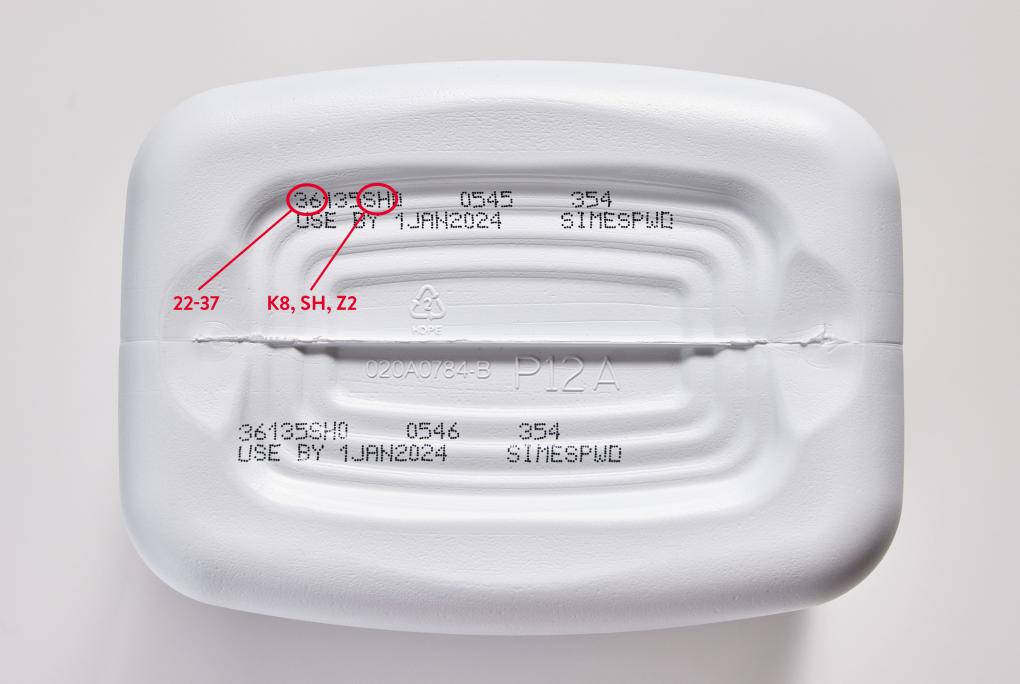
Powdered infant formula container with product coding

Recalled Powdered Infant Formula

On February 17, Abbott recalledexternal icon three brands of formula produced at its manufacturing facility in Sturgis, Michigan.

Recalled Similac, Alimentum, or EleCare powdered formula have all three of these conditions:

  • First two digits of the code are 22 through 37, AND
  • Code on the container contains “K8,” “SH,” or “Z2,” AND
  • Use-by date is 4-1-2022 (APR 2022) or later.

To find out if the product you have is included in this recall, review these codes in the bottom of the package. See the recall noticeexternal icon for more information.

What Parents and Caregivers Should Do

Do not feed your baby any recalled powdered formula.

Contact your baby’s healthcare provider if:

  • Your baby has symptoms of Cronobacter illness (fever and poor feeding, excessive crying, or very low energy).
  • Your regular formula is not available, and you need recommendations on other ways to feed your baby.
Symptoms
  • The first symptom of Cronobacter infection in infants (0–1 year old) is usually a fever, accompanied by poor feeding, excessive crying, or very low energy. Some infants may also have seizures. Infants with these symptoms should be seen by a medical provider as soon as possible.
  • Cronobacter germs can cause a dangerous blood infection (sepsis) or make the linings surrounding the brain and spinal cord swell (meningitis). Infections in infants usually occur in the first days or weeks of life. Infants 2 months of age and younger are most likely to develop meningitis if they are infected with Cronobacter.
What Healthcare Providers/Laboratories Should Do
  • If a Cronobacter infection is diagnosed by a laboratory culture, CDC encourages clinicians and laboratories to inform their local or state health department.
  • Cronobacter can be detected in the blood or cerebrospinal fluid (CSF) of patients with meningitis or sepsis caused by these bacteria. Cronobacter bacteria grow on routine culture media and microbiological laboratories can detect Cronobacter from blood or CSF samples.
  • CDC does not recommend testing infants for Cronobacter infection unless they have symptoms of meningitis or sepsis, even if they consumed recalled formula.
  • CDC does not recommend testing stool for CronobacterCronobacter infection does not typically cause diarrhea in infants.
  • CDC does not recommend testing formula for Cronobacter contamination unless an infant has a diagnosed Cronobacter infection.
alert icon
Please contact your local or state health department if your child has been diagnosed with Cronobacter infection and consumed recalled formula.
Description of Cases

On February 10, 2022, CDC was notified of FDA’s investigation of consumer complaints of infant illness related to products from Abbott Nutrition in Sturgis, Michigan. These complaints include three reports of Cronobacter sakazakii infections and one report of Salmonella Newport infection in infants. CDC and FDA are conducting additional laboratory testing and investigation to better understand these cases.

The most recent investigation details are summarized below:

From September 16, 2021, to January 5, 2022, CDC received reports of three Cronobacter cases in infants that were later found to be linked to this ongoing investigation:

  • Three infants in Minnesota, Ohio, and Texas consumed formula produced at the Sturgis, Michigan, facility before they got sick. Formula consumed included Similac Sensitive, Similac Pro-total Comfort, and Similac Advance. Cronobacter may have contributed to the death of an infant in Ohio.
  • These are the same cases identified in the consumer complaints received by FDA.

On February 16, 2022, CDC asked clinicians and state and local health departments to provide information on other cases of Cronobacter associated with infant formula from November 2020 through the present. Since then, CDC has received reports of more possible cases of Cronobacter illnesses in infants who might have consumed recalled formula. CDC is investigating to determine if these cases are linked to formula products produced at the Abbott Nutrition facility in Sturgis, Michigan. CDC is performing whole genome sequencing on Cronobacter bacteria isolated from available patient samples to compare with the environmental samples taken at the facility to determine if there is any relation.

CDC’s routine outbreak surveillance has not detected an outbreak of Salmonella illnesses linked to the case reported to FDA.

About Cronobacter

Cronobacter sakazakii is a germ found naturally in the environment and can live in very dry places. The germs can live in dry foods, such as powdered infant formula, powdered milk, herbal teas, and starches. Cronobacter infection is not reportable in most states, meaning doctors are not required to report cases to their health department. Cronobacter illnesses are rare, but when infections happen, they can be deadly for infants. CDC typically receives reports of 2 to 4 infections in infants per year, but the total number of cases that occur in the United States each year is not known.

How Cronobacter Can Spread
  • At a production factory, Cronobacter could get into formula powder if contaminated raw materials are used to make the formula or if the formula powder touches a contaminated surface in the manufacturing environment.
  • Powdered infant formula could also become contaminated at home or elsewhere after the container is opened. For example, Cronobacter could get into the formula if formula lids or scoops are placed on contaminated surfaces and later touch the formula or if the formula is mixed with contaminated water or in a contaminated bottle. See more information on how to safely prepare and store powdered infant formula.

UK – Former butcher fined after Listeria outbreak link; his family now running shop

Food Safety News

A former butcher in England was fined this week after his business was linked to a Listeria outbreak. Officials said it was one of the biggest environmental health investigations the authorities have ever had.

Robert Bowring of Bowring Butchers was prohibited from managing any food business during sentencing at Nottingham Crown Court. While he is not allowed to manage food processes and production, he will be able to undertake tasks such as deliveries.

The Mansfield District Council launched an investigation in April 2019 after being told by Public Health England East Midlands, now the UK Health Security Agency (UKHSA), that whole genome sequencing had linked two cases of listeriosis to Bowring. The suspected source was Bowring Butchers and potted beef.

The court was told about the death of Kathleen Ferguson who was admitted to hospital after becoming ill. Listeria was found in a blood sample, confirming listeriosis, although cause of death was recorded as heart disease. Analysis revealed that the bacteria in Ferguson’s blood was from the same source as those in samples taken in Bowring’s premises, where she was a regular customer. Two care homes had also been supplied with meat by Bowring.

Sentencing Judge Nigel Godsmark said although Ferguson died with, rather than of, listeriosis, the consequences could have been serious, particularly for vulnerable and elderly people in care homes.

Sweden – Salmonella in meat sick 15 in Sweden

Europe Cities

Disease In Food

More than a dozen people recently fell ill in Sweden with Salmonella infections after eating poorly cooked burgers.

An outbreak with 15 cases of salmonellosis after a lunch at a hotel restaurant was investigated by the local food authority and the regional public health authority in Jämtland Härjedalen.

The Salmonella Enteritidis outbreak occurred among students and teachers from Fjällgymnasiet high school during a ski competition in northern Sweden.

Based on information from 11 patients, the first date for disease onset was January 28 and the last was February 4. The age range was 17 to 57 years with a median age of 19. Ten of the patients were men and one was female, all were from northern Sweden.

All the sick had a common meal where they ate ground (minced) burgers. Some of those who ate lunch reported that the burgers were clearly poorly cooked.

After finding Salmonella in samples of minced meat, further tracing of the batch of frozen beef and pork involved was carried out by local authorities, revealing that it came from Poland.

Salmonella was found in three of six meat samples but there is no ongoing risk of people getting sick as the batch involved was only distributed to restaurants and has now been withdrawn.

RASFF Alerts – Foodborne outbreak suspected to be caused by infant formulae from the United States – Salmonella Newport – Cronobacter

RASFF

Foodborne outbreak suspected to be caused by infant formulae from the United States in Croatia, Ireland, Italy, Netherlands, Slovenia , Spain

Italy – Similac – Alimentum – Salmonella – Cronobacter

Salute

Brand : Similac

Name : Alimentum

Reason for reporting : Recall due to microbiological risk

Publication date : 24 February 2022

Click to access C_17_PubblicazioneRichiami_1659_azione_itemAzione0_files_itemFiles0_fileAzione.pdf

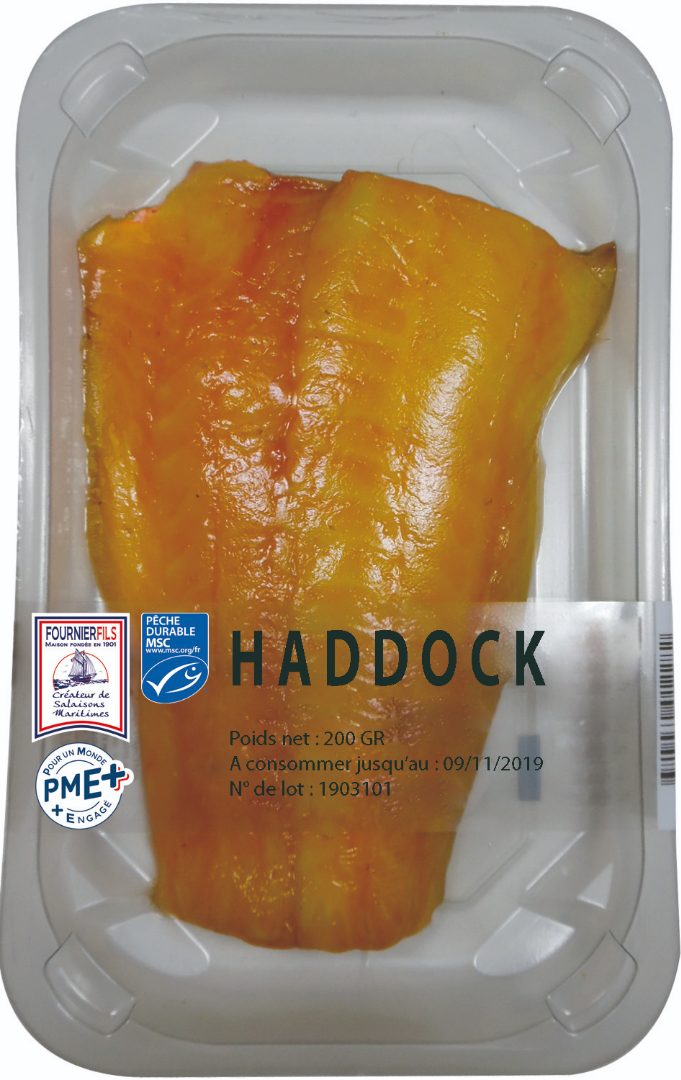
France – HADDOCK 200 GR MSC SKIN MSC-C-53427 – Listeria monocytogenes

Gov france

Identification information of the recalled product

  • Product category Food
  • Product subcategory Fishery and aquaculture products
  • Product brand name Fournier son
  • Model names or references HADDOCK 200 GR MSC SKIN MSC-C-53427
  • Identification of products
    GTIN Lot Dated
    3324030012282 2204206 Use-by date 04/03/2022
    3324030012282 2204306 Use-by date 05/03/2022
  • Packaging skin tray 200g
  • Marketing start/end date From 02/14/2022 to 02/24/2022
  • Storage temperature Product to be stored in the refrigerator
  • Health mark FR 62 193 100 CE
  • Geographic area of ​​sale Whole France
  • Distributors Carrefour, CORA, Leclerc, Top Atlantic Lorient

Practical information regarding the recall

  • Reason for recall Detection of listeria monocytogenes
  • Risks incurred by the consumer Listeria monocytogenes (causative agent of listeriosis)

Netherlands – Safety warning Similac Elecare from Abbott BV – Salmonella and Cronobacter

NVWA

Safety warning Similac Elecare from Abbott BV

Abbot BV warns against Similac Elecare 400g can. As a precaution, Abbot BV is recalling the products after four complaints from US consumers related to Cronobacter sakazakii or Salmonella Newport in infants who ingested products from its Sturgis, Michigan plant.

See the Abbot Nutrition NL website

Which products are involved?

  • Similac Elecare, 400g can
  • Best before September 2022
  • Batch number on the can 27930Z20

Yours sincerely

The Dutch Food and Consumer Product Safety Authority

Spain – Alert for possible presence of Cronobacter sakazakii and Salmonella Newport in special infant milks from the United States

ACSA

The Spanish Agency for Food Safety and Nutrition has informed the Autonomous Communities through the Coordinated System for the Rapid Exchange of Information (SCIRI) of an alert notification sent by the health authorities of the Autonomous Community of Madrid regarding the possible presence of Cronobacter sakazakii and Salmonella Newport in two special infant milks.

This information has been transferred to the contact point of the Community of Madrid by the company ABBOTT LABORATORIES SA, which has proceeded to the voluntary withdrawal of two special infant milks, manufactured at the Sturgis Michigan plant (USA), after having received four consumer complaints in the US related to Cronobacter sakazakii and Salmonella Newport in infants who had consumed special infant formula made at this plant.

The information included is the result of the company’s own self-control, which has reported the incident to the competent authorities, in compliance with the legislation and in order not to make unsafe food available to the public.

The products and batches subject to withdrawal are:

  • SIMILAC FOOD 400g: lots:
    • 25659Z261 (expiration 01 2023)
    • 28123Z261 (expiration 04 2023)
    • 30283Z262 (expiration 06 2023)
    • 31410Z204 (expiration 07 2023)
    • 33688Z201 (expiration 09 2023)
  • SIMILAC ELECARE 400g: lots:
    • 25557Z203 (expiration 07 2022)
    • 30374Z202 (expiration 12 2022)

According to the information available, the distribution has been exclusively through pharmacy channel and hospitals of all the autonomous communities.

The company reports that it has contacted the distribution warehouses, hospitals, health centers and pharmacy services of the hospitals that purchase these products to slow down their distribution and proceed with the return of the units that are still in stock.

With the information available , there is NO evidence in Spain of any reported cases associated with this alert.

People who have products affected by this alert at home are advised to refrain from consuming them and return them to the point of purchase.

Australia – EleCare, Similac and Alimentum infant formula products – Salmonella and Cronobacter

FSANZ

Product information

​Abbott Australasia Pty Ltd and Abbott US are conducting a precautionary recall of some EleCare, Similac and Alimentum infant formula products manufactured in Abbott’s Sturgis plant in the United States. The products are available nationally​​ through prescription at pharmacies, hospitals and via direct mail order. ​

The recalled products can be identified by the 7 to 9 digit code and expiration date on the bottom of the package (see images). Products are included in the recall if they have all three items below:
• the first two digits of the code are 22 through 37 and
• the code on the container contains K8, SH, or Z2, and
• the expiration date is 1 April 2022 (APR 2022) or later.​


Infant formula lot codes
Problem

The recall is due to potential microbial contamination (Cronobacter and Salmonella).

Food safety hazard

Food products contaminated with Cronobacter or Salmonella may cause illness if consumed.

Country of origin

United States

What to do​

​Parents and caregivers should change to a suitable alternative product as soon as possible. Cease feeding the affected product once an alternative has been sourced. Medical advice on alternative products can be sought from your treating doctor.

For further information please contact:

Abbott Australasia Pty Ltd

Customer Service Number: 1800 225 311

http://www.abbottnutrition.com.au

Singapore – Recall of Abbott Alimentum powdered infant formula from USA due to possible presence of Cronobacter sakazakii and Salmonella Newport

Click to access sfa-media-release—20220223-recall-of-abbott-alimentum-and-similac-hmf.pdf

Updated media release:

Update on 19Feb 2022:Further to the media release on 19 Feb 2022, SFA has directed the recall of an additional affected product –Similac Human Milk Fortifier (HMF).The recall for both affected products have been completed. Parents or caregivers who are concerned should stop using these products. They should seek medical assistance should their infants feel unwell after consuming the affected products.

Consumers may reach out to the importer, Abbott Laboratories (S) Pte Ltd, at 6278 6220 or email to family.sg@abbott.com for any clarification.