Category Archives: Food Illness

UK – Update on reporting of non-O157 STEC infections and an outbreak of Shiga toxin-producing E. coli (STEC) O145 in the UK, February 2024

Gov UK

In December 2023 the UK Health Security Agency (UKHSA) reported (1) unseasonably high levels of Shiga toxin-producing Escherichia coli other than serogroup O157 (non-O157 STEC) case notifications during October to December of that year. Since then, reporting has returned to levels comparable with previous years. Investigations into the drivers of that unseasonal increase in reports of non-O157 STEC continue, as well as into individual outbreaks of STEC that were reported in the December 2023 report.

The investigations into the concurrent foodborne STEC O145: H28 outbreak associated with unpasteurised cheese – being undertaken by UKHSA, the Local Authority (LA) Environmental Health Team, Public Health Scotland (PHS), Food Standards Agency (FSA), Food Standards Scotland (FSS) and the Animal Plant Health Agency (APHA) – are nearly completed.

In total 36 confirmed cases and 1 probable case have been reported across England (n=29) and Scotland (n=8) since late July 2023, with most cases falling ill in November 2023. The last reported primary case had a symptom onset date of 23 December 2023 (see figure below).

Based on epidemiological, food chain and microbiological investigations, the vehicle was identified as an unpasteurised cheese produced in North West England. The food business concerned carried out a product withdrawal and recall on 24 December 2023 (2) and updated on 27 December 2023 (3) which ensured all recalled products were removed from sale in a timely manner.

Subsequent work between the food business, the LA Environmental Health team and the FSA allowed refinement of the product withdrawal and recall notice to include only the batches likely associated with illness, which resulted in a further update of the product withdrawal and recall by the food business on 9 February 2024 (4).

The FSA and FSS both published updated Product Recall Information Notices (PRIN’s) on 24 (2) and 27 December (3), and again on 9 February (4), with supporting news stories to amplify messaging about each of the product recalls.

USA – Hamburger E. coli O157 Outbreak sickens 13 with 1 death in Montana

Food Poison Journal

The Flathead City-County Health Department (FCCHD), the Montana Department of Public Health and Human Services (DPHHS), and other local health departments, are working together to investigate an E.coli O157:H7 outbreak originating in Flathead County.

To date, the investigation has identified at least 13 individuals associated with the outbreak. Many of the cases experienced moderate to severe symptoms, and one death has occurred. Preliminary investigative findings indicate that ground beef containing the E.coli bacteria may be the exposure of concern. State partners continue to test clinical and food samples for laboratory confirmation.mp

USA – Salmonella Sickened 171, the Biggest Outbreak From Raw Milk in Years

New York Times

Experts say the number of people affected in the outbreak, linked to Raw Farm milk, could be far higher.

Interesting article at the link above.

USA- Deadly Deli: 28 with Listeria with 2 dead linked to unnamed Deli Counter Meats

Food Poison Journal

As of July 19, 2024, a total of 28 people infected with the outbreak strain of Listeria have been reported from 12 states . Sick people’s samples were collected from May 29, 2024, to July 5, 2024. Of 28 people with information available, all have been hospitalized. One person got sick during their pregnancy and remained pregnant after recovering. Two deaths have been reported, 1 in Illinois and 1 in New Jersey.

The true number of sick people in this outbreak is likely higher than the number reported, and the outbreak may not be limited to the states with known illnesses. This is because some people recover without medical care and are not tested for Listeria. In addition, recent illnesses may not yet be reported as it usually takes 3 to 4 weeks to determine if a sick person is part of an outbreak.

Research – Risk Assessment Predicts Most of the Salmonellosis Risk in Raw Chicken Parts is Concentrated in Those Few Products with High Levels of High-Virulence Serotypes of Salmonella

Science Direct

Abstract

Salmonella prevalence declined in U.S. raw poultry products since adopting prevalence-based Salmonella performance standards, but human illnesses did not reduce proportionally. We used Quantitative Microbial Risk Assessment (QMRA) to evaluate public health risks of raw chicken parts contaminated with different levels of all Salmonella and specific high- and low-virulence serotypes. Lognormal Salmonella level distributions were fitted to 2012 USDA-FSIS Baseline parts survey and 2023 USDA-FSIS HACCP verification sampling data. Three different Dose-Response (DR) approaches included (i) a single DR for all serotypes, (ii) DR that reduces Salmonella Kentucky ST152 virulence, and (iii) multiple serotype-specific DR models. All scenarios found risk concentrated in the few products with high Salmonella levels. Using a single DR model with Baseline data (μ = −3.19, σ = 1.29 Log CFU/g), 68% and 37% of illnesses were attributed to the 0.7% and 0.06% of products with >1 and >10 CFU/g Salmonella, respectively. Using distributions from 2023 HACCP data (μ = −5.53, σ = 2.45), 99.8% and 99.0% of illnesses were attributed to the 1.3% and 0.4% of products with >1 and >10 CFU/g Salmonella, respectively. Scenarios with serotype-specific DR models showed more concentrated risk at higher levels. Baseline data showed 92% and 67% and HACCP data showed >99.99% and 99.96% of illnesses attributed to products with >1 and >10 CFU/g Salmonella, respectively. Regarding serotypes using Baseline or HACCP input data, 0.002% and 0.1% of illnesses were attributed to the 0.2% and 0.4% of products with >1 CFU/g of Kentucky ST152, respectively, while 69% and 83% of illnesses were attributed to the 0.3% and 0.6% of products with >1 CFU/g of Enteritidis, Infantis, or Typhimurium, respectively. Therefore, public health risk in chicken parts is concentrated in finished products with high levels and specifically high levels of high-virulence serotypes. Low-virulence serotypes like Kentucky contribute few human cases.

Canada – Hundreds of Norovirus cases now linked to B.C. oysters, PHAC says

CTV News

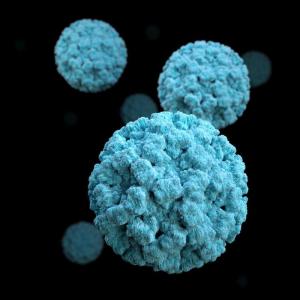
Food Borne Illness - Norovirus -CDC Photo

The norovirus outbreak involving raw oysters harvested in B.C. has infected almost 300 people, the Public Health Agency of Canada announced Thursday.

The agency says as of Wednesday, there had been 279 cases(opens in a new tab) of norovirus linked to B.C. oysters, with the vast majority of those cases (262) found in B.C. residents. 

An additional 15 cases have been confirmed in Ontario, as well as one each in Alberta and Saskatchewan.

According to the PHAC, recalls of affected oysters were issued on Feb. 18, March 20, March 23 and March 27


USA – Investigations of Foodborne Illness Outbreaks

FDA

What’s New

  • For the outbreak of Salmonella Irumu (ref #1235) linked to a not yet identified product, the case count has increased from 26 to 29.
  • For the outbreak of Salmonella Typhimurium illnesses (ref #1234) linked to a not yet identified product, the case count has increased from 80 to 87.
Date
Posted
Ref Pathogen
or
Cause of
Illness
Product(s)
Linked to
Illnesses

(if any)
Total
Case
Count

Status
7/10/

2024

1235 Salmonella
Irumu
Not Yet
Identified
29 Active
6/19/

2024

1234 Salmonella
Typhimurium
Not Yet
Identified
87 Active
6/12/

2024

1233 Not Yet
Identified
Chocolate,
Gummies,
Cones
See
Advisory
Active
5/22/

2024

1227 Salmonella
Africana
&
Braenderup
Cucumbers See
Advisory
Active
5/22/

2024

1232 Listeria
monocytogenes
Not Yet
Identified
2 Active

Canada – Public Health Notice: Outbreak of Listeria infections linked to recalled plant-based refrigerated beverages – Two Dead

PHAC

This outbreak investigation is ongoing. The public health notice will be updated as the investigation evolves.

At a glance

Do not consume, use, sell, serve or distribute various recalled plant-based refrigerated beverages

At a glance
Illnesses 12
Provinces and territories with illnesses (number of illnesses)
  • Ontario (10)
  • Quebec (1)
  • Nova Scotia (1)
Hospitalizations 9
Deaths 2
Gender 67% female
Age range 37-89
58% of cases are 60 years of age or older
Food Recall Yes, various Silk and Great Value brand plant-based refrigerated beverages recalled nationally
Recall information
Investigation status Active

Food recall warnings have been issued for plant-based refrigerated beverages from:

  • Silk
  • Great Value

For more information on the recalled products, please consult the Canadian Food inspection Agency (CFIA) recall notice on the Government of Canada Recalls and Safety Alerts website.

Food recall warning: Various Silk and Great Value brand plant-based refrigerated beverages recalled due to Listeria monocytogenes

UK – FSA sees incidents decline as Listeria claims top spot

Food Safety News

Listeria has overtaken Salmonella as the main pathogen in incidents involving the Food Standards Agency (FSA).

FSA was notified of 1,837 food and feed safety incidents in England, Northern Ireland, and Wales during 2023/24. This is the lowest amount for the past six years.

While incidents have declined, the agency said it deals with more complex events and outbreaks, which take longer to resolve. Examples include fake branded Wonka chocolate and glycerol in slush ice drinks.

EU – Raw milk cheese linked to French Yersinia outbreak

Food Safety News

More than 130 people are sick in France as part of a Yersinia outbreak linked to a raw milk goat’s cheese brand.

France has 133 cases, while Belgium, Norway, and Luxembourg all have one each in the Yersinia enterocolitica biotype 2, serotype O:9 outbreak.

Etoile de Provence Banon AOP 100-gram with dates up to Aug. 2, 2024, has been recalled from more than 20 countries, including Germany, Italy, Spain, the United Kingdom, and the United States.