Category Archives: Food Hygiene

Research – Norovirus Transmission

Cambridge Journals OnlineNorwalk_Caspid

Causal mechanisms of norovirus outbreaks are often not revealed. Understanding the transmission route (e.g. foodborne, waterborne, or environmental) and vehicle (e.g. shellfish or recreational water) of a norovirus outbreak, however, is of great public health importance; this information can facilitate interventions for an ongoing outbreak and regulatory action to limit future outbreaks. Towards this goal, we conducted a systematic review to examine whether published outbreak information was associated with the implicated transmission route or vehicle. Genogroup distribution was associated with transmission route and food vehicle, but attack rate and the presence of GII.4 strain were not associated with transmission route, food vehicle, or water vehicle. Attack rate, genogroup distribution, and GII.4 strain distribution also varied by other outbreak characteristics (e.g. setting, season, hemisphere). These relationships suggest that different genogroups exploit different environmental conditions and thereby can be used to predict the likelihood of various transmission routes or vehicles

Cambridge Journals Online

USA – FDA – Pistachio’s – Salmonella

FDASalmonella

Torn and Glasser, Inc of Los Angeles, CA  90021 is voluntarily recalling some packaged Pistachios because it has the potential to be contaminated with Salmonella, an organism which can cause serious and sometimes fatal infections in young children, frail or elderly people, and others with weakened immune systems. Healthy persons infected with Salmonella often experience fever, diarrhea (which may be bloody), nausea, vomiting and abdominal pain. In rare circumstances, infection with Salmonella can result in the organism getting into the bloodstream and producing more severe illnesses such as arterial infections (i.e., infected aneurysms), endocarditis and arthritis.

This decision to recall was made due to the expanded recall of pistachio products by ARO pistachio (Upgraded from a Class II to a Class I) due to the potential of contamination with Salmonella.  The Torn and Glasser recalled products contain pistachios supplied by the ARO processing plant located in Terra Bella Ca 93270.

The recalled product was distributed from February 21, 2012 to April 29, 2013 in CA, AZ, and HI.

UK – FSA – Latest research published by the FSA

FSA

The Agency has produced a summary of its research published in April to June 2013. Several areas of research were covered, including consumer attitudes towards the decontamination of meat and the use of freezing to reduce campylobacter in chicken livers. A full report for each area of research can be found via the links at the bottom of the page.

Evaluation: Freezing to reduce campylobacters in chicken liver
The FSA commissioned a research project to assess whether freezing chicken livers, before they are prepared and cooked in a catering or domestic kitchen, can significantly reduce the incidence of campylobacter contamination. Freezing is a proven effective intervention to control campylobacter contamination of poultry meat. However, there has been a lack of evidence on how effective this treatment is with chicken livers, particularly under conditions similar to those in catering or domestic kitchens where freezer temperatures and freezing rates may vary.

Research – Controlling Salmonella and Listeria with Marinades

Science DirectEurofins Food Testing UK

The effect of marination on the survival and growth of the pathogens Salmonella enterica and Listeria monocytogenes on beef pieces was investigated.

Five marinades were used: soy sauce base marinade without (SB) or with lactic acid (SBLA), red wine base marinade without (WB) or with 0.5% v/v oregano essential oil (WBO), and sterile saline used as control (C). Inoculated fresh beef pieces were marinated for 18 h at 5 °C, removed from the marinade and subjected to storage trials at 5 °C and 15 °C. Heat inactivation studies were also performed on the isolates after exposure to the marinades to determine if marination affects heat resistance of the pathogens.

The marinades with antimicrobials caused a significant decrease in viable count of the pathogens during marinations at 5 °C for 18 h of up to 2.1 and 3.4 log cfu cm−2 for Salmonella and L. monocytogenes, respectively. Marinades without antimicrobials were less bactericidal resulting to reductions ranging from 0.3 to 0.4 and 1.3 to 2.0 log cfu cm−2 for Salmonella and L. monocytogenes, respectively. Growth of L. monocytogenes was observed in the controls at both tested temperatures, while growth of Salmonella was observed in the controls stored at 15 °C. No growth of the pathogens was observed in any of the marinated samples at both temperature tested. No significant changes of heat resistance of the tested pathogens after exposure to the marinades were observed demonstrating the enhanced safety of the marinated beef product.

RASFF Alerts – Salmonella – Sesame Seeds – Poultry – Whole Chickens

RASFF – Salmonella Tennessee (presence /25g) in hulled sesame seeds from India in Greece

RASFF – Salmonella Tennessee (presence /25g) in hulled sesame seeds from India in Greece

RASFF – Salmonella enterica (presence /25g) in frozen poultry meat preparations (Aves) from Brazil in the Netherlands

RASFF – Salmonella spp. (presence /25g) in frozen poultry meat preparations (Aves) from Brazil in the Netherlands

RASFF – Salmonella enteritidis in chilled whole chickens with neck and frozen trussed chickens from Poland in Bulgaria

RASFF Alerts – Aflatoxin – Pistachios – Dried Red Chilli

RASFF – Aflatoxins (B1 = 29 / B1 = 62) in roasted pistachios from Turkey in France

RASFF – Aflatoxins (B1 = 10; Tot. = 10 µg/kg – ppb) in dried red chilli from India in France

RASFF – Aflatoxins (B1 = 45.98; Tot. = 54.84 µg/kg – ppb) in pistachios from Turkey in Germany

RASFF Alerts – STEC – Chilled Beef

RASFF -Shigatoxin-producing Escherichia coli in chilled boneless beef (Bos taurus) from Argentina in the Netherlands

RASFF – Shigatoxin-producing Escherichia coli in chilled boneless beef (Bos taurus) from Argentina in the Netherlands


USA Research – Whole Chickens from Farmers Markets – Higher Pathogen Risk

Science DailyimagesCAYZ5I84

Raw, whole chickens purchased from farmers markets throughout Pennsylvania contained significantly higher levels of bacteria that can cause foodborne illness compared to those purchased from grocery stores in the region, according to a small-scale study by researchers in Penn State’s College of Agricultural Sciences

Of 100 whole chickens purchased from farmers markets, 90 percent tested positive for Campylobacter and 28 percent harbored Salmonella.

By comparison, during the same period, 20 percent of raw, whole, organic chickens purchased from grocery stores were found to contain Campylobacter bacteria, and 28 percent tested positive for Salmonella. Just 8 percent of raw, whole, nonorganic, conventionally processed chickens from the grocery stores tested positive for Campylobacter and 52 percent of those contained Salmonella.

Europe Research – Action Plan Against the Rising Threats from Antimicrobial Resistance

European CommisionEUC

When micro-organisms become resistant to antimicrobial agents such as antibiotics, they develop antimicrobial resistance (AMR).

AMR is a health concern for human and non-human antimicrobial usage. Its management and prevention have become more difficult over the past few decades because of excessive use of antimicrobial medicines and the slower marketing of new classes of antimicrobials.

AMR RoadMap

EC


USA – FDA Recall – Pistachios – Salmonella

FDAPistachios_th

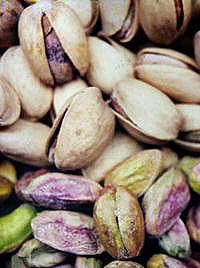
Western Mixers Produce & Nut Company of Los Angeles, California is recalling ARO and/or Treasured Harvest Pistachios, because it has the potential to be contaminated with Salmonella, an organism which can cause serious and sometimes fatal infections in young children, frail or elderly people, and others with weakened immune systems. Healthy persons infected with Salmonella often experience fever, diarrhea (which may be bloody), nausea, vomiting and abdominal pain. In rare circumstances, infection with Salmonella can result in the organism getting into the bloodstream and producing more severe illnesses such as arterial infections (i.e., infected aneurysms), endocarditis and arthritis.

Pistachios were distributed in: California, Nevada, Ohio and Utah; through Retail Stores, Mail Order and various Distributors during the dates of: October 17, 2012 – April 29, 2013.