Category Archives: Food Hygiene

RASFF Alert – Histamine -Anchovy Fillets with Olive Oil

kswfoodworld food safety poisoning

RASFF-histamine (220; 260 mg/kg – ppm) in anchovy fillets with olive oil from Italy in Italy

RASFF Alert – STEC E.coli – Chilled Beef

kswfoodworld food safety poisoning

RASFF-shigatoxin-producing Escherichia coli (stx1+ stx2+ eae+ /25g) in chilled beef from Uruguay in the Netherlands

RASFF Alert – ASP -Scallops

kswfoodworld food safety poisoning

RASFF-Amnesic Shellfish Poisoning (ASP) toxins – domoic acid (57.8 mg/kg – ppm) in scallops (Pecton jacobeus) from Belgium in Belgium

RASFF Alerts – Salmonella – Raw Sheeps Milk Cheese – Whitish Sesame Seeds – Sesame Seeds -Chicken Fillets – Catfish -Turkey Drumsticks – Mechanically Separated Chicken Meat

kswfoodworld food safety poisoning

RASFF-Salmonella (present /25g) in raw sheep’s milk cheeses from France in France

RASFF-Salmonella enterica ser. Dessau (presence in 1 out of 5 samples /25g) in whitish sesame seeds from Sudan in Greece

RASFF-Salmonella enterica ser. Kentucky (presence in 1 out of 5 samples /25g) in hulled sesame seeds from India in Germany

RASFF -Salmonella enterica ser. Orion (presence /25g) in sesame seeds from India in Germany

RASFF-Salmonella enterica ser. Enteritidis (presence /25g) in frozen chicken fillets from Poland, via Germany in France

RASFF-Salmonella (presence /25g) in frozen catfish (Clarias spp) from Vietnam in the Netherlands

RASFF-Salmonella enterica ser. Infantis (presence /25g) in frozen turkey drumsticks from Germany in France

RASFF-Salmonella (presence /10g) in chilled mechanically separated chicken meat from Belgium in Belgium

USA -FDA Investigated Multistate Outbreak of Salmonella Adelaide Infections Linked to Pre-Cut Melons

FDA 

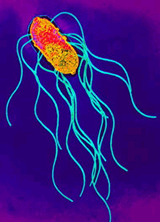
Salmonella kswfoodworld

Image CDC Enter a caption

July 26, 2018 Update

As of July 24, 2018, CDC reports that there were 77 cases in nine states with 36 hospitalizations. Illnesses occurred from April 30, 2018, to July 2, 2018. Ill people ranged in age from less than 1 year to 97, with a median age of 67. Sixty-seven percent were female. Out of 70 people with information available, 36 (51%) were hospitalized. No deaths were reported.

USA -FDA Investigates Multistate Outbreak of Cyclospora Illnesses Likely Linked to Salads from Fast Food Chain

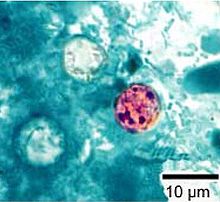
FDA 220px-Cyclospora_cayetanensis_stained

Fast Facts

  • The FDA, CDC, along with state and local officials are investigating a multi-state outbreak of cyclosporiasis illnesses likely linked to salads from McDonald’s restaurants.
  • The CDC reports that 286 people in 15 states have become ill. There have been 11 hospitalizations and no deaths.
  • As this is an ongoing investigation, the FDA will update this page as more information becomes available, such as product information, epidemiological results, and recalls.
  • The FDA is working with McDonald’s to identify the common ingredients in the salads identified by those who became sick and to trace back those ingredients through the supply chain.
  • As of July 13, 2018, McDonald’s has decided to voluntarily stop selling salads at impacted restaurants in IL, IA, IN, WI, MI, OH, MN, NE, SD, MT, ND, KY, WV, and MO until they are able to switch to another salad supplier. More information can be found in McDonald’s Statement.
  • Consumers who have symptoms of cyclosporiasis should contact their health care provider to report their symptoms and receive care. Most people infected with Cyclospora develop diarrhea, with frequent, sometimes explosive, bowel movements. Other common symptoms include loss of appetite, weight loss, stomach cramps/pain, bloating, increased gas, nausea, and fatigue. Vomiting, body aches, headache, fever, and other flu-like symptoms may be noted. Some people who are infected with Cyclospora do not have any symptoms. If not treated, the illness may last from a few days to a month or longer. Symptoms may seem to go away and then return one or more times (relapse).
  • At this time, we do not have evidence to suggest that this cluster of illnesses is related to the ongoing Cyclospora outbreak linked to Del Monte vegetable trays.

USA -Kraft Heinz Voluntarily Recalls Taco Bell Salsa Con Queso Mild Cheese Dip Distributed to Retailers

FDA

As a precaution, approximately 7,000 cases of Taco Bell Salsa Con Queso Mild Cheese Dip are being voluntarily recalled because the affected product is showing signs of product separation which can lead to a potential health hazard.

This could create conditions that could allow for the growth of Clostridium botulinum (C. botulinum), a bacterium which can cause life-threatening illness or death. Consumers are warned not to use the product even if it does not look or smell spoiled.

Botulism, a potentially fatal form of food poisoning, can cause the following symptoms: general weakness, dizziness, double vision, and trouble with speaking or swallowing. Difficulty in breathing, weakness of other muscles, abdominal distension and constipation may also be common symptoms. People experiencing these problems should seek immediate medical attention.
There have been no consumer complaints or reports of illness related to this issue to date.

Research -Salmonella enterica Serotype Javiana Infections Linked to a Seafood Restaurant in Maricopa County, Arizona, 2016

Journal of Food Protection

On 10 August 2016, the Maricopa County Department of Public Health identified culture-confirmed Salmonella enterica serotype Javiana isolates from two persons who reported eating at a seafood restaurant; seven additional cases were reported by 15 August. We investigated to identify a source and prevent further illness. We interviewed persons with laboratory-reported Salmonella Javiana infection. Pulsed-field gel electrophoresis (PFGE) and whole genome sequencing of isolates were performed. A case was defined as diarrheal illness in a person during July to September 2016; confirmed cases had Salmonella Javiana isolate yielding outbreak-related PFGE patterns; probable cases had diarrheal illness and an epidemiologic link to a confirmed case. Case finding was performed (passive surveillance and identification of ill meal companions). A case-control study assessed risk factors for Salmonella Javiana infection among restaurant diners; control subjects were chosen among meal companions. No restaurant workers reported illness. Foods were reportedly cooked according to the Food Code. Food and environmental samples were collected and cultured; Salmonella Javiana with an indistinguishable PFGE pattern was isolated from portioned repackaged raw shrimp, halibut, and a freezer door handle. We identified 50 Salmonella Javiana cases (40 confirmed and 10 probable); illness onset range was from 22 July to 17 September 2016. Isolates from 40 patients had highly related PFGE patterns. Thirty-three (73%) of 45 patients interviewed reported eating at the restaurant. Among 21 case patients and 31 control subjects, unfried cooked shrimp was associated with illness (odds ratio, 6.7; 95% confidence interval, 1.8 to 24.9; P = 0.004). Among restaurant diners, laboratory and case-control evidence indicated shrimp as the possible outbreak source; poor thermal inactivation of Salmonella on shrimp is theorized as a possible cause. Cross-contamination might have prolonged this outbreak; however, the source was not identified and highlights limitations that can arise during these types of investigations.

UK -Analysis shows source of E. coli outbreak was leafy greens – O157 – 2016

Food Safety News 

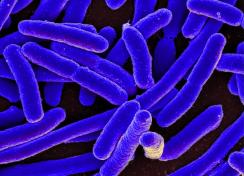
CDC E.coli

Image CDC Enter a caption

Increased use of ingredient-based analyses is being promoted by researchers after the method was used to identify the source of infection in an E. coli outbreak. 

Public Health England was alerted to an outbreak of Shiga toxin-producing E. coli (STEC) O157 phage type (PT) 34 in July 2016 involving 56 cases in England and Wales. The source of infection was baby-mixed leaf salad, which was an ingredient in multiple dishes.

“A traditional analysis may have resulted in multiple menu items being associated with illness, thereby failing to identify the true source of infection,” said researchers.


USA -AMPI Recalls Limited Amount of Dry Whey Powder Because of Possible Health Risk – Salmonella

FDA

Associated Milk Producers Inc. (AMPI) of New Ulm, Minn., is recalling dry whey powder packaged in 50-pound and 25-kg bags that were produced at the cooperative’s Blair, Wis., dry whey plant from May 1-5, 2018; May 24-29, 2018; June 2-5, 2018; and June 7-14, 2018 due to the potential to be contaminated with salmonella. This is a precautionary recall. All products shipped to the marketplace tested negative for salmonella.

AMPI dry whey powder is not sold directly to consumers, but is used as an ingredient in a number of foods. It is sold directly to manufacturers and also distributed by brokers. A limited amount was sold for animal feed. All products shipped into the marketplace tested negative for salmonella as part of AMPI’s routine testing program. However, because additional product tested positive for salmonella under AMPI’s routine test and hold procedures, the company is recalling product as a precautionary measure. AMPI has ceased production at its Blair, Wis., dry whey plant, is currently investigating the cause for the positive samples, and will take all necessary remedial actions.

All customers that have received the dry whey powder lots have been notified by AMPI and instructed to return the recalled powder, or to document the destruction of the powder, after contacting AMPI for specific instructions.

At AMPI, we are dedicated to producing dairy products that meet the highest quality and safety standards required by our customers as well as complying with all government food safety requirements. We are recalling this product as a precautionary measure and in keeping with our commitment to the best interests of our customers and consumers, and in line with the Food Safety Modernization Act and FDA requirements. We will continue to work cooperatively with the FDA to provide products that meet our customers’ requirements, meet government food safety standards, and provide the nutritious benefits of dairy products to customers throughout the United States.

Consumers with questions may contact the AMPI Response Center at 734-773-4220.