Category Archives: food contamination

USA – Majestic Meat Company Recalls Ground Beef Products due to Possible E. Coli O157:H7 Contamination

FSIS USDA

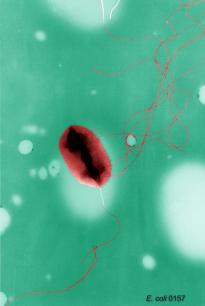
kswfoodworld E.coli O157

Image CDC


WASHINGTON, Nov. 16, 2018 – Majestic Meat Company, a Salt Lake City, Utah establishment, is recalling approximately 532 pounds of ground beef products that may be contaminated with E. coli O157:H7, the U.S. Department of Agriculture’s Food Safety and Inspection Service (FSIS) announced today.

The bulk ground beef, ground beef patties, and meatballs were produced on November 8, 2018. The product list can be found here: [View Labels (PDF only)]

The products subject to recall bear establishment number “EST. 19915” inside the USDA mark of inspection. These items were shipped to restaurants in the state of Utah.

The problem was discovered on November 15, 2018 when FSIS identified that product associated with a sample that confirmed positive for E. coli O157:H7 had been shipped. The establishment held 2 of the 3 boxes of source material associated with the sampled product, however, the third box of source material was further processed and shipped.  There have been no confirmed reports of adverse reactions due to consumption of these products.

Anyone concerned about an injury or illness should contact a healthcare provider. E. coli O157:H7 is a potentially deadly bacterium that can cause dehydration, bloody diarrhea and abdominal cramps 2–8 days (3–4 days, on average) after exposure the organism. While most people recover within a week, some develop a type of kidney failure called hemolytic uremic syndrome (HUS). This condition can occur among persons of any age but is most common in children under 5-years old and older adults. It is marked by easy bruising, pallor, and decreased urine output. Persons who experience these symptoms should seek emergency medical care immediately.


USA – Swift Beef Company Recalls Ground Beef Products due to Possible E. Coli O157:H7 Contamination

FSIS USDA USDA

WASHINGTON, Nov. 17, 2018 – Swift Beef Co., a Hyrum, Utah establishment, is recalling approximately 99,260 pounds of raw non-intact ground beef products that may be contaminated with E. coli O157:H7, the U.S. Department of Agriculture’s Food Safety and Inspection Service (FSIS) announced today.

The bulk ground beef was produced on Oct. 24, 2018. The following products are subject to recall: [View Labels (PDF only)]

  • 2,000 lb. – bulk pallets of Swift Ground Beef 81/19 (81% lean) Fine Grind Combo bearing product code 42982.
  • 8-10 lb. – plastic wrapped chubs of “blue ribbon BEEF” Ground Beef 81/19 (81% lean) Coarse Grind bearing product code 42410.
  • 8-10 lb. – plastic wrapped chubs of “blue ribbon BEEF” Ground Beef 93/07 (93% lean) Coarse Grind bearing product code 42413.
  • 8-10 lb. – plastic wrapped chubs of “blue ribbon BEEF” Ground Beef 85/15 (85% lean) Coarse Grind bearing product code 42415.
  • 8-10 lb. – plastic wrapped chubs of “blue ribbon BEEF” Ground Beef 73/27 (73% lean) Coarse Grind bearing product code 42510.

The products subject to recall bear establishment number “EST. 628” inside the USDA mark of inspection. These items were shipped to retail distributors for further processing and food service distributors for institutional use in locations in California, Nevada, Oregon, Utah, and Washington.

The problem was discovered on November 15, 2018, when FSIS visited Swift Beef Company in response to a FSIS ground beef sample that was collected at a further processing establishment and was confirmed positive for E. coli O157:H7. FSIS confirmed that Swift Beef Company was the sole source supplier for the ground beef products. That affected product was recalled on Nov. 16 and information on that recall can be found here. There have been no confirmed reports of adverse reactions due to consumption of these products.

UK – Northern Ireland – Caffreys recalls its Confectionery Halloween Bloodie Mallows because it may contain Salmonella

FSA

Caffreys has taken the precautionary step of recalling its Confectionery Halloween Bloodie Mallows because the product might contain salmonella. The product was sold in Northern Ireland.

Product details

Confectionary Halloween Bloodie Mallows

Batch code All batches
Best before 30 January 2019

No other Caffreys products are known to be affected.

Risk statement

The product listed above might be contaminated with salmonella.

Symptoms caused by salmonella usually include fever, diarrhoea and abdominal cramps.

Action taken by the company

Caffreys is recalling the above product. Point of sale notices will be displayed in all retail stores that are selling this product. These notices explain to customers why the product is being recalled and tell them what to do if they have bought the product. Please see the attached notice.

USA – Infant botulism cases prompt alert about honey pacifiers – Clostridium botulinum

DSHS Texas 

CDC Clost Spore

Children under 12 months old should not consume honey

The Texas Department of State Health Services is warning parents and other adults not to give babies pacifiers containing honey after four babies were treated for botulism in Texas. Each infant had been given a honey-containing pacifier purchased in Mexico.

The four illnesses occurred from mid-August to the end of October and caused all four babies to be hospitalized for life-saving treatment. The unrelated infants are residents of West Texas, North Texas and South Texas.

Botulism is a serious illness caused by a toxin that attacks the body’s nerves and can cause difficulty breathing, paralysis and even death. Honey may contain bacteria that produce the toxin in the intestine of babies that eat it. By the time children get to be 12 months old, they’ve developed enough other types of bacteria in their digestive tract to prevent the botulism bacteria from growing and producing toxin.

DSHS today also issued a health alert asking health care providers to look out for cases of infant botulism and to remind parents not to let babies eat honey. The Centers for Disease Control and Prevention and the American Academy of Pediatrics have long advised that children under 12 months old should not consume honey.

Honey-filled pacifiers are not common in the United States but may be available in some specialty stores and through online retailers. Most aren’t designed for the honey to be consumed, but some have a small hole so a child could eat the honey, or the pacifier could accidentally rupture or leak. Parents should also avoid pacifiers containing any other food substance, because they could also pose a risk of botulism.

Texas has had seven to eight cases of infant botulism per year in recent years. Ten confirmed or suspected cases have been reported in 2018. Additional information on botulism is available on the DSHS website.

Hong Kong – Not to consume a kind of Italian sausage suspected to be contaminated with Listeria monocytogenes

CFS logo

Issue Date 16.11.2018
Source of Information Rapid Alert System for Food and Feed (RASFF) of the European Commission
Food Product A kind of sausage imported from Italy
Product Name and Description Product name: Mortadella Bologna IGP con pistacchio

Brand: Casa Modena

Place of origin: Italy

Importer: Angliss Hong Kong Food Service Ltd

Use-by date: November 28, 2018

Reason For Issuing Alert
  • The Centre for Food Safety (CFS) received a notification from the RASFF that the above-mentioned product might have been contaminated with Listeria monocytogenes and is being recalled.  According to the information provided by the RASFF, a local importer, Angliss Hong Kong Food Service Ltd, had imported a small quantity of the affected product into Hong Kong.
Action Taken by the Centre for Food Safety
  • The CFS immediately contacted the importer concerned for follow-up.  Preliminary investigation showed that the importer had imported 10.96 kilograms of the affected product and all of them were sold. The importer has initiated a recall according to the CFS’ advice.
  • The CFS will alert the trade to the incident, and will continue to closely monitor the case and take appropriate follow-up action. Investigation is ongoing.
Advice to the Trade
  • Stop using or selling the product concerned immediately if they possess it.
Advice to Consumers
  • Not to consume the affected products if they have bought any.
Further Information The CFS press release

Members of the public may call the hotline of the importer concerned at 2494 2128 during office hours for enquiries about the recall.

Research – Control of Listeria monocytogenes in Caramel Apples by Use of Sticks Pretreated with Potassium Sorbate

Journal of Food Protection

A multistate listeriosis outbreak associated with caramel apples from 2014 to 2015 prompted research on the survival of Listeria monocytogenes in fresh apples and caramel apples. Research indicated that stem end–inoculated caramel apples with stick insertion allowed for the survival and growth of L. monocytogenes at both refrigeration and ambient temperatures. This study aimed to assess the effectiveness of chemical preservatives as pretreatments for the wooden stick component to reduce L. monocytogenes loads in stem end–inoculated caramel apples during storage. Wooden sticks were pretreated with 1, 3, or 5% ascorbic acid (vitamin C), Nisaplin (2.5% nisin), potassium sorbate, and sodium benzoate and then inoculated with L. monocytogenes at 7 log CFU per stick. After storage at 25°C, the pathogen was reduced most effectively by the ascorbic acid pretreatments. At all three ascorbic acid concentrations tested, L. monocytogenes levels were reduced below the level of enumeration (2.5 log CFU per apple) at 24 h and were no longer detectable by enrichment after 72 h. Ascorbic acid (5, 10, and 20%) and potassium sorbate (10, 20, 30, and 40%) were further tested as wooden stick pretreatments for pathogen reduction on stem end–inoculated caramel apples stored at 5 and 25°C. The 40% potassium sorbate solution at 25°C was the most effective pretreatment condition in caramel apples and demonstrated a 3.1-log CFU per apple overall decrease in L. monocytogenes population levels after 216 h. Pretreatment of the wooden stick component of a caramel apple with potassium sorbate may be a viable preventive measure to reduce postprocess L. monocytogenes population levels and hence reduce consumer risk associated with caramel apple consumption.

Research – Restaurant Inspection Letter Grades and Salmonella Infections, New York, New York, USA

CDC

Rates of Salmonella infection in the United States have not changed over the past 20 years. Restaurants are frequent settings for Salmonella outbreaks and sporadic infections. Few studies have examined the effect of posting letter grades for restaurant inspections on the incidence of foodborne illness. We compared Salmonella infection rates in New York, New York, USA (NYC), with those in the rest of New York state before and after implementation of a letter grade system for restaurant inspections in NYC. We calculated a segmented regression model for interrupted time series data. After implementation of letter grading, the rate of Salmonella infections decreased 5.3% per year in NYC versus the rest of New York state during 2011–2015, compared with the period before implementation, 2006–2010. Posting restaurant inspection results as letter grades at the point of service was associated with a decline in Salmonella infections in NYC and warrants consideration for broader use.


Research – Norovirus: New study sheds light on outbreaks

Outbreak News Today Norovirus Food Safety kswfoodworld

Outbreaks of norovirus in health care settings and outbreaks caused by a particular genotype of the virus are more likely to make people seriously ill, according to a new study in The Journal of Infectious Diseases. Based on an analysis of nearly 3,800 U.S. outbreaks from 2009 to 2016, the research confirms several factors that can make norovirus outbreaks more severe and may help guide efforts to develop a vaccine to prevent this highly contagious disease.

USA – JBS Salmonella Outbreak Grows to 246 in 25 States with 6.9 Million Pounds of Meat Recalled

Food Poison Journal

Arizona 42, California 66, Colorado 50, Connecticut 1, Hawaii 4, Idaho 3, Iowa 1, Illinois 1, Indiana 1, Kansas 1, Kentucky 1, Massachusetts 1, Minnesota 2, Missouri 3, Montana 8, New, Mexico 9, Nevada 3, Ohio 9, Oklahoma 4, Oregon 1, South Dakota 6, Texas 13, Utah 9, Washington 3 and Wyoming 4.

According to the CDC, as of November 15, 2018, 246 people infected with the outbreak strain of Salmonella Newport have been reported from 25 states. Arizona 42, California 66, Colorado 50, Connecticut 1, Hawaii 4, Idaho 3, Iowa 1, Illinois 1, Indiana 1, Kansas 1, Kentucky 1, Massachusetts 1, Minnesota 2, Missouri 3, Montana 8, New, Mexico 9, Nevada 3, Ohio 9, Oklahoma 4, Oregon 1, South Dakota 6, Texas 13, Utah 9, Washington 3 and Wyoming 4.

Illnesses started on dates ranging from August 5, 2018 to October 16, 2018. Ill people range in age from less than one year to 88, with a median age of 38. Fifty-six percent are male. Of 168 people with information available, 59 (35%) have been hospitalized. No deaths have been reported.

Illnesses might not yet be reported due to the time it takes between when a person becomes ill and when the illness is reported. This takes an average of 2 to 4 weeks.

Whole genome sequencing analysis did not identify predicted antibiotic resistance in 180 Salmonella bacteria isolates from 176 ill people and four food samples.

RASFF Alerts – Salmonella – Frozen Kebab Turkey and Veal Meat – Salted Chicken – Turkey Merquez Sausages – Frogs Legs

RASFF-Logo

RASFF-Salmonella (present /25g) in frozen kebab turkey and veal meat from Germany in France

RASFF-Salmonella (presence /25g) in frozen boneless salted chicken half breasts without inner fillet from Brazil in the Netherlands

RASFF-Salmonella enterica ser. Typhimurium monophasic (1 ,4, [5], 12:i:-) (presence /25g) in chilled turkey merguez sausages from France, via Belgium in the Netherlands

RASFF-Salmonella enterica ser. Newport (presence /25g) and Salmonella enterica ser. Potsdam (presence /25g) in frozen frog legs from Vietnam in Germany

RASFF-Salmonella (presence (in 3 out of 5 samples) /25g) in frozen boneless salted chicken half breasts without inner fillet from Brazil in the UK

RASFF-Salmonella enterica ser. Infantis (presence /25g) in frozen veal, poultry, mutton kebab from Poland in Germany