Category Archives: food bourne outbreak

USA – FDA documents first Cyclospora contamination of U.S. fresh produce

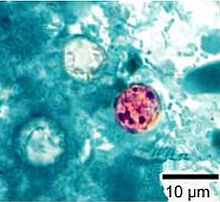
Food Safety News 220px-Cyclospora_cayetanensis_stained

A special FDA testing program on fresh herbs has documented the first confirmed evidence of the Cyclospora parasite in U.S. produce.

The Food and Drug Administration found the microscopic parasite on fresh cilantro at a U.S. distribution facility in July. In a follow-up investigation, the FDA found Cyclospora on fresh cilantro at a farm. The federal agency worked with state and local officials to embargo the cilantro. Staff from FDA have been working with the farmer on “corrective actions geared toward common routes of contamination,” according to a constituent update from the agency. 

“Although this is the first confirmed evidence of the presence of Cyclospora in domestic produce, FDA is currently unaware of illnesses associated with the product, and traceforward efforts do not indicate there are any connections between this domestic finding of contaminated cilantro and multistate outbreaks of Cyclospora illnesses investigated this spring and summer,” the agency reported.

Those Cyclospora outbreaks were linked to Del Monte vegetable-dip trays and salads made with Fresh Express chopped lettuce and carrots that were served at McDonald’s restaurants.

South Africa – South Africa declares end to largest ever Listeria outbreak

Food Safety News

The largest ever detected Listeria outbreak in known history is over, according to officials in South Africa.

Between Jan. 1, 2017, and July 17, 2018, South Africa recorded 1,060 laboratory-confirmed cases of listeriosis, including 216 deaths.

The outbreak was linked to a ready-to-eat (RTE) processed meat plant owned by Tiger Brands, the Enterprise Foods production facility in Polokwane. However, investigators for the government and in the private sector have not been able to determine how the outbreak strain was introduced in the affected factory.

A total of 12 million South African rand ($810,000) was spent to deal with the outbreak.

Health Minister Aaron Motsoaledi gave processed meats the all clear at a media briefing on Monday.

“A team of World Health Organization, international and local experts (have) agreed that because no cases of listeriosis due to the outbreak strain have been identified since the first week of June 2018, and that over the last two months the incidence rate of laboratory-confirmed listeriosis cases has dropped to pre-outbreak levels, the outbreak of listeriosis is over,” Motsoaledi said

Listeriosis cases have been recorded for 40 years in South Africa. There have been between 60 and 80 cases every year for the past five years.


Research – What Sparked An E. Coli Outbreak In Lettuce? Scientists Trace A Surprising Source

NPR

The illnesses started appearing in late March. Here and there, across the country, people were checking themselves in to hospitals, sick from toxic E. coli bacteria. At least 200 people got sick. Five of them died.

Investigators quickly identified romaine lettuce as the source of the outbreak, but have had trouble pinpointing the cause for months. Now, the Food and Drug Administration has a theory for how E. coli ended up on that lettuce. According to the FDA, it probably came from a large cattle feedlot at one end of a valley near Yuma, Ariz., which is one of the country’s biggest lettuce-growing areas.

The finding has put lettuce growers in Yuma in a tough spot. The feedlot has been their neighbor for many years. Some vegetable farmers are wondering whether they can still co-exist with all those cattle nearby

France – Salmonella outbreak in France linked to raw milk goat cheese

Food Safety News 

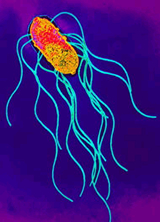
Salmonella kswfoodworld

Image CDC

More than 20 people are sick in France as part of a Salmonella outbreak suspected to be caused by raw milk goat cheese. The implicated cheese was also distributed to Belgium, Côte d’Ivoire, Germany, Hong Kong, Japan, Luxembourg, Spain and the United Kingdom.

Investigations by French health authorities found about 20 salmonellosis cases linked to consumption of “Pélardon” products made by Mounier.

The company, based in Quezac, a commune of the Lozère department in the country, recalled the product in early August following detection of Salmonella. The recall was extended last week to include additional lot numbers and dates.

Fromage AOP Pélardon fermier 60g Earl Mounier Thierry with lot numbers between 24/06/2018 and 29/07/2018 and dates between 24/08/2018 and 29/09/2018 are affected.

Europe – Greenyard Frozen to restart production at site linked to deadly Listeria outbreak

Food Safety News

The Hungarian frozen vegetable factory believed to be the source of a Listeria outbreak that sickened 54 people in six countries, killing 10 of them, is set to restart production.

Following shutdown and cleaning, all tests at the Baja production site were negative for the presence of Listeria monocytogenes, according to a statement from Greenyard Frozen, which is part of the multinational Greenyard Group.

The follow-up tests were performed by the company with external experts including Campden BRI and confirmed by the Hungarian authorities’ own analysis.

Greenyard did not give a restart date but said it would be in the short term with more information being released in coming weeks. Company officials previously said they decided to stop production to do an in-depth review and would not restart or release the freezing lines until they found and eliminated the root cause of the Listeria contamination.

USA – Fremont Bowl Associated with Salmonella Outbreak in Seattle, Washington

Food Poisoning Bulletin 

Salmonellaa

The Fremont Bowl restaurant in Seattle, Washington state has been associated with a Salmonella Enteritidis outbreak, according to the Seattle King County Health Department. At least four people are sick in this outbreak; one person has been hospitalized because their illness is so severe; that person has since recovered and has been released.

The Fremont Bowl is located at 4258 Fremont Avenue N. Ste. #4262 in Seattle. those sickened ate there on July 27 – July 29, 2018. The patients were part of three separate meal parties. The press release stated that there is no indication that any employees of the restaurant have been ill with symptoms that are consistent with salmonellosis.

RASFF Alert -Foodborne Outbreak caused by Salmonella in goat’s raw milk cheese

kswfoodworld food safety poisoning

RASFF-foodborne outbreak caused by Salmonella (presence /25g) in goat’s raw milk cheese from France in France

USA – Cyclospora Outbreak Expands plus Oklahoma Outbreak

Food Poison Journal 

220px-Cyclospora_cayetanensis_stained

Image CDC Enter a caption

The CDC, public health and regulatory officials in several states, and the U.S. Food and Drug Administration are investigating a multistate outbreak of Cyclospora infections. As of August 9, 2018 (11am EDT), a total of 436 laboratory-confirmed cases of Cyclospora infection were reported in people who consumed salads from McDonald’s restaurants; the cases were reported by 15 states. Note, the Connecticut, Tennessee, and Virginia case-patients purchased salads while traveling in Illinois; the Florida case-patient purchased a salad while traveling in Kentucky.

Food Poison Journal

The Tulsa Health Department (THD) in collaboration with the Oklahoma State Department of Health (OSDH), Acute Disease Service (ADS) are investigating an outbreak of cyclosporiasis among residents of Tulsa and surrounding counties. As of August 1, 24 laboratory-confirmed cases of cyclosporiasis have been reported; symptom onsets have occurred from June 24 through July 26, 2018. The epidemiologic investigation suggests this outbreak is likely ongoing with persons currently experiencing illness and new cases being reported. Case ages range from 27 to 67 years (median = 43 years); 67% of cases are females. Nine (38%) cases are of Hispanic ethnicity. Twenty-one (88%) cases are residents of Tulsa County; although the other three cases are residents of Wagoner, Creek, and Rogers counties, case interviews have revealed at least two of these three individuals shopped and dined at establishments in the Tulsa area.


USA – Salmonella Outbreak – Arapahoe County Fair

Food Poisoning Bulletin 

Salmonella kswfoodworld

Image CDC Enter a caption

A Salmonella outbreak among people who attended the Arapahoe County Fair in Colorado has sickened at least seven people, according to the Tri-County Health Department, Arapahoe County, and the Colorado Department of Public Health and Environment. Those sickened attended the fair, or 4-H events associated with the fair, from July 21 to July 29, 2018.

Europe – Multi-country outbreak of Salmonella Agona infections possibly linked to ready-to-eat food

ECDC 


A multi-country outbreak of Salmonella enterica subspecies enterica serovar Agona (S. Agona) is under investigation in the European Union (EU), with cases retrospectively identified back to 2014. Overall, 147 outbreak cases have been reported by five EU countries: 122 cases since 1 January 2017, and 25 historical cases between 2014 and 2016. The United Kingdom is reporting most outbreak cases (129), with Finland (15), Denmark, Germany and Ireland (one case each) reporting the other cases. The Irish case was probably infected while visiting the United Kingdom.

The outbreak was first detected in the United Kingdom using whole genome sequencing (WGS). All S. Agona isolates from the five countries are genetically close with a maximum difference of 2 alleles from any other single isolate by core genome multilocus sequence typing scheme (cgMLST) using the ECDC Enterobase pipeline. The cases peaked in April 2017 and 2018. The close genomic relationship and the distinct seasonal spring peaks suggest that cases are part of an intermittent common source outbreak.

Seventeen S. Agona food isolates from 2018, detected in the United Kingdom, were found to be closely genetically related to the human strains. The food isolates were from cucumbers sampled during processing before and after washing (11 isolates) and ready to eat (RTE) food products containing cucumbers (six isolates). The contaminated food isolates were sampled in the United Kingdom at four plants owned by Company A and a Company C plant.

At present, there is insufficient epidemiological information available on the consumption of contaminated products by humans to support the microbiological evidence provided by the isolation of the outbreak strain in food. The epidemiological investigations in the other affected countries did not generate any strong hypothesis about the vehicle or source of infection.

Although the cucumbers used in all final contaminated products originated from Spain for a limited period (from November 2017 to April 2018), no connection between supply chains was identified: primary producers of cucumbers were different (producers A and B), and cucumbers were delivered to different processing companies through different distributors in the United Kingdom. The laboratory results for Salmonella in all cucumber samples, taken either at primary production level in Spain or during distribution to/within UK, were negative.

Based on the information available, the microbiological evidence suggests RTE products containing cucumbers as a possible vehicle of infection but so far it has not been possible to identify the specific point in the production chain where the contamination occurred.

Further investigations along the food chain are needed to identify the source of contamination. These should include collection of information about various production and processing stages for the RTE products implicated in this event, as well as thorough sampling and testing.

ECDC Link