Category Archives: Decontamination Microbial

Research – First Report of Food Poisoning Due to Staphylococcal Enterotoxin Type B in Döner Kebab (Italy)

MDPI

Abstract

Staphylococcal food poisoning results from the consumption of food contaminated by staphylococcal enterotoxins. In July 2022, the Turin local health board was notified of a suspected foodborne outbreak involving six children who had consumed döner kebab purchased from a takeaway restaurant. The symptoms (vomiting and nausea) were observed 2–3 h later. A microbiological analysis of the food samples revealed high levels (1.5 × 10⁷ CFU/g) of coagulase-positive staphylococci (CPS). The immunoassay detected a contamination with staphylococcal enterotoxins type B (SEB). The whole genome sequencing of isolates from the food matrix confirmed the staphylococcal enterotoxin genes encoding for type B, which was in line with the SEB detected in the food. This toxin is rarely reported in staphylococcal food poisoning, however, because there is no specific commercial method of detection. The involvement of enterotoxin type P (SEP) was not confirmed, though the corresponding gene (sep) was detected in the isolates. Nasal swabs from the restaurant food handlers tested positive for CPS, linking them to the likely source of the food contamination.
Research – Listeria monocytogenes Biofilms in Food-Associated Environments: A Persistent Enigma

MDPI

Abstract

Listeria monocytogenes (LM) is a bacterial pathogen responsible for listeriosis, a foodborne illness associated with high rates of mortality (20–30%) and hospitalisation. It is particularly dangerous among vulnerable groups, such as newborns, pregnant women and the elderly. The persistence of this organism in food-associated environments for months to years has been linked to several devastating listeriosis outbreaks. It may also result in significant costs to food businesses and economies. Currently, the mechanisms that facilitate LM persistence are poorly understood. Unravelling the enigma of what drives listerial persistence will be critical for developing more targeted control and prevention strategies. One prevailing hypothesis is that persistent strains exhibit stronger biofilm production on abiotic surfaces in food-associated environments. This review aims to (i) provide a comprehensive overview of the research on the relationship between listerial persistence and biofilm formation from phenotypic and whole-genome sequencing (WGS) studies; (ii) to highlight the ongoing challenges in determining the role biofilm development plays in persistence, if any; and (iii) to propose future research directions for overcoming these challenges.

Research – Studying bacteriophage therapy in chickens

DVM360

Salmonella Campylobacter

Fowl typhoid (FT) is among the most significant poultry bacterial diseases worldwide, mostly affecting developing countries.1 The causal agent of FT is Salmonella enterica Gallinarum. Although S enterica Gallinarum is egg-transmitted and produces lesions in chicks and poults, there is a much greater tendency to spread among growing or mature flocks. Mortality in young birds is possible but tends to be higher in older birds.2

In a poster presentation at the 2023 World Anti-Microbial Resistance Congress in Philadelphia, Pennsylvania, researchers from Purdue University in West Lafayette, Indiana, and the University of Veterinary and Animal Sciences (UVAS) Lahore, Pakistan, stated that, “Antibiotics are often used to prevent or control fowl typhoid; however, such practices contribute to the continually global challenge of antibiotic resistance.”1

“In previous studies, we developed a polyphage prototype that significantly reduced Salmonella Gallinarum in experimentally challenged chickens. Here, we evaluated the pact of treatment with the polyphage prototype on microbial communities surrounding the targeted bacteria.”1

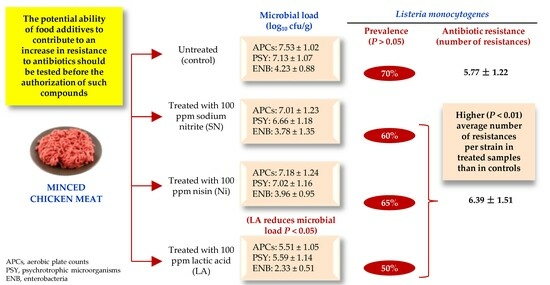
Research -Effect of Sodium Nitrite, Nisin and Lactic Acid on the Prevalence and Antibiotic Resistance Patterns of Listeria monocytogenes Naturally Present in Poultry

MDPI

Abstract

The impact of treating minced chicken meat with sodium nitrite (SN, 100 ppm), nisin (Ni, 10 ppm) and lactic acid (LA, 3000 ppm) on the levels of some microbial groups indicating hygiene quality were investigated. Specifically, aerobic plate counts and culture-based counts of psychrotrophic microorganisms and enterobacteria were obtained. Additionally, the prevalence of Listeria monocytogenes and the resistance of 245 isolates from this bacterium to 15 antibiotics were documented. L. monocytogenes was isolated using the ISO 11290-1:2017 method and confirmed with polymerase chain reaction using the lmo1030 gene. Antibiotic resistance was established using the disc diffusion technique (EUCAST and CLSI criteria). Twenty-four hours after treatment, the microbial load (log10 cfu/g) was reduced (p < 0.05) relative to controls in those samples treated with LA, with counts of 5.51 ± 1.05 (LA-treated samples) vs. 7.53 ± 1.02 (control) for APC, 5.59 ± 1.14 (LA) vs. 7.13 ± 1.07 (control) for psychrotrophic microorganisms and 2.33 ± 0.51 (LA) vs. 4.23 ± 0.88 (control) for enterobacteria. L. monocytogenes was detected in 70% (control samples), 60% (samples receiving SN), 65% (Ni) and 50% (LA) (p > 0.05) of samples. All strains showed resistance to multiple antimicrobials (between 3 and 12). In all, 225 isolates (91.8%) showed a multi-drug resistant (MDR) phenotype, and one isolate (0.4%) showed an extensively drug-resistant (XDR) phenotype. The mean number of resistances per strain was lower (p < 0.01) in the control samples, at 5.77 ± 1.22, than in those receiving treatment, at 6.39 ± 1.51. It is suggested that the use of food additives might increase the prevalence of resistance to antibiotics in L. monocytogenes, although additional studies would be necessary to verify this finding by analyzing a higher number of samples and different foodstuffs and by increasing the number of antimicrobial compounds and concentrations to be tested.

Research – Microbiological Quality and Safety of Fresh Quail Meat at the Retail Level

MDPI

Abstract

The objective of this study was to evaluate the microbiological quality and safety of 37 fresh quail meats. Mesophiles, Pseudomonas spp., Enterobacteriaceae, and staphylococci counts were 5.25 ± 1.14, 3.92 ± 1.17, 3.09 ± 1.02, and 2.80 ± 0.64 log CFU/g, respectively. Listeria monocytogenes was detected in seven samples (18.92%). Campylobacter jejuni was detected in one sample (2.70%). Clostridium perfringens was not detected in any sample. The dominant bacteria were Pseudomonas spp. (30.46%), Micrococcaceae (19.87%), lactic acid bacteria (14.57%), and Enterobacteriaceae (11.92%). Brochotrix thermosphacta and enterococci were isolated to a lesser extent, 7.28% and 1.99%, respectively. The dominant Enterobacteriaceae found were Escherichia coli (42.53%). ESBL-producing E. coli was detected in one sample (2.70%), showing resistance to 16 antibiotics. Sixteen different Staphylococcus spp. and three Mammaliicoccus spp. were identified, the most common being S. cohnii (19.86%) and M. sciuri (17.02%). S. aureus and S. epidermidis were also found in one and four samples, respectively. Methicillin-resistant M. sciuri and S. warneri were found in 13.51% and 10.81% of quail samples, respectively. These bacteria showed an average of 6.20 and 18.50 resistances per strain, respectively. The high resistance observed in ESBL-producing E. coli and methicillin-resistant S. warneri is of special concern. Measures should be adopted to reduce the contamination of quail meat.

Research – Natural preservatives for hams: Essential oil mixtures and major compounds’ efficacy against Clostridium sporogenes

Wiley Online

Abstract

The demand for healthier products by consumers has prompted research into the use of essential oils (EOs), which are known for their antimicrobial properties. This study investigated the antimicrobial properties of EOs as a potential alternative to synthetic preservatives, specifically, cinnamon, clove, and oregano EOs, as well as their majority compounds (cinnamaldehyde, eugenol, and carvacrol) on Clostridium sporogenes inoculated in hams. The findings of the study revealed that cinnamon EO and its major compound cinnamaldehyde were the most efficient in inhibiting the growth of C. sporogenes, demonstrating the lowest minimum bactericidal concentration MBC (0.1%). The combination of oregano EO, cinnamon EO, cinnamaldehyde, and carvacrol led to a significant decrease in bacterial growth (approximately 3 log) after 28 days in hams. Furthermore, the presence of spores was not observed for 14 days (at 14°C) and 21 days (at 7°C) of storage, indicating a delay in sporulation. The treatments using the combination of EOs, and their major compounds had minimal impact on the color of the hams while maintaining the physicochemical characteristics of the product. This study demonstrates that EOs and their major compounds can be applied as natural preservatives in ham, offering a potential alternative for reducing the use of nitrites in various food types. The research emphasizes the antibacterial efficacy of cinnamon, clove, and oregano EOs, along with their major compounds, in inhibiting C. sporogenes in ham. The findings indicate that these natural alternatives could be valuable in preserving food products and reducing the reliance on synthetic preservatives.

Research – Essential Oils and Their Combination with Lactic Acid Bacteria and Bacteriocins to Improve the Safety and Shelf Life of Foods: A Review

MDPI

Abstract

The use of plant extracts (e.g., essential oils and their active compounds) represents an interesting alternative to chemical additives and preservatives applied to delay the alteration and oxidation of foods during their storage. Essential oils (EO) are nowadays considered valuable sources of food preservatives as they provide a healthier alternative to synthetic chemicals while serving the same purpose without affecting food quality parameters. The natural antimicrobial molecules found in medicinal plants represent a possible solution against drug-resistant bacteria, which represent a global health problem, especially for foodborne infections. Several solutions related to their application on food have been described, such as incorporation in active packaging or edible film and direct encapsulation. However, the use of bioactive concentrations of plant derivatives may negatively impact the sensorial characteristics of the final product, and to solve this problem, their application has been proposed in combination with other hurdles, including biocontrol agents. Biocontrol agents are microbial cultures capable of producing natural antimicrobials, including bacteriocins, organic acids, volatile organic compounds, and hydrolytic enzymes. The major effect of bacteriocins or bacteriocin-producing LAB (lactic acid bacteria) on food is obtained when their use is combined with other preservation methods. The combined use of EOs and biocontrol agents in fruit and vegetables, meat, and dairy products is becoming more and more important due to growing concerns about potentially dangerous and toxic synthetic additives. The combination of these two hurdles can improve the safety and shelf life (inactivation of spoilage or pathogenic microorganisms) of the final products while maintaining or stabilizing their sensory and nutritional quality. This review critically describes and collects the most updated works regarding the application of EOs in different food sectors and their combination with biocontrol agents and bacteriocins.

Research – Evaluation of Hygiene Practice for Reducing Campylobacter Contamination on Cutting Boards and Risks Associated with Chicken Handling in Kitchen Environment

MDPI

Abstract

Campylobacter kswfoodworld

Cutting boards can serve as potential carriers for the cross-contamination of pathogens from chicken to other surfaces. This study aimed to assess chefs’ handling practices of cutting boards across five provinces in China and identify the key factors contributing to unsafe cutting board usage, including cleaning methods and handling practices. Handling practices associated with cutting boards were examined through a web-based survey (N = 154), while kitchen environment tests were conducted to investigate the splashing or survival of Campylobacter, inoculated in chicken or on cutting boards, to mimic the practices of chefs. Among chefs in the five provinces of China, wood and plastic cutting boards were the most commonly used for preparing chicken meat. Approximately 33.7% of chefs washed boards with running tap water, 31.17% of chefs washed boards with detergent, and 24.03% of chefs cleaned boards by scraping them with a knife after preparing other meats or chicken. The study tested 23 cutting boards from commercial kitchens for Campylobacter presence before and after chicken preparation and cleaning. Among these, 17 were cleaned with a knife, 5 with running tap water, and only 1 with disinfectant. Results showed that cleaning with a knife significantly reduced Campylobacter presence on cutting boards (p < 0.05), while the three main cleaning methods were inadequate in eliminating contamination to a safe level. In kitchen environment tests, contaminated chicken was chopped on cutting boards, with a maximum distance of 60 cm for low contamination, and 120 cm for medium and high contamination levels. This suggested a contamination risk exposure area ranging from 60 cm to 120 cm. Campylobacter survival on surfaces of wood, plastic, and stainless steel was also tested, with plastic surfaces showing the longest survival time (4.5 h at 15 °C and 3.5 h at 25 °C) In comparison, survival time on stainless steel or wood surfaces was only 3 h, implying a cross-contamination risk exposure period of 3 to 4.5 h after chicken preparation. In conclusion, based on the current study data, the practices employed by chefs play an important role in Campylobacter transfer in the kitchen environment. The presence of Campylobacter on cutting boards even after wiping or droplet splashing highlights its potential as a source of cross-contamination in the kitchen environment. So, chefs in China should reinforce their hygiene culture and adopt effective cutting board cleaning practices to prevent pathogen contamination.

Research – Utilization of Algae Extracts as Natural Antibacterial and Antioxidants for Controlling Foodborne Bacteria in Meat Products

MDPI

Abstract

Padina pavonicaHormophysa cuneiformis, and Corallina officinalis are three types of algae that are assumed to be used as antibacterial agents. Our study’s goal was to look into algal extracts’ potential to be used as food preservative agents and to evaluate their ability to inhibit pathogenic bacteria in several meat products (pastirma, beef burger, luncheon, minced meat, and kofta) from the local markets in Alexandria, Egypt. By testing their antibacterial activity, results demonstrated that Padina pavonica showed the highest antibacterial activity towards Bacillus cereusStaphylococcus aureusEscherichia coliStreptococcus pyogenesSalmonella spp., and Klebsiella pneumoniaePadina pavonica extract also possesses most phenolic and flavonoid content overall. It has 24 mg gallic acid equivalent/g and 7.04 mg catechol equivalent/g, respectively. Moreover, the algae extracts were tested for their antioxidant activity, and the findings were measured using ascorbic acid as a benchmark. The IC50 of ascorbic acid was found to be 25.09 μg/mL, while Padina pavonica exhibited an IC50 value of 267.49 μg/mL, Corallina officinalis 305.01 μg/mL, and Hormophysa cuneiformis 325.23 μg/mL. In this study, Padina pavonica extract was utilized in three different concentrations (Treatment 1 g/100 g, Treatment 2 g/100 g, and Treatment 3 g/100 g) on beef burger as a model. The results showed that as the concentration of the extract increased, the bacterial inhibition increased over time. Bacillus cereus was found to be the most susceptible to the extract, while Streptococcus pyogenes was the least. In addition, Padina pavonica was confirmed to be a safe compound through cytotoxicity testing. After conducting a sensory evaluation test, it was confirmed that Padina pavonica in meat products proved to be a satisfactory product.

Research – Reoccurring Escherichia coli O157:H7 Strain Linked to Leafy Greens–Associated Outbreaks, 2016–2019

CDC

Abstract

Genomic characterization of an Escherichia coli O157:H7 strain linked to leafy greens–associated outbreaks dates its emergence to late 2015. One clade has notable accessory genomic content and a previously described mutation putatively associated with increased arsenic tolerance. This strain is a reoccurring, emerging, or persistent strain causing illness over an extended period.