Category Archives: Decontamination Microbial

CPS – Research Project Funding 2022 – Bulb Onions

CPS

Assessing the potential for production practices to impact dry bulb onion safety

In 2020, the dry bulb onion industry faced their first significant outbreak of foodborne illness when red onions grown in California were epidemiologically linked to >1,000 cases of salmonellosis. Since then, industry and food safety experts have been scratching their heads to figure out how this could have happened. After review of outbreak data and consultation with various stakeholders, we have identified a small number of practices with the potential to contribute to a large-scale contamination event, through water or agricultural input contamination. We have designed field trials to determine the risks of using contaminated water source or other agricultural input when 1) applying crop protection sprays (pesticides and/or clay) and 2) during irrigation (overhead vs. drip). Our primary goal is to collect evidence demonstrating risks of these practices and to communicate our findings to relevant stakeholders to reduce the potential for outbreak like this from recurring in the future. We will share our findings via a broad outreach strategy that communicates with industry throughout the two-year study. Outreach activities culminate with the development and delivery of a workshop and best practices guide that enables growers to better understand risks and implement changes to minimize the likelihood of crop contamination.

CPS

Strategic approaches to mitigate Salmonella contamination of bulb onions

The proposal aims to address the recent multi-state Salmonella outbreak associated with red onion, resulting in nationwide recalls of onions and associated products. The outbreak highlights the pathogen’s ability to persist and survive on bulb onions during production, handling, or storage, causing significant concern to the onion produce industry. Although Salmonella’s persistence on other farm produce is documented, there is a general lack of knowledge on Salmonella’s behavior on bulb onions. We propose developing an onion-specific risk reduction plan by investigating Salmonella’s survival and growth on onion bulbs using different genetic backgrounds, nutritional compositions influenced by agronomic practices, seasons, and managed stress environments. Additionally, to understand the potential to serve as a transient host for transmission, we will investigate the effects of genetic, nutritional, and physiochemical characters on Salmonella survival and growth. This project will provide the industry with tools (1) to identify factors in the onion production and supply chain that may allow a Salmonella to persist, (2) identify varieties and agronomic practices that would minimize or eliminate its persistence, and (3) to help the produce industry in developing guidelines to manage risks of Salmonella in onions effectively.
Research – USA – Hepatitis A

Food Safety News

As of Nov. 9, 2021, health officials in Roanoke, Virginia, confirmed a total of 50 primary cases and two secondary cases of hepatitis A linked to a hepatitis A positive food service employee who worked at three Famous Anthony’s restaurants. Of those 52 cases, there have been at least 31 hospitalizations with one liver transplant, and unfortunately, three deaths. 

Hepatitis A is a highly contagious disease that attacks the liver. It is also the only vaccine-preventable foodborne illness. Hepatitis A vaccines are available and given out nationwide for free by local health departments, or at a cost of less than $100. 

So why aren’t all food workers vaccinated against hepatitis A? Your guess is as good as mine. According to the Centers for Disease Control and Prevention (CDC), hepatitis A vaccines are safe and effective at preventing hepatitis A infections. Severe allergic reactions following vaccination are rare, and the common side effects are usually mild and last 1-2 days. 

Had the food service employee who exposed patrons of three Famous Anthony’s restaurants been vaccinated, the Seattle law firm Marler Clark would not be representing 27 individuals in this outbreak and the families of two who died.  The cost to this restaurant will be in the tens of millions of dollars and will likely result in bankruptcy.

In the link above is what employers of food service employees and the CDC can do to prevent future illnesses, hospitalizations, and deaths.

Research – Best Practice for the Control of Human Pathogenic Microorganisms in Plant Production Systems

Teagasc

There is an increased emphasis on and observance of food-borne diseases associated with fresh produce, due in part to changes in the processing, agronomy and distribution of fresh produce but also in the increasing trend for the consumption of minimally processed and raw, ready-to-eat crops. A recent meeting of European experts and commercial growers, assembled under the HuPlant Cost Action assessed the current European situation in relation to the safety of horticultural produce under the themes of
(1) protecting fresh produce from microbial pathogens,
(2) control strategies and sampling and
(3) risk assessment and risk based sampling.
The following report details the discussions and observations which emanated from that meeting, including a list of recommendations, aimed at
(1) Growers,
(2) Regulators and Advisors and
(3) Scientists.
For growers recommendations include reinforcement through clear communication on the need to prevent initial contamination of produce through the adoption of good microbiological safety practice, utilising on farm risk assessments and a focus on avoidance of initial contamination rather than a reliance on decontamination efforts.
This can be achieved through approaches such as the adoption and incorporation of good agricultural practice and good hygiene into standard operating procedures on farm. Recommendations to regulators and advisors include balancing communication messages to growers, indicating what is required of them, but also equally, clearly explaining why it is necessary.
Additionally it was felt that additional supports and materials could be made available to growers, particularly to smaller growers, to assist in the training of staff on the importance of biological safety practice, particularly in sectors where staff turnover may be high and differences in the native languages spoken.
Finally recommendations to scientists include a greater emphasis on knowledge transfer and also to, where possible focus knowledge transfer efforts into developing clear recommendations which growers can implement. The interaction between the plant microbiome, potential pathogens, environmental conditions and agricultural practices requires a greater level of attention and research to aid in predict the risk of human pathogen establishment.
Overall it was recognised that through increased interaction and information exchange between stakeholders will enable better understanding of the issues and opportunities faced by the horticultural sector and the co-creation of advice through participation of all stakeholders can assist in reducing the risk of contamination of horticultural produce.

Research – Control of Bacillus weihenstephanensis in Pasteurized Liquid Whole Eggs Formulated with Nisin

Journal of Food Protection

Bacillus weihenstephanensis can grow at refrigeration temperature and cause food poisoning. It has been isolated from liquid whole egg products. The moderate heat used for pasteurization of liquid egg products is ineffective for killing spore-forming bacteria including Bacillus. Available predictive models and a pretrial study in broth suggested the potential for growth of Bacillus spp. under the tested conditions. Hence, hurdles such as storage of product below 4°C or use of preservatives would be needed to ensure the food safety of pasteurized egg products. This study evaluated the growth inhibition of B. weihenstephanensis in pasteurized liquid whole egg product formulated with 6.25 ppm nisin during storage at refrigerated and abuse refrigerated temperatures for a total 13 weeks, in three replicate trials. At day 0, the product had a pH of 7.52±0.29, while background microflora such as aerobic plate counts, presumptive B. cereus, and yeast and molds were <10 CFU/g. Product inoculated with target 2.5 log10 CFU/g of B. weihenstephanensis, stored at 4°C for 4 weeks and subsequently at 7 or 10°C for 9 weeks exhibited no growth in all three replicate trials.  Average counts reduced (p<0.05) by at least one-log10 in six weeks in all samples stored at either 7 or 10°C. Similarly, growth of total plate counts, presumptive Bacillus spp., yeast and mold counts was not observed in uninoculated controls stored at 4°C for 4 weeks and subsequently at 7 or 10°C for 9 weeks. Visual and odor evaluation performed at each sampling time point showed no abnormalities. This study assessed the efficacy of maximum allowed level of nisin for use in pasteurized liquid whole eggs and validated the inhibition of B. weihenstephanensis in the product for an extended shelf life of up to 13 weeks.

Research – Survival of Salmonella Typhimurium and Escherichia coli O157:H7 on blueberries and impacts on berry quality during 12 weeks of frozen storage after washing with combinations of sodium dodecyl sulfate and organic acids or hydrogen peroxide

Wiley Online

Salmonella spp. and Escherichia coli are well tolerant of freezing. This study was to investigate survival of the foodborne pathogens during storage at −18 ± 2°C for 12 weeks on blueberries after washing with: 500 ppm acetic acid plus 5,000 ppm sodium dodecyl sulfate (SDS) (AA/SDS), 20 ppm peroxyacetic acid plus 5,000 ppm SDS (PPA/SDS), or 200 ppm hydrogen peroxide plus 5,000 ppm SDS (H2O2/SDS), when compared with findings from no wash, or wash with water, 80 ppm PPA or 200 ppm chlorinated water. Following a 60 s contact with one of the three new solutions, the treatments showed 3.3–3.9 log10 CFU/g reductions in Salmonella Typhimurium and E. coli O157:H7 counts. After 2 weeks of frozen storage, 3.9–4.2 log10 CFU/g reductions of Salmonella and E. coli were observed. After 12 weeks of frozen storage, Salmonella and E. coli survivors were below detection limits (0.39 log10 CFU/g) in berries washed with new solutions. The frozen storage had a significant impact (p < .05) on microbial counts of both treated and nontreated blueberries. Although none of these washings decreased the total phenolic and anthocyanins contents and apparent quality at time 0, frozen storage caused significant damage on the texture of both treated and nontreated blueberries. Interestingly, no significant decrease in the total phenolic, anthocyanins content, and apparent quality was observed during the 12-week frozen storage. The counts of total bacteria, yeasts, and molds decreased throughout storage for treated and untreated berries. This demonstrates that the three wash solutions enhance the safety of frozen berries.

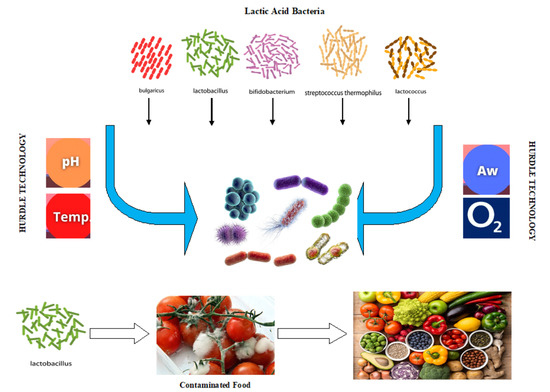
Research – Lactic Acid Bacteria as Antimicrobial Agents: Food Safety and Microbial Food Spoilage Prevention

MDPI

In the wake of continual foodborne disease outbreaks in recent years, it is critical to focus on strategies that protect public health and reduce the incidence of foodborne pathogens and spoilage microorganisms. Currently, there are limitations associated with conventional microbial control methods, such as the use of chemical preservatives and heat treatments. For example, such conventional treatments adversely impact the sensorial properties of food, resulting in undesirable organoleptic characteristics. Moreover, the growing consumer advocacy for safe and healthy food products, and the resultant paradigm shift toward clean labels, have caused an increased interest in natural and effective antimicrobial alternatives. For instance, natural antimicrobial elements synthesized by lactic acid bacteria (LAB) are generally inhibitory to pathogens and significantly impede the action of food spoilage organisms. Bacteriocins and other LAB metabolites have been commercially exploited for their antimicrobial properties and used in many applications in the dairy industry to prevent the growth of undesirable microorganisms. In this review, we summarized the natural antimicrobial compounds produced by LAB, with a specific focus on the mechanisms of action and applications for microbial food spoilage prevention and disease control. In addition, we provide support in the review for our recommendation for the application of LAB as a potential alternative antimicrobial strategy for addressing the challenges posed by antibiotic resistance among pathogens. View Full-Text

Research – A Naturally Derived Nanocomposite Film with Photodynamic Antibacterial Activity: New Prospect for Sustainable Food Packaging

ACS

Abstract Image

Food packaging with efficient antibacterial ability is highly desirable and challenging in facing the crisis of microbial contamination. However, most present packaging is based on metal-based antibacterial agents and requires a time-consuming antibacterial process. Here, the unique packaging (CC/BB films) featuring aggregation-induced emission behavior and photodynamic inactivation activity is prepared by dispersing self-assembled berberine–baicalin nanoparticles (BB NPs) into a mixed matrix of sodium carboxymethylcellulose-carrageenan (CC). The superiority of this design is that this packaging film can utilize sunlight to generate reactive oxygen species, thus eradicating more than 99% of E. coli and S. aureus within 60 min. Also, this film can release BB NPs to inactivate bacteria under all weather conditions. Surprisingly, the CC/BB nanocomposite film presented excellent mechanical performances (29.80 MPa and 38.65%), hydrophobicity (117.8°), and thermostability. The nanocomposite film is validated to be biocompatible and effective in protecting chicken samples, so this work will provide novel insights to explore safe and efficient antibacterial food packaging.

Research – ‘Jelly’ ice cubes could revolutionize cold storage and the safety of cold food

Food Safety News

Researchers at the University of California-Davis have developed a new type of cooling cube with the potential, they say, to transform how cold storage is done.

The benefits of plastic-free, “jelly ice cubes” are that they do not melt, are compostable and antimicrobial, and can help prevent cross-contamination.

It can be easy for foodservice operators and their employees not to think about the food safety implications of how ice is used and handled. If they don’t take proper precautionary measures to handle food properly or keep up with necessary preventive maintenance measures to ensure that their ice machines are clean, sanitary and operating safely, there can be serious food safety risks. The researchers at the UC-Davis took note of this concern.

The researchers began working on their coolant cubes after Luxin Wang, an associate professor in the Department of Food Science and Technology, saw the amount of ice used at fish-processing plants and the cross-contamination that meltwater could spread among products or drains.

“The amount of ice used by these fish-processing sites is massive,” Wang said. “We need to control the pathogens.”

Research – Salmonella enterica 4,[5],12:i:- an emerging threat for the swine feed and pork production industry

Journal of Food Protection

Salmonella continues to be a significant cause of foodborne illnesses in human medicine. The Centers for Disease Control and Prevention reported Salmonella as the second leading cause of foodborne illness in the United States, and the leading cause of both hospitalizations and deaths. Salmonella enterica 4,[5],12:i:- (STM) is a monophasic variant of S. Typhimurium and it is an emerging threat to both human and animal health. STM was first identified in the 1980’s from poultry products and has become increasingly prevalent in meat products including pork. STM has also been identified in swine farms as well as feed manufacturing environments and feed itself. Similar pulse-field gel electrophoresis profiles have been observed between human clinical cases and the STM samples originating from swine feed. These related profiles suggest a link between swine ingesting contaminated feed and the source of foodborne illness in human. The objective of this article was to better understand the history of STM and the possible pathway between swine feed to the household table. Continued research is necessary to better understand how STM can enter both the feed supply chain and the pork production chain to avoid contamination of pork products destined for human consumption.

India – 30 students of Pune institute fall ill, officials suspect food poisoning; probe underway

Hindustan Times

The local block development officer said the students started complaining of stomach upset and nausea after eating certain food items for Christmas.

About 30 girls of a training institute in Pune, Maharashtra, fell ill due to suspected food poisoning after a Christmas dinner following which many of them had to be admitted to a hospital. An investigation is underway.

The incident happened at Nav Gurukul training centre of Flora Institute of Technology, Kusegaon in Bhor taluka. Local block development officer Vishal Tanpure said 31 students started complaining of stomach upset and nausea after eating some food items for Christmas.

Pune district civil surgeon Dr Ashok Nandapurkar said the girls had consumed food items made from paneer (Indian cottage cheese) for Christmas. “On Monday, some of them complained of stomach ache and nausea. A total of 22 girls have been taken to Bhor sub-district hospital. Of them seven are admitted and the rest are being treated at the OPD level. The remaining students have been taken to Sassoon hospital,” he said.

Officials said the condition of all 30 girls was stable, adding that necessary samples were being collected for examination. “The local administration has initiated the investigation and sent a team to collect food and water samples from the spot,” Tanpure was quoted as saying by news agency ANI.