Category Archives: Contaminated water

Research – Prevalence of E. coli , Salmonella , and Listeria spp. as potential pathogens: A comparative study for biofilm of sink drain environment

Wiley Online

Abstract

Since knowledge and understanding of waterborne pathogens and their diseases are well illuminated, a few research publications on the prevalence of pathogenic microorganisms in various household sink drain pipes are often not extensively examined. Therefore, this study aims to (a) assess and monitor the densities of the bacterial community in the different natural biofilm that grow on plastic pipelines, (b) to detect Escherichia coli Salmonella , and Listeria spp. from natural biofilm samples that are collected from the kitchen (= 30), bathroom (= 10), laboratories (= 13), and hospital (= 8) sink drainage pipes. Three bacterial species selected were assessed using a culture‐dependent approach followed by verification of isolates using both BIOLOG GEN III and polymerase chain reaction. The estimated number of each bacterium was 122 isolates, while 60, 20, 26, and 16 isolates were obtained from the natural biofilm samples, kitchen, bathroom, laboratories, and hospital, respectively. As for the tests, in all types of biofilm samples, the overall bacterial counts at low temperature (22°C) were higher than those at high temperature (37°C). Meanwhile, coli had the most significant number of bacterial microorganisms compared to the other two pathogens. Additionally, the most massive cell densities of coli Salmonella , and Listeria species were discovered in the biofilm collected from the kitchen, then the hospital. Statistically, the results reveal that there is a positive correlation (≥ .0001) with significance between the sources of biofilm. This work certainly makes the potential of household sink drain pipes for reservoir contagious pathogens more explicitly noticeable. Such knowledge would also be beneficial for prospective consideration of the threat to human public health and the environment.
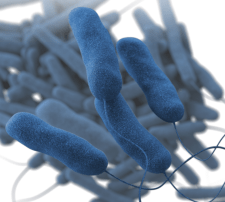
Information – Legionella risks during the coronavirus outbreak

HSE

CDC legionella

Image CDC


Employers, the self-employed and people in control of premises, such as landlords, have a duty to identify and control risks associated with legionella.

If your building was closed or has reduced occupancy during the coronavirus (COVID-19) outbreak, water system stagnation can occur due to lack of use, increasing the risks of Legionnaires’ disease. This may particularly affect:

For detailed guidance on Legionella and safer working during the coronavirus outbreak visit the HSE website.

Research -A review of outbreaks of cryptosporidiosis due to unpasteurized milk

Spinger  raw

Abstract

Purpose

This review analysed outbreaks of human cryptosporidiosis due to raw milk. The objective of our study was to highlight and identify underestimated and underreported aspects of transmission of the parasite as well as the added value of genotyping Cryptosporidium isolates.

Methods

We conducted a descriptive literature review using the digital archives Pubmed and Embase. All original papers and case reports referring to outbreaks of Cryptosporidium due to unpasteurized milk were reviewed. The cross-references from these publications were also included.

Results

Outbreaks have been described in the USA, Australia, and the UK. Laboratory evidence of Cryptosporidium from milk specimens was lacking in the majority of the investigations. However, in most recent reports molecular tests on stool specimens along with epidemiological data supported that the infection was acquired through the consumption of unpasteurized milk. As the incubation period for Cryptosporidium is relatively long (days to weeks) compared with many other foodborne pathogens (hours to days), these reports often lack microbiological confirmation because, by the time the outbreak was identified, the possibly contaminated milk was not available anymore.

Conclusion

Cryptosporidiosis is generally considered a waterborne intestinal infection, but several reports on foodborne transmission (including through raw milk) have been reported in the literature. Calves are frequently infected with Cryptosporidium spp., which does not multiply in milk. However, Cryptosporidium oocysts can survive if pasteurization fails. Thus, pasteurization is essential to inactivate oocysts. Although cryptosporidiosis cases acquired from raw milk are seldom reported, the risk should not be underestimated and Cryptosporidium should be considered as a potential agent of contamination. Genotyping Cryptosporidium isolates might be a supportive tool to strengthen epidemiologic evidence as well as to estimate the burden of the disease.


Research – Use of algal oil in shrimp diets shows sharp reduction in vibrio deaths, study finds

Under Current News

A study conducted by a team of shrimp disease experts from the US and Vietnam has found that the usage of algal oil in vannamei shrimp diets has a notable impact on survival rates among shrimp exposed to the bacterium vibrio, responsible for early mortality syndrome, or EMS, reports the Global Aquaculture Alliance.

Groups of specific pathogen-free 3-gram shrimp were fed different diets by the research team, before being exposed to shrimp broth inoculated with a consistently virulent strain of vibrio collected from a farm in Vietnam.

Research – Cholera studies reveal mechanisms of biofilm formation and hyperinfectivity

UCSC

Free-swimming cholera bacteria are much less infectious than bacteria in biofilms, aggregates of bacterial cells embedded in a sticky matrix that form on surfaces. This accounts for the surprising effectiveness of filtering water through cloth, such as a folded sari, which can reduce infections dramatically in places where the disease is endemic, despite the fact that individual cholera bacteria easily pass through such a filter.

A new study led by researchers at UC Santa Cruz goes a long way toward explaining the hyperinfectivity of cholera biofilms. The study, published the week of April 20 in the Proceedings of the National Academy of Sciences (PNAS), is one of several new papers on cholera biofilms from the laboratory of UCSC microbiologist Fitnat Yildiz.

Research- FAO and WHO report rise in foodborne diseases related to Vibrio species

New Food Magazine

The FAO/WHO assessment revealed that there have been a series of pandemic outbreaks of V. parahaemolyticus foodborne illnesses due to the consumption of seafood and outbreaks have occurred in regions of the world where it was previously unreported.

Full Report


USA – New Oyster Rules Aim to Reduce Vibrio Cases

Coastal Review

Division of Marine Fisheries Director Steve Murphey implemented the new oyster harvest control measures through Proclamation SS-1-2020  and Proclamation SS-2-2020, both issued Monday.

The Division of Marine Fisheries announced that while the state’s public health record concerning shellfish-related illnesses is one of the best in the country, the number of Vibrio cases nationwide had increased in recent years. Vibrio are naturally occurring bacteria in coastal waters that can cause illness in humans if precautions are not taken during the warmer months of the year.

The new regulations also will bring the state into conformity with guidance from the National Shellfish Sanitation Program, which is the federal, state and industry cooperative program recognized by the U. S. Food and Drug Administration and the Interstate Shellfish Sanitation Conference for the sanitary control of shellfish produced and sold for human consumption.

The changes include the following new requirements to:

  • Shade oysters harvested between May 1 and Oct. 14. This involves providing shade over harvested oysters or covering the oysters with a light-colored tarp or other nontoxic material while they are stored on the vessel, floating container when the oysters are not submerged, or a vehicle (this is already required for the harvest of clams in the summer).
  • Resubmerge oysters exposed to the air for greater than five hours between May 1 and Oct. 14 (this might occur during air-drying or de-fouling with gear such as OysterGro). The oysters must remain submerged for at least 14-days to abate Vibrio levels that may have been elevated.
  • Clarify that when working in intertidal waters the term “start of harvest” begins when the oyster is first exposed by the receding tide.
  • Clarify the tagging procedures when oysters leave the lease for tumbling or culling.
  • Resubmerge oysters moved from one growing area to another for at least 21 days prior to harvest (Certified shellfish dealers with a wet storage permit are exempt). This may prevent the closure of multiple growing areas in the event of an illness outbreak.

Previously implemented regulations pertaining to recording the start of harvest on the harvest tag and delivering the oysters to a licensed dealer within a specified time remain in effect.

For more information, contact Shannon Jenkins, chief of the division’s Shellfish Sanitatio

Research -Microbiological reduction strategies of irrigation water for fresh produce

JFP

Irrigation water can be a source of pathogenic contamination of fresh produce. The quality of the water used during primary production is important to control to ensure food safety and protect human health. Several measures to control the microbiological quality of irrigation water are available for growers, including preventative and mitigation strategies. However, clear guidance for growers on which strategies could be used to reduce microbiological contamination is needed. This study evaluates pathogenic microorganisms of concern in fresh produce and water, the microbiological criteria of water intended for agricultural purposes, as well as preventative and mitigative microbial reduction strategies. This article provides suggestions for control measures that growers can take during primary production to reduce foodborne pathogenic contamination coming from irrigation water. Results show that controlling the water source, regime, and timing of irrigation may help to reduce the potential exposure of fresh produce to contamination. Moreover, mitigation strategies like electrolysis, ozone, UV, and photocatalysts hold promise either as a single treatment, with pretreatments that remove suspended material, or as combined treatments with another chemical or physical treatment(s). Based on the literature data, a decision tree was developed for growers, which describes preventative and mitigation strategies for irrigation water disinfection based on the fecal coliform load of the irrigation water and water turbidity. It helps guide growers when trying to evaluate possible control measures given the quality of the irrigation water available. Overall, the strategies available to control irrigation water used for fresh produce should be evaluated on a case-by-case basis as one strategy or technology does not apply to all scenarios.

Research – As warming waters make shellfish toxic, a way of life becomes deadly for Native Alaskans.

Grist org

This summer, independent shellfish testing sites all over the state reported spikes in toxin levels, possibly related to the historic high temperatures in the water surrounding Alaska. And those warming waters are creating the ideal conditions for the algae that produce the toxin to propagate year-round, some researchers say.

Information – Controlling Legionella on Ships, Ferries & Maritime Vessels

Legionella Control

This expert guide from our water safety specialists looks at the control of legionella on ships, ferries and other maritime vessels. The guide considers the water safety risks that can arise on-board different vessels, the need to consider dry dock safety, why a detailed risk assessment and Water Safety Plan are essential, and concludes by outlining the potential consequences following an outbreak of Legionnaires’ disease.

When we hear about outbreaks of Legionnaires’ disease, we tend to associate them with scenarios that occur on land – in hotels, hospitals, leisure centres etc. However, there are similar opportunities for Legionella bacteria to grow and spread at sea too. Ships, ferries, cruise liners and other maritime vessels of all shapes and sizes can be affected, and as such must take suitable precautions to make sure their water systems are safe for those who use them or are exposed to them.