Category Archives: bacterial contamination

UK -Cardiff City Road restaurant found infested with salmonella-carrying cockroaches

Wales Online

A popular City Road café in the Welsh capital was closed down after around 100 cockroaches were discovered in the kitchen and dining area.

The insects were found at Mr Tikka on City Road in Roath, Cardiff, when council officers carried out an unannounced routine inspection on May 7 of last year.

When officers arrived, the owner, Rubi Begum, was seen sweeping two live insects off the counter and white powder – believed to be an insecticide – was on the kitchen floor.

More insects, including German cockroaches, which pose a significant health risk, were later discovered in the kitchen and dining area where customers were eating.

Research -Carbon dioxide as a novel indicator for bacterial growth in milk

Wiley Online

Human milk spoils due to bacterial, yeast, or mold contamination. Current domestic methods of assessing milk spoilage are subjective or rely on time and temperature‐based guidelines. A key unmet food safety need remains the objective assessment of human milk spoilage. Experiments were conducted using a simplified human milk spoilage model based on goat’s milk as a human milk surrogate, spiked with a single bacterial strain (Staphylococcus epidermidis ), in which pH and carbon dioxide (CO2) concentration were measured along with bacteria count over 160 hr. Bacteria count correlated highly with CO2 but not with pH. A 0.21% CO2 concentration threshold could be defined for milk spoilage (correlating to a bacteria count threshold of 105 CFU/ml), with sensitivity and specificity above 84%. These findings suggest that CO2 measurement is a promising method to detect S. epidermidis growth in milk which merits further investigation for the objective and quantitative assessment of milk spoilage.


Research -Fate of Listeria on various food contact and noncontact surfaces when treated with bacteriophage

Wiley Online

Listeria kswfoodworld food safety food poisoning

Image CDC


Study objective was to determine efficacy of a bacteriophage suspension against Listeria spp. when applied to three common types of materials used in food manufacturing facilities. Materials included two food contact materials (stainless steel and polyurethane thermoplastic belting) and one noncontact material (epoxy flooring). Coupons of each material were inoculated with a cocktail containing L. monocytogenes and L. innocua (4 to 5‐log10 CFU/cm2). Two phage concentrations and a control, 0, 2 × 107 and 1 × 108 PFU/cm2 were evaluated. Treated samples were held at 4 or 20°C for 1 and 3 hr to determine the effect of temperature and treatment time. Reductions in Listeria populations ranged from 1.27 to 3.33 log10 CFU/cm2 on stainless steel, from 1.17 to 2.76 log10 CFU/cm2 on polyurethane thermoplastic belting, and from 1.19 to 1.76 log10 CFU/cm2 on epoxy resin flooring. Higher phage concentration (1 × 108 PFU/cm2), longer treatment time (3 hr), and processing area temperature of 20°C showed a greater ( ≤ .05) reduction of Listeria on the stainless‐steel and polyurethane thermoplastic belting coupons. Overall, Listeria reduction by phage treatment occurred on all three materials tested, under all conditions.


Korea – ‘Special bank will manage, distribute food poisoning bacteria’

Korea Biomed

The Ministry of Food and Drug Safety said that its food poisoning bacteria resource center has been designated as a bank specializing in managing the pathogen.

It is the first food poisoning bacteria bank. The nation has six specialized banks dealing with pathogen resources in the areas of viruses and zoonotic diseases.

With the latest designation, the new bank will preserve, manage, and distribute the food poisoning bacteria that are separated from food as a national resource.


Research -Reducing contamination of carcasses during de-feathering

Watt Poultry USA Campylobacter kswfoodworld

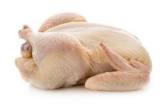
Broiler carcasses are often contaminated with bacteria during feather plucking. Applying an acidic solution could prevent this.


RASFF Alert- High Bacterial and Enterobacteriaceae – Short Pig Intestines

RASFF-Logo

RASFF – high bacterial count (8.3x10E8 CFU/g) and high count of Enterobacteriaceae (4.9x10E6 CFU/g) in frozen short pig intestines from Poland unfit for human consumption (untreated) in Germany

Infographics -Did you know that superbugs can be found in food?

WHO

Research – New dual-action coating keeps bacteria from cross-contaminating fresh produce

Science Daily

Over the course of their journey from the open fields to the produce displays at grocery stores, fresh vegetables and fruits can sometimes become contaminated by microorganisms. These items can then spoil other produce, spreading the contamination further and increasing the number of food items that can cause illnesses.

To prevent cross-contamination between fresh produce, researchers at Texas A&M University have created a coating that can be applied to food-contact surfaces like conveyor belts, rollers and collection buckets. In addition to being germicidal, the researchers have designed their coating to be extremely water-repellent. The researchers said without water, bacteria can’t stick or multiply on surfaces, thereby drastically curbing contamination from one piece of produce to another.

“Consuming contaminated raw foods causes hundreds of people to get sick annually, and so food contamination is not only a huge health concern but is also a significant economic burden,” said Mustafa Akbulut, associate professor in the Artie McFerrin Department of Chemical Engineering. “In our study, we show that our new dual-function coating — one that can both repel and kill bacteria — can greatly mitigate bacterial spread, averting cross-contamination.”

The results of the study are in the February issue of the journal ACS Applied Materials & Interfaces

Research – Now metal surfaces can be instant bacteria killers

Science Daily

Bacterial pathogens can live on surfaces for days. What if frequently touched surfaces such as doorknobs could instantly kill them off?

Purdue University engineers have created a laser treatment method that could potentially turn any metal surface into a rapid bacteria killer — just by giving the metal’s surface a different texture.

In a study published in the journal Advanced Materials Interfaces, the researchers demonstrated that this technique allows the surface of copper to immediately kill off superbugs such as MRSA.

“Copper has been used as an antimicrobial material for centuries. But it typically takes hours for native copper surfaces to kill off bacteria,” said Rahim Rahimi, a Purdue assistant professor of materials engineering.

“We developed a one-step laser-texturing technique that effectively enhances the bacteria-killing properties of copper’s surface.”

The technique is not yet tailored to killing viruses such as the one responsible for the COVID-19 pandemic, which are much smaller than bacteria.

Research – How silver ions kill bacteria

Science Daily

The antimicrobial properties of silver have been known for centuries. While it is still a mystery as to exactly how silver kills bacteria, University of Arkansas researchers have taken a step toward better understanding the process by looking at dynamics of proteins in live bacteria at the molecular level.

Traditionally, the antimicrobial effects of silver have been measured through bioassays, which compare the effect of a substance on a test organism against a standard, untreated preparation. While these methods are effective, they typically produce only snapshots in time, said Yong Wang, assistant professor of physics and an author of the study, published in the journal Applied and Environmental Microbiology.