Category Archives: Bacteria

USA – 10 Largest Food Poisoning Outbreaks 2012

Food Poisoning BulletinEcoli Istock

The 10 largest multi-state food poisoning outbreaks of 2012 poisoned 1,071 people in 45 states. Various strains of just three pathogens- Salmonella, E.coli and  Listeria were the cause of the 10 largest multi-state foodborne illness outbreaks, based on the total number of people sickened.  Six of them were caused by Salmonella, three by E.coli and one by Listeria. These dangerous bacteria  made their way into unsuspecting consumers through a variety of food sources including  meat, cheese, fish, peanut butter, fruit and vegetables.

USA – FDA – Recall Cold Smoked Salmon – Listeria monocytogenes

FDA

Potential Listeria-positive products have been identified and we can
confirm that Delifish S.A. has issued a voluntary recall of cold smoked salmon
products potentially containing Listeria monocytogenes placed on the
market in the USA produced from lots 249 through 291, manufactured between
September 5 2012 and October 17, 2012. There have been no complaints or
illnesses reported. Listeria monocytogenes is an organism which can
cause serious and sometimes fatal infections in young children, frail or elderly
people, and others with weakened immune systems. Although healthy individuals
may suffer only short-term symptoms such as high fever, severe headache,
stiffness, nausea, abdominal pain and diarrhea, listeria infection can
cause miscarriages and stillbirths among pregnant women.

Research- New Listeria Strains Discovered from the US Canteloupe Outrbreak 2011

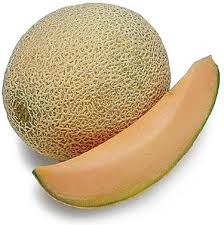
Food Safety Newscatalopue

After analyzing four of the five types of Listeria implicated in last year’s deadly cantaloupe outbreak, scientists have discovered that a new outbreak strain was among those that contributed to the nearly 150 illnesses and 33 deaths caused by contaminated melons.

The researchers, an international team of government and university scientists, also compared the strains involved in the 2011 outbreak to those that had caused other outbreaks or been collected from other food facilities. By doing this, they identified two new sets of “epidemic clones” –  strains isolated in different times and places that appear to have common ancestors.

Only five epidemic clones, or ECs, of Listeria had been identified prior to this study, which raises that number to seven.

Research – Hot Water and Chlorine Treatments – Bean Sprout

Science DirectEurofins

Abstract

The majority of bean sprout-related outbreaks have been associated with Escherichia coli O157:H7 and Salmonella, and an effective method to inactivate these organisms on seeds prior to sprouting is important to avoid foodborne pathogen diseases. We have previously tested treatment with a combination of hot water and chlorine, and a high bactericidal effect without decreases in the germination ratio was observed on mung bean seeds produced in China. To evaluate the versatility of this treatment, the present study confirmed whether our disinfection treatment can be applied to mung bean seeds produced in another country (Myanmar). A more than 5.0 log CFU/g reduction of E. coli O157:H7 was achieved when the mung bean seeds were treated with hot water at 85 °C for 10–40 s, followed by soaking in a 2000 ppm chlorine solution for 2 h; the hot water treatment at 85 °C for 40 s followed by the chlorine treatment completely eliminated E. coli O157:H7 from the mung bean seeds. Additionally, a more than 5.0 log CFU/g reduction was obtained for Salmonella after the hot water treatment at 85 °C followed by the chlorine treatment. These treatments did not significantly affect the viability and germination of the mung bean seeds, and a sufficient yield for commercial uses was obtained.

Research – Staphylococcus Nasal Colonisation

HACCPEUROPAStaphylococcus

Staphylococcus aureus (S. aureus) is one of the five most common causes of infections after injury or surgery and can be a food contaminant. Around one third of healthy individuals carry this bacteria in their noses, pharynx and on their skin. In normal healthy and immunocompentent person, S. aureus colonization of the skin, intestinal tract, or nasopharynx does not lead to any symptoms or disease.

Nasal colonisation by Staphylococcus aureus depends upon clumping factor B binding to the squamous epithelial cell envelope protein loricrin.

USA – Leftover Food Storage Tips Chart

Food Safety.gov

These short but safe time limits for home-refrigerated foods will keep them from
spoiling or becoming dangerous to eat. The guidelines for freezer storage are
for quality only. Frozen foods remain safe indefinitely.

Food Safety.gov Egg Products

Egg Safety Information

USDA Tips on Thawing and Re-Heating

UK – FSA – Update on Tofu Recall – Bacillus cereus

FSABacillus_cereus_01

Heads of Environmental Health and Directors of Trading Standards will wish to be aware of this update to Food Alert for Action 07/2012 issued on 20 December 2012 concerning the recall associated with rose bean curd tofu and chilli bean curd tofu originating from China via The Netherlands. The Agency has now received further information confirming that other lots of tofu from the same Chinese producer are contaminated with high levels of Bacillus cereus. Based on the findings, the Dutch importer Liroy B.V. is recalling all the tofu products they have imported this year from the Chinese producer.

The affected products have been distributed widely throughout the UK.

The Dutch importer will contact all their customers regarding withdrawing all other rose bean curd tofu and chilli bean curd tofu as a precaution.

Identification of the affected products:

1. Koon Yick Wah Kee – Rose Bean Curd (Tofu) 454g Best Before Date 30.06.14 Lot number 023424

2. Koon Yick Wah Kee – Chilli Bean Curd (Tofu) 454g Best Before Date 30.06.14 Lot Number 023421

(Photo Courtesy of the CDC via Wiki)

Culture Better Than Rapid?

The Packer

Tests for foodborne pathogens in which a culture is not grown in a lab may be necessary for produce companies, but they can’t replace traditional culture tests, industry leaders and government officials say.

Nonculture diagnostic tests have been around since the early 1980s, said David Gombas, senior vice president of food safety and technology for the Washington D.C.-based United Fresh Produce Association.

But there has been a recent push, Gombas said, to use them to replace culture tests that the Centers for Disease Control and Prevention, the Food and Drug Administration and other agencies and organizations rely on to accurately diagnose cases of salmonella, E. coli and other foodborne illnesses.

That trend was highlighted in a recent article in Scientific America magazine, which found that many clinics and state-run labs are turning to nonculture tests, which are faster than culture tests.

They’re faster, but are they better?

“Right now, the answer is no,” Gombas said. “CDC, FDA, and those in the produce industry I talk to — they want a live bug.”

Canada Salmonella –

Le Journal de Montreal

The Ministry of Agriculture, Fisheries and Food (MAPAQ) has warned the public not to consume ardelenesc sausage ready to eat, as it may contain Salmonella.

This notice is issued in conjunction with the Charcuterie Transilvania, located boulevard Curé-Labelle, Laval, which makes this product. The affected lots are for all ardelenesc sausages sold from December 12 at the hotel. The product was sold only Charcuterie Transilvania, and the company is voluntarily recalling its sausages.

No illnesses associated with the consumption of this food has not been reported so far MAPAQ.

Research Articles – Pulsed Electronic Field Milk – PCR Method Vibrio – Listeria Detection Culture Methods

Science Direct

Abstract

Lethal and sublethal injury of two Gram-positive (Staphylococcus aureus and Listeria monocytogenes) and one Gram-negative (Escherichia coli) bacteria in milk by pulsed electric fields (PEF) were determined using non-selective and selective media. PEF inactivation kinetics including lethal and sublethal injury fractions was also studied. The proportion of the sublethally injured microbial cells depended on the microorganisms, electric field strength and treatment time. The proportion of sublethally injured microbial cells reached maximum after a specific PEF treatment, and it kept constant or progressively decreased at greater electric field strengths and with longer PEF treatments. For the strain of L. monocytogenes, the proportion of sublethally injured cells increased from 18.98% to 43.64% with the increasing electric field strength from15 to 30 kV/cm. While for the strains of E. coli and S. aureus, the proportion of sublethally injured cells achieved the maximum (40.74% and 36.51%, respectively) at 25 kV/cm and then decreased. The proportion of the sublethally injured microbial cells reached maximum at 400 μs (S. aureus and L. monocytogenes) or 500 μs (E. coli), and decreased at longer treatments at 30 kV/cm. The PEF inactivation kinetics including lethal and sublethally injured fractions was analyzed by the Hülsheger model, and the model parameters (EC, tC, kE, bt) for lethal and sublethal injury were also calculated.

Science Direct

Abstract

A previously developed multiplex PCR targeting gyrB of Vibrios at genus level and pntA genes for specific detection of Vibrio cholerae, Vibrio parahaemolyticus and Vibrio vulnificus was evaluated. The sensitivity of the multiplex PCR on spiked seafood was 1.5 × 10³ CFU g−1. One hundred and fifty seafood samples were collected from retail stores and hypermarkets in different locations in Kuala Lumpur, Petaling Jaya and Seri Kembangan. The prevalence of V. parahaemolyticus was 29% (43/150). The pntA primers for V. parahaemolyticus detection were 100% specific and comparable to the toxR gene-based PCR. Six (12%) and 2 (4%) isolates contained trh and tdh genes, respectively. Repetitive Extragenic Palindromic PCR (REP-PCR) was used to genetically characterize the V. parahaemolyticus isolates in which 41 REP profiles were observed and all the isolates were categorized into 11 distinct clusters at the similarity of 80%. tdh-positive isolates shared a low level of similarity with trh-positive isolates. The prevalence of V. parahaemolyticus and particularly the presence of virulent gene such as trh and tdh among the isolates reiterate a high risk of contamination for seafood consumers in Malaysia. DNA fingerprinting of V. parahaemolyticus in this study indicates a high genetic diversity among the isolates and REP-PCR was able to distinguish the isolates with different virulotypes.

Science Direct

Abstract

The objectives of this study were to determine the prevalence of Listeria spp., specifically Listeria monocytogenes in ready-to-eat (RTE) foods and ascertain the efficiency of detecting L. monocytogenes with different selective culture media. A total of 396 RTE food samples were purchased from hypermarkets and streetside hawker stalls to examine the presence of Listeria spp. and L. monocytogenes. The presumptive isolates were characterized biochemically and were further confirmed by Polymerase Chain Reaction (PCR). Out of 396 samples, Listeria spp. was detected in 71 (17.9%) samples in which 45 (11.4%) were positive for L. monocytogenes. Among the studied RTE foods, salads and vegetables had the highest prevalence (14.7%) of L. monocytogenes, followed by chicken and chicken products (13.2%), beverages (10%), eggs and egg products (9.5%), beef and beef products (6.7%), lunch boxes (6.7%) and seafood and seafood products (6.7%). Both Listeria selective agar and PALCAM agar displayed a low sensitivity and specificity in L. monocytogenes detection compared to CHROMagar™ Listeria which demonstrated 96.9% of sensitivity and 99.1% of specificity in L. monocytogenes detection in naturally-contaminated foods. In conclusion, this work revealed consumption of RTE foods as a potential risk of listeriosis in this region. The high contamination rate of L. monocytogenes in salads and vegetables from hypermarkets and streetside hawker stalls was of great concern due to emerging fresh produce-borne L.monocytogenes globally. The scenario warrants further surveillance and action by the local authority to control the incidence of L. monocytogenes contamination in RTE foods.