Category Archives: Bacteria

USA – Cold Smoked Salmon Recall – Listeria monocytogenes

Food Poisoning Bulletin

Potential Listeria contamination in certain smoked salmon products sold at Sam’s Club stores nationwide has prompted the discount retailer to notify its customers of a recall. The products under recall were produced by Tampa Bay Fisheries Inc. of Dover Fl. and Multi-Export Foods. Inc of Miami.

The recall covers all smoked salmon products produced since November 14, 2012.Specifically, Smoked Salmon Twin Packs with the UPC numbers 0068826486705) or UPC 0068826486703  with a lot-sublot-batch number of: 931-59733-2; 933-59753-1; 933-59754-2;  875-701413-1 and 890-701413-1 are under recall. Those numbers can be found on a white sticker located on the back of the package above the UPC bar code.

European Alerts – Extended Recall Tofu – Bacillus cereus – Dog Food – Salmonella – Cheese – Listeria

AFSAC – FrenchEnglish tofu

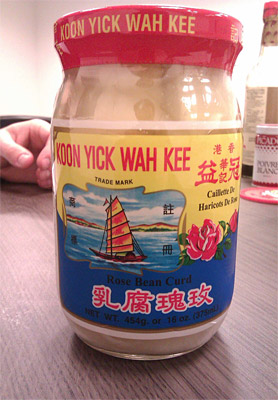
The Food Agency recommends not eating TOFU in sesame oil with or without chili brand KOON WAH KEE YICK following the detection of Bacillus cereus in this commodity. The product is sold in Asian specialty stores.

RASFF – Salmonella in Dog Food in Germany sourced in India

France – (English)

Following the detection of Listeria monocytogenes in certain lots of cheese, and as a precautionary measure, the company JUSSAC OF CHEESE shall withdraw the sale and recall of consumption of all cheeses.

The products covered by these measures were traded between 31 October 2012 and 26 December 2012.

Research Papers – Pathogens – Celery – Irradiation – Spinach – Boiling Shrimp – Low Water Activity and Pathogens

Science Direct

Illnesses from Escherichia coli O157:H7, Listeria monocytogenes, and Salmonella have been associated with the consumption of numerous produce items. Little is known about the effect of consumer handling practices on the fate of these pathogens on celery. The objective of this study was to determine pathogen behavior at different temperatures under different storage conditions. Commercial fresh-cut celery was inoculated at ca. 3 log CFU/g onto either freshly cut or outer uncut surfaces and stored in either sealed polyethylene bags or closed containers. Samples were enumerated following storage for 0, 1, 3, 5, and 7 days when held at 4 °C or 12 °C, and after 0, 8, and 17 h, and 1, and 2 days when held at 22 °C. At 4 °C, all populations declined by 0.5–1.0 log CFU/g over 7 days. At 12 °C, E. coli O157:H7 and Salmonella populations did not change, while L. monocytogenes populations increased by ca. 0.5 log CFU/g over 7 days. At 22 °C, E. coli O157:H7, Salmonella, and L. monocytogenes populations increased by ca. 1, 2, or 0.3 log CFU/g, respectively, with the majority of growth occurring during the first 17 h. On occasion, populations on cut surfaces were significantly higher than those on uncut surfaces. Results indicate that populations are reduced under refrigeration, but survive and may grow at elevated temperatures.

The Packer

Researchers say common packinghouse practices for fresh spinach are not sufficient to avoid outbreaks of salmonella-related illnesses and recently showed that irradiation eliminated almost all cross contamination from field and packing operations.

Scientists at Texas A&M University and Pusan National University in South Korea set out to develop a quantitative risk assessment model to evaluate microbial hazards during the processing of baby spinach leaves, according to their abstract recently published with their results in the journal “ScienceDirect.”

IngentaConnect

The purpose of this study was to determine whether the current consumer method of boiling shrimp until floating and pink in color is adequate for destroying Listeria and Salmonella. Shrimp samples were submerged in bacterial suspensions of Listeria and Salmonella for 30 min and allowed to air dry for 1 h under a biosafety cabinet. Color parameters were then measured with a spectrophotometer programmed with the CIELAB system. Twenty-four shrimp samples were divided into groups (days 0, 1, or 2) and stored at 4°C. The samples were treated by placing them in boiling water (100°C) on days 0, 1, and 2. The shrimp were immediately removed from the boiling water once they floated to the surface, and color parameters were measured. Bacterial counts were determined, and the log CFU per gram was calculated. The effect of sodium tripolyphosphate on the color change of cooked shrimp also was determined. Initial bacterial counts on shrimp after air drying were 5.31 ± 0.14 log CFU/g for Salmonella Enteritidis, 5.24 ± 0.31 log CFU/g for Salmonella Infantis, 5.40 ± 0.16 log CFU/g for Salmonella Typhimurium, 3.91z 0.11 log CFU/g for Listeria innocua, 4.45 ± 0.11 log CFU/g for Listeria monocytogenes (1/2a), and 3.70 ± 0.22 log CFU/g for Listeria welshimeri. On days 0, 1, and 2, all bacterial counts were reduced to nondetectable levels for shrimp samples that floated. The average time for shrimp to float was 96 ± 8 s. The bacterial counts remained at nondetectable levels (<10 log CFU/g) during refrigerated (4°C) storage of cooked shrimp for 2 days. The redness, yellowness, and lightness were significantly higher (P < 0.0001) for the cooked shrimp than for the uncooked shrimp on all days tested. The standard deviation for redness in the cooked shrimp was large, indicating a wide range of pink coloration on all days tested. The results suggest that boiling shrimp until they float will significantly reduce Listeria and Salmonella contamination, but color change is not a good indication of reduction of these pathogens because of the wide natural color variation.

IngentaConnect

Foods and food ingredients with low water activity (aw) have been implicated with increased frequency in recent years as vehicles for pathogens that have caused outbreaks of illnesses. Some of these foodborne pathogens can survive for several months, even years, in low-aw foods and in dry food processing and preparation environments. Foodborne pathogens in low-aw foods often exhibit an increased tolerance to heat and other treatments that are lethal to cells in high-aw environments. It is virtually impossible to eliminate these pathogens in many dry foods or dry food ingredients without impairing organoleptic quality. Control measures should therefore focus on preventing contamination, which is often a much greater challenge than designing efficient control measures for high-aw foods. The most efficient approaches to prevent contamination are based on hygienic design, zoning, and implementation of efficient cleaning and sanitation procedures in the food processing environment. Methodologies to improve the sensitivity and speed of assays to resuscitate desiccated cells of foodborne pathogens and to detect them when present in dry foods in very low numbers should be developed. The goal should be to advance our knowledge of the behavior of foodborne pathogens in low-aw foods and food ingredients, with the ultimate aim of developing and implementing interventions that will reduce foodborne illness associated with this food category. Presented here are some observations on survival and persistence of foodborne pathogens in low-aw foods, selected outbreaks of illnesses associated with consumption of these foods, and approaches to minimize safety risks.

Canada – First E.coli O157 of 2013

Ecoli Blog

CBC News reports that Canadian health officials say seven people in Nova Scotia have been infected with E. coli, likely E. coli O157:H7. Five people have been treated in hospital and released, while two people remain hospitalized. One is suffering from kidney failure. The people who have fallen ill range from their late teens to their 80s.

Five to six cases of E. coli O157:H7 have also been reported in New Brunswick, leading health officials to believe the common denominator is likely a food item that is sold in both provinces.

According to the Herald News, because there are no known new cases, officials are hoping that whatever caused the illness was a food with a short shelf life, such as a type of fruit or vegetable

Israel – Recalls – Goats Butter E.coli and Salad with Listeria monocytogenes

White Goat brand Goat Butter (100g glass jar; Expiry date 4/24/2013)

Hill Home-style Egg Salad (250g; Expiry date 22.01.13)


Denmark Recall – Lollo Rosso Lettuce – Salmonella

RASFF – Salmonella in Lollo Rosso Lettuce in Germany sourced in Denmark

Research : Inhibitory Effect of Cinnamon Powder on Pathogen Growth in Laboratory Media

ingentaconnect

Abstract:

There has been an increasing interest in the use of natural plant materials as alternative food preservatives. We examined the antimicrobial effects of natural plant materials used as additives against foodborne pathogens in laboratory media and Sulgidduk, oriental-style rice cakes. Cinnamon, mugwort, and garlic powder solutions (3%) were tested for their antimicrobial activities against pathogens in laboratory media. Sulgidduk prepared with different amounts of cinnamon powder (1, 3, and 6%) was inoculated with a Staphylococcus aureus or Bacillus cereus cocktail. The samples were air or vacuum packaged and stored at 22 ± 1°C for 72 h, and microbial growth was determined. Cinnamon powder showed more inhibitory properties against pathogens such as Salmonella enterica serovar Typhimurium, Escherichia coli O157:H7, Listeria monocytogenes, S. aureus, and B. cereus than did mugwort or garlic powder. The populations of S. aureus and B. cereus in Sulgidduk containing cinnamon powder were significantly lower than in the control during storage time. Different packaging methods did not result in a significant difference in pathogen growth. In a sensory evaluation, Sulgidduk containing 1 and 3% cinnamon powder did not significantly differ from the control sample in any of the attributes tested other than flavor. These results indicate that natural plant materials such as cinnamon powder could be used as food additives to improve the microbiological stability of rice cakes.

UK Research – MRSA in British Cattle

Global Meat News

Food and farming charity The Soil Association has called on the British government to investigate the bacteria MRSA in UK farm animals, as well as the claimed overuse of antibiotics in farming.


Hong Kong – Recall Bean Curd High Levels Bacillus cereus

Center for Food SafetyiStock_000008493122Small

The Centre for Food Safety (CFS) today (December 31) advised people not to
consume a kind of bottled fermented bean curd cubes imported from China which might have been contaminated with Bacillus cereus, a pathogen. The trade should immediately stop selling or using the product.

“A sample of bottled fermented bean curd cubes was collected at a food distributor for testing under the regular Food Surveillance Programme. The test result showed that the sample contained Bacillus cereus at an excessive level of 130,000 per gram,” a CFS spokesman said.

“According to the ‘Microbiological Guidelines for Ready-to-eat Food’, it is potentially hazardous to the health of consumers if 100,000 or more of Bacillus cereus per gram of food is detected,” he added.

Product details of the unsatisfactory sample are as
follows:

Product name: Shui Kou Preserved Bean Curd (Chilli)
(350 grams per bottle)
Best before date: December 30, 2013
Place of origin: Guangdong Province

Bacillus cereus is commonly found in the environment.
Unhygienic conditions in food processing and storage may give rise to its
growth. Consuming food contaminated with excessive Bacillus cereus may cause gastrointestinal upset such as vomiting and diarrhoea.

European Alerts – Listeria in Cheese in Switzerland and Luxembourg

Switzerland – Listeria in Sheeps Cheese

A sheep’s milk cheese sold in Western Switzerland by Migros contains bacteria like Listeria. . It is dangerous to health and should not be consumed, warns the Federal Office of Public Health (BAG).

Type bacteria Listeria were found in sheep’s cheese mini-Jussac bricks manufactured in France and sold in western Switzerland by Migros. The Federal Office of Public Health (BAG) recommend to the public not to consume it.

Luxembourg

Following the detection of Listeria monocytogenes in certain lots of cheese, and as a precaution, the company JUSSAC OF CHEESE is withdrawing the sale and recalling of the consumption of these whole cheeses.

The products covered by these measures were traded between 31 October 2012 and December 26, 2012.