Archives
-
Join 341 other subscribers
KSWFoodWorld
Blog Stats
- 425,792 Views
Category Archives: antifungal
Research – Recent Advances in Non-Contact Food Decontamination Technologies for Removing Mycotoxins and Fungal Contaminants
Agricultural food commodities are highly susceptible to contamination by fungi and mycotoxins, which cause great economic losses and threaten public health. New technologies such as gamma ray irradiation, ultraviolet radiation, electron beam irradiation, microwave irradiation, pulsed light, pulsed electric fields, plasma, ozone, etc. can solve the problem of fungal and mycotoxin contamination which cannot be effectively solved by traditional food processing methods. This paper summarizes recent advancements in emerging food decontamination technologies used to control various fungi and their associated toxin contamination in food. It discusses the problems and challenges faced by the various methods currently used to control mycotoxins, looks forward to the new trends in the development of mycotoxin degradation methods in the future food industry, and proposes new research directions.
Research – Predictive Mapping of Antimicrobial Resistance for Escherichia coli, Salmonella, and Campylobacter in Food-Producing Animals, Europe, 2000–2021
Abstract
In Europe, systematic national surveillance of antimicrobial resistance (AMR) in food-producing animals has been conducted for decades; however, geographic distribution within countries remains unknown. To determine distribution within Europe, we combined 33,802 country-level AMR prevalence estimates with 2,849 local AMR prevalence estimates from 209 point prevalence surveys across 31 countries. We produced geospatial models of AMR prevalence in Escherichia coli, nontyphoidal Salmonella, and Campylobacter for cattle, pigs, and poultry. We summarized AMR trends by using the proportion of tested antimicrobial compounds with resistance >50% and generated predictive maps at 10 × 10 km resolution that disaggregated AMR prevalence. For E. coli, predicted prevalence rates were highest in southern Romania and southern/eastern Italy; for Salmonella, southern Hungary and central Poland; and for Campylobacter, throughout Spain. Our findings suggest that AMR distribution is heterogeneous within countries and that surveillance data from below the country level could help with prioritizing resources to reduce AMR.
Research – Comparison of Antibacterial Activity of Phytochemicals against Common Foodborne Pathogens and Potential for Selection of Resistance
Abstract
Antimicrobial resistance is now commonly observed in bacterial isolates from multiple settings, compromising the efficacy of current antimicrobial agents. Therefore, there is an urgent requirement for efficacious novel antimicrobials to be used as therapeutics, prophylactically or as preservatives. One promising source of novel antimicrobial chemicals is phytochemicals, which are secondary metabolites produced by plants for numerous purposes, including antimicrobial defence. In this report, we compare the bioactivity of a range of phytochemical compounds, testing their ability to directly inhibit growth or to potentiate other antimicrobials against Salmonella enterica Typhimurium, Pseudomonas aeruginosa, Listeria monocytogenes, and Staphylococcus aureus. We found that nine compounds displayed consistent bioactivity either as direct antimicrobials or as potentiators. Thymol at 0.5 mg/mL showed the greatest antimicrobial effect and significantly reduced the growth of all species, reducing viable cell populations by 66.8%, 43.2%, 29.5%, and 70.2% against S. enterica Typhimurium, S. aureus, P. aeruginosa, and L. monocytogenes, respectively. Selection of mutants with decreased susceptibility to thymol was possible for three of the pathogens, at a calculated rate of 3.77 × 10⁻⁸, and characterisation of S. enterica Typhimurium mutants showed a low-level MDR phenotype due to over-expression of the major efflux system AcrAB-TolC. These data show that phytochemicals can have strong antimicrobial activity, but emergence of resistance should be evaluated in any further development.
Research – Natural Antimicrobial Agents Utilized in Food Preservation
Since the initial transformation of food surpluses, improving food quality and safety are of principal importance to human health. Due to the mass production (eggs, poultry, meat, grains, and pulses) of huge quantities of food, as well as storage and transport, food technologists are faced with challenges of contamination, undesirable microbial growth, the production of toxins, or the deterioration of food (food spoilage). Different food preserving methods (drying, smoking, etc.) have been developed throughout human history to increase the storage time of perishable raw materials or improve diets. For a long time, chemical preservatives used in the prevention of food spoilage or foodborne diseases were considered convenient for consumer protection. Effective in small concentrations and maintaining the sensory properties of food, as well as exhibiting stability at different temperatures or pH values, made their application in the prevention of food spoilage highly applicable. Indeed, they reduce food losses, increase quality, extend shelf life, and enable the development of new formulations as well as food stabilization and standardization [1]. Although consumers still demand safe, fresh-like (minimally processed), nutritionally highly valuable, high-quality foods, attitudes towards chemical conservatives have changed in contemporary nutrition. The continuous intake of chemicals during our (increasingly long-lived) lifetime and the documented adverse activity have changed consumer perceptions and attitudes towards synthetic preservatives in food technology [2]. More natural food production or the application of natural compounds in maintaining food safety have become highly desirable for many consumers in developed countries. Bio-preservatives, naturally occurring compounds from plants, animals, or microorganisms, can be successfully used in extending the shelf life of food, the inhibition/elimination of spoilage and pathogenic microorganisms, and the enhancement of food’s functionality and quality. Natural antimicrobials can be used directly in product formulation, incorporated into packaging material, or surface-coated to prevent spoilage processes or pathogen growth [3].
The most important naturally occurring used compounds in the food industry are essential oils, enzymes, and edible coatings.
Essential oils are highly volatile compounds from herbs and spices such as basil, thyme, oregano, cinnamon, clove, and rosemary, and are used to reduce spoilage microorganisms, increase overall food quality, and to inhibit food-borne pathogens such as Salmonella, Listeria monocytogenes, Escherichia coli, Bacillus cereus, and Staphylococcus aureus [4]. Essential oils are effective in inhibiting fungal growth as well as mycotoxin synthesis, reducing fungal damage and health risks [5,6]. Although essential oils are mainly used in the food industry as flavorings, by increasing knowledge of their modes of action and interactions with food matrix components, they can be successfully used in reducing targeted microbes.
Enzymes from animal sources such as lyzozime, lactoferrin, and bacteriocins (natamycin, nisin, pediocin, and reuterin) from bacteria are used in small concentrations in a similar way to prolong shelf life and inhibit pathogen proliferation [7].
Edible coatings, thin layers of naturally occurring polymers, with or without the addition of essential oils or enzymes, used for food coating reduce moisture loss, reduce microbial contamination, and minimize the impact of packaging materials on the environment [8].
Many natural compounds are promising for replacing synthetic food additives while improving overall quality and safety. Through cooperation, food scientists and food technologists can help meet consumer needs for safe and nutritionally valuable food without the adverse effect of synthetic preservatives.
This Special Issue aims to publish quality articles on natural antimicrobials in food preservation, their activity towards pathogens and contaminants, and novel formulations or applications in the production of safe and healthy foods.
Author Contributions
Conceptualization, S.K.-T. and H.P.; writing—original draft preparation, H.P.; writing—review and editing, S.K.-T.; supervision, S.K.-T. All authors have read and agreed to the published version of the manuscript.
Research – The Role of Biofilms in the Pathogenesis of Animal Bacterial Infections
Abstract
Biofilms are bacterial aggregates embedded in a self-produced, protective matrix. The biofilm lifestyle offers resilience to external threats such as the immune system, antimicrobials, and other treatments. It is therefore not surprising that biofilms have been observed to be present in a number of bacterial infections. This review describes biofilm-associated bacterial infections in most body systems of husbandry animals, including fish, as well as in sport and companion animals. The biofilms have been observed in the auditory, cardiovascular, central nervous, digestive, integumentary, reproductive, respiratory, urinary, and visual system. A number of potential roles that biofilms can play in disease pathogenesis are also described. Biofilms can induce or regulate local inflammation. For some bacterial species, biofilms appear to facilitate intracellular invasion. Biofilms can also obstruct the healing process by acting as a physical barrier. The long-term protection of bacteria in biofilms can contribute to chronic subclinical infections, Furthermore, a biofilm already present may be used by other pathogens to avoid elimination by the immune system. This review shows the importance of acknowledging the role of biofilms in animal bacterial infections, as this influences both diagnostic procedures and treatment.
Posted in Antibacterial, Antibiotic Resistance, antifungal, antimicrobial resistance, Antimicrobials, Biofilm, Decontamination Microbial, Food Micro Blog, Food Microbiology Blog, microbial contamination, Microbial growth, Microbiological Risk Assessment, Microbiology, Microbiology Investigations, Microbiology Risk
Research – Bread Biopreservation through the Addition of Lactic Acid Bacteria in Sourdough

Abstract
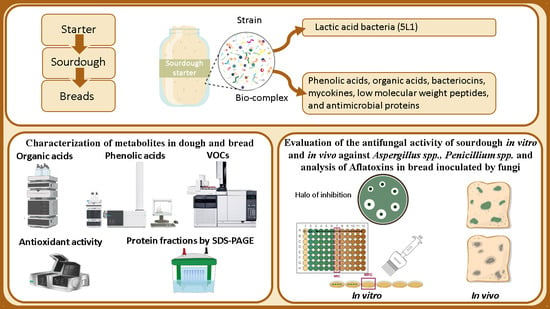
Nowadays, the consumer seeks to replace synthetic preservatives with biopreservation methods, such as sourdough in bread. Lactic acid bacteria (LAB) are used as starter cultures in many food products. In this work, commercial yeast bread and sourdough breads were prepared as controls, as well as sourdough breads with L. plantarum 5L1 lyophilized. The impact of L. plantarum 5L1 on the properties of bread was studied. Antifungal compounds and the impact on the protein fraction by the different treatments in doughs and breads were also analyzed. In addition, the biopreservation capacity of the treatments in breads contaminated with fungi was studied and the mycotoxin content was analyzed. The results showed significant differences with respect to the controls in the properties of the bread and a higher total phenolic and lactic acid content in breads with higher amounts of L. plantarum 5L1. In addition, there was a higher content of alcohol and esters. Furthermore, adding this starter culture produced hydrolysis of the 50 kDa band proteins. Finally, the higher concentration of L. plantarum 5L1 delayed fungal growth and reduced the content of AFB1 and AFB2 compared to the control.
Posted in antifungal, Decontamination Microbial, Food Micro Blog, Food Microbiology, Food Microbiology Blog, Food Microbiology Research, Food Microbiology Testing, fungi, LAB, lactic acid bacteria, Lactobacillus, Lactobacillus plantarum, microbial contamination, Microbial growth, Microbiological Risk Assessment, Microbiology, Microbiology Investigations, Microbiology Risk
Research – Fighting Foodborne Pathogens with Natural Antimicrobials
The food industry has now started exploring natural alternatives for preserving food to reduce the dependency on chemical preservatives, some of which are linked to obesity and metabolic syndrome. Specifically, natural antimicrobials produced by plants and microorganisms like bacteria and fungi can kill food-borne pathogens like Salmonella Typhimurium, Escherichia coli, Listeria monocytogenes and Clostridium botulinum and also food spoilage bacteria like Brochothrix thermosphacta, Lactobacillus spp., Bacillus spp. and Weissella spp., among others. Foodborne pathogens and spoilage microbes pose a serious health concern for consumers and destroy the appearance, texture and sensory characteristics of the food, affecting the food industry and consumers alike.
Posted in Antibacterial, antifungal, Antimicrobials, Bacillus, Brochothrix thermosphacta, Clostridium botulinum, Decontamination Microbial, Food Micro Blog, Food Microbiology, Food Microbiology Blog, Food Microbiology Research, Food Microbiology Testing, Food Pathogen, microbial contamination, Microbiological Risk Assessment, Microbiology, Microbiology Investigations, Microbiology Risk, Pathogen, pathogenic, Research
Research – Unraveling the Antimicrobial Effectiveness of Coridothymus capitatus Hydrolate against Listeria monocytogenes in Environmental Conditions Encountered in Foods: An In Vitro Study
The increased resistance of bacteria to antimicrobials, as well as the growing interest in innovative and sustainable alternatives to traditional food additives, are driving research towards the use of natural food preservatives. Among these, hydrolates (HYs) have gained attention as “mild” alternatives to conventional antimicrobial compounds. In this study, the response of L. monocytogenes ATCC 7644 exposed to increasing concentrations of Coridothymus capitatus HY (CHY) for 1 h at 37 °C was evaluated by means of Phenotype Microarray, modelling the kinetic data obtained by inoculating control and treated cells into GEN III microplates, after CHY removal. The results revealed differences concerning the growth dynamics in environmental conditions commonly encountered in food processing environments (different carbon sources, pH 6.0, pH 5.0, 1–8% NaCl). More specifically, for treated cells, the lag phase was extended, the growth rate was slowed down and, in most cases, the maximum concentration was diminished, suggesting the persistence of stress even after CHY removal. Confocal Laser Scanner Microscopy evidenced a diffuse aggregation and suffering of the treated cells, as a response to the stress encountered. In conclusion, the treatment with HY caused a stressing effect that persisted after its removal. The results suggest the potential of CHY application to control L. monocytogenes in food environments.
Posted in antifungal, antimicrobial resistance, Decontamination Microbial, Food Micro Blog, Food Microbiology, Food Microbiology Blog, Food Microbiology Research, Food Microbiology Testing, Food Technology, Listeria, Listeria monocytogenes, microbial contamination, Microbiological Risk Assessment, Microbiology, Microbiology Investigations, Research, Technology
Research – Antifungal Preservation of Food by Lactic Acid Bacteria
Fungal growth and consequent mycotoxin release in food and feed threatens human health, which might even, in acute cases, lead to death. Control and prevention of foodborne poisoning is a major task of public health that will be faced in the 21st century. Nowadays, consumers increasingly demand healthier and more natural food with minimal use of chemical preservatives, whose negative effects on human health are well known. Biopreservation is among the safest and most reliable methods for inhibiting fungi in food. Lactic acid bacteria (LAB) are of great interest as biological additives in food owing to their Generally Recognized as Safe (GRAS) classification and probiotic properties. LAB produce bioactive compounds such as reuterin, cyclic peptides, fatty acids, etc., with antifungal properties. This review highlights the great potential of LAB as biopreservatives by summarizing various reported antifungal activities/metabolites of LAB against fungal growth into foods. In the end, it provides profound insight into the possibilities and different factors to be considered in the application of LAB in different foods as well as enhancing their efficiency in biodetoxification and biopreservative activities. View Full-Text
Posted in antifungal, Decontamination Microbial, Food Micro Blog, Food Microbiology, Food Microbiology Blog, Food Microbiology Research, Food Microbiology Testing, fungi, LAB, lactic acid bacteria, microbial contamination, Microbiological Risk Assessment, Microbiology, Microbiology Investigations, Probiotic, Research
Research – The use of antifungal oat‐sourdough lactic acid bacteria to improve safety and technological functionalities of the supplemented wheat bread
In the present study, predominant lactic acid bacteria (LAB) were isolated from oat sourdough. Then, the isolates were screened based on their in vitro antifungal activity. Subsequently, biotechnological capabilities of the selected LAB were evaluated in wheat bread supplemented with controlled fermented oat containing the isolate. Pediococcus pentosaceus was molecular identified as predominant antifungal isolate. Based on our results, fermented oat not only significantly (p < .05) reduced the mold expansion on the produced breads, but also improved the quality attributes of the product. Crumb porosity and antioxidant capacity of the supplemented bread revealed the positive effects of the isolate on textural and functional characteristics of the enriched bread. Wheat bread supplemented with controlled fermented oat had also the highest 2,2‐diphenyl‐1‐picrylhydrazyl radical scavenging activity compared to the other samples. Accordingly, the potential applications of P. pentosaceus isolate as profunctional starter culture in processing of mixed wheat‐oat sourdough bread were verified.