Category Archives: Antibacterial

Research – Fighting Foodborne Pathogens with Natural Antimicrobials

Mirage News

The food industry has now started exploring natural alternatives for preserving food to reduce the dependency on chemical preservatives, some of which are linked to obesity and metabolic syndrome. Specifically, natural antimicrobials produced by plants and microorganisms like bacteria and fungi can kill food-borne pathogens like Salmonella Typhimurium, Escherichia coliListeria monocytogenes and Clostridium botulinum and also food spoilage bacteria like Brochothrix thermosphactaLactobacillus spp., Bacillus spp. and Weissella spp., among others. Foodborne pathogens and spoilage microbes pose a serious health concern for consumers and destroy the appearance, texture and sensory characteristics of the food, affecting the food industry and consumers alike.

Research – Occurrence and Multidrug Resistance of Campylobacter in Chicken Meat from Different Production Systems

MDPI

Campylobacter kswfoodworld

Campylobacter is the leading bacterial cause of diarrheal disease worldwide and poultry remains the primary vehicle of its transmission to humans. Due to the rapid increase in antibiotic resistance among Campylobacter strains, the World Health Organization (WHO) added Campylobacter fluoroquinolone resistance to the WHO list of antibiotic-resistant “priority pathogens”. This study aimed to investigate the occurrence and antibiotic resistance of Campylobacter spp. in meat samples from chickens reared in different production systems: (a) conventional, (b) free-range and (c) backyard farming. Campylobacter spp. was detected in all samples from conventionally reared and free-range broilers and in 72.7% of backyard chicken samples. Levels of contamination were on average 2.7 × 10³ colony forming units (CFU)/g, 4.4 × 10² CFU/g and 4.2 × 10⁴ CFU/g in conventionally reared, free-range and backyard chickens, respectively. Campylobacter jejuni and Campylobacter coli were the only species isolated. Distribution of these species does not seem to be affected by the production system. The overall prevalence of Campylobacter isolates exhibiting resistance to at least one antimicrobial was 98.4%. All the C. coli isolates showed resistance to ciprofloxacin and to nalidixic acid, and 79.5 and 97.4% to ampicillin and tetracycline, respectively. In total, 96.2% of C. jejuni isolates displayed a resistant phenotype to ciprofloxacin and to nalidixic acid, and 92.3% to ampicillin and tetracycline. Of the 130 Campylobacter isolates tested, 97.7% were classified as multidrug resistant (MDR).

Research – Preservation of cut fruit and use of a technological adjuvant for washing certain vegetables

ACSA

The Spanish Agency for Food Safety and Nutrition has published two new reports from its Scientific Committee:

  • Report on the storage conditions of fruit cut in half in retail establishments.
  • Report on the safety of the use of an aqueous solution of sodium lauryl ether sulfate as a processing aid for washing apples, peaches, bananas, tomatoes, peppers and citrus in processing plants .      

Report on the storage conditions of fruit cut in half in retail establishments

The AESAN Scientific Committee has assessed whether it is possible to keep melon, watermelon, pineapple and papaya cut in half at room temperature in retail establishments for a limited time, ensuring consumer safety.

The Scientific Committee has concluded that, on the basis of the information

  • Storage at room temperature of melon, watermelon, papaya and pineapple cut in half can pose a health risk as the physicochemical conditions (pH, water activity, total soluble solids, nutrient availability, etc.) are compatible with growth. of foodborne pathogens, such as Salmonella , E. coli verotoxigenic or L. monocytogenes .
  • In order to make the storage conditions of melon, watermelon, papaya and pineapple cut in half more flexible, temperatures below 25 ºC for a time of less than 3 may be allowed, as they do not pose a significant microbiological risk. hours in a place sufficiently ventilated and preserved from sunlight, followed by continuous refrigerated storage at temperatures below 5 ºC.
  • To minimize the health risk that these practices may pose, it is recommended to discard for cutting fruits with an excessive degree of ripeness, or that have wounds or cracks on their surface, as they can be a source of contamination.

Report on the safety of the use of an aqueous solution of sodium lauryl ether sulfate as a processing aid for washing apples, peaches, bananas, tomatoes, peppers and citrus in processing plants

The AESAN Scientific Committee has evaluated the safety of using an aqueous solution of sodium lauryl ether sulfate (27%) as a technological aid for washing apples, peaches, bananas, tomatoes, peppers and citrus in processing plants. request of a company request.

Sodium lauryl ether sulfate (LESS) is not authorized for human consumption.

As the presence of residues in the final products (fruits and vegetables) after the use of this aqueous solution cannot be ruled out, the technology adjuvant is classified as an unauthorized substance in human food whose Admissible Daily Intake (ADI) is not established and whose use may lead to the presence of technically unavoidable waste.

The Scientific Committee concludes that, based on the information provided by the applicant and taking into account the proposed composition and conditions of use, the use of the technology adjuvant does not imply a risk to the health of the consumer.

The conclusions of this report refer exclusively to the solution under evaluation as a technological aid in the proposed conditions of use and its composition, and may not be extended to formulations or conditions other than those evaluated, including joint use with other substances.

This evaluation does not imply an authorization for use or affect uses other than use as a technological aid in the process of washing apples, peaches, bananas, tomatoes, peppers and citrus in the processing plants. This use involves a final rinsing with drinking water, following the application of the washing water with the technological adjuvant, so that the possible residues in the fruits and vegetables are eliminated.

Click to access FRUTAS_CORTADAS.pdf

Click to access COADYUVANTE_LAURIL_ETER.PDF

Research – Surveillance of Antimicrobial Resistance (AMR) in E. coli and Campylobacter from retail turkey meat and E. coli from retail lamb in 2020/21-FS102109

APHA

ecoli

This report presents results of the surveillance of antimicrobial resistance (AMR) in specific bacteria, i.e., Campylobacter and Escherichia coli (E.coli)from lamb and turkey meats on retail sale in the UK between October 2020 and February 2021.
The aim was to test by culture approximately 200 samples each of lamb and turkey meat for E.coli, and also to test the turkey samples for Campylobacter. The FSA requested testing of lamb and turkey meat as the majority of AMR surveys on UK retail meats have focused on beef, chicken and pork.
As such there is an evidence gap for AMR in lamb and turkey meat. E. coli is a normal inhabitant of the mammalian and avian gut and most isolates do not cause observable clinical disease in healthy animals and humans. Therefore, E.coli isolates can be useful “indicators” of AMR in gut bacteria. Campylobacter is frequently present in the gut of healthy poultry, and thermophilic species (Campylobacter jejuni and Campylobacter coli) typically cause food poisoning in humans.
The monitoring of lamb and turkey meat for AMR is not mandatory as part of the European Directive 2003/99/EC, but the methodology used in this survey was broadly based on the current EU methodologies for the testing of retail beef, chicken and pork. These methodologies involve culture of E. coli on selective agar media containing the antimicrobial drug cefotaxime. Growth of E. coli on such plates indicate resistance to third generation cephalosporin antimicrobial drugs, including extended-spectrum beta lactamase (ESBL) and Amp C type resistance. Such isolates should be further tested for susceptibility to a panel of antimicrobials by determining minimum inhibitory concentration (MIC) values using a broth dilution method based on EN ISO 20776-1:2006.As recommended by the EU, additional selective cultures were performed on samples to isolate any E.coli resistant to carbapenem antimicrobials. Carbapenems are termed ‘last resort’ drugs, used to treat severe infections when other treatment options are ineffective because of multiple resistances in the target Gram negative bacteria.

6At the request of the FSA (non-harmonised testing outside the remit of Decision 2013/652/EU) further screening was performed for E.coli strains resistant to colistin (another ‘last resort’ human antimicrobial drug) and those specifically producing ESBL resistance enzymes. Colistin-resistant strains may harbour mcr resistance genes, which are located on plasmids that can transfer between bacteria.

Research – Strategies for Biocontrol of Listeria monocytogenes Using Lactic Acid Bacteria and Their Metabolites in Ready-To-Eat Meat- and Dairy-Ripened Products

MDPI

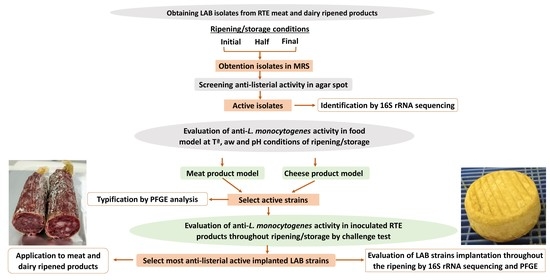
Listeria monocytogenes is one of the most important foodborne pathogens. This microorganism is a serious concern in the ready-to-eat (RTE) meat and dairy-ripened products industries. The use of lactic acid bacteria (LAB)-producing anti-L. monocytogenes peptides (bacteriocins) and/or lactic acid and/or other antimicrobial system could be a promising tool to control this pathogen in RTE meat and dairy products. This review provides an up to date about the strategies of use of LAB and their metabolites in RTE meat products and dairy foods by selecting the most appropriate strains, by analysing the mechanism by which they inhibit L. monocytogenes and methods of effective application of LAB, and their metabolites in these kinds of products to control this pathogen throughout the processing and storage. The selection of LAB with anti-L. monocytogenes activity allows to dispose of effective strains in meat and dairy-ripened products, achieving reductions form 2–5 logarithmic cycles of this pathogen throughout the ripening process. The combination of selected LAB strains with antimicrobial compounds, such as acid/sodium lactate and other strategies, as the active packaging could be the next future innovation for eliminating risk of L. monocytogenes in meat and dairy-ripened products.

Research – Antibacterial Properties of TMA against Escherichia coli and Effect of Temperature and Storage Duration on TMA Content, Lysozyme Activity and Content in Eggs

MDPI

Studies on trimethylamine (TMA) in egg yolk have focused on how it impacts the flavor of eggs, but there has been little focus on its other functions. We designed an in vitro antibacterial test of TMA according to TMA concentrations that covered the TMA contents typically found in egg yolk. The change in TMA content in yolk was analyzed at different storage temperatures and for different storage durations. The known antibacterial components of eggs, including the cuticle quality of the eggshell and the lysozyme activity and content in egg white, were also assessed. The total bacterial count (TBC) of different parts of eggs were detected. The results showed that the inhibitory effect of TMA on Escherichia coli (E. coli) growth increased with increasing TMA concentration, and the yolk TMA content significantly increased with storage duration (< 0.05). The cuticle quality and lysozyme content and activity significantly decreased with storage time and increasing temperature, accompanied by a significant increase in the TBC on the eggshell surface and in the egg white (< 0.05). This work reveals a new role for trace TMA in yolks because it reduces the risk of bacterial colonization, especially when the antibacterial function of eggs is gradually weakened during storage.

Research – Antibacterial Effect of Oregano Essential Oil against Vibrio vulnificus and Its Mechanism

MDPI

Oregano essential oil (OEO) is an effective natural antibacterial agent, but its antibacterial activity against Vibrio vulnificus has not been widely studied. The aim of this study was to investigate the inhibitory effect and germicidal activity of OEO on V. vulnificus and its possible inhibition mechanism. The minimum inhibitory concentrations (MICs) and minimum bactericidal concentrations (MBCs) of OEO against four V. vulnificus strains (ATCC 27562 and three isolates from seafoods) were from 0.06 to 0.15 μL/mL. Compared with untreated bacteria, OEO reduced the concentration of intracellular adenosine triphosphate (ATP), hyperpolarized the cell membrane, increased the level of reactive oxygen species (ROS), and increased the concentration of intracellular malondialdehyde (MDA), but there was no obvious DNA damage at the OEO test concentration. It was indicated that OEO inactivated V. vulnificus by generating ROS which caused lipid peroxidation of cell membranes, thereby reducing the permeability and integrity of cell membranes and causing morphological changes to cells, but there was no obvious damage to DNA. In addition, OEO could effectively kill V. vulnificus in oysters at 25 °C, and the number of bacteria decreased by 48.2% after 0.09% OEO treatment for 10 h. The good inhibitory effect and bactericidal activity of OEO showed in this study, and the economy and security of OEO make it possible to apply OEO to control V. vulnificus contamination in oysters and other seafoods. View Full-Text

Research – EU Harmonised Surveillance of Antimicrobial Resistance (AMR) in E. coli from Retail Meats in UK (2020 -Year 6, chicken)

Gov UK

Lay person’s summary
This report presents results of the EU harmonised surveillance of antimicrobial resistance (AMR) in E. coliform retail chicken meats in the UK in 2020.
In accordance with European Directive 2003/99/E Con the monitoring of bacteria that can pass from animals to humans and causes disease (zoonoses and zoonotic agents), Member States (MS) are obliged to ensure that procedures are in place to monitor and report on the occurrence of antimicrobial resistance(AMR) in such bacteria.
The UK continued to be subject to EU rules during the transition period up to the end of December 2020.Further testing of retail beef, chicken and pork is being considered based on surveillance priorities. The requirements (with additional detailed guidance from the EU Reference Laboratory for Antimicrobial Resistance) state that 300 retail chicken meats should be tested by culture for the bacterium Escherichia coli. E. coli bacteria are a normal part of the gut flora of mammals and as such can be useful “indicators” of AMR in gut bacteria.
Whilst some strains of E. coli can cause disease, most strains of E. coli do not cause observable disease in healthy animals and humans. The EU requirements state that samples should be tested on an agar (growth medium) supplemented with a third generation cephalosporin. Third generation cephalosporins area group of antimicrobials which are important for treating infections in humans. E. coligrowth on this agar suggests antimicrobial resistance known as Extended Spectrum β-lactamase (ESBL) resistance and/or Amp C resistance.
ESBL resistance is also referred to as ESBL-phenotype, Amp C resistance is also referred to as Amp C-phenotype. The degrees of susceptibility/resistance of E. coli recovered from this agar must then be determined to a pre-defined panel of antimicrobials by Minimum Inhibitory Concentrations (MICs) tests. EU requirements also state that samples should be tested on two other supplemented agars which select bacteria which are resistant to carbapenems.
Carbapeems are another a group of antimicrobials which are very important in human medicine. Carbapenems are termed “last resort” antimicrobials because they are used to treat severe infections when all or almost all other treatment options have failed, because the infecting bacteria are resistant to most / all other relevant antimicrobials. Additionally, each meat sample is tested for counts of the number of background and AMR(Amp C and ESBL type resistance only) E. coli in each meat sample according to an EU protocol.
At the request of the FSA, other agar culture media used to test samples included an agar to specifically isolate E. coli with ESBL-only type resistance only (rather than for E. coli with both an AmpC and an ESBL type resistance as per one of the EU specified agars), and an agar to isolate colistin resistant E. coli. Colistin is another “last resort” antimicrobial, so it is important to monitor if resistance in E. coli to colistin is occurring in food samples.
Colistin resistance in E. coli isolates may involve a number of resistance genes such as mcr-1, mcr-2 andmcr-3. These mcr genes are considered particularly important as they are usually carried on genetic elements known as plasmids. As plasmids are “mobile” (can pass from one bacterium to another), the resistance genes located on them can potentially be shared with other bacteria within the gut. In total during 2020, 327 samples of fresh chicken were collected of which 315 were eligible for testing. The 315 eligible retail chicken meat samples were collected from England (n=274), Scotland (n=20), Wales (n=11), and Northern Ireland (n=10) from ten different supermarket chains. Sample collection was impacted by the coronavirus pandemic.
Monthly sampling was suspended for 3 months from April to June2020, resuming in July. Sample numbers were adjusted in subsequent months to reach the target of 300 samples. The types of chicken meat collected were whole chicken (n=127), chicken breast (n=113) and other cuts, including quarters, legs, thighs & drumsticks (n=75). Of the samples collected, 58.7% and 41.2% had skin on or off respectively.
Breast samples were the main sample type from which skin was removed. Of the 315 samples, 309 were stated as originating from the UK, five from Poland and one from Ireland. No growth was observed from any of the samples(meaning the test results were negative and the bacteria were therefore not resistant to carbapenem antimicrobials) on the two agars that selected for carbapenem-resistant E. coli.
Forty-one(13.0%) of the samples gave rise to E. coli on MacConkey agar + 1mg/L cefotaxime. These positive results imply the E. coli were resistant to cefotaxime. MIC analysis of these 41isolatesfound that39 of the total number of samples tested (12.4%) expressed an ESBL-phenotype resistance (including two isolates additionally expressed the Amp C phenotype resistance).
The remaining two of these 41 E. coli isolates(0.63%) expressed an Amp C-phenotype resistance but not ESBL-phenotype resistance. The observed frequencies of recovery of ESBL-phenotype E. coli from samples from individual supermarkets ranged from 0% to and 22.1% of the samples tested per supermarket, including those with an Amp C+ESBL-phenotype. A total of 54 of all the samples tested, representing 17.1%,gave rise to growth on the ESBL-only specific agar and a total of 3 (0.95%)of all the samples tested were positive for the mcr-1 transferable colistin resistance gene. These three samples all originated from Poland.
A further two samples were also originally positive for mcr-3 when multiple suspect colonies was tested. However, it was not possible to isolate individual mcr-3positive E. coli from the mix, so these results must be considered equivocal. Using MIC tests, the isolates from the Amp C/ESBL specific agar were tested for the degree of resistance to a total of 19 antimicrobials. Based on the MIC results, isolates were determined as resistant or sensitive to a particular antimicrobial using cut-offs known as ECOFFs (Epidemiological Cut Offs published by EUCAST). The ECOFF distinguishes between organisms without and with phenotypically expressed resistance mechanisms for a bacterial species to an antimicrobial. None of the 41 isolates from the Amp C/ESBL specific agar were microbiologically resistant to the ‘last resort’ carbapenem antimicrobials imipenem and meropenem or to colistin. The MIC of ertapenem against one Amp C+ESBL-phenotype isolate was just above the previous EUCAST ECOFF(currently there is only a tentative ECOFF for ertapenem), and as such was microbiologically resistant. This isolate was not clinically resistant though, using EUCAST clinical break point..None of the E. coli were resistant to the antibiotics temocillin or tigecycline.
Only one isolate was resistant to the antibiotic’s azithromycin or gentamicin, whilst about 60% of isolates were resistant to the quinolone antibiotics (ciprofloxacin or nalidixic acid)or to chloramphenicol. Isolates obtained from agar with 1 mg/L cefotaxime were all resistant to cefotaxime andto antibiotics of a similar type, such as ampicillin and ceftazidime and most were also resistant to cefepime. Most of the isolates were resistant to the older antibiotics’ sulfamethoxazole and tetracyclines, and approximately 50% were resistant to trimethoprim.
Genetic tests (whole genome sequencing) showed that most of the E. coli isolates from the ESBL agar carried the bla CTX-Mgene which confers resistance to third generation cephalosporin antimicrobials, and has been frequently detected in E. coli from chickens and chicken meat in previous studies, including the 2016 and 2018 surveys. None of the meat samples had bacterial counts of background E. coli (isolates obtained from agar without antibiotics) or presumptive Amp C/ESBL-producing E. coli above the detection limit (when using the EU method) of 3,000 E. coli colony forming units (cfu) per gram of meat. In summary, the results in 2020 showed that 12.4% and 1.6% of retail chicken meat samples were positive for ESBL or Amp C-phenotype E. coli, respectively (including the three isolates with the combined Amp C/ESBL-phenotype in both the ESBL or Amp C-phenotype groups) on the Amp C/ESBL specific agar. Whilst there was an increase in the percentage of isolates with an ESBL-phenotype there was a decrease in the percentage of isolates with an Amp C-phenotype between 2018 and 2020.
Overall, between 2018 and 2020, the percentages of samples positive on the Amp C/ESBL specific agar remained almost identical at 13.6% and 13.0%,respectively.None of the samples were positive for carbapenem-resistant E. coli on either of the two carbapenem selective agars. Between the 2016 and 2018 EUsurveys1there was a significant reduction in the proportion of chicken samples positive on the Amp C/ESBL specific agar and the ESBL agar.
Comparison with a paper on UK samples tested in 2013/142 also showed a significant reduction in samples positive for ESBL-producing E. coli between 2013/14 and the 2016 EU survey (65.4% to 29.7%), albeit sampling and isolation methods were similar, but not identical for the two studies.The2018 report for chicken meat samples1 suggests that these drops in the level of antimicrobial-resistant E. coli on retail chicken meat since 2013/14 may be linked to the restriction by the British Poultry Council to the use of third-and fourth-generation cephalosporins in flocks used for poultry meat production in the UK in 2012 as part of antimicrobial stewardship.
The 2020 survey results suggest that the proportions of Amp C or ESBL-phenotype E. coli in retail chicken have not changed since 2018. There was a slight increase in the proportions of samples that were positive on the ESBL-specific agar compared to the 2018. This was the first year that retail chicken samples were found to be positive for mcr plasmid-mediated colistin resistant E. coli. It should be considered that 2020 was an unusual year due to the impact of the coronavirus pandemic, although there is no reason to suppose this affected the proportions of retail chicken meat positive for AMR E. coli.


Research – Scientists invent biodegradable bacteria-killing packaging

Food Safety News

Scientists from Harvard T.H. Chan School of Public Health and Nanyang Technological University Singapore have developed a biodegradable food packaging material that kills harmful microbes and could extend the shelf-life of fresh fruit by two to three days.

Having an antibacterial and biodegradable alternative for food packaging could be hugely beneficial for waste reductions and food safety. According to the U.S. Environmental Protection Agency, containers and packaging make up a major portion of municipal solid waste, amounting to 82.2 million tons of generation in 2018. Packaging is defined as the products used to wrap or protect goods, including food, beverages, medications and cosmetic products.

The new packaging is intended for food items such as raw meat, fish, fruit, vegetables and ready-to-eat meals. Professor Mary Chan, the director of NTU’s Centre for Antimicrobial Bioengineering who co-led the project, says the team’s aim is to replace conventional plastic packaging with the new material that will also double the shelf life of produce.

“Vegetables are a source of wastage because even if they are refrigerated, they will continue to respire, leading to spoilage after a week or two. With the antimicrobial packaging, there is a chance to extend their shelf life. . . and also make the vegetables and fruits look fresh with time,” she said.

Research – Sustainable food packaging that keeps harmful microorganisms away

ACS

Abstract Image

Active food packaging materials that are sustainable, biodegradable, and capable of precise delivery of antimicrobial active ingredients (AIs) are in high demand. Here, we report the development of novel enzyme- and relative humidity (RH)-responsive antimicrobial fibers with an average diameter of 225 ± 50 nm, which can be deposited as a functional layer for packaging materials. Cellulose nanocrystals (CNCs), zein (protein), and starch were electrospun to form multistimuli-responsive fibers that incorporated a cocktail of both free nature-derived antimicrobials such as thyme oil, citric acid, and nisin and cyclodextrin-inclusion complexes (CD-ICs) of thyme oil, sorbic acid, and nisin. The multistimuli-responsive fibers were designed to release the free AIs and CD-ICs of AIs in response to enzyme and RH triggers, respectively. Enzyme-responsive release of free AIs is achieved due to the degradation of selected polymers, forming the backbone of the fibers. For instance, protease enzyme can degrade zein polymer, further accelerating the release of AIs from the fibers. Similarly, RH-responsive release is obtained due to the unique chemical nature of CD-ICs, enabling the release of AIs from the cavity at high RH. The successful synthesis of CD-ICs of AIs and incorporation of antimicrobials in the structure of the multistimuli-responsive fibers were confirmed by X-ray diffraction and Fourier transform infrared spectrometry. Fibers were capable of releasing free AIs when triggered by microorganism-exudated enzymes in a dose-dependent manner and releasing CD-IC form of AIs in response to high relative humidity (95% RH). With 24 h of exposure, stimuli-responsive fibers significantly reduced the populations of foodborne pathogenic bacterial surrogates Escherichia coli (by ∼5 log unit) and Listeria innocua (by ∼5 log unit), as well as fungi Aspergillus fumigatus (by >1 log unit). More importantly, the fibers released more AIs at 95% RH than at 50% RH, which resulted in a higher population reduction of E. coli at 95% RH. Such biodegradable, nontoxic, and multistimuli-responsive antimicrobial fibers have great potential for broad applications as active and smart packaging systems.