Author Archives: KSW

Netherlands – Safety warning meal salad chicken-ketjap various supermarkets (alert)

NVWA

The chicken-ketjap meal salad 450g will immediately be removed from the shelves of supermarkets Boon, Coop, Dekamarkt, Dirk and Hoogvliet.
After checking, it turned out that the salad may contain incompletely cooked chicken thigh fillet. Don’t eat the salad.

Research – Sporadic Shiga Toxin-Producing Escherichia coli-Associated Paediatric Haemolytic Uraemic Syndrome, France, 2012–2021

Sante Publique

Shiga toxin-producing Escherichia coli (STEC) bacteria cause a variety of symptoms, ranging from simple diarrhoea to bloody diarrhoea, and expose patients to an increased risk of serious complications, including haemolytic uraemic syndrome (HUS). HUS due to STEC infection can occur at any age, although it mainly affects children under the age of 5 and the elderly. Over the past decade, several outbreaks of food-borne STEC-HUS have received wide media coverage. For children, this illness remains a significant public health risk in France. Although ruminants (cows, sheep, goats, etc.) are the main reservoir of STEC bacteria, it is difficult to determine the source of contamination in sporadic infections due to the multiple possible modes of contamination (consumption of contaminated food or water, contact with ruminants or their contaminated environment, contact with an infected person, etc.).

Identifying geographic areas where there is a higher risk of sporadic STEC-HUS will help to improve our knowledge of the environmental risk factors associated with the geographic disparities. This was the objective of the study carried out by Santé publique France, in partnership with the National Reference Centre (Centre national de référence, CNR) for E. coli, at the Institut Pasteur, and its associated laboratory at the Robert Debré Teaching Hospital (Centre Hospitalier Universitaire Robert Debré), which was recently published in the journal Emerging Infectious Diseases.

CDC

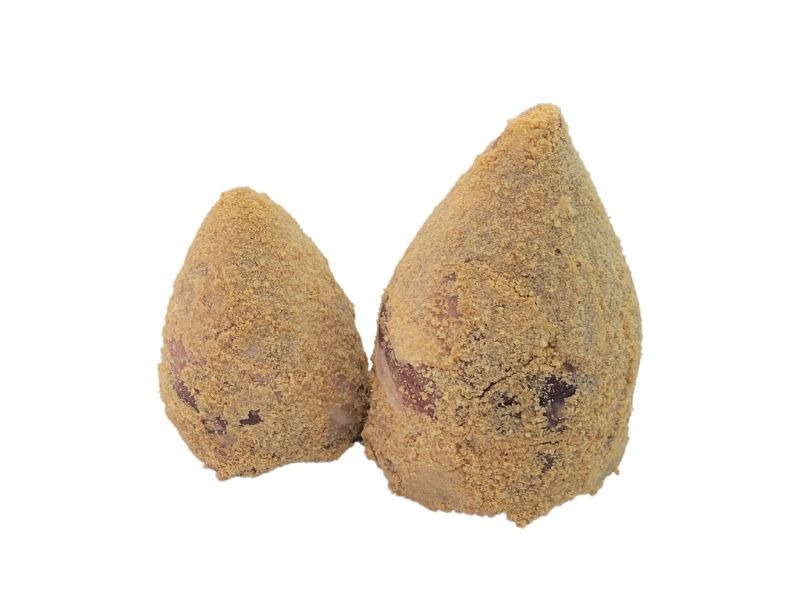
France – Artisanal breaded pork ham Listeria monocytogenes

Gov France

Product category
Food
Product subcategory
Meats
Product brand name
Richard Charcuteries
Model names or references
Artisanal breaded pork ham
Product identification
Batch Date
50124 Use-by date 01/15/2024
Start/end date of marketing
From 01/09/2024 to 01/14/2024
Storage temperature
Product to keep in the refrigerator
Health mark
Richard Charcuteries
Further information
Traditional stand sales
Geographical sales area
Whole France
Distributors
E.Leclerc Saint-Just-en-Chaussée

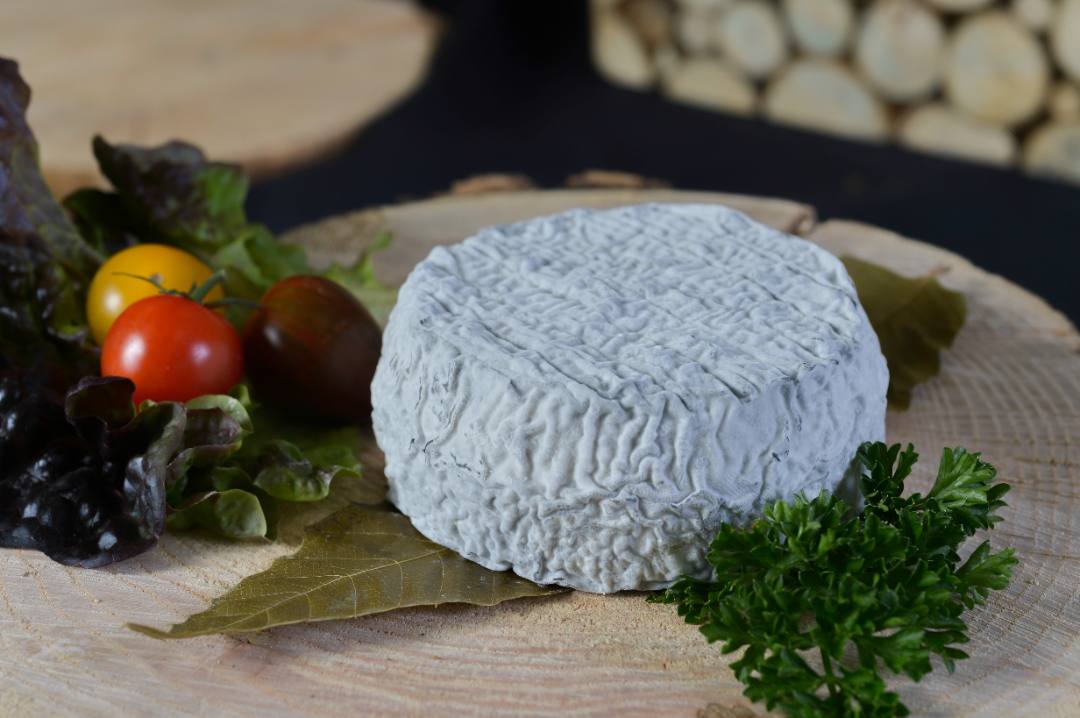
France – Goat cheese -Parthenay ash – STEC E.coli

Gov France

Product category
Food
Product subcategory
Milk and dairy products
Product brand name
White Cheese Shop
Model names or references
Goat cheese – Parthenay ash
Product identification
Batch Date
lot number: 353 Minimum durability date 02/16/2024
Start/end date of marketing
From 12/26/2023 to 01/08/2024
Storage temperature
Product to keep in the refrigerator
Health mark
FR 79-202-024 CE
Geographical sales area
Whole France
Distributors
DISCOUNTS – SAFF – WEST DISTRIBUTION FEES – TEAM WEST

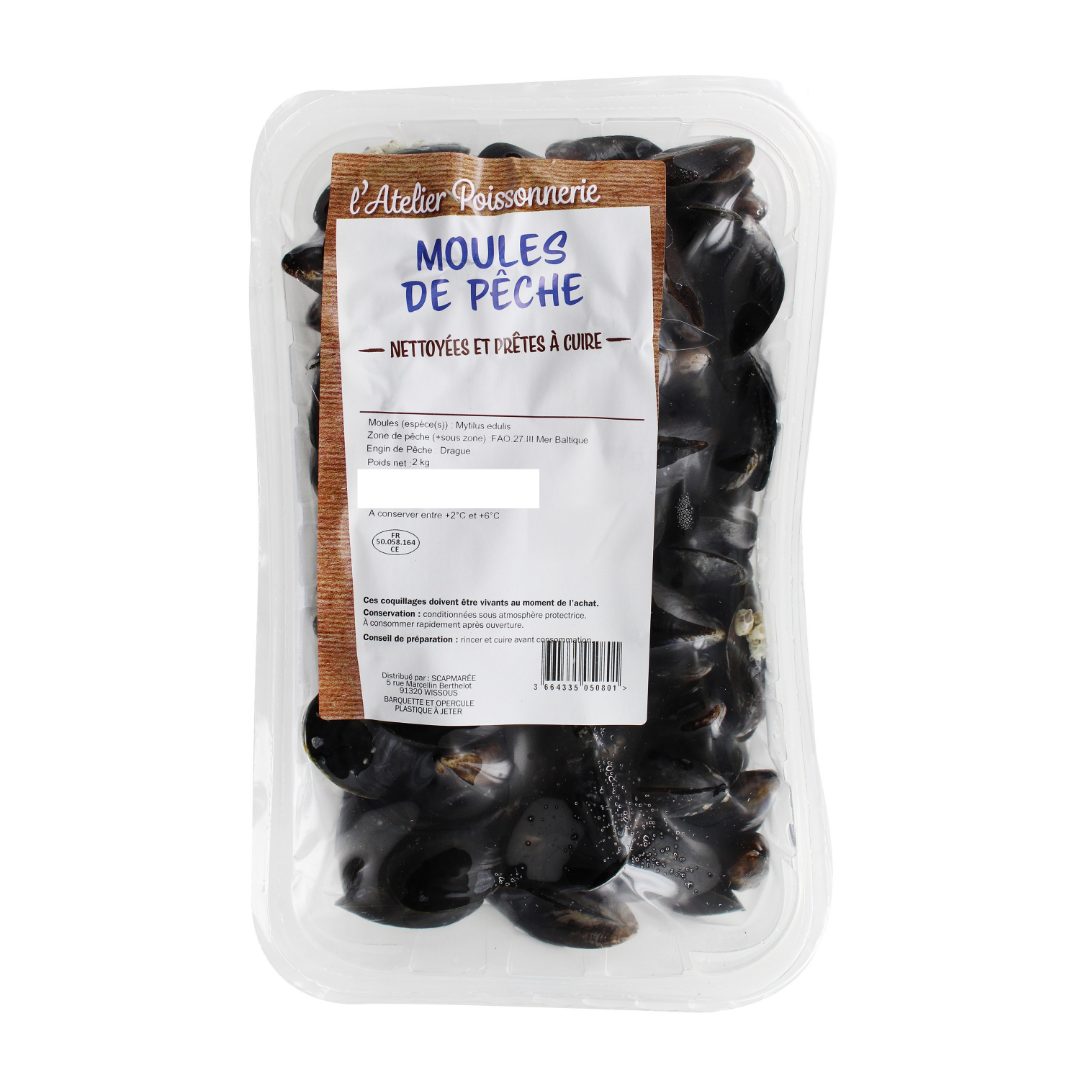
France – Mussels – FISHING MOLD FISH WORKSHOP P/ANE X2KG 6UVC PFX – E.coli

Gov France

Product category
Food
Product subcategory
Fishing and aquaculture products
Product brand name
FISH WORKSHOP
Model names or references
FISHING MOLD FISH WORKSHOP P/ANE X2KG 6UVC PFX
Product identification
GTIN Batch Date
3664335050801 J02SEA Use-by date 01/23/2024
Packaging
2KG tray
Start/end date of marketing
From 01/18/2024 to 01/23/2024
Storage temperature
Product to keep in the refrigerator
Health mark
FR 50.058.164 CE
Geographical sales area
Whole France
Distributors
E. Leclerc
List of points of sale
Store_list.pdf

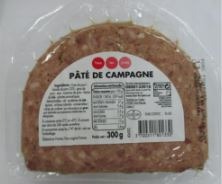
France – Country pâté 300g Every day – Listeria monocytogenes

Gov France

Product category
Food
Product subcategory
Meats
Product brand name
Every day
Model names or references
Country pâté 300g Every Day
Product identification
GTIN Batch Date
3700311801330 39465/05222891 Use-by date 01/19/2024
Packaging
Slice of vacuum-packed country pâté
Start/end date of marketing
From 12/19/2023 to 01/19/2024
Storage temperature
Product to keep in the refrigerator
Health mark
FR 22.093.001 CE
Geographical sales area
Whole France
Distributors
CASINO, VIVAL, SPAR and Casino distribution networks

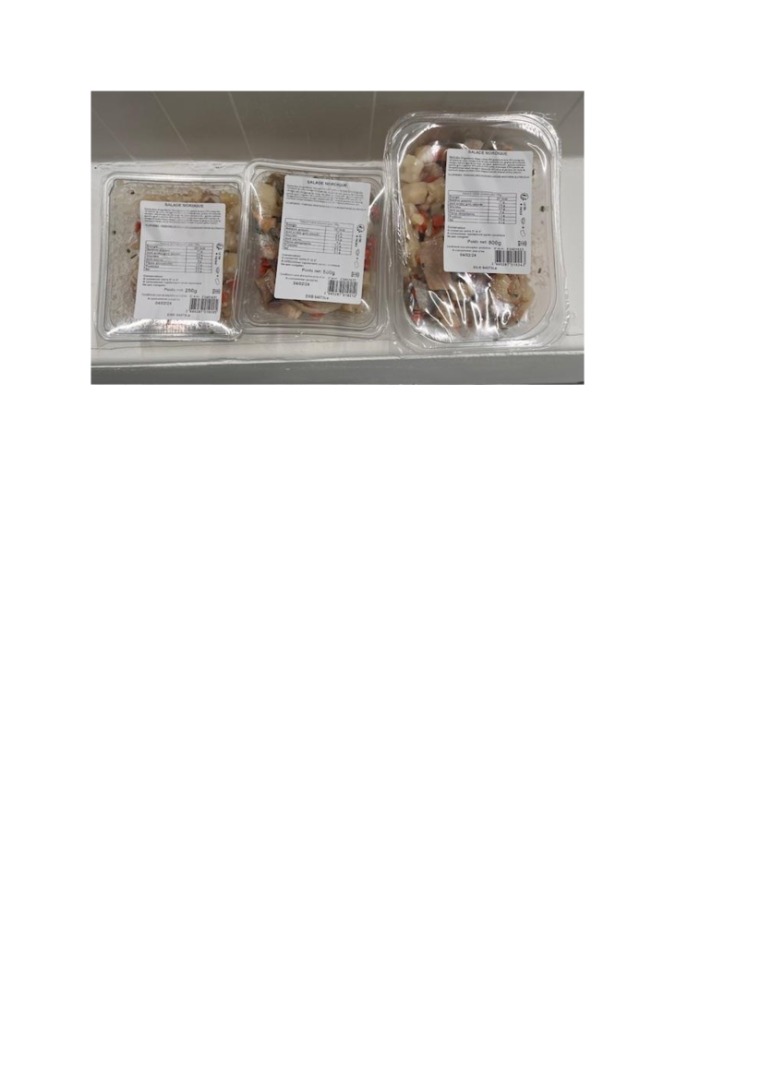
France – NORDIC SALAD – Listeria monocytogenes

Gov France

Product category
Food
Product subcategory
Others
Product brand name
EMB 94073 The
Model names or references
LOTS F2401623/F2401622/F2401621 PACKAGED IN 800g/500g/250g
Product identification
GTIN Batch Date
3665287019243 F2401623 Use-by date 02/04/2024
3665287019212 F2401622 Use-by date 02/04/2024
3665287019205 F2401621 Use-by date 02/04/2024
Packaging
800g/500g/250g
Start/end date of marketing
From 01/17/2024 to 02/04/2024
Storage temperature
Product to keep in the refrigerator
Geographical sales area
Regions: Île-de-France
Distributors
FRESH MARKET STORES

Research – The Role of Flagellum and Flagellum-Based Motility on Salmonella Enteritidis and Escherichia coli Biofilm Formation

MDPI

Abstract

Flagellum-mediated motility has been suggested to contribute to virulence by allowing bacteria to colonize and spread to new surfaces. In Salmonella enterica and Escherichia coli species, mutants affected by their flagellar motility have shown a reduced ability to form biofilms. While it is known that some species might act as co-aggregation factors for bacterial adhesion, studies of food-related biofilms have been limited to single-species biofilms and short biofilm formation periods. To assess the contribution of flagella and flagellum-based motility to adhesion and biofilm formation, two Salmonella and E. coli mutants with different flagellar phenotypes were produced: the fliC mutants, which do not produce flagella, and the motAB mutants, which are non-motile. The ability of wild-type and mutant strains to form biofilms was compared, and their relative fitness was determined in two-species biofilms with other foodborne pathogens. Our results showed a defective and significant behavior of E. coli in initial surface colonization (p < 0.05), which delayed single-species biofilm formation. Salmonella mutants were not affected by the ability to form biofilm (p > 0.05). Regarding the effect of motility/flagellum absence on bacterial fitness, none of the mutant strains seems to have their relative fitness affected in the presence of a competing species. Although the absence of motility may eventually delay initial colonization, this study suggests that motility is not essential for biofilm formation and does not have a strong impact on bacteria’s fitness when a competing species is present.

Research – An outbreak of Salmonella Typhimurium associated with the consumption of raw liver at an Eid al-Adha celebration in Wales (UK), July 2021

Cambridge.org

Abstract

In July 2021, Public Health Wales received two notifications of salmonella gastroenteritis. Both cases has attended the same barbecue to celebrate Eid al–Adha, two days earlier. Additional cases attending the same barbecue were found and an outbreak investigation was initiated. The barbecue was attended by a North African community’s social network. On same day, smaller lunches were held in three homes in the social network. Many people attended both a lunch and the barbecue. Cases were defined as someone with an epidemiological link to the barbecue and/or lunches with diarrhoea and/or vomiting with date of onset following these events. We undertook a cohort study of 36 people attending the barbecue and/or lunch, and a nested case-control study using Firth logistic regression. A communication campaign, sensitive towards different cultural practices, was developed in collaboration with the affected community. Consumption of a traditional raw liver dish, ‘marrara’, at the barbecue was the likely vehicle for infection (Firth logistic regression, aOR: 49.99, 95%CI 1.71–1461.54, p = 0.02). Meat and offal came from two local butchers (same supplier) and samples yielded identical whole genome sequences as cases. Future outbreak investigations should be relevant to the community affected by considering dishes beyond those found in routine questionnaires.

Research – Legal Regulation of Whole Genome Sequencing of Listeria monocytogenes in the Food Industry: Challenges, Attitudes, Possibilities

SSRN

Abstract

This report presents the outcome of legal research conducted under the aegis of the project ‘Food Safety with High Precision—Pathogenomics for the Food Industry’ (short title: PathoSeq). A central objective of the PathoSeq project has been to prepare the Norwegian food industry for challenges accompanying the introduction of whole genome sequencing (WGS) of foodborne bacteria. The report elucidates the legal rules that may affect the implementation of WGS of bacterial pathogens in the food industry, using Listeria monocytogenes (Lm) as a case study. While the report focuses predominantly on the Norwegian context, account is also taken of the experiences and practices of certain other European states, particularly Austria, in light of EU food safety rules. Three key issues are canvassed: (i) the role of WGS data in assessing the safety of food; (ii) access by food safety authorities to WGS data, or to isolates on which to perform WGS, from the food industry; and (iii) food business operators’ ability to receive Lm isolates and sequences held by the authorities. A special feature of the report is that it builds on, and presents, an extensive mapping of stakeholder perspectives on these issues and, more generally, on potentials, hindrances and needs in respect of mitigating Lm-related risk through WGS technology.