Monthly Archives: August 2021

France- Product recall: Brie de Normandie with raw milk stuffed with walnuts and hazelnuts, MONS brand – Listeria monocytogenes

Oulah

ENCOUNTERED PROBLEM

Presence of Listeria monocytogenes

PROPOSED SOLUTION

People who may have this product are asked not to consume it and to return it to the point of sale where it was purchased.

People who have consumed this product and who present with fever, isolated or accompanied by headaches, are invited to consult their attending physician, notifying him of this consumption.
Pregnant women should pay special attention to these symptoms, as well as immunocompromised people and the elderly. These symptoms may suggest listeriosis, a disease that can be serious and can take up to eight weeks to incubate.

FURTHER INFORMATION

▸ Model names or references
Milk Noixsettes – Brie de Normandie with raw milk


▸ Affected products

Lot Dated
310521 Use-by date 06/21/2021
070621 Use-by date 06/28/2021

▸ Packaging


▸ Start date / End of marketing
From 06/08/2021 to 06/28/2021


▸ Health mark
42.232.001


▸ Geographical area of ​​sales throughout
France


▸ Distributors
SARL LM BRUEL ET FILS


▸ Consumer service contact


▸ Source
MONS – FROMAGER AFFINEUR Mons Fromager Affineur

France – Product recall: CHENE ET FILS brand muzzle salad – Listeria monocytogenes

Oulah

ENCOUNTERED PROBLEM

Presence of Listeria monocytogenes

PROPOSED SOLUTION

People who may have this product are asked not to consume it and to return it to the point of sale where it was purchased.

People who have consumed this product and who present with fever, isolated or accompanied by headaches, are invited to consult their attending physician, notifying him of this consumption.
Pregnant women should pay special attention to these symptoms, as well as immunocompromised people and the elderly. These symptoms may suggest listeriosis, a disease that can be serious and can take up to eight weeks to incubate.

FURTHER INFORMATION

▸ Names of models or references


▸ Products concerned


▸ Packaging


▸ Start / end date of marketing
From 08/20/2021 to 08/22/2021 IN TRADITIONAL RADIUS


▸ Health mark


BELLEY L’OUSSON geographic sales area


CARREFOUR BELLEY L’OUSSON distributors EXCLUSIVELY


▸ Contact
customer service 0969397000


▸ Source
PROVENCIA CARREFOUR OPERATING COMPANY

USA – Updated Food Recall Warning – Veggie Foodle brand Whole Vegetable Noodles recalled due to Listeria monocytogenes

CFIA

Recall details

Ottawa, August 30, 2021 – The food recall warning issued on August 20, 2021 has been updated to include additional product information. This additional information was identified during the Canadian Food Inspection Agency’s (CFIA) food safety investigation.

Freshline Foods Ltd. is recalling Veggie Foodle brand Whole Vegetable Noodles from the marketplace due to Listeria monocytogenes. Consumers should not consume the recalled product described below.

Recalled product

Brand Product Size UPC Codes
Veggie Foodle Green Zucchini Whole Vegetable Noodles 340 g 8 09145 70000 0 21AU28
Best Before
228083
Veggie Foodle Pasta Blend Whole Vegetable Noodles 340 g 8 09145 70016 1 21AU26
Best Before
228055

What you should do

If you think you became sick from consuming a recalled product, call your doctor.

Check to see if you have the recalled products in your home. Recalled products should be thrown out or returned to the store where they were purchased.

Food contaminated with Listeria monocytogenes may not look or smell spoiled but can still make you sick. Symptoms can include vomiting, nausea, persistent fever, muscle aches, severe headache and neck stiffness. Pregnant women, the elderly and people with weakened immune systems are particularly at risk. Although infected pregnant women may experience only mild, flu-like symptoms, the infection can lead to premature delivery, infection of the newborn or even stillbirth. In severe cases of illness, people may die.

Background

This recall was triggered by CFIA test results. The CFIA is conducting a food safety investigation, which may lead to the recall of other products. If other high-risk products are recalled, the CFIA will notify the public through updated Food Recall Warnings.

The CFIA is verifying that industry is removing the recalled product from the marketplace.

Illnesses

There have been no reported illnesses associated with the consumption of this product.

Product photos

Printer ready version of photos

  • Veggie Foodle - Green Zucchini Whole Vegetable Noodles - 340 grams

Public enquiries and media

Public enquiries
Toll-free: 1-800-442-2342 (Canada and U.S.)
Telephone: 1-613-773-2342 (local or international)
Email: information@inspection.gc.ca
Media relations
Telephone: 613-773-6600
Email: cfia.media.acia@inspection.gc.ca

USA – Recalled: Nom Nom Chicken Cuisine Cat Food – Listeria monocytogenes

Petful

Maker: NomNomNow Inc.
Cause: Potential for listeria
Announcement: Company letter to customers, dated July 8, 2021
What was recalled: Chicken Cuisine cat food—only with the following lot numbers: 18700, 18714, 18728, 18742, 18756 and 18770 (the lot number has the initials “CC” before it)

Nom Nom has announced its first-ever cat food recall, and it comes after one of its suppliers, Tyson Foods Inc., recalled millions of pounds of chicken because of possible listeria contamination.

The affected Nom Nom cat food, called Chicken Cuisine, was produced between March 8 and May 17 of this year. All customers have been notified, and only the lot numbers listed above are part of the recall. No other Nom Nom product is affected.

Canada – Soo brand Enoki Mushrooms recalled due to Listeria monocytogenes

CFIA

Soo Enoki Mushroom - 200 grams - front

Recall details

Ottawa, August 30, 2021 – T-Brother Food & Trading Ltd. is recalling Soo brand Enoki Mushrooms from the marketplace due to possible Listeria monocytogenes contamination. Consumers should not consume the recalled product described below.

Recalled products

Brand Product Size UPC Codes
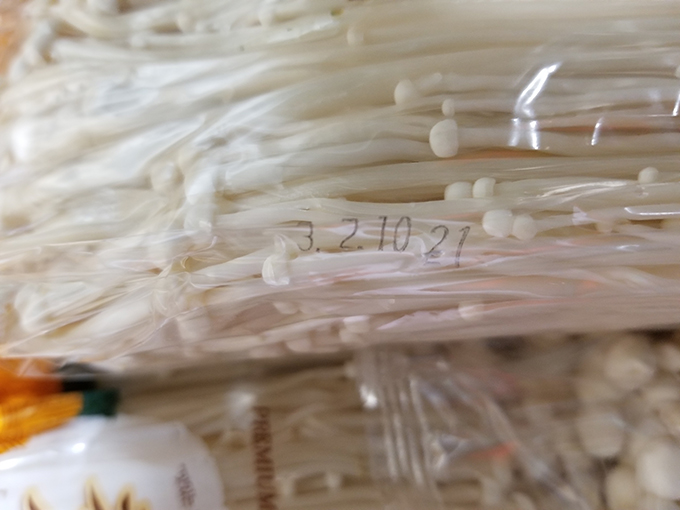
Soo Enoki Mushroom 200 g 6 23431 92001 5 3.2.10 21

What you should do

If you think you became sick from consuming a recalled product, call your doctor.

Check to see if you have the recalled products in your home. Recalled products should be thrown out or returned to the store where they were purchased.

Food contaminated with Listeria monocytogenes may not look or smell spoiled but can still make you sick. Symptoms can include vomiting, nausea, persistent fever, muscle aches, severe headache and neck stiffness. Pregnant women, the elderly and people with weakened immune systems are particularly at risk. Although infected pregnant women may experience only mild, flu-like symptoms, the infection can lead to premature delivery, infection of the newborn or even stillbirth. In severe cases of illness, people may die.

Background

This recall was triggered by Canadian Food Inspection Agency (CFIA) inspection activities. The CFIA is conducting a food safety investigation, which may lead to the recall of other products. If other high-risk products are recalled, the CFIA will notify the public through updated Food Recall Warnings.

The CFIA is verifying that industry is removing the recalled product from the marketplace.

Illnesses

There have been no reported illnesses associated with the consumption of this product.

Soo Enoki Mushroom - 200 grams - code

Research – Intensive Environmental Surveillance Plan for Listeria monocytogenes in Food Producing Plants and Retail Stores of Central Italy: Prevalence and Genetic Diversity

MDPI

Listeria monocytogenes (Lm) can persist in food processing environments (FPEs), surviving environmental stresses and disinfectants. We described an intensive environmental monitoring plan performed in Central Italy and involving food producing plants (FPPs) and retail grocery stores (RSs). The aim of the study was to provide a snapshot of the Lm circulation in different FPEs during a severe listeriosis outbreak, using whole genome sequencing (WGS) to investigate the genetic diversity of the Lm isolated, evaluating their virulence and stress resistance profiles. A total of 1217 samples were collected in 86 FPEs with 12.0% of positive surfaces at FPPs level and 7.5% at RSs level; 133 Lm isolates were typed by multilocus sequencing typing (MLST) and core genome MLST (cgMLST). Clonal complex (CC) 121 (25.6%), CC9 (22.6%), CC1 (11.3%), CC3 (10.5%), CC191 (4.5%), CC7 (4.5%) and CC31 (3.8%) were the most frequent MLST clones. Among the 26 cgMLST clusters obtained, 5 of them persisted after sanitization and were re-isolated during the follow-up sampling. All the CC121 harboured the Tn6188_qac gene for tolerance to benzalkonium chloride and the stress survival islet SSI-2. The CC3, CC7, CC9, CC31 and CC191 carried the SSI-1. All the CC9 and CC121 strains presented a premature stop codon in the inlA gene. In addition to the Lm Pathogenicity Island 1 (LIPI-1), CC1, CC3 and CC191 harboured the LIPI-3. The application of intensive environmental sampling plans for the detection and WGS analysis of Lm isolates could improve surveillance and early detection of outbreaks. View Full-Text

Research – Ongoing High Incidence and Case-Fatality Rates for Invasive Listeriosis, Germany, 2010–2019

CDC

We used 10 years of surveillance data to describe listeriosis frequency in Germany. Altogether, 5,576 cases were reported, 91% not pregnancy associated; case counts increased over time. Case-fatality rate was 13% in non–pregnancy-associated cases, most in adults ≥65 years of age. Detecting, investigating, and ending outbreaks might have the greatest effect on incidence.

The aging of the population of Germany as a result of demographic shifts that will continue in the coming years may partially explain the increase in listeriosis cases and the median age of patients. In addition, factors related to the foodborne nature of the disease and an increase in exposure to Listeria must be presumed; it is possible that people eat more RTE food or that RTE food is more likely to become contaminated, although only single-case findings of L. monocytogenes >100 CFU/g have been detected in RTE foods in recent years.

Research – Dynamic model to describe kinetic behavior of Listeria monocytogenes in smoked salmon

Wiley Online

In this study, the dynamic model was developed to describe cell counts of Listeria monocytogenes in smoked salmon under distribution conditions. A 9-strain mixture of L. monocytogenes was inoculated in smoked salmon at 3–4 Log CFU/g. The inoculated samples were stored at 4°C, 10°C, and 20°C for up to 16 days, and the bacterial cell counts were enumerated on PALCAM agar. The Baranyi model was fitted to the L. monocytogenes cell counts to calculate the lag phase duration (LPD; hr) and maximum growth rate (μmax; Log CFU/g/hr). LPD was 74.22 hr at 4°C, and the value was rapidly decreased to 4.84 hr at 20°C as temperature increased. μmax ranged from 0.01 to 0.13 Log CFU/g/hr, depending on the storage temperature. The kinetic parameters were fitted with secondary models as a function of temperature. Cell counts predicted by the developed model were compared with the predicted cell counts obtained at 8°C and 15°C, and the differences between predicted and observed cell counts were indicated by root mean square error (RMSE). The dynamic model was then developed with the kinetic parameters derived from the secondary model and simulated the L. monocytogenes growth. RMSE (0.368) indicates that the model performance was appropriate. These results suggest that the developed kinetic models can be useful in predicting the fates of L. monocytogenes in smoked salmon under the dynamic conditions of storage temperature and time.

Research – Is Fresh Produce in Tigray, Ethiopia a Potential Transmission Vehicle for Cryptosporidium and Giardia?

MDPI

CDC Giardia2

In rural Ethiopia, where people often share their homes with their livestock, infections of humans and animals with Cryptosporidium and Giardia are relatively common. One possible transmission route is consumption of contaminated fresh produce; this study investigated the occurrence of Cryptosporidium and Giardia in fresh produce in four districts of rural Tigray in Ethiopia. Fresh produce samples (n = 55) were analysed using standard laboratory procedures. Overall, 15% (8/55) of samples were found to be contaminated. Although contamination levels were mostly low, a few samples had high numbers of Giardia cysts (up to around 70 cysts per 30 g sample). Molecular analyses were largely unsuccessful, but Giardia Assemblage A was identified in one sample. Contamination with these parasites was identified in two of the four districts, but, although a similar pattern has already been described for water contamination, this may be at least partially explained by sampling bias. Nevertheless, we speculate that access to clean water sources may be an important factor for reducing the occurrence of these pathogens. Given the public health and veterinary burden associated with both parasites, the factors which are of importance for their circulation in the communities and environments deserve further investigation. View Full-Text

Research – Antimicrobial activity and mechanism of limonene against Staphylococcus aureus

Wiley Online

Staph

In this study, inhibitory effect of limonene on Staphylococcus aureus (S. aureus) and its antibacterial mechanism was explored, respectively. The results showed that limonene effectively inhibited bacterial growth at a minimum inhibitory concentration (MIC) of 20 ml/L. Scanning electron microscopy (SEM), the reduction of AKP activity and fluorescence microscope observation confirmed that limonene caused the destruction of the cell morphology and cell wall integrity of S. aureus. The reduction of MFI in fluorescein diacetate staining experiment and leakage of biological macromolecules (nucleic acids and proteins) indicated that limonene damaged the cell membrane and increased membrane permeability. Besides, the reduction of membrane potential (MP) further confirmed that the damage to membrane and the reduction of respiratory metabolic activity. Furthermore, the respiratory depression test confirmed that the pathway of limonene affecting the respiratory metabolism of S. aureus is TCA pathway, followed by EMP. In addition, the disorder of succinate dehydrogenase (SDH), malate dehydrogenase (MDH), pyruvate kinase (PK), ATPase (T-ATPase, Na+-K+-ATPase, Ca2+-Mg2+-ATPase), and ATP concentration demonstrated that limonene could result in a slowdown of metabolism and metabolic dysfunction, thus inhibiting ATP synthesis.