Tag Archives: science

USA – Research -STEC Sampling and Listeria Outbreaks 1998-2008

FSIS Notice

 This notice provides new instructions to inspection program personnel (IPP) for verifying and documenting the sample source (beef, veal, or mixed) in the Public Health Information System (PHIS) when collecting raw beef samples under FSIS’s verification testing programs for Shiga toxin-producing Escherichia coli (STEC).

CDC

Listeria monocytogenes, a bacterial foodborne pathogen, can cause meningitis, bacteremia, and complications during pregnancy. This report summarizes listeriosis outbreaks reported to the Foodborne Disease Outbreak Surveillance System of the Centers for Disease Control and Prevention during 1998–2008. The study period includes the advent of PulseNet (a national molecular subtyping network for outbreak detection) in 1998 and the Listeria Initiative (enhanced surveillance for outbreak investigation) in 2004. Twenty-four confirmed listeriosis outbreaks were reported during 1998–2008, resulting in 359 illnesses, 215 hospitalizations, and 38 deaths. Outbreaks earlier in the study period were generally larger and longer. Serotype 4b caused the largest number of outbreaks and outbreak-associated cases. Ready-to-eat meats caused more early outbreaks, and novel vehicles (i.e., sprouts, taco/nacho salad) were associated with outbreaks later in the study period. These changes may reflect the effect of PulseNet and the Listeria Initiative and regulatory initiatives designed to prevent contamination in ready-to-eat meat and poultry products.

HPA – Scotland Cryptosporidum Increase 2012

HPA Scotland763px-Cryptosporidium_parvum_01

By the end of the first 50 weeks of 2012, 684 cases of cryptosporidiosis had been reported to Health Protection Scotland. This was an increase of 256 (60%) over the same period in 2011.

In weeks 41-44 of 2012, 128 cases were reported. This was an increase of 84 (191%) over the same period in 2011. In weeks 45-48 of 2012, 74 cases were reported, an increase of 38 (106%) over the same period in 2011. However, in the first two weeks of the current period (weeks 49-52) of 2012, only 17 cases have been reported. In weeks 49-52 of 2011, a total of 39 cases were reported so the figure for weeks 49-52 of 2012, thus far, is unremarkable.


HPA- Norovirus Update

HPANorovirus

Figures from the Health Protection Agency (HPA) show that there were 337 confirmed laboratory reports of norovirus in the week ending December 9 2012 and 236 for the week ending 2 December 2012. The latest weekly report is now published.

In this season to date there have been 3,046 confirmed laboratory reports of norovirus. This is 83 per cent higher than the same period in the last season when there were 1,669 cases reported.

The figures for the number of hospital outbreaks show that there were 61 hospital outbreaks during the last two weeks up to December 16 2012. In the same fortnight in the previous year there were 35 outbreaks reported by the same time.

The data show that the increase in norovirus laboratory reports is earlier this season than in previous years; however, there are no indications as to why this is the case.

BBC – Schools Norovirus

BBC – Hospital Norovirus

BBC – Hospital Norovirus

Guardian – Norovirus

USA – FDA Recall Clostridium botulinum – Hot Smoked Trout

FDA

True Taste, LLC of Kenosha, WI, is recalling it’s vacuum packaged Hot Smoked Rainbow Trout, Hot Smoked Whitefish, Hot Smoked Herring, Hot Smoked Mackerel, Hot Smoked Salmon Steak, Cold Smoked Mackerel, and Cold Smoked Whitefish because they have the potential to be contaminated with Clostridium botulinum, a bacterium which can cause life- threatening illness or death. Consumers are warned not to use the product even if it does not look or smell spoiled.

Botulism, a potentially fatal form of food poisoning, can cause the following symptoms: general weakness, dizziness, double-vision and trouble with speaking or swallowing. Difficulty in breathing, weakness of other muscles, abdominal distension and constipation may also be common symptoms. People experiencing these problems should seek immediate medical attention.

The recalled product is vacuum packaged and can be identified with either the True Taste Label in CA and IL or the Lowell Foods Label in IL. The recalled product has a white sticker applied to the package with two sets of numbers. The first set of numbers represent the date of processing the second set of numbers represents the best if used by date. This recall includes all production dates beginning on 01/01/2012 through current.

No illnesses have been reported to date in connection with this recall.

Chile – Food Poisoning Outbreak from Hot Dogs

ABC NewsHot Dog

More than 200 people are being treated for food poisoning in Chile after eating hot dogs during an outing at a park.

Local media in the South American nation say the adults and children ate spoiled sausages or bad mayonnaise during the affair organized by a family benefit fund.

It was held at a park in San Jose de Maipo. That’s a town about 30 miles (48 kilometers) south-east of the capital of Santiago.

The sick are being treated at local hospitals. Some children have been released but others are being held for observation.

New Zealand – Paralyitic Shellfish Poisoning Alert – PSP

New Zealand HeraldMarlith

At least seven people have been poisoned by eating shellfish in the Bay of Plenty, prompting warnings from health officials.

In a 24 hour-period over the weekend, five people went to Rotorua Hospital with symptoms of toxic shellfish poisoning with a further two unrelated cases were seen at Tauranga Hospital.

All of those who had fallen ill had eaten shellfish collected from the coastline between Mount Maunganui and Papamoa. Their symptoms ranged from tingling round the mouth and face, tingling of the skin on their arms and hands, mild weakness when walking, and diarrhoea and vomiting.

For up-to-date information on health warnings in Bay of Plenty go to www.ttophs.govt.nz and click on health warnings or call (0800) 221 555 and press 6 to speak to the on-call Health Protection Officer.

Research – Cold Atmosphric Gas Plasma – Salmonella. Radio Frequency Heating E.coli O157. Simultaneous physicochemical stresses – Salmonella

Science Direct

Cold atmospheric gas plasma treatment (CAP) is an alternative approach for the decontamination of fresh and minimally processed food. In this study, the effects of growth phase, growth temperature and chemical treatment regime on the inactivation of Salmonella enterica serovar Typhimurium (S. Typhimurium) by Nitrogen CAP were examined. Furthermore, the efficacy of CAP treatment for decontaminating lettuce and strawberry surfaces and potato tissue inoculated with S. Typhimurium was evaluated. It was found that the rate of inactivation of S. Typhimurium was independent of the growth phase, growth temperature and chemical treatment regime. Under optimal conditions, a 2 min treatment resulted in a 2.71 log-reduction of S. Typhimurium viability on membrane filters whereas a 15 min treatment was necessary to achieve 2.72, 1.76 and 0.94 log-reductions of viability on lettuce, strawberry and potato, respectively. We suggest that the differing efficiency of CAP treatment on the inactivation of S. Typhimurium on these different types of fresh foods is a consequence of their surface features. Scanning electron microscopy of the surface structures of contaminated samples of lettuce, strawberry and potato revealed topographical features whereby S. Typhimurium cells could be protected from the active species generated by plasma.

Science Direct

A multistate outbreak of Salmonella enterica serovar Typhimurium recently occurred in the USA, which was traced back to various food products made with contaminated peanut butter. This study was conducted to investigate the efficacy of radio-frequency (RF) heating to inactivate S. Typhimurium and Escherichia coli O157:H7 in peanut butter cracker sandwiches using creamy and chunky commercial peanut butter and to determine the effect on quality by measuring color changes and sensory evaluation. Samples were treated for a maximum time of 90 s in a 27.12 MHz RF heating system. Samples were prepared in the form of peanut butter cracker sandwiches and placed in the middle of two parallel-plate electrodes. After 90 s of RF treatment, the log reductions of S. Typhimurium and E. coli O157:H7 were 4.29 and 4.39 log CFU/g, respectively, in creamy peanut butter. RF treatment of chunky peanut butter for 90 s also significantly (P < 0.05) reduced levels of S. Typhimurium and E. coli O157:H7 by 4.55 log CFU/g and 5.32 log CFU/g. Color values and sensory characteristics of the RF treated peanut butter and crackers were not significantly (P > 0.05) different from the control. These results suggest that RF heating can be applied to control pathogens in peanut butter products without affecting quality.

Science Direct

The effects of prior simultaneous pH (3.0–8.0), water activity, aw (0.93–0.99) and temperature (3.0–62.0 °C) stresses on injury and subsequent resistance of Salmonella Enteritidis to acid (pH 3.78, 25 °C) and heating (pH 3.78, 55 °C) in apple juice were determined. Injury rates were significantly (P < 0.05) influenced by the linear effects of aw and temperature. Exposure to combinations (pH 4.0, aw 0.98, 15 °C) and (pH 5.5, aw 0.99, 32.5 °C) resulted in acid adaptation. Only the linear influence of prior aw stress significantly affected the subsequent acid resistance. Heat resistance was greatest after previous exposure to pH, aw and temperature ranges of 4.0–5.5, 0.96–0.98, and 15–50 °C, respectively. None of the stress factors significantly influenced subsequent heat resistance. These results provide a more realistic simulation of the effects of environmental stress factors on the behavior of S. Enteritidis in food and food processing ecologies; and contribute in further understanding the behavior of the pathogen for the improvement of evaluation and control of safety of apple juice and similar products.

 

Research – Grape Seed Extract Effect on Virus and E.coli on Fresh Cut Lettuce

Science Direct

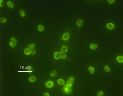
Grape seed extract (GSE) is reported to have antibacterial properties with few current studies on antiviral activity. Recently, we reported the effects of GSE against foodborne viral surrogates in vitro. This study evaluated the application of GSE (commercial Gravinol-S) against hepatitis A virus (HAV) and human norovirus surrogates, feline calicivirus (FCV-F9) and murine norovirus (MNV-1), on model produce. Washed and air-dried lettuce (3 × 3 cm2) and jalapeno peppers (25–30 g) were inoculated with FCV-F9, MNV-1, or HAV at high (∼7 log10 PFU/ml) or low (∼5 log10 PFU/ml) titers, and treated with 0.25, 0.5, 1 mg/ml GSE or water for 30 s to 5 min. Treatments were stopped/diluted with cell-culture media containing 10% heat-inactivated fetal bovine serum and evaluated using plaque assays. At high titers, FCV-F9 was reduced by 2.33, 2.58, and 2.71 log10 PFU on lettuce; and 2.20, 2.74, and 3.05 log10 PFU on peppers after 1 min using 0.25, 0.50, and 1 mg/ml GSE, respectively. Low FCV-F9 titers could not be detected after 1 min at all three GSE concentrations. Low titer MNV-1 was reduced by 0.2–0.3 log10 PFU on lettuce and 0.8 log10 PFU on peppers, without reduction of high titer. GSE at 0.25–1 mg/ml after 1 min caused 0.7–1.1 and 1–1.3 log10 PFU reduction for high and low HAV titers, respectively on both commodities. Instrumental color analysis showed no significant differences between treated and untreated produce. GSE shows potential for foodborne viral reduction on produce as part of hurdle technologies.

Direct Science

Fresh-cut iceberg lettuce inoculated with Escherichia coli O157:H7 was submitted to chlorine washing (150 mg/mL) and modified atmosphere packaging on laboratory scale. Populations of E. coli O157:H7 were assessed in fresh-cut lettuce stored at 4, 8, 13 and 16 °C using 6–8 replicates in each analysis point in order to capture experimental variability. The pathogen was able to grow at temperatures ≥8 °C, although at low temperatures, growth data presented a high variability between replicates. Indeed, at 8 °C after 15 days, some replicates did not show growth while other replicates did present an increase. A growth primary model was fitted to the raw growth data to estimate lag time and maximum growth rate. The prediction and confidence bands for the fitted growth models were estimated based on Monte-Carlo method. The estimated maximum growth rates (log cfu/day) corresponded to 0.14 (95% CI: 0.06–0.31), 0.55 (95% CI: 0.17–1.20) and 1.43 (95% CI: 0.82–2.15) for 8, 13 and 16 °C, respectively. A square-root secondary model was satisfactorily derived from the estimated growth rates (R2 > 0.80; Bf = 0.97; Af = 1.46). Predictive models and data obtained in this study are intended to improve quantitative risk assessment studies for E. coli O157:H7 in leafy green products.


USA – Multiple Item Recall – Clostridium botulinum and Listeria Fears

Food Safety News

Fears about deadly botulism and listeria Friday prompted the Rhode Island Department of Health to issue a public health warning about Farmstead Inc. of 186 Wayland Ave. in Providence.

Certain food items from the Farmstead Inc. retail shop or through www.farmsteadinc.com are being voluntarily recalled due to food safety concerns.

Ten year old Farmstead is owned by chefs  Matt and Kate Jennings. They are known for using “New England ingredients with a strong sense of place and traditional Yankee character” and supporting local growers and producers.

A spokesman for the Jennings has confirmed the recall, but claimed its production methods have not changed since it last passed inspection in 2010.  Health inspectors initiated the current investigation after receiving a tip.

No illnesses associated with these products have yet been reported.

Research – Bacillus cereus Enterotoxin Testing

Liebert Open Acesss

Currently, three commercial kits for Bacillus cereus enterotoxins Nhe and/or Hbl detection are available, namely, the Bacillus diarrheal enterotoxin visual immunoassay (BDE VIA™) kit (3M Tecra), B. cereus enterotoxin reversed passive latex agglutination (BCET-RPLA) kit (Oxoid), and the Duopath® Cereus Enterotoxins (Merck). The performance of the kits and their applicability to gastrointestinal simulation samples were evaluated. Then, the stability and production of enterotoxins Hbl and Nhe under gastrointestinal conditions were investigated. Enterotoxin production was absent or impaired at acidic pH, i.e., in gastric medium with pH 5.0 and lasagne verde with pH 5.5. B. cereus did produce enterotoxins Nhe and Hbl during anaerobic growth in intestinal medium at pH 7.0, but the toxins were instantly degraded by the enzymes in the host’s digestive secretions. Preformed enterotoxins did not withstand gastrointestinal passage under the simulated conditions, which suggests that preformed enterotoxins in food do not contribute to the diarrheal food poisoning syndrome. In conclusion, diarrhea is probably caused by de novo enterotoxin production by B. cereus cells located closely to the host’s intestinal epithelium.