Tag Archives: restaurants

USA – Rich Products – E.coli O121 Update

Food Poisoning Journal

Rich Products Corporation of Buffalo, New York is expanding its recall of various heat treated, not fully cooked frozen mini meals and snack items to more than 10.5 million pounds because they may be contaminated with E. coli O121, the U.S. Department of Agriculture’s Food Safety and Inspection Service (FSIS) announced today. The expanded recall covers all products produced at the company’s Waycross, Ga. plant with “Best by” dates ranging from January 1, 2013 to September 29, 2014.  Each product package above contains the establishment number “EST. 27232″ or “P-27233″ inside the USDA mark of inspection.

The products subject to recall were produced between July 1, 2011 and March 29, 2013 then distributed for retail or restaurant sale nationwide. FSIS and the establishment are concerned that some product may be present in household freezers.

FSIS was notified of a multistate investigation of E. coli O121 illnesses on March 19, 2013. Food samples were collected from an ill individual in New York as part of this investigation, and tested by the New York State Department of Health Wadsworth Laboratory. At present, the outbreak includes 24 cases in 15 states that led to seven hospitalizations and one case of Hemolytic Uremic Syndrome (HUS), a type of kidney failure. A sample of a Farm Rich frozen chicken mini quesadilla product from a New York case tested positive for the outbreak strain of E. coli O121. Additionally, a sample of leftover Farm Rich mini pepperoni pizza slices product from a Texas case tested positive for the same strain, confirmed by FSIS lab technicians.

When available, the retail distribution list(s) will be posted on the FSIS website at: www.fsis.usda.gov/FSIS_Recalls/Open_Federal_Cases/index.asp

RASFF – Alerts – Aflatoxins – Histamine – Almonds – Dried Figs – Pistachios – Tuna

RASFF -Aflatoxins (B1 = 15.9; Tot. = 17.8 / B1 = 4.9; Tot. = 5.8 µg/kg – ppb) in shelled almonds from the United States in Spain

RASFF– Aflatoxins (Tot. = 60.6 µg/kg – ppb) in dried figs from Turkey in the Czech Republic

RASFF – Aflatoxins (B1 = 26; Tot. = 29 µg/kg – ppb) in pistachios in shell from Iran in France

RASFF – Histamine (500 mg/kg – ppm) in frozen yellowfin tuna loins (Thunnus albacares) from Indonesia in Italy

RASFF – Histamine (2690; 2740; 2481 mg/kg – ppm) in canned tuna in olive oil from France, with raw material from Côte d’Ivoire in Italy

USA – Chicken Quesadilla – E.coli O121

Ecoli BlogEcoli Istock

Rich Products Corporation, a Buffalo, NY firm, is recalling approximately 196,222 pounds of frozen chicken quesadilla and various other heat treated, not fully cooked frozen mini meals and snack items because they may be contaminated with E. coli O121, the U.S. Department of Agriculture’s Food Safety and Inspection Service (FSIS) announced today.

The U.S. Department of Agriculture’s Food Safety and Inspection Service (FSIS) was notified of a multistate investigation of E. coli O121 illnesses on March 19, 2013. Food samples were collected from an ill individual in New York as part of this investigation, and tested by the New York State Department of Health Wadsworth Laboratory. At present, the cluster includes 24 cases in 15 states. A sample of a Farm Rich frozen chicken mini quesadilla product from a New York case tested positive for the outbreak strain of E. coli O121. Eight cases in Michigan, Mississippi, New York, Ohio, Pennsylvania, Texas, and Virginia report consuming Farm Rich products. FSIS is continuing to work with federal and state public health partners on this investigation, including the New York State Department of Health, New York State Department of Agriculture & Markets, Food and Drug Administration, and Centers for Disease Control and Prevention.

RASFF Alerts – Salmonella – Sunflower Seed – Chicken

RASFF – Salmonella Montevideo (present /25g) in sunflower seed expeller from Ukraine in Germany

RASFF – Salmonella (present /25g) in sunflower seed cake from Ukraine in Poland

RASFF – Salmonella Heidelberg in frozen chicken cuts and offal (Gallus gallus) from Brazil in Spain


Research – Ready to Eat Salads

HACCPSalmonella

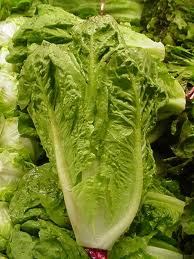
Ready to eat salad is considered one of the products most likely to cause food-related illness, said Professor Hugh Pennington, an emeritus professor of bacteriology at the University of Aberdeen in Scotland — who worked for the British, Scottish and Welsh governments as an expert on microbiology and food safety.

His claim follows a Health Protection Agency investigation into an outbreak of salad-linked Cryptosporidium infections that affected around 300 people in England and Scotland in May.

In the analysis of the exposure to different salad vegetables a significant statistical association was found between infection and the consumption of pre-cut spinach. The strongest association with infection was found to be with consumption of ready to eat pre-cut mixed salad leaves from a major supermarket chain. These findings suggest that one or more types of salad vegetables could have been contaminated.

That is largely because greens are grown directly in the soil, and some pathogens can only be killed by heat or strong detergents, not just water. Certain types of bacteria found in the ready to eat salad bags can be almost impossible to kill, unless the leaves are irradiated – a process the public would oppose.

“You could irradiate it – but that would be a `no, no` with the public. You just can`t be absolutely sure that the bagged salad you are buying – which has been put through a chemical wash to kill the bugs, is actually free of them.”

Food pathogens are very good at clinging on to salad and the risk from cryptosporidium, salmonella and listeria is very real.

“I would advise people to thoroughly wash salad even when it says it has been washed and is ready to eat,” Pennington said.

Vegetables are fine and safe if they are cooked in the traditional way of boiling them to death. The only danger comes when you eat them raw.

The responsibility falls on the people who produce food. But much of our vegetables are now grown in countries that do not necessarily have the same hygiene standards. The consumer has no way of knowing how the food has been produced.

Canada – Food Alerts – Salmon – Listeria – Clam Stew – Boutulinum – Nut Butters – Salmonella

CFIA – The public warning issued on March 15, 2013 has been expanded to include additional products because the products may be contaminated with Clostridium botulinum

The Canadian Food Inspection Agency (CFIA) is warning the public not to consume the Bar Clams and Bar Clam Stew described below because they may be contaminated with Clostridium botulinum.  Toxins produced by these bacteria may cause botulism, a life-threatening illness.

CFIA – The Canadian Food Inspection Agency (CFIA) is warning the public not to consume and retailers, restaurants and institutions not to sell or use the nut butters, peanuts, sugar or tahini described below because the products may be contaminated with Salmonella or other harmful bacteria.

These products have been distributed in Ontario and Quebec and may have been distributed in other provinces as well.

Consumers who cannot determine the original product identity are  advised to check with their retailer to determine if they have one of  the affected products.

There have been no reported illnesses associated with the consumption of these products.

CFIA – The Canadian Food Inspection Agency (CFIA) and Central-Epicure Food Products Ltd. are warning the public not to consume Central-Epicure brand Smoked Atlantic Salmon because it may be contaminated with Listeria monocytogenes.

There have been no reported illnesses associated with the consumption of this product.

The manufacturer, Central-Epicure Food Products Ltd., Toronto, Ontario, is voluntarily recalling the affected product from the marketplace.  The CFIA is monitoring the effectiveness of the recall.


RASFF Alerts – Salmonella in Feed

RASFF – Salmonella Senftenberg (presence /25g) in rape seed from Estonia in Finland

RASFF – Salmonella Bredeney (presence /25g) in organic soybean meal from China in Cyprus

RASFF – Salmonella Senftenberg (1out of 10 samples /25g) in soy bean meal pellets from Brazil, via Germany in Sweden

RASFF Alerts – Aflatoxin – Ochratoxin – Spices – Nuts – Maize -Birdfeed

RASFF – Ochratoxin A (38.6 µg/kg – ppb) in paprika powder from China in Germany

RASFF – Aflatoxins (B1 = 54.4; Tot. = 60.6 / B1 = 6.9; Tot. = 7.8 µg/kg – ppb) in almonds with shell from the United States in Germany

RASFF – Aflatoxins (B1 = 30.23 µg/kg – ppb) in maize grains from Italy

RASFF – Aflatoxins (B1 = 14.0; Tot. = 14.8 µg/kg – ppb) in groundnut kernels from India, via the Netherlands in Germany

RASFF – Aflatoxins (B1 = 36.7 /  µg/kg – ppb) in groundnuts for birdfeed from Argentina in GB

RASFF Alerts Salmonella – Seasame Seeds – Chicken Fillets-Frozen Beef – Black Pepper- Shrimps

RASFF -Salmonella (presence /25g) in whitish sesame seeds from Sudan in Cyprus

RASFF -Salmonella (presence /25g) in chicken fillets preparation from Belgium

RASFF -Salmonella Montevideo (presence /25g) in frozen beef trimmings from Poland, processed in the Netherlands, via Germany in Sweden

RASFF -Salmonella spp. (presence /25g) in black pepper from Vietnam in Poland

RASFF – Salmonella spp. (presence /25g) in frozen shrimps (Penaeus vannamei) from Panama in Italy

RASFF – Salmonella spp. (present /25g) in frozen cooked shrimps (Penaeus spp.) from India in France


RASFF Alerts – Norovirus -Clams – Oysters

RASFF-Norovirus in chilled clams (Tapes decussatus) from Turkey in Italy

RASFF-Norovirus (GI and GII) in chilled oysters (Cassostrea gigas) from France in Italy

RASFF-Norovirus in chilled clams (Tapus decussatus) from Turkey in Italy