Tag Archives: bacillus cereus

European RASFF Alerts – Norovirus – Moulds – E.coli – Ochratoxin – Histamine

RASFF – Norovirus in Oysters in Italy sourced in France

RASFF – Moulds in Chocolate and Ornage Spread in France sourced in Denmark

RASSF – Histamine in Tuna in France sourced in Vietnam

RASFF – Histamine in Tune in Italy sourced in Spain

RASFF – E.coli in Clams in Italy sourced in Spain via France

RASFF – Ochratoxin in Figs in Germany source in Turkey

Greece – Bacillus cereus in Soy Cheese Cubes

UK – FSA Second Update Recall of Tofu – Bacillus cereus

FSAfood_standards_agency_logo

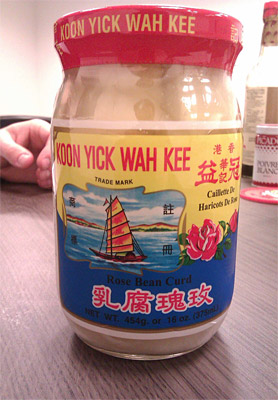
The Food Standards Agency is issuing a second updated Food Alert for Action on the Koon Yick Wah Kee rose bean curd (tofu) and chilli bean curd (tofu) originating from China via The Netherlands, because of confirmation that further tofu from the same company has high levels of Bacillus cereus.

The affected products have a best before date of 30 December 2013 but there are currently no distributions details available. The levels of the bacteria detected can cause vomiting or diarrhoea.

European Alerts – Extended Recall Tofu – Bacillus cereus – Dog Food – Salmonella – Cheese – Listeria

AFSAC – FrenchEnglish tofu

The Food Agency recommends not eating TOFU in sesame oil with or without chili brand KOON WAH KEE YICK following the detection of Bacillus cereus in this commodity. The product is sold in Asian specialty stores.

RASFF – Salmonella in Dog Food in Germany sourced in India

France – (English)

Following the detection of Listeria monocytogenes in certain lots of cheese, and as a precautionary measure, the company JUSSAC OF CHEESE shall withdraw the sale and recall of consumption of all cheeses.

The products covered by these measures were traded between 31 October 2012 and 26 December 2012.

UK – FSA Recall – Koon Yick Wah Kee Rose Bean Curd (Tofu) and Chilli Bean Curd (Tofu) due to contamination with Bacillus cereus and yeasts

FSA – food_standards_agency_logo

Heads of Environmental Health and Directors of Trading Standards will wish to be aware of a recall associated with rose bean curd tofu and chilli bean curd tofu originating from China via the Netherlands. The Dutch importer Liroy B.V, is recalling all affected batches.

The two affected products have shown to be contaminated with Bacillus cereus and several different yeast varieties. The affected products have been distributed widely throughout the UK. Pictures are attached for ease of identification.

The levels of Bacillus cereus detected render the product a potential health risk.

Identification of the affected products:

1) Koon Yick Wah Kee – Rose Bean Curd (Tofu) 454g. Best Before Date 30.12.14 Lot number 023424

2) Koon Yick Wah Kee – Chilli Bean Curd (Tofu) 454g. Best Before Date 30.12.14 Lot Number 023421

Actions to be taken by local authorities.

Local authorities are requested to identify and make contact with relevant retailers in their area who may sell the implicated product. If implicated products are found during the course of their investigations, enforcement officers should ensure that the specific lot code and ‘best before’ date are withdrawn from sale and destroyed, if necessary, using powers under the Food Safety Act 1990.

Local authorities should report any finding of the implicated product by emailing the FSA’s dedicated Food Incidents mailbox: foodincidents@foodstandards.gsi.gov.uk

RASFF/European Alerts – Salmonella – Bacillus cereus – Norovirus – Histamine – Ochratoxin – Moulds

RASFF – Histamine in Frozen Sardines in Italy sourced in Morocco

RASFF – Salmonella in Ham and Chicken Salad in Belgium

RASFF – Bacillus cereus and high count of yeasts  in  tofu in sesame oil with chilli in glass jar from China, in Finland via the Netherlands

RASFF – Salmonella in frozen beef trimmings from the Netherlands,  in Sweden via Germany

RASFF – Moulds in Raisins in the Czech Republic sourced in Iran

RASFF – Norovirus in Oysters in the Netherlands sourced in Ireland

RASFF – Ochratoxin in Dried Figs in Germany sourced in Turkey

RASFF – Salmonella in Frozen Chicken Breasts in Italy sourced in Brazil


Australia- Recall Favor Swallow Bean Sauce – Bacillus cereus

FSANZFSANZ

Delin (Australia) Trading Pty Ltd has recalled Favor Swallow Bean Sauce from some Asian supermarkets in Victoria due to microbial contamination (Bacillus cereus). Food products contaminated with Bacillus cereus  may cause illness if consumed. Consumers should not eat this product and should return it to the place of purchase for a full refund.

European Alerts – Listeria, Salmonella, Hepatitis A, Bacillus cereus

RASFF – Listeria monocytogenes in Pate from Belgium

RASFF – Salmonella in Chilled Sausage in UK sourced in Italy

Denmark  – Suspected Hepatitis A in Strawberry Yoghurt in Germany

RASFF – Listeria monocytogenes in Raw Milk Cheese in Belgium sourced in France.

Greece – Organic Radish Seeds Bacillus cereus

Microbial safety and quality of various types of cooked chilled foods

Science Direct

Refrigerated Processed Foods of Extended Durability (REPFEDs) are a diverse group of food products. Their production process consists of a variable sequence of different processing steps leading to various types of REPFEDs being introduced to the market. To assure microbial safety, the food industry relies on a combination of mild heat treatment (i.e. pasteurization), appropriate product formulation (i.e. pH, water activity, modified atmosphere packaging, preservatives), cold storage and shelf life limitation. In this paper a classification of REPFED food types is presented and their microbiological safety is evaluated. REPFEDs were classified according (i) to the production process and (ii) to the expected consumer’s reheating practices. To evaluate the microbiological safety, historical data on the microbial contamination of REPFEDS were collected from five companies, 706 analyses on the day of production (T0) and 2912 analyses at the end of shelf life (TEoS). Results demonstrated that the microbial safety of the products is overall satisfactory. The number of samples exceeding the acceptable levels for Bacillus cereus/sulfite reducing Clostridia (T0: 103 CFU/g, TEoS: 105 CFU/g) was 4.07%/1.94% at T0 and 2.04%/0.69% at TEoS. None of the samples exceeded the acceptable levels for Listeria monocytogenes (T0: Absent in 25 g, TEoS: max 102 CFU/g). In addition the temperature of 38 products was monitored during reheating according to instructions of the manufacturer. The pasteurization values obtained during reheating are very heterogeneous, and only 7 products obtained a P70 of 2 min throughout the entire product. To assess the effect of reheating on L. monocytogenes a challenge test (including reheating) of paella with L. monocytogenes was performed. This demonstrated that L. monocytogenes can grow up to 0.63 log CFU/g in 6 days at 4 °C and that reheating the paella according to the instructions on the label does not guarantee absence of L. monocytogenes. These findings demonstrate the microbial food safety of the tested REPFEDs is satisfactory, and that producers should not rely on the reheating at consumer level to eliminate L. monocytogenes.


RASFF Alerts


RASFF – Listeria monocytogenes Sweden Cheese Raw material from France

RASFF – Salmonella typhimurium Norway Beef from Uruguay.

RASFF – Salmonella and Bacillus cereus in All Spice in Austria orginating in Germany.