Research – Gotcha! New technology speeds up bacterial testing in food

Science Daily

Researchers have developed a measurement technique that rapidly measures the number of viable bacteria in food products. They have succeeded in drastically reducing the inspection time from 2 days to about 1 hour. With this technology, it will be possible to confirm food safety before shipment from factories and prevent food poisoning.

It is said that haste makes waste, but researchers from Osaka Metropolitan University have proven that doing things rapidly does not necessarily mean working ineffectively. A research group led by Professor Hiroshi Shiigi at the Graduate School of Engineering, Osaka Metropolitan University has developed a technology that can rapidly and accurately determine the number of viable bacteria in food products electrochemically, using tetrazolium salt (MTT), a water-soluble molecule.

One of the most important assessment indicators for ensuring that food is free from contamination is the number of viable bacteria. However, conventional measurement methods take up to 2 days to yield results, and these results are only available after the food has been shipped from the factory — leading to potentially fatal consequences. Therefore, it is imperative to have a testing method that speeds up the process of identifying bacterial contamination before shipment.

Research -Control of the Growth of Listeria monocytogenes in Cooked Ham through Combinations of Natural Ingredients

MDPI

Abstract

In the ready-to-eat food industry, Listeria control is mandatory to ensure the food safety of the products since its presence could cause a disease called listeriosis. The objective of the present study was to carry out a challenge test to verify the efficiency of different combinations of natural antimicrobial ingredients against Listeria monocytogenes to be used in ready-to-eat foods. Six different formulations of cooked ham were prepared: a control formulation and five different formulations. An initial inoculation of 2 log cycles was used in the different products, and the growth of Listeria was monitored at different temperatures and times (4 °C for 17 w and 7 °C for 12 w). Control samples showed a progressive growth, reaching 5–6 log after 3 or 4 weeks. The rest of the samples showed constant counts of Listeria during the entire study. Only samples containing 100 ppm nitrite + 250 PPM ascorbic acid + 0.7% PRS-DV-5 did not control the growth of Listeria at 7 °C after 7 w of storage. The results obtained allowed us to classify the cooked ham prepared using natural ingredient combinations as a “Ready-to-eat food unable to support the growth of L. monocytogenes other than those intended for infants and for special medical purposes”.

Research – A Bacteriophage Cocktail Reduces Five Relevant Salmonella Serotypes at Low Multiplicities of Infection and Low Temperatures

MDPI

Abstract

Salmonella are important pathogenic bacteria and, following Campylobacter, they are the second most common cause of bacterial foodborne infections worldwide. To reduce the presence of bacteria along the food chain, the application of bacteriophages (phages) may be a promising tool. In this study, the lytic properties of six phages against five relevant Salmonella serotypes (S. Enteritidis, S. Typhimurium, S. Infantis, S. Paratyphi B and S. Indiana) were analyzed. Three phages were able to lyse all five serotypes. We determined the lytic potential of each phage on indicator strains in vitro at room temperature (RT) and at 37 °C using low multiplicities of infection (MOIs). Most phages reduced their host more efficiently at RT than at 37 °C, even at the lowest MOI of 0.001. Following this, the lytic activity of a cocktail comprising five phages (MOI = 0.1) was examined with each of the five serotypes and a mix of them at RT, 15, 12, 10, 8 and 6 °C. All cultures of single serotypes as well as the mixture of strains were significantly reduced at temperatures as low as 8 °C. For single serotypes, reductions of up to 5 log10 units and up to 2.3 log10 units were determined after 6 h (RT) and 40 h (8 °C), respectively. The mixture of strains was reduced by 1.7 log10 units at 8 °C. The data clearly suggest that these phages are suitable candidates for biocontrol of various Salmonella serotypes under food manufacturing conditions

Research – Killing of a Multispecies Biofilm Using Gram-Negative and Gram-Positive Targeted Antibiotic Released from High Purity Calcium Sulfate Beads

MDPI

Abstract

Background: Multispecies biofilm orthopedic infections are more challenging to treat than mono-species infections. In this in-vitro study, we aimed to determine if a multispecies biofilm, consisting of Gram positive and negative species with different antibiotic susceptibilities could be treated more effectively using high purity antibiotic-loaded calcium sulfate beads (HP-ALCSB) containing vancomycin (VAN) and tobramycin (TOB) in combination than alone. Methods: Three sets of species pairs from bioluminescent strains of Pseudomonas aeruginosa (PA) and Staphylococcus aureus (SA) and clinical isolates, Enterococcus faecalis (EF) and Enterobacter cloacae were screened for compatibility. PA + EF developed intermixed biofilms with similar cell concentrations and so were grown on 316L stainless steel coupons for 72 h or as 24 h agar lawn biofilms and then treated with HP-ALCSBs with single or combination antibiotics and assessed by viable count or bioluminescence and light imaging to distinguish each species. Replica plating was used to assess viability. Results: The VAN + TOB bead significantly reduced the PA + EF biofilm CFU and reduced the concentration of surviving antibiotic tolerant variants by 50% compared to single antibiotics. Conclusions: The combination of Gram-negative and positive targeted antibiotics released from HP-ALCSBs may be more effective in treating multispecies biofilms than monotherapy alone.

Research – Review of visual analytics methods for food safety risks

Nature.com

With the availability of big data for food safety, more and more advanced data analysis methods are being applied to risk analysis and prewarning (RAPW). Visual analytics, which has emerged in recent years, integrates human and machine intelligence into the data analysis process in a visually interactive manner, helping researchers gain insights into large-scale data and providing new solutions for RAPW. This review presents the developments in visual analytics for food safety RAPW in the past decade. Firstly, the data sources, data characteristics, and analysis tasks in the food safety field are summarized. Then, data analysis methods for four types of analysis tasks: association analysis, risk assessment, risk prediction, and fraud identification, are reviewed. After that, the visualization and interaction techniques are reviewed for four types of characteristic data: multidimensional, hierarchical, associative, and spatial-temporal data. Finally, opportunities and challenges in this area are proposed, such as the visual analysis of multimodal food safety data, the application of artificial intelligence techniques in the visual analysis pipeline, etc.

Belgium – Smoked trout fillets (125g and 500g) from the forel.nl brand – Listeria monocytogenes

AFSCA

Recall from the FASFC
Products: Smoked trout fillets (125g and 500g) from the forel.nl brand.
Problem: Possible presence of Listeria Monocytogenes.
Following notification via the RASFF system (European Rapid Alert System Food and Feed), the FASFC is withdrawing from sale smoked trout fillets (125g and 500g) of the forel.nl brand and recalling them from consumers in due to the possible presence of Listeria Monocytogenes.

The FASFC asks not to consume these products and to return them to the point of sale in which they were purchased.

Description of products:

Smoked trout fillet (125g) from the forel.nl brand
Lots: L23233, L23234, L23235, L23236, L23240, L23241, L23242, L23243, L23244, L23247, L23248, L23249, L232450, L232 51 Expiration
dates ( Shelf life): 09/08/2023 until 10/05/2023
Weight: 125g

Smoked trout fillet (500g) from the forel.nl brand
Lots: L23233, L23234, L23240, L23242, L23248, L23249
Weight: 500g

The products were distributed via different points of sale.

For any further information , you can contact the AFSCA contact point for consumers: 0800/13.550 or pointdecontact@afsca.be .

USA – Shigella Outbreak hits conference at Westin Bonventure in Los Angeles

Food Poison Journal

Outbreak of Shigellosis likely associated with a Conference at Westin Bonventure Hotel Venue in Downtown Los Angeles, August 21-24, 2023.

Alameda County Public Health Department, in coordination with the California Department of Public Health (CDPH), is investigating an outbreak of shigellosis likely associated with a union delegate conference held at a hotel venue in downtown Los Angeles from August 21-24, 2023.

The event included an estimated 300+ attendees from across California. As of August 31, 2023, CDPH is reporting six shigellosis cases from four California local health jurisdictions among event attendees, including Alameda County residents.

At least three/six cases were PCR+ for Shigella; culture and additional subtyping are pending. Known illness onset dates were on 8/25/23; at least two patients have been hospitalized. As of September 1, 2023, Alameda County is reporting three shigellosis cases to CDPH, all of whom attended this event.

Denmark – Listeria in hot-smoked trout fillet

Foedevarestyrelsen

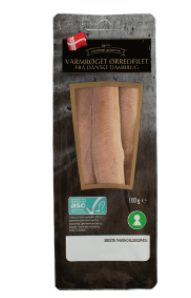
Geia Food A/S is recalling Seafood Selection hot-smoked trout fillets, as Listeria monocytogenes has been found in the product.

Image of the product

Which food is recalled

Seafood Selection hot-smoked trout fillet
Net weight: 100g
EAN barcode: 5710326020242
Best before dates: All dates from 08/09/2023 to 05/10/2023

Where is the product sold

The product is sold in Coop stores throughout the country.

Why is the product being recalled?

The bacterium Listeria monocytogenes has been detected in the product. Infection with Listeria bacteria can cause flu-like symptoms, fever and headache and, in rare cases, gastrointestinal problems.

Read more about Listeria in food here

Read more about infection with Listeria (listeriosis) here

What should you do as a consumer?

The Danish Veterinary and Food Administration advises consumers to return the product to the store where it was purchased, or to discard it.

If you experience symptoms in connection with consuming the product, you should contact your own doctor.

Who recalls the product

Geia Food A/S
Fuglevænget 9
9000 Aalborg

Australia – NSW community urged to be on alert amid rise in Listeriosis

Health NSW

NSW Health is reminding people who are immunocompromised, pregnant, or aged over 65 years to avoid foods that can cause listeriosis, following several confirmed cases of listeria infection in NSW.

Listeriosis infection, which comes from consuming food contaminated with Listeria monocytogenes bacteria, can cause severe illness or even death in vulnerable people. Most healthy people will not become ill.

Director of NSW Health’s One Health branch, Keira Glasgow, said the call follows a rise in both the number reported cases of listeriosis and the number of people treated in hospital for their illness.

“Already in 2023, we’ve recorded 25 cases of listeriosis among NSW residents, which is more than we usually expect to see in a whole year,” Ms Glasgow said.

“There are a range of foods that present very real risks to people who are older, pregnant or have underlying health conditions such as cancer, diabetes, heart, liver, or kidney disease, or who are on medications such as corticosteroids which impact immune systems.

“That’s why NSW Health is reminding these vulnerable people to be aware of the foods that present these risks. It’s vital these people choose safer options at all times.”

Symptoms usually start with fever and muscle aches. In people at high-risk, the disease can rapidly spread to the blood or central nervous system, causing sudden onset of fever, intense headache, stiff neck, confusion or delirium, convulsions, loss of balance, or a coma.

For information on listeriosis, see the NSW Health listeriosis factsheet online.

People at increased risk of listeriosis are reminded to avoid the following foods, and take care not to contaminate fruit when cutting it and not to store cut fruit and vegetables that are eaten raw, as listeria survives refrigeration:

  • cold delicatessen meats (freshly sliced, pre-packaged or from sandwich bars)
  • pre-cooked cold chicken (whole, portions or diced)
  • smoked seafood (for example, smoked salmon), unless cooked and served hot
  • chilled or raw seafood (for example, ready-to-eat prawns)
  • rockmelon, and pre-cut fruit or pre-prepared fruit, including fruit salad (pre-packaged, buffets or salad bars)
  • pre-packed cold salads, including coleslaw (pre-packaged, buffets or salad bars)
  • frozen vegetables, unless cooked
  • pâté or meat spreads
  • unpasteurised milk or milk products
  • soft cheeses such as brie, camembert, ricotta, or blue-vein (unless cooked and eaten while hot)
  • soft serve ice cream
  • sprouted seeds

Denmark – Listeria in hot-smoked trout fillet

Foedevarestyrelsen

Agustson A/S is recalling agustson hot-smoked Danish trout fillet, as Listeria monocytogenes has been found in the product.

Which food is recalled

agustson hot-smoked Danish trout fillet
Net content: 80g
Best-by dates: All dates up to and including 10/10/2023
Lot numbers: L23233, L23234, L23235, L23236, L23237, L23240, L23241, L23242, L23243, L23244, L232 47, L23248, L23249, L23250, L23251

Where is the product sold

The product is sold in REMA 1000 stores throughout the country.

Why is the product being recalled?

The bacterium Listeria monocytogenes has been detected in the product. Infection with Listeria bacteria can cause flu-like symptoms, fever and headache and, in rare cases, gastrointestinal problems.

Read more about Listeria in food here

Read more about infection with Listeria (listeriosis) here

What should you do as a consumer?

The Danish Veterinary and Food Administration advises consumers to return the product to the store where it was purchased, or to discard it.

If you experience symptoms in connection with consuming the product, you should contact your own doctor.

Who recalls the product

Agustson A/S
Englandsvej 11
7100 Vejle