Category Archives: Yersinia

Scotland – HPS publishes annual surveillance reports for Hepatitis A, Hepatitis E, Listeria, Norovirus, Shigella and Yersinia in Scotland for 2019

HPS

12 May 2020

Article: 54/1901

On 12 May 2020, Health Protection Scotland (HPS) published the following annual surveillance reports:

Europe – Yersiniosis – Annual Epidemiological Report for 2017

ECDC

kswfoodworld.com

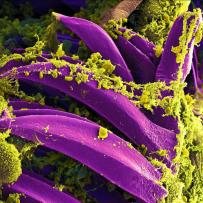
Image CDC

For 2017, 28 countries reported 6 890 confirmed yersiniosis cases in the EU/EEA. The overall notification rate was 1.8 per 100 000 population and remained stable from 2013–2017. The highest rate was detected in 0–4 year-old children (7.7 per 100 000 population). The highest rates were reported by Finland, Lithuania and the Czech Republic.

Download

Europe – Yersiniosis – Annual Epidemiological Report for 2018

ECDC European Centre for Disease Prevention and Control

For 2018, 29 countries reported 7 204 confirmed yersiniosis cases in the EU/EEA.  The overall notification rate was 1.7 per 100 000 population and remained stable from 2014 to 2018. The highest rates were reported by Finland, Belgium and the Czech Republic. The highest rate was detected in 0-4 year-old children; 7.9 per 100 000 population for males and 6.8 per 100 000 population for females.

Download

USA – Yersinia: Creamworks Creamery may be the source of illnesses in Pennsylvania

Outbreak News Today

kswfoodworld.com

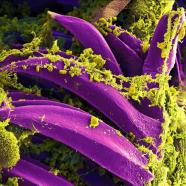
Image CDC

In a public health alert issued recently, the Pennsylvania Department of Health advises residents of Pennsylvania to avoid drinking milk from Creamworks Creamery in Waymart, Wayne County because it may be tainted with dangerous Yersinia enterocolitica bacteria. As of today, department is currently investigating 17 laboratory-confirmed illnesses as well as numerous additional reports of digestive illnesses. According to health agents, the illnesses seem to be connected to only milk sold at the dairy.

Sweden – New outbreak of Yersinia infection is being investigated

Outbreak News

In Sweden, the National Institute of Public Health, or Folkhälsomyndigheten is reporting a new outbreak of infections caused by Yersinia enterocolitica type O3. The source of infection is still unknown.

So far, 26 cases of disease have been confirmed to belong to the outbreak by means of whole-genome sequencing. Another handful of cases are investigated. Since the current outbreak strain of Yersinia enterocolitica type O3 has been found in different parts of the country, it is likely that a food borne infection. The current outbreak strain differs from the one that caused a Yersinia outbreak earlier in the spring.During the middle of May, an number of reported cases of Yersinia infection has been seen in Sweden. Seven regions from different parts of the country have reported cases, but the majority of cases come from the northernmost regions of the country.

RASFF Alert – Yersinia enterocolitica – Teen Spinach

RASFF-Logo

RASFF – Yersinia enterocolitica in teen spinach from Italy in Denmark

Sweden and Denmark – Yersinia outbreak update in Sweden and Denmark

Outbreak News Today

kswfoodworld.com

Image CDC

In a follow-up on the Yersinia enterocolitica outbreak ongoing in Sweden and Denmark, health officials from both countries in this cross-border outbreak to a cumulative total of 57. 
In Sweden the outbreak tally has reached 37, as of May 3. Health officials say that previous suspicions of a link to Latvian carrots has proven to have no connection.

Sweden has begun a case-control study to search for foods that the disease cases have eaten and which differ from what controls have eaten.

While in Denmark, a total of 20 people are part of the outbreak. The investigation shows that the source of infection was probably fresh spinach.

Sweden – Yersinia enterocolitica outbreak is being investigated in Sweden

Outbreak News Today

kswfoodworld.com

Image CDC

Swedish health officials (Folkhälsomyndigheten) report investigating (computer translated) an outbreak of Yersinia enterocolitica cases throughout the country since March. Cases have been reported in nearly all regions of the country and affected adults the most.

The investigation into a foodborne source is ongoing with collaboration of the Public Health Authority, the National Food Administration, municipalities and the County Administrative Board.To date, 26 cases in ten regions have been confirmed in the outbreak. Another thirty cases are being investigated. Health officials say since the current outbreak strain of Y. enterocolitica type O3 has been found in different parts of the country, it is likely that a food borne infection will occur.

Sweden reports between 200 to 300 cases reported annually.

RASFF Alert – Yersinia enterocolitica – Raw Carrots

RASFF-Logo

RASFF – Yersinia enterocolitica (present /25g) in raw carrots from Sweden in Latvia

Research – Yersiniosis – Annual Epidemiological Report for 2016

ECDC

kswfoodworld.com

Image CDC

Publication series: Annual Epidemiological Report on Communicable Diseases in Europe
Time period covered: This report is based on the data for 2016 retrieved from The European Surveillance System (TESSy) on 21 February 2018.
In 2016, 28 countries reported 6 918 confirmed yersiniosis cases in the EU/EEA.

Besides Yersinia pestis (see plague) the Yersinia group of bacteria also includes two species frequently causing illness (mainly enteritis) in humans; Yersinia enterocolitica and Yersinia pseudotuberculosis.

Both are zoonoses, with a large number of animals, but mainly pigs, acting as reservoirs. Raw/undercooked meat consumption is often the cause of infection in humans. Direct transmission from other animals (e.g. pets) or through contaminated food or drink is also possible.

After an incubation period of 3–7 days, the clinical presentation includes fever, diarrhoea and abdominal pain in the right lower part of the abdomen, mimicking appendicitis. Both infections respond well to antibiotics, but untreated symptoms of abdominal pain may last for a long while. Children and adolescents are most affected. Other manifestations such as joint inflammation, “erythema nodosum” (a skin affection) and Reiter’s syndrome (inflammation of eyes and joints) can also appear.

Outbreaks are sometimes detected as a sudden increase in appendectomies due to mistaken diagnoses of appendicitis. Prophylactic measures include adequate hygiene in meat processing (especially of pork), hand hygiene and protection of water supplies.