Category Archives: Water

UK – Research – Guidance – Pseudomonas aeruginosa in Water Systems

Health Protection Scotland

Guidance on management of Pseudomonas aeruginosa in water systems

On 12 March, the UK Department of Health published an addendum to the Health Technical Memorandum 04-01 Water sources and potential Pseudomonas aeruginosa contamination of taps and water systems – Advice for augmented care units.

The document is concerned with controlling and minimising the risk of morbidity and mortality due to P. aeruginosa associated with water outlets and provides guidance on:

  • forming a Water Safety Group and developing water safety plans
  • assessing the risk to patients when water systems become contaminated with P. aeruginosa or other opportunistic pathogens
  • remedial actions to take when a water system becomes contaminated with P. aeruginosa
  • protocols for sampling, testing and monitoring water for P. aeruginosa.

The guidance is directed towards healthcare organisations providing patient care in augmented care settings, and is specifically aimed at estates and facilities departments, and infection prevention and control teams. [Source: DH News Release, 12 March 2013. http://www.dh.gov.uk/health/2013/03/pseudomonas-addendum]

In Scotland, the same issues have been addressed in Health Protection Scotland’s Guidance for neonatal units (NNUs) (levels 1, 2 & 3) adult and paediatric intensive care units (ICUs) in Scotland to minimise the risk of Pseudomonas aeruginosa infection from water. This is due for imminent publication with an accompanying CEL letter. SHTM 04-01 Parts A&B have also been amended to reflect this latest guidance and will be published on the Health Facilities Scotland website along with the new Part G (following a consultation period) at the end of March.
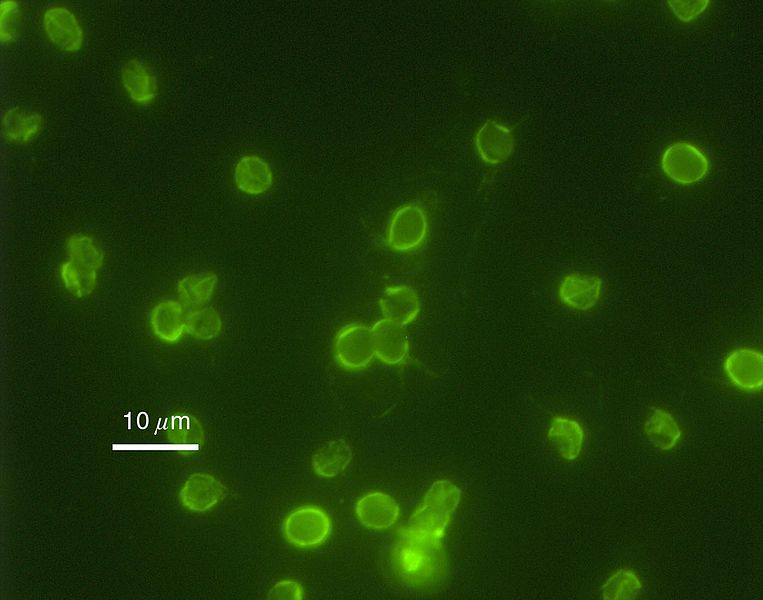
UK – FSA – HPA – Cryptosporidum 2012 Outbreak

FSA763px-Cryptosporidium_parvum_01

The Health Protection Agency (HPA) today published findings of an investigation into an outbreak of Cryptosporidium infection that affected around 300 people in England and Scotland in May 2012.

The Food Standards Agency was part of the outbreak control team, led by the HPA, and gathered information on the production and distribution of salad vegetables to help identify the likely source of the outbreak.

The full HPA statement can be read via this HPA link

Reserch European Legionella Outbreaks 2009-2010

EurosurveillanceLegionella_Plate_01

The surveillance of Legionnaires’ disease (LD) in Europe is carried out by the European Legionnaires’ Disease Surveillance Network (ELDSNet) and coordinated by the European Centre for Disease Prevention and Control (ECDC). All cases reported in 2009 and 2010 and meeting the European case definition were electronically transmitted to The European Surveillance System (TESSy) database. A total of 5,551 and 6,305 cases were reported by 29 European countries in 2009 and 2010, respectively. The age-standardised rate of all cases was 1.20 per 100,000 inhabitants in 2010, 12% higher than in 2009, which was consistent with the increasing trend observed since 2005. Most of this increase consisted of community-acquired cases reported by France, Germany and the Netherlands with dates of onset in August–September. The exceptionally hot summer of 2010 in some parts of Europe may have played a role in this increase.

Australia- Gastroenteritis Linked to Swimming Pool Water

Courier Mail

Victoria’s chief health officer Dr Rosemary Lester said there has been a three-fold increase in gastro cases after hot weather sparked people seeking to cool off at public swimming pools.

She urged those who have had diarrhoea not to go into a swimming pool for at least 14 days after symptoms had stopped for fear of passing on the bug.

Dr Lester said the cryptosporidium gastro parasite could not be killed by normal levels of chlorination.

“Cryptosporidiosis is typically caused by swallowing contaminated water, household contact with a case and contact with farm animals,” she said.

Authorities are working with swimming pool owners to implement extra measures to kill the parasite.

Symptoms included watery diarrhoea, stomach cramps and vomiting, Dr Lester said.

Dr Lester urged sufferers to shower before swimming to avoid infecting others, with children and the elderly particularly at risk.

There were 155 Victorian cases of gastro caused by the cryptosporidium parasite last month, three times the February average of 53.

New Zealand – Cryptosporidium Outbreak?

The New Zealand Herald763px-Cryptosporidium_parvum_01

Hawke’s Bay’s water operators are checking the region’s supplies for contamination of Cryptosporidium.

Health authorities have issued a warning following the diagnosis of 45 people over the past two months.

Medical Officer of Health Dr Nicholas Jones said the health protection team is analysing information to establish the cause of the outbreak – and expect there is more than one source.

“We’ve been in touch with the water operators and they don’t think they’ve got problems at the moment, but obviously it’s something we’re going to be looking into in more detail,” said Dr Jones.

European RASFF Alerts – Norovirus

RASFF– Norovirus in Clams in Italy sourced in Turkey

RASFF – Norovirus in Oysters in Italy sourced in France

RASFF – Salmonella in Frozen Turkey and Poultry Kebab in Italy sourced in Germany via Poland


Research- Rsing Sea Temperatures Increased Vibrio?

Huffington PostVibrio

In December, Darrell Dishon became one of the approximately 15 people each year who succumb to vibriosis after eating raw oysters. Vibriosis is an incredibly rare disease — but Centers for Disease Control and Prevention data show that it’s getting more common.

“While all the other pathogens have shown a nice decline, the vibrios are about twice what it was since 1998. In a little over a decade, incidence has doubled. They’re still relatively small numbers — but it’s a very striking increase,” leading vibrio researcher Glenn Morris of the University of Florida’s Emerging Pathogens Institute told The Huffington Post.

Vibrio thrive in warm water. (That’s why the majority of cases happen in the summer, and why vibriosis is more closely associated with oysters from the Gulf of Mexico than from, say, the Pacific Northwest.) One widely publicized study published in July 2012 indicated that a 1-degree increase in the temperature of a body of water triples its vibrio population. For that reason, many scientists believe that climate change has contributed to the recent rise in vibriosis, and that it could make vibrio bacteria much more prevalent in coming years.

“Vibrios are in many ways the poster children for global warming, because they are so temperature sensitive and the temperature breakpoint for them is right around the point that we’re seeing temperature increases,” Morris explained.

The disease has already cropped up in places it had never been seen before: Israel, the Baltic Sea, even Alaska. Yet vibrio vulnificus, the form of vibrio bacteria that’s considered the most dangerous and the one that killed Dishon, remains most closely associated with oysters from the Gulf of Mexico. With only about 30 total cases in the United States a year, it’s exceptionally rare. Your chances of finding a valuable pearl in one of the 2.5 billion oysters Americans eat a year are about 100 times greater than your chances of contracting vibrio vulnificus.

Yet when it strikes, it strikes hard. It kills about half the people who get it, a rate comparable, among foodborne illnesses, only to the dreaded listeria monocytogenes. And many of these deaths are unusually painful.

USA – Drinking Water Draft Revised Coliforms Regulations

USA EPA FactsheetWater

The Environmental Protection Agency (EPA) has revised the 1989 Total Coliform Rule (TCR), a national primary drinking water regulation (NPDWR). The purpose of the 1989 TCR is to protect public health by ensuring the integrity of the drinking water distribution system and monitoring for the presence of microbial contamination. EPA anticipates greater public health protection under the revised requirements, which are based on recommendations by a federal advisory committee and the agency’s consideration of public comments. The final Revised Total Coliform Rule (RTCR):

• Requires public water systems that are vulnerable to microbial contamination to identify and fix problems; and

• Establishes criteria for public water systems to qualify for and stay on reduced monitoring, which could reduce water system burden and provide incentives for better system operation.

The 1989 TCR remains effective until March 31, 2016. PWSs and primacy agencies must comply with the requirements of the RTCR beginning April 1, 2016.

Scientific American Article

RASFF/European Alerts – Pseudomonas aeruginosa, Listeria monocytogenes

RASFF – Listeria monocytogenes (presence /25g) in gorgonzola and mascarpone cheese cake from Italy.

Switzerland – Food safety and public warning: Listeria in goat cheese “The Capriglânois”

Greece – The EFET, namely the Regional Directorate of Western Greece Within the framework of implementation of official control programs for food safety and quality control on bottled water and in cooperation with the State General Laboratory, found that there unsafe product – natural mineral water – which detected the bacterium Pseudomonas Aeruginosa


UK/Germany/Netherlands – Increase in Cryptosporidium Notifications in 2012

ECDC

An increase in Cryptodsporidim notifications has been observed in the UK, Netherlands and Germany since August 2012 that is likely to be real and not due to surveillance or notifcations artifacts.

The available information from investigations in the United Kingdom, the Netherlands and Germany indicates that there is not a single, common source, but rather a combination of several causes. These may include climatic drivers, such as the increased rainfall in the summer of 2012 in these countries or a widely distributed commonly consumed product. There is however no evidence for it at this stage and further investigations are ongoing.

 The overall threat for the European Union/European Economic Area (EU/EEA) is considered to be low.

 EU/EEA Member States should be alert to an increase in cases as observed in the United Kingdom, the Netherlands and Germany, particularly in relation to immunocompromised and other at-risk groups as they may present with a more severe manifestation of cryptosporidiosis.