Category Archives: water microbiology

Legionella risks during the coronavirus pandemic

HSE

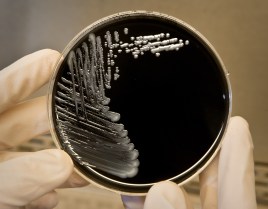
Legionella_Plate_01

Employers, the self-employed and people in control of premises, such as landlords, have a duty to protect people by identifying and controlling risks associated with legionella.

If your building was closed or has reduced occupancy during the coronavirus (COVID-19) pandemic, water system stagnation can occur due to lack of use, increasing the risks of Legionnaires’ disease.

You should review your risk assessment and and manage the legionella risks when you:

If the water system is still used regularly, maintain the appropriate measures to prevent legionella growth.

You can find out what Legionnaires’ disease is, where it comes from, how people get it and symptoms and treatment by reading our guidance What is Legionnaires’ disease?.

USA – Bacteria that causes Legionnaire’s disease found in N.J. prison water

NJ.com

Legionella A

New Jersey officials have found a potentially deadly bacteria in the water at one of New Jersey’s largest prisons, according to a staff memo obtained by NJ Advance Media.

Legionella was detected in a medical building at Northern State Prison in Newark, according to the document, and staff have since moved inmates out of the affected area. The bacteria causes Legionnaire’s disease, a form of pneumonia especially dangerous for people with compromised immune systems,

Research – Risk of Legionella is high when offices reopen after lockdown

Digital Journal

Once more offices open up, following the easing of coronavirus measures, a new danger presents itself – Legionnaires’ disease. This arises because of poorly maintained water and air conditioning systems.

The number of cases of Legionella is increasing globally, with a marked change recorded in the U.S. The number of cases now stands, typically, at 10,000 cases per year. The disease is a form of pneumonia caused by Legionella bacteria (L. pneumophila). These organisms can be inhaled into the lungs through water aerosols and droplet, suspended in the air when water is used. Signs and symptoms typically include fever, cough, and chest pain, and it can result in death in up to 10 percent of cases.

Research – Rapid Testing and Interventions to Control Legionella Proliferation following a Legionnaires’ Disease Outbreak Associated with Cooling Towers

MDPI

Legionella_Plate_01

Most literature to date on the use of rapid Legionella tests have compared different sampling and analytical techniques, with few studies on real-world experiences using such methods. Rapid tests offer a significantly shorter feedback loop on the effectiveness of the controls. This study involved a complex of five factories, three of which had a history of Legionella contamination in their cooling water distribution system. Multiple sampling locations were utilised to take monthly water samples over 39 months to analyse for Legionella by both culture and quantitative polymerase chain reaction (qPCR). Routine monitoring gave no positive Legionella results by culture (n = 330); however, samples were frequently (68%) positive by qPCR for Legionella spp. (n = 1564). Legionella spp. qPCR assay was thus found to be a good indicator of cooling tower system health and suitable as a routine monitoring tool. An in-house qPCR limit of 5000 genomic units (GU)/L Legionella spp. was established to trigger investigation and remedial action. This approach facilitated swift remedial action to prevent Legionella proliferation to levels that may represent a public health risk. Cooling tower operators may have to set their own action levels for their own systems; however, in this study, 5000 GU/L was deemed appropriate and pragmatic. View Full-Text

USA – Legionnaires’ Disease cluster reported in north New Jersey

Outbreak News Today

CDC legionella

Image CDC

The New Jersey Department of Health (NJDOH) is investigating a cluster of Legionnaires’ disease cases in Union County. The Department is aware of 14 confirmed cases of Legionnaires’ disease, including one death, among individuals who live in or spend time in the county.

The cases were reported to the Department between February 3 and February 26, 2021. The Department is working with the local health departments in Union County to investigate this cluster. The individual who died was a male resident of Union County in his late 60s.

“This is a continuing investigation. The risk to anyone who lives in Union County is very small,” said New Jersey Health Commissioner Judith Persichilli.  “Out of an abundance of caution, the Department recommends that individuals who live in Union County who become ill with pneumonia-like/respiratory symptoms, such as fever, chills, cough, shortness of breath, muscle aches, and headache visit their healthcare provider.”

Research – Environmental Management of Legionella in Domestic Water Systems: Consolidated and Innovative Approaches for Disinfection Methods and Risk Assessment

MDPI

Legionella_Plate_01

Legionella is able to remain in water as free-living planktonic bacteria or to grow within biofilms that adhere to the pipes. It is also able to enter amoebas or to switch into a viable but not culturable (VBNC) state, which contributes to its resistance to harsh conditions and hinders its detection in water. Factors regulating Legionella growth, such as environmental conditions, type and concentration of available organic and inorganic nutrients, presence of protozoa, spatial location of microorganisms, metal plumbing components, and associated corrosion products are important for Legionella survival and growth. Finally, water treatment and distribution conditions may affect each of these factors. A deeper comprehension of Legionella interactions in water distribution systems with the environmental conditions is needed for better control of the colonization. To this purpose, the implementation of water management plans is the main prevention measure against Legionella. A water management program requires coordination among building managers, health care providers, and Public Health professionals. The review reports a comprehensive view of the state of the art and the promising perspectives of both monitoring and disinfection methods against Legionella in water, focusing on the main current challenges concerning the Public Health sector.

USA – Waterborne Disease Outbreak Investigation Toolkit

CDC

The Waterborne Disease Outbreak Investigation Toolkit is a guide to assist state and local health departments in conducting waterborne disease outbreak investigations. CDC developed this toolkit to help partners address the unique challenges they face when investigating waterborne disease outbreaks. Because of the numerous ways in which water impacts every person’s daily lives, timely detection, response, and control of these outbreaks is crucial to protect public health.

Using experiences of epidemiologists at the state and local levels, this toolkit describes best practices in preparing for, identifying, and remediating a waterborne disease outbreak.

For outbreaks related to recreational water, visit CDC’s Recreational Water Illness Outbreak Response Tools page.

CDC is available to assist local, state, territorial, and tribal health departments—as well other countries’ ministries of health—with investigating and controlling waterborne disease outbreaks.

How to Use the Toolkit

All of the toolkit content can be found by navigating through this website. It is also available as a PDF document pdf icon[PDF – 36 pages].

Research – Giardiasis Outbreaks — United States, 2012–2017

CDC

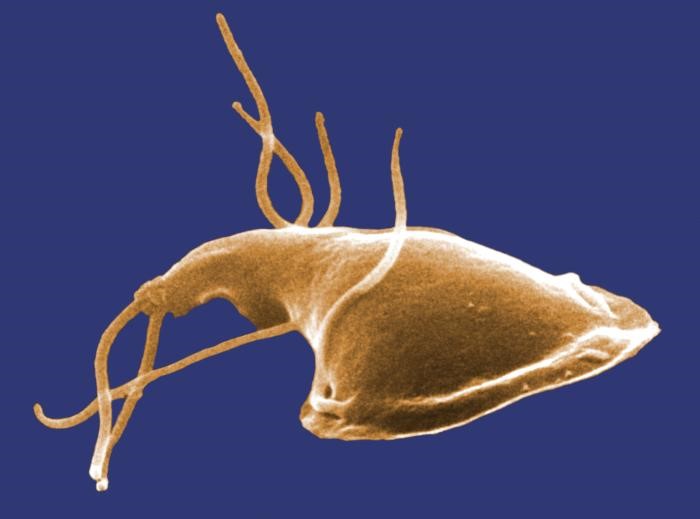
CDC Giardia2

Summary

What is already known about this topic?

Giardiasis is a diarrheal disease caused by the parasite Giardia duodenalis, the most common cause of intestinal parasite infections in the United States.

What is added by this report?

During 2012–2017, public health officials from 26 states reported 111 giardiasis outbreaks involving 760 cases. Leading causes of outbreaks were waterborne and person-to-person exposures. Private residences and child care facilities were the most common settings of giardiasis outbreaks across all transmission modes.

What are the implications for public health practice?

To prevent and control giardiasis outbreaks, CDC recommends prompt diagnosis, maintaining good hand hygiene, cleaning and disinfecting home environments and child care facilities, and monitoring water quality in private well

Giardiasis is a diarrheal disease caused by the parasite Giardia duodenalis, the most common cause of intestinal parasite infections in the United States. Transmission occurs when Giardia cysts spread from feces to water, food, surfaces, or skin and are then ingested. Illness is characterized by gastrointestinal symptoms, including diarrhea, abdominal cramps, greasy stools, bloating or gas, nausea, vomiting, weight loss, and dehydration. Approximately 50% of infections are asymptomatic (1,2). Most symptomatic Giardia infections are self-limited in duration; however, some persons might experience a reoccurrence of symptoms or develop long-term complications (3). During 2012–2017, public health officials from 26 states reported 111 giardiasis outbreaks (760 cases) to the National Outbreak Reporting System (NORS). Three main modes of transmission for these outbreaks were identified: water exposure in 29 (26%) outbreaks, person-to-person contact in 28 (25%) outbreaks, and contaminated food in six (5%) outbreaks. A single transmission mode could not be determined in 48 (43%) of the outbreaks. Private residences and child care facilities were the most common settings of outbreaks for all the transmission modes combined. To prevent and control giardiasis outbreaks, CDC recommends prompt diagnosis, maintaining good hand hygiene, cleaning and disinfecting home environments and child care facilities, and monitoring water quality in private wells.

A giardiasis outbreak is defined as the occurrence of two or more cases of illness epidemiologically linked to a common exposure (1). Health department officials from across the United States (state, local, and District of Columbia), U.S. territories,* and freely associated states voluntarily report outbreaks to NORS. This study included giardiasis outbreak reports submitted to NORS by December 30, 2019 and data reported during 2012–2017 (the year of the earliest case illness onset date through the most recent year for which data were available). NORS data summarized in this study include primary case counts, hospitalizations, and deaths; transmission mode; exposures and settings; and earliest onset date. Negative binomial regression analysis was conducted to assess for annual trends in outbreak counts using SAS (version 9.4; SAS Institute). This activity was reviewed by CDC and conducted consistent with applicable federal law and CDC policy.§

During 2012–2017, public health officials from 26 states reported 111 giardiasis outbreaks with 760 primary cases, 28 hospitalizations, 48 emergency department visits, and no deaths. Among the 703 cases with available data, 370 (53%) persons were male and 333 (47%) persons were female. Pennsylvania reported the largest number of outbreaks with 44 (40%), followed by Minnesota with 11 (10%); no other state reported >10 outbreaks (Figure 1). There was no significant trend in giardiasis outbreaks by year (χ2 = 0.67, p = 0.98) (Figure 2).

Among 29 (26%) waterborne outbreaks (370 cases), exposure sources included tap water systems (e.g., municipal systems or private wells) in nine outbreaks, outdoor freshwater consumption in seven outbreaks, treated recreational water in five outbreaks, untreated recreational water in four outbreaks, and “other” in four outbreaks (Table). Reported settings for waterborne outbreaks included 12 (41%) outdoor areas (e.g., parks and forests) five (17%) private residences, four (14%) camps or cabins, three (10%) community/municipality settings, three (10%) unknown, and two (7%) other settings. Person-to-person transmission was the primary mode identified in 28 (25%) outbreaks, resulting in 129 cases. The primary exposure settings for these outbreaks were 14 (50%) private residences and 12 (43%) child care facilities (Table). Among the 14 settings in private homes, nine (64%) were in households with children aged ≤5 years; two (14%) were in homes with only adults. Among the six (5%) foodborne outbreaks, all foods associated with the five known food exposures were eaten raw or with minimal or no processing. No outbreaks were attributed to animal contact or environmental contamination other than food and water (i.e., contact with objects or surfaces with Giardia). Among all 111 outbreaks, 48 (43%) had an indeterminate or unknown transmission mode, meaning that there was insufficient evidence to implicate one specific primary mode of transmission; 33 (69%) of these outbreaks occurred in private residences (Table).

USA – NJDOH Investigates Legionnaires’ Cluster in Union County

NBC

Legionella A

The New Jersey Department of Health (NJDOH) is investigating a cluster of Legionnaires’ disease — a bacteria-triggered form of pneumonia — in Union County in which at least 14 cases, including one death, were confirmed.

The cases were reported to the state’s Department of Health between Feb. 3 and Feb. 26, according to officials.

Health officials are working with the local health departments in Union County to investigate this cluster. The individual who died was a male resident of Union County in his late 60s.

Taiwan – CDC issues Norovirus warning after Taiwan sees surge in cases

Taiwan News

Food Borne Illness - Norovirus -CDC Photo

The health authorities are sounding the alarm over norovirus-induced gastroenteritis, with cases soaring over the past week.

Taiwan recorded over 138,000 cases of diarrhea between Feb. 21 and 27, reflecting an uptick in stomach illnesses following the Lunar New Year. Over the past four weeks, 87 diarrhea clusters have been reported nationwide, and 97 percent of the 58 cases where pathogens were identified pointed to norovirus as the culprit, according to the Taiwan Centers for Disease Control (CDC).

Members of the public are urged to improve their hygiene, as the virus is transmitted via the fecal-oral route, which involves contaminated food or water or contact with infected persons.