Category Archives: Vibrio

Norway -Vibrio and Shewanella: Norway health officials warn of swimming in the warm waters

Outbreak News Today 

CDC Vibrio

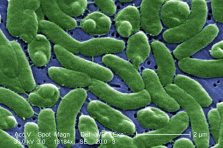
Image CDC Enter a caption

Norwegian health authorities are warning people who are particularly vulnerable to Vibrio infections to take precautions while swimming as a number of serious bacterial infections ave been recorded.

This summer, six people have been severely ill with wound infection due to bacteria in seawater (five Vibrio and one Shewanella). The infection has occurred after swimming in the Oslo Fjord.

All adults over the age of 50 who have had a sore wound or have suffered sores during bathing in the Oslo Fjord in five different municipalities, Bærum, Oslo, Moss, Vestby and Fredrikstad.

In addition to the serious cases we know from earlier, there have been reports of 20 people who have had mild Vibrio infections on August 8th. These are sore infections and ear infections that often do not require treatment.

Poland -Algae blooms force Poland to shut down 50 Baltic Sea beaches

Herald Whig

WARSAW, Poland (AP) — Thinking of a dip in the Baltic Sea to cool off from the unusually scorching European summer? It’s too hot for that.

Authorities in Poland this week banned swimming at over 50 beaches along its Baltic coast, after hot weather led to the toxic growth of bacteria in the unusually warm sea. Baltic Sea water temperatures exceeded 23 degrees Celsius (73.4F) in some places Thursday.

Emergency water rescuers told vacationers on hot sandy beaches — from Swinoujscie in the west to Gdynia in the east — not to enter the sea, where thick green-brown cyanobacteria colonies have grown and pose a health threat.

Regional sanitation authorities have issued warnings that contact with the bacteria may cause allergies and rashes. Drinking contaminated water can also lead to serious digestive problems.

The Baltic Sea has not seen such intense growth of cyanobacteria for 12 years. It results from exceptionally high air temperatures of 34 degrees Celsius (93.2 degrees Fahrenheit) that have raised the temperatures of the usually cold Baltic.

A similar ban has been issued for some inland lakes and reservoirs, such as the Zegrze Resevoir near Warsaw.

In neighboring Germany, authorities issued a warning about the higher than usual growth of vibrio bacteria in the warm Baltic that can cause deadly illness in people with compromised immune systems. They said a 70-year-old man with a chronic illness died of vibrio infection over the weekend, and warned elderly people and those with chronic illnesses such as diabetes or HIV to avoid contact with the sea or brackish water.

In Finland, the Loviisa nuclear power plant said in a statement it briefly reduced energy production in both its units Wednesday to prevent the Baltic Sea water that cools its infrastructure from getting too warm. It said there was no danger to people or the environment.

Research -Occurrence of four pathogenic Vibrios in Chinese freshwater fish farms in 2016

Science Direct

The purpose of this survey was to investigate the distribution of major pathogenic Vibrio spp. (Vibrio parahaemolyticus, Vibrio alginolyticus, Vibrio vulnificus and Vibiro cholerae) in Chinese freshwater fish farms. In total, 4,064 samples of freshwater fish, water and sediment were collected from 12 provinces covering every quarter in 2016. The occurrence of Vibrios was as follows: V. cholerae (10.33%), V. parahaemolyticus (3.89%), V. alginolyticus (1.24%) and V. vulnificus (0.76%). Among 158 confirmed V. parahaemolyticus isolates, 44 isolates (27.85%) had virulence genes (trh/tdh). Among 420 confirmed V. cholerae isolates, 4 were the O1 stains and 4 were the O139 strains. Out of 112 freshwater farms, 58.93% had Vibrios-positive samples. The rates of Vibrios-positive samples from May to October (12.45%∼35.20%) were higher than those in other months (0.00%∼8.07%). Compared the environment factors of Vibrios positive and negative water samples, there was a significantly difference in temperature (P<0.01), while no significant difference in salinity and pH value (P>0.05). In summary, the study presents comprehensive contamination data on the occurrence of four major pathogenic Vibrios in freshwater aquaculture of China for the first time, and the results indicate that Vibrios are widely distributed in aquaculture environment and a further risk assessment is needed to conduct.

USA – Texas warns public of Vibrio risk

Outbreak News Today 

CDC Vibrio

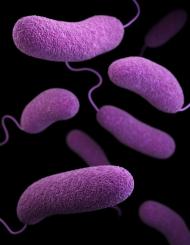
Image Cdc Enter a caption


Texas health officials are warning the public about the increased risk of Vibrio infections naturally found in coastal water.

Most infections occur between May and October, when the warmer water temperatures in the Gulf of Mexico promote the growth of these bacteria.

People can become ill after eating raw or undercooked contaminated seafood, particularly oysters, or when a person has an open wound that is exposed to seawater. Illness due to eating raw or undercooked seafood usually includes gastrointestinal symptoms such as vomiting, diarrhea, abdominal pain, nausea, fever, and chills. These symptoms frequently occur within 24 hours of eating and last approximately three days. Wound infections can cause redness, swelling, large blisters on the skin, skin ulcers, and, in serious cases, may even lead to limb amputation or death. People with a weakened immune system, liver disease, diabetes, cancer, or other chronic diseases or who have decreased gastric acidity are at highest risk for severe illness.

Research -Occurrence, virulence factors, and antimicrobial susceptibility patterns of Vibrio spp. isolated from live oyster (Crassostrea gigas) in Korea

Wiley Online

Abstract

This study determined the incidence, virulence factors, and antimicrobial susceptibility patterns of Vibrio spp. in live oysters (Crassostrea gigas) marketed in Korea. A total of 41 Vibrio spp. isolates including 23 Vibrio alginolyticus, 11 Vibrio fluvialis and 7 Vibrio antiquarius were isolated and identified. All Vibrio spp. isolates showed DNase, amylase, lipase, phospholipase, and gelatinase activities. For slime production, caseinase and β‐hemolysis isolates were positive in 68%, 78%, and 56%, respectively. PCR‐based assays showed that V. alginolyticus expressed collagenase, tlh, toxR, ctxAB, and VPI virulence genes in 100%, 100%, 78%, 39%, and 48% of the isolates, respectively. All V. fluvialis strains harbored hupO gene while 64% and 55% isolates were positive for toxR and vfh. Besides, V. antiquarius strains were positive for toxR, tlh, ctxAB, and VPI virulence genes in 57%, 86%, 43%, and 43% of the isolates, respectively. Multiple Antibiotic Resistance (MAR) index calculated with disk diffusion test results revealed that 54% of the isolates were having MAR indices >0.2. Our results reveal that consumption of raw oysters may cause potential risk for public health owing to the Vibrio spp. comprising putative virulence properties and antimicrobial resistance.

Practical applications

The genus Vibrio are most commonly associated with seafood‐borne diseases. Oysters are one of the most preferred seafood in Korea as well as throughout the world. However, it may harbor pathogenic Vibrio spp., can cause foodborne illnesses if consumed as raw or undercooked product. In this study, the prevalence and characteristics of Vibrio spp. isolated from oysters in Korean markets was investigated. Among a total of 41 isolates presumptively identified by biochemical tests as vibrios, the incidence of three Vibrio species was confirmed by gyrB sequencing. Most of the isolates showed positive results for pathogenicity tests and virulence gene tests indicating the putative virulence of Vibrio spp. Susceptibility for 14 antimicrobials were tested using disk diffusion method. All the isolates were resistant to ampicillin while resistance to some other antimicrobials were also observed. According to these results, it is worthwhile to raise consumer awareness that consumption of oysters from markets in Korea may pose a risk of Vibrio infection.

Bahamas -Vibrio cases linked to conch in the dozens

Outbreak News Today  Vibrio_vulnificus_01

In a follow-up on the Vibrio parahaemolyticus outbreak linked to conch meat in the Bahamas, Health Minister Dr. Duane Sands says the number of confirmed cases has risen to 27, according to local media.

In additionthere are 22 cases awaiting lab results.  Among those now suffering from the illness are tourists.

Vibrio parahaemolyticus is a bacterium in the same family as those that cause cholera. It lives in brackish saltwater and causes gastrointestinal illness in humans. V. parahaemolyticus naturally inhabits coastal waters in the United States and Canada and is present in higher concentrations during summer.

USA – Man dies from bacterial infection after eating raw oysters in Florida – Vibrio vulnificans

CBS News 

CDC Vibrio

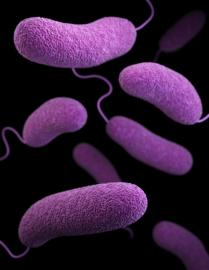
EImage CDC


A 71-year-old man died from a bacteria infection after eating raw oysters at a restaurant in Sarasota County, Florida, according to reports.

The Florida Department of Health has not released the man’s identity or the restaurant where he ate, but CBS Miami reported the man died two days after eating the oysters, after contracting a Vibrio vulnificus infection.

“We have an individual that consumed some raw oysters and to the best of our knowledge had no exposure to salt water, became severely ill, and passed away,” said Michael Drennon of the Sarasota County Health Deptartment, WJAX reports.

RASFF Alert – Vibrio parahaemolyticus – Raw Shrimps

kswfoodworld food safety poisoning

RASFF-Vibrio parahaemolyticus (TDH; TRH /25g) in frozen whole raw shrimps from Vietnam in France

USA – FDA Advises Consumers to Avoid Potentially Contaminated Fresh Crab Meat Imported from Venezuela due to Vibrio parahaemolyticus

FDA 

CDC Vibrio

The U.S. Food and Drug Administration is working with federal, state, and local officials regarding a Vibrio parahaemolyticus outbreak linked to fresh crab meat from Venezuela. At this time, the FDA is advising consumers to avoid eating fresh crab meat from Venezuela, as it may be contaminated with Vibrio parahaemolyticus. Consumers are advised to ask where their crab meat is from, if dining out at a restaurant or in grocery stores. This product is commonly found in plastic tubs and may be labeled as “pre-cooked.” As this is an ongoing investigation, the FDA will share additional updates as soon as information becomes available. The FDA and the states are conducting an investigation to determine the source of contaminated fresh crab meat and ensure it is removed from the food supply. Retailers should not serve or sell fresh crab meat imported from Venezuela.

As of July 12, 2018, there are 12 cases of Vibrio parahaemolyticus. The states reporting cases associated with this outbreak include  Maryland (8), Louisiana (2), Pennsylvania (1), and the District of Columbia (1). Four of these cases are confirmed matches to the outbreak strain by Pulsed Field Gel Electrophoresis (PFGE), which is a type of DNA fingerprinting. All four of these confirmed cases are in Maryland. Four people (33%) have been hospitalized. Illnesses started on dates ranging from April 1, 2018 to July 3, 2018.

Food contaminated with Vibrio parahaemolyticus may look, smell, and taste normal.

USA – Father may lose all four limbs after contracting flesh-eating bacteria in NJ – Vibrio vulnificans

News and Tribune

CAMDEN, NJ (RNN) – A 60-year-old father is hospitalized in intensive care after his family says he contracted flesh-eating bacteria while crabbing in a New Jersey river.

Doctors say Angel Perez, 60, developed necrotizing fasciitis, caused by a variety of Vibrio bacteria. The father is now in the ICU at Cooper University Hospital in Camden, NJ, according to NJ Advance Media.

Perez’s daughter, Dilena Perez-Dilan, says her father is an avid crabber. She says hours after he went crabbing near the Maurice River on July 2, his right leg began to swell then quickly got worse.

“It turned brown, blackish color. It was swelling, it was blistered,” Perez-Dilan told WPVI.

According to Perez’s family, it only took a few hours for the infection to spread to all four of his limbs, turning his skin raw and red with blisters and scarring.

“He is in critical condition,” Perez-Dilan told NJ Advance Media. “The infection has spread to his blood…his skin; you can see it spreading from his feet all the way above his kneecap. His forearms are black in color; they have blisters, cuts and sores.”