Archives
-
Join 343 other subscribers
KSWFoodWorld
Blog Stats
- 431,469 Views
Category Archives: Vibrio cholera
Research – Pathogenic Vibrio bacteria in the current and future Baltic Sea waters: mitigating the problem
ContextVibrio – microbes that are part of the natural bacterioplankton in temperate marine waters – have in recent years flourished in the Baltic Sea, probably stimulated by elevated surface water temperatures. Several Vibrio species are human pathogens. It is hence of great concern that Vibrio-related wound infections and fatalities have increased dramatically along the Baltic coasts. Future climate change is predicted to escalate this problem, posing a significant threat to human health and the Baltic tourism industry.
However, the projections do not yet take into account the influence of ‘ecosystem engineers’ such as mussels and macrophytes on Vibriodiversity and abundance. Recent data indicate that in some of the ‘ecosystem engineers’ habitats the abundance of pathogenic Vibrio spp. is reduced. However, climate change will also affect the structure and functioning of the ecosystem engineers, with as yet unknown consequences for the Vibrio populations in the Baltic Sea.Main objectivesBaltVib aims to delineate the current and future Vibrio status, determine biotic and abiotic key factors regulating Vibrio prevalence, and identify nature-based solutions (NbS) to mitigate the problem.
This opens up the option for NbS strategies to control pathogenic vibrios in the nearshore habitat where humans interact with the sea.Main activitiesThe main activities will be understanding Vibrio – ecosystem engineer relations in the past, indexing the current distribution, regulation and pathogenicity of Vibrio, making a projection of Vibrio – ecosystem engineer relations in the future.
Further we will test the potential of underwater islands as an NbS to reduce pathogenic Vibrio spp.National authorities of the partner countries with responsibility for public health, bathing water quality, Marine Strategy Framework Directive and Water Framework Directive will be actively included in the decision-making process during the project through means of an advisory board. Additionally, politicians, stakeholders and the general public will be actively engaged to foster understanding of the need to protect and restore the biodiversity of seagrass meadow habitats as potential biofilters to conserve or reach a good ecological status and protect human health.
This will be achieved through a number of workshops, trainings, the provision of data and open web-GIS “BALTIC SEA ATLAS” maps and a website.BaltVib’s goals will be achieved through interdisciplinary integration of marine, microbiological, molecular and socio-ecological expertise carried by partners from seven Baltic nations.Seagrass meadows form a characteristic biotope type of shallow coastal waters of the Baltic Sea and have great ecological importance as potent biofilters
Research – Secret to how cholera adapts to temperature revealed

Scientists have discovered an essential protein in cholera-causing bacteria that allows them to adapt to changes in temperature, according to a study published today in eLife.
The protein, BipA, is conserved across bacterial species, which suggests it could hold the key to how other types of bacteria change their biology and growth to survive at suboptimal temperatures.
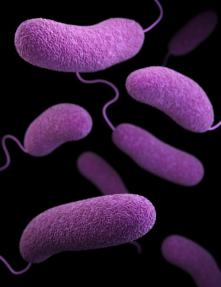
Vibrio cholerae (V. cholerae) is the bacteria responsible for the severe diarrheal disease cholera. As with other species, V. cholerae forms biofilms — communities of bacteria enclosed in a structure made up of sugars and proteins — to protect against predators and stress conditions. V. cholerae forms these biofilms both in their aquatic environment and in the human intestine. There is evidence to suggest that biofilm formation is crucial to V. cholerae’s ability to colonise in the intestine and might enhance its infectivity.
“V. cholerae experiences a wide range of temperatures, and adapting to them is not only important for survival in the environment but also for the infection process,” explains lead author Teresa del Peso Santos, a postdoctoral researcher at the Laboratory for Molecular Infection Medicine Sweden (MIMS), Umeå University, Sweden. “We know that at 37 degrees Celsius, V. cholerae grows as rough colonies that form a biofilm. However, at lower temperatures these colonies are completely smooth. We wanted to understand how it does this.”
The researchers screened the microbes for genes known to be linked with biofilm formation. They found a marked increase in the expression of biofilm-related genes in colonies grown at 37C compared with 22C.
To find out how these biofilm genes are controlled at lower temperatures, they generated random mutations in V. cholerae and then identified which mutants developed rough instead of smooth colonies at 22C. They then isolated the colonies to determine which genes are essential for switching off biofilm genes at low temperatures.
The most common gene they found is associated with a protein called BipA. As anticipated, when they intentionally deleted BipA from V. cholerae, the resulting microbes formed rough colonies typical of biofilms rather than smooth colonies. This confirmed BipA’s role in controlling biofilm formation at lower temperatures.
To explore how BipA achieves this, the researchers compared the proteins produced by normal V. cholerae with those produced by microbes lacking BipA, at 22 and 37 degrees Celsius. They found that BipA alters the levels of more than 300 proteins in V. cholerae grown at suboptimal temperatures, increasing the levels of 250 proteins including virtually all known biofilm-related proteins. They also showed that at 37 degrees Celsius, BipA adopts a conformation that may make it more likely to be degraded. In BipA’s absence, the production of key biofilm regulatory proteins increases, leading to the expression of genes responsible for biofilm formation.
These results provide new insights into how V. cholerae adapts to temperature and will help understand — and ideally prevent — its survival in different environments and transmission into humans.
“We have shown that BipA is critical for temperature-dependent changes in the production of biofilm components and alters colony shape in some V. cholerae strains,” concludes senior author Felipe Cava, Associate Professor at the Department of Molecular Biology, and MIMS Group Leader and Wallenberg Academy Fellow, Umeå University. “Future research will address the effect of temperature- and BipA-dependent regulation on V. cholerae during host infection and the consequences for cholera transmission and outbreaks.”
Research – Presence of Foodborne Pathogens in Seafood and Risk Ranking for Pathogens
This study aims at examining the contamination of coliform bacteria, Escherichia coli, Listeria monocytogenes, Vibrio vulnificus, and Vibrio cholerae, which carry extremely serious risks to the consumer health, in 700 seafood belonging to 4 different (raw sea fish, raw mussels, raw shrimp, and raw squid) categories. The total number of samples was determined as 700. When the obtained results were viewed in total, they were found to be 48.14%, 18.71%, 8.57%, and 3.42% for coliform bacteria, E. coli, L. monocytogenes, and V. vulnificus, respectively. V. cholerae, one of the factors studied, was not found. Conventional microbiological cultivation methods were used in the analysis stage as well as the real-time PCR method. This study aims at making a risk ranking modeling for consumer health based on product category and pathogens by interpreting the results of the analysis with statistical methods. According to the statistical analysis, significantly binary correlations were determined among some parameters that stimulate one another for reproducing. In the light of the obtained results of the study, it has been concluded that the studies of the most detailed examinations of the microbiological risks associated with seafood, forms of microbial pollution and microorganisms that cause deterioration in seafood and threaten consumer health and the path that their epidemiologies follow, are of primary importance to both protecting consumer health and obtaining safe and quality seafood.
Posted in food contamination, Food Hygiene, Food Illness, Food Inspections, Food Micro Blog, Food Microbiology, Food Microbiology Blog, Food Microbiology Research, Food Microbiology Testing, Food Pathogen, Food Safety, Listeria, Listeria monocytogenes, Research, Vibrio cholera, vibrio cholerae, Vibrio parahaemolyticus, Vibrio vulnificans, Vibrio vulnificus
Research – Predicting Cholera Risk in Yemen

Image CDC
This story is adapted from our recent feature, Of Mosquitoes and Models: Tracking Disease by Satellite.
In 2017, Yemen experienced one of its worst cholera outbreaks on record. Following heavy rains, flooding, and mass movement of the population due to civil unrest, more than one million people were suspected of contracting cholera and at least 2,000 died. A few scientists saw it coming, and they are now working to make sure people are prepared for future cholera outbreaks in Yemen and around the world.
Cholera is a waterborne bacterial infection that can spread quickly through a population. The disease is primarily contracted by consuming water or food contaminated with the cholera bacteria, Vibrio cholerae. It causes uncontrollable diarrhea that, if left untreated, can result in dehydration or death.
A team of NASA-funded researchers has been using satellite and ground-based data to forecast the risk of cholera in Yemen and other countries. The map above shows the forecasted risk of cholera in Yemen from August 10 to September 6, 2020. It was created with the Cholera Prediction Modeling System, which incorporates NASA precipitation data, air temperature data from NASA’s MERRA-2 reanalysis product, and population data. The number of cholera cases could increase in coming weeks, influenced by heavy rains that usually fall in August, though researchers predict the outbreaks should be limited to a few hotspots unless there is a large population displacement.
Posted in Contaminated water, Food Micro Blog, Food Microbiology, Food Microbiology Blog, Food Microbiology Research, Food Microbiology Testing, microbial contamination, Microbiological Risk Assessment, Microbiology, Research, Uncategorized, Vibrio, Vibrio cholera, vibrio cholerae, Water, water microbiology, Water Safety
Borneo – Alert in Brunei as Sabah reports 43 cholera cases
According to the Ministry of Health (MoH), the Malaysian Ministry of Health has reported 43 cholera cases in several areas in Sabah since January 2020 until now.
Continuous monitoring by the MoH showed no cases of cholera detected in Brunei Darussalam. Cholera is an intestinal infection caused by the ‘vibrio cholera’ virus that spreads through contaminated food and water. The main symptom is diarrhoea. Other symptoms include vomiting and abdominal pain. Severe cholera infection can lead to dehydration and death, if left untreated.
RASFF Alert – Vibrio cholerae – Cooked Whiteleg Peeled Shrimps

RASFF – Vibrio cholerae (presence /25g) in cooked whiteleg peeled shrimps (Penaeus vannamei) from Vietnam in Denmark
Posted in food contamination, Food Hygiene, Food Inspections, Food Micro Blog, Food Microbiology, Food Microbiology Blog, Food Microbiology Testing, Food Pathogen, Food Poisoning, food recall, Food Safety, Food Safety Alert, Food Testing, Food Toxin, RASFF, Uncategorized, Vibrio, Vibrio cholera, vibrio cholerae
Denmark – Cooked giant prawns contaminated with vibrio cholerae
Nordic Seafood A / S recalls COOP giant prawns, cooked after the company itself found Vibrio cholerae in a sample of the product.
Recalled Foods , Published: June 22, 2020
Amended June 24, 2020
What food:
COOP prawns, cooked
See pictures of the front , rear and lot number
Weight: 300 g
Packing date: 18-03-2020, 19-03-2020 and 20-03-2020
Best before: 18-03-2022, 19-03-2022 and 20-03-2022
Lot number: TASE_20 / 15
EAN: 7340011454953
Sold at:
Kvickly, SuperBrugsen, LokalBrugsen and Facts.
Company recalling:
Nordic Seafood A / S
9850 Hirtshals
Cause:
The company’s own analyzes have found Vibrio cholerae in the product
Risk:
Vibrio cholerae is a sign of contamination and can cause vomiting and diarrhea.
Consumer Advice: The
Food Agency advises consumers to return the product to the store where it was purchased or to discard it.
Research – The fate of cold‐stressed or tetracycline‐resistant Vibrio spp. in precooked shrimp during frozen storage

Image CDC
We compared the fate of cold‐stressed (CS) or tetracycline‐resistant (TR) Vibrio parahaemolyticus, Vibrio vulnificus , and Vibrio cholerae in precooked shrimp during frozen storage. The recovery ability of viable but nonculturable (VBNC) Vibrio cells was compared at 25°C. Each suspension of nonstressed (NS), CS, or TR Vibrio cells inoculated into cooked shrimps were subjected to frozen storage at −20°C or three freeze–thaw cycles. CS and TR cells were more rapidly converted to VBNC state than NS cells. Most of VBNC Vibrio cells were observed as viable cells after frozen storage. Although there were differences in the recovery extent of cells depending on the types of stress and strain, VBNC cells were resuscitated at 25°C. The most resistant to tetracycline and the lowest injury rate were observed in V. cholerae cells during frozen storage.
Research – Use of algal oil in shrimp diets shows sharp reduction in vibrio deaths, study finds
A study conducted by a team of shrimp disease experts from the US and Vietnam has found that the usage of algal oil in vannamei shrimp diets has a notable impact on survival rates among shrimp exposed to the bacterium vibrio, responsible for early mortality syndrome, or EMS, reports the Global Aquaculture Alliance.
Groups of specific pathogen-free 3-gram shrimp were fed different diets by the research team, before being exposed to shrimp broth inoculated with a consistently virulent strain of vibrio collected from a farm in Vietnam.
Research – Cholera studies reveal mechanisms of biofilm formation and hyperinfectivity
Free-swimming cholera bacteria are much less infectious than bacteria in biofilms, aggregates of bacterial cells embedded in a sticky matrix that form on surfaces. This accounts for the surprising effectiveness of filtering water through cloth, such as a folded sari, which can reduce infections dramatically in places where the disease is endemic, despite the fact that individual cholera bacteria easily pass through such a filter.
A new study led by researchers at UC Santa Cruz goes a long way toward explaining the hyperinfectivity of cholera biofilms. The study, published the week of April 20 in the Proceedings of the National Academy of Sciences (PNAS), is one of several new papers on cholera biofilms from the laboratory of UCSC microbiologist Fitnat Yildiz.