Category Archives: Uncategorized

Canada: Salmonella outbreak in 8 provinces linked to snakes and feeder rodents

Outbreak News Today

The Public Health Agency of Canada is investigating an outbreak occurring in eight provinces of Salmonella infections linked to snakes and feeder rodents.

As of April 13, 2023, there are 45 confirmed cases of Salmonella illness reported in this outbreak in the following provinces: British Columbia (1), Alberta (5), Saskatchewan (1), Manitoba (3), Ontario (22), Quebec (11), New Brunswick (1) and Newfoundland and Labrador (1).

Individuals became sick between February 2022 and March 2023. Nine individuals have been hospitalized. One person has died and provincial public health partners have confirmed that Salmonella was the cause of death.

Individuals who became ill are between 0 and 96 years of age. Nine of 45 (20%) of the cases are under 5 years of age. Approximately half of the cases (51%) are male.

Many of the individuals who became sick reported having direct or indirect contact with snakes and feeder rodents (used as reptile food) before their illnesses occurred.

Salmonellosis is a well-known foodborne illness caused by Salmonella bacteria. However, it can also occur if a person does not properly wash their hands after handling pets and farm animals, such as pet reptiles or baby chicks.

Quebec – Notice not to consume pea soup and baked beans prepared and sold by Cabane à sucre chez Oswald – Clostridium botulinum

Quebec

QUEBEC CITY , April 13, 2023 /CNW/ – The Ministry of Agriculture, Fisheries and Food (MAPAQ), in collaboration with Cabane à sucre chez Oswald, located at 222, rang des Continuations, in Saint -Esprit , warns the population not to consume the products indicated in the table below, because they have not been prepared and packaged in such a way as to ensure their harmlessness. Indeed, these products could promote the proliferation of the  Clostridium botulinum bacterium . 

Product name

Format

Affected lot

 Pea soup 

UNITARY

Units sold until April 13, 2023

” Beans with bacon “

The products that are the subject of this warning were offered for sale until April 13, 2023, and this, only at the establishment designated above. The products were packaged in cans and sold at room temperature. The label of the products included, in addition to their name, the words “Oswald Cabane à sucre”.

The operator is voluntarily recalling the products in question. It has agreed with MAPAQ to issue this warning as a precautionary measure. Also, people who have any of these products in their possession are advised not to consume it. They must return it to the establishment where they bought it or throw it away. Even if the affected products show no signs of tampering or suspicious odors, their consumption may represent a health risk.

It should be noted that one complaint associated with the consumption of these foods has been reported to MAPAQ so far.

Catalonia – Alert for the presence of Clostridium perfringens in ground cinnamon from Vietnam

ACSA

Alert Ground Cinnamon

The Spanish Agency for Food Safety and Nutrition has notified the competent authorities of the autonomous communities and the Coordination Center for Health Alerts and Emergencies (CCAES), through the Coordinated  System for Rapid Information Exchange  (SCIRI), an alert, transferred by the health authorities of the Community of Madrid, regarding the presence of Clostridium perfringens in ground cinnamon from the Especias Pedroza brand.

The data of the product involved are:

  • Product name: ground cinnamon
  • Brand/Commercial Name: Pedroza Spices
  • Product appearance: plastic container
  • Batch numbers and best before date:
    • A220079, 12/31/2023
    • A222605, 02/28/2026
  • Unit Weight: 700g
  • Temperature: ambient

The withdrawal of affected products from marketing channels will be verified by the competent authorities.

People who have products affected by this alert at home are recommended to refrain from consuming them and return them to the point of purchase.

EU – Listeriosis – Annual Epidemiological Report for 2020

ECDC

In 2020, 29 EU/EEA Member States reported 1 931 confirmed listeriosis cases. Germany, France and Spain had the highest number of reported cases. The age-standardised EU/EEA notification rate was 0.37 cases per 100 000 population.

The highest rate was detected among elderly people above 64 years of age (1.5 cases per 100 000 population). In 2020, a decrease in the number of confirmed listeriosis cases was seen in the EU/EEA, which was a possible outcome of the COVID-19 pandemic.

Click to access listeriosis-annual-epidemiological-report-2020.pdf

France – SAVOY HAM – Listeria monocytogenes

Gov france

Identification information of the recalled product

  • Product category Feed
  • Product subcategory Others
  • Product brand name REFLECTIONS OF FRANCE
  • Model names or references SAVOY HAM REFLECTIONS OF FRANCE 90g
  • Identification of products
    GTIN Batch Date
    3245390060907 210159813 Use-by date 04/07/2023
  • Packaging tray 6 slices 90g
  • Marketing start/end date From 03/17/2023 to 03/24/2023
  • Storage temperature Product to be stored in the refrigerator
  • Health mark EN 11.262.047 EC
  • Geographic area of ​​sale Whole France
  • Distributors CROSSROADS

Practical information regarding the recall

  • Reason for recall Suspicion of contamination by Listeria Monocytogenes

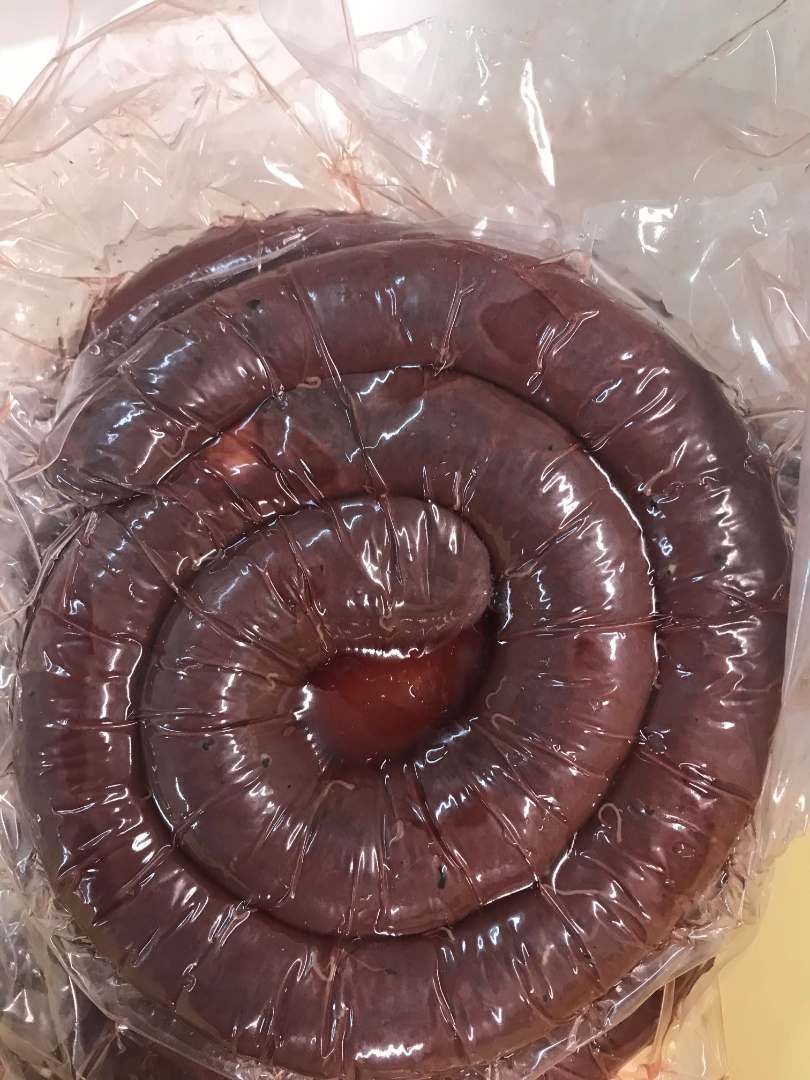
France – Black Pudding – Listeria monocytogenes

Gov france

Identification information of the recalled product

  • Product category Feed
  • Product subcategory Others
  • Product brand name meadow pig
  • Model names or references blood sausage breaststroke
  • Identification of products
    Batch Date
    M30670006 Use-by date 03/27/2023
  • Packaging under a vacuum
  • Storage temperature Product to be stored in the refrigerator
  • Health mark En 22 259 033 CE
  • Geographic area of ​​sale Whole France
  • Distributors organic stores and supermarkets

Practical information regarding the recall

  • Reason for recall demonstration of the presence of Listeria monocytogenes.
  • Risks incurred by the consumer Listeria monocytogenes (causative agent of listeriosis)

Italy- gold equine Mince? g 400 atm – Listeria monocytogenes

Salute

Brand : Coppiello Giovanni srl

Name : gold equine fraying g 400 atm

Reason for reporting : Remind for microbiological risk

Date of publication : 17 March 2023

Documentation

Documentation

Austria – Mayflower anchovy rings in olive oil 50g – Histamine

AGES

During an official sampling of Mayflower anchovy rings in olive oil 50g, marketed by IMGRO GmbH, Untere Donaustraße 11, A-1020 Vienna, increased histamine levels were found. The corresponding batch R02L21 with a best-before date of 06/02/2023 was assessed as harmful and therefore not safe. As a result, we are recalling the affected batch of this item:

Mayflower anchovy rings in olive oil 50g

Batch: R02L21

Best before date: 06/02/2023

The product is not suitable for consumption and can be returned by consumers (in all branches). Of course, customers will also be reimbursed the purchase price without proof of purchase.

The distributor IMGRO GmbH fulfills its responsibility according to the food law regulations and has therefore initiated a recall of the product.

original recall

RASFF Alerts- Salmonella – Polish Chicken Products – Black Pepper -Chicken – Mussels – Poultry Meat Preparations – Chilled Chicken Legs with Back Bone – Frozen Pig Small Intestine – Frozen Shrimps

RASFF

Salmonella spp. in black pepper from Brazil in Germany

RASFF

Salmonella enterica ser. Bovismorbificans (in 1 out of 5 samples /25g) in chilled chicken leg quarters from Poland, via Lithuania in Latvia

RASFF

Salmonella spp. in black pepper from Brazil in Germany

RASFF

Salmonella in chicken from Latvia in Sweden

RASFF

Salmonella enteritidis in chilled chicken from Poland in the Czech Republic

RASFF

Salmonella in mussels from The Netherlands in Belgium

RASFF

Salmonella enterica ser. Enteritidis (present /25g) in chilled chicken fillets from Poland in the Czech Republic

RASFF

Salmonella enterica ser. Enteritidis (present /25g) in chilled chicken fillets from Poland in the Czech Republic

RASFF

Salmonella in poultry meat preparations from Belgium in Luxembourg

RASFF

Salmonella enterica ser. Bovismorbificans in chilled chicken legs with back bone from Latvia in Estonia

RASFF

Salmonella spp. and high levels of recontamination germs in frozen shrimps from Bangladesh, via the Netherlands in Germany

RASFF

Salmonella in frozen pig small intestine from Lithuania, via the Netherlands in Germany

Research – Why it’s hard to tell what gave you food poisoning

Medical Express

Soon after eating a kale salad, your stomach churns and you need to run to the nearest bathroom. There must have been something in the salad to make you sick—right?

Probably not. While a few gut-unfriendly pathogens make their presence known immediately, the most common culprits in the United States—e. coli, salmonella, norovirus and campylobacter—lurk in your bowels for several hours or days before the symptoms of food poisoning appear.

It takes time for the invaders to multiply in your intestines before you experience the telltale nausea,  and vomiting, explained Denise Monack, Ph.D., a professor of microbiology and immunology.

“If several people eat the same contaminated food,” Monack said, “some may get sick; some may not. And those who get sick will start to feel the effects at different times—a day later, or several days later.”

It depends on a variety of factors, she said, individual gut microbiomes, what other foods people ate, how much of the pathogen they consumed and the strength of their immune systems.

The upshot: If you suspect food poisoning, you’re unlikely to know the cause. The turkey sandwich you chowed down at a deli last week could be the guilty party just as easily as the fruit smoothie you made for breakfast yesterday.