Category Archives: Technology

Research -Effect of Silver Nanoparticles on the Morphology of Toxoplasma gondii and Salmonella braenderup

Hindawi

The study of silver nanoparticles (AgNPs) has recently increased due to the different antimicrobial properties that have been evaluated. Studies have shown that AgNPs decrease the cell viability of some parasitic species and inhibit bacterial growth and biofilm formation. Toxoplasma gondii is a parasite with different stages of development including the oocyst, and it can survive in the environment for a long time generating contamination of vegetables and water. This parasite has the ability to generate congenital toxoplasmosis and chorioretinitis in humans. Another human pathogen present in water is Salmonella braenderup, this bacterium, when consumed, causes gastroenteritis and typhoid fever. We evaluate the affectation that causes the AgNPs in oocysts of T. gondii and S. braenderup using fluorescence microscopy and scanning electron microscopy techniques. The results showed that at different ratios of AgNPs and microorganisms, as well as at different exposure time during the treatments, morphological alteration of the cell structure of oocysts of T. gondii and S. braenderup was evidenced, suggesting a potential treatment method for the inhibition of the viability of these microorganisms.
Research – Inactivation of Salmonella and Shiga toxin-producing Escherichia coli (STEC) from the surface of alfalfa seeds and sprouts by combined antimicrobial treatments using ozone and electrolyzed water

Science Direct

Individual chemical and non-chemical treatments have failed to disinfect alfalfa seeds and sprouts from pathogens thoroughly. This study investigated the disinfection of alfalfa seeds and sprouts using a procedure combining ozone with acidic (pH 3.0) electrolyzed water (AEW). Inoculated alfalfa seeds with a cocktail of 3 strains Salmonella and 3 strains of STEC were treated sequentially with aqueous ozone followed by AEW. Treatment started by immersing the samples into ozonated water (5 mg/L ozone) for 15 or 20 minutes with persistent oxygen feeding pressurized with 10 psi. The samples then were immersed in 1 L of AEW for 15 min. Salmonella and STEC were significantly (P < 0.05) reduced by 3.6 and 2.9 log CFU/g on seeds respectively, and by 3.1 and 3.0 log CFU/g reduction on sprouts. Significant differences (P < 0.05) were found in the magnitude of the log reduction between Salmonella and STEC on seeds and between seeds and sprouts. Using combined treatments showed no significant changes in the quality, including shelf life, weight, and color in sprouts as compared to controls. The findings suggest that the combination of ozone and AEW is effective in inactivation of Salmonella and STEC on alfalfa seeds and sprouts with no adverse effects on sprouts quality.

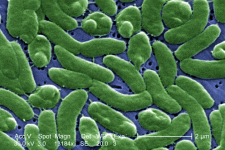
Research – Effect of Ploidy on Vibrio parahaemolyticus and Vibrio vulnificus Levels in Cultured Oysters

JFP Vibrio_vulnificus_01

Vibrio parahaemolyticus and V. vulnificus are naturally occuring human pathogenic bacteria commonly found in estuarine environments where oysters are cultured. The use of triploid oysters has increased, due to their rapid growth rate and that they maintain a high quality throughout the year. Previous work suggested levels of Vibrio spp. may be lower in triploid oysters, as compared to diploids. Therfore, this study aimed to determine if there is a difference in the abundances of V. parahaemolyticus and V. vulnificus between half-sibling diploid and triploid oysters. In four trials, 100 individual oysters (either iced or temperature abused) were analyzed for V. parahaemolyticus and V. vulnificus using direct plating followed by colony hybridization. Mean levels of V. parahaemolyticus in iced and abused diploid oysters were 3.55 and 4.21 log CFU/g, respectively. Mean levels in iced and abused triploid oysters were 3.49 and 4.27 log CFU/g, respectively. Mean levels of V. vulnificus in iced and abused diploid oysters were 3.53 and 4.56 log CFU/g, respectively. Mean levels in iced and abused triploid oysters were 3.54 and 4.55 log CFU/g, respectively. The differences in Vibrio spp. abundances between diploid and triploid oysters was not significant (p>0.05). However, the differences across treatments were significant (p<0.05), with the exception of V. parahaemolyticus levels in trial 3 (p=0.83). Variation between individual oysters was also observed, with 12 of 808 measurements being outside of the 95 th percentile. This phenomenon of occasional statistical outliers (“hot” or “cold” oysters) has been previously described and supports the appropriateness of composite sampling to account for inherent animal variability. In summary, the data indicate that abundances of V. parahaemolyticus and V. vulnificus are not dependent on the ploidy of cultured oysters, but vary with the type of handling.


Research – Evaluation of weakly acidic electrolyzed water and modified atmosphere packaging on the shelf life and quality of farmed puffer fish (Takifugu obscurus ) during cold storage

Wiley Online

The combined effect of weakly acidic electrolyzed water (WAEW) and modified atmosphere packaging (MAP) treatments on the quality of puffer fish (Takifugu obscurus ) during cold storage was studied on aspects of microbiological activity, texture, total volatile basic nitrogen (TVB‐N), trimethylamine (TMA), free amino acids (FAAs), thiobarbituric acid reactive substance (TBARS), ATP‐related compounds and value, volatile organic compounds (VOCs), and organoleptic properties. As a result, significantly ( < .05) higher inhibitory effects on total viable counts (TVC), H2S‐producing bacteria (including Shewanella putrefaciens ), Pseudomonas spp., and lactic acid bacteria (LAB) were observed in WAEW‐treated puffer fish packaged in 60%CO2/5%O2/35%N2 atmosphere than that in air package and vacuum package with/without WAEW‐treated samples. In addition, chemical results showed that WAEW together with MAP treatments were highly efficient in maintaining lower TVB‐N, TMA, and TBARS values in refrigerated puffer fish. Moreover, the presence of WAEW combined with MAP treatments showed positive effects on retarding the relative content of fishy flavor compounds, such as 1‐octen‐3‐ol, 1‐penten‐3‐ol, hexanal, heptanal, nonanal, decanal, ()‐2‐octenal, and 2,3‐butanedione. As a whole, the combined effect of WAEW and MAP on refrigerated puffer fish is advisable to maintain better quality and extend the shelf life.

Research – Combination of ultraviolet light‐C and clove essential oil to inactivate Salmonella Typhimurium biofilms on stainless steel

Wiley Online

Salmonella typhimurium is able to form biofilms as a resistance mechanism against antimicrobials; therefore, it represents a problem for assuring food safety and highlights the importance of research on anti‐biofilm technologies. In this study, S. typhimurium biofilms were inactivated with the combination of clove essential oil (CEO) and ultraviolet light (UV‐C). The volatile composition of the CEO determined by gas chromatography showed eugenol as the major constituent (82%). A combination of CEO with UV‐C achieved a complete bacterial reduction (6.8 log/cm2) on biofilms with doses of 1.2 mg/ml and 76.41 mJ/cm2, respectively. Individually, the CEO at 1.2 mg/ml caused a reduction of 1.8 log CFU/cm2 of attached bacteria cells on stainless steel, while UV‐C individually used at 620.4 mJ/cm2 caused a 2.9 log CFU/cm2 reduction compared to control biofilms. In conclusion, this study demonstrated a synergistic effect of combining CEO and UV‐C irradiation to inactivate biofilms of S. typhimurium .

Research – Antibacterial activity and mechanism of Litsea cubeba essential oil against food contamination by Escherichia coli and Salmonella enterica

Wiley Online

Litsea cubeba essential oil (LC‐EO) has been reported as antibacterial agents, but there are few studies about its possible antibacterial mechanism. The antibacterial activities and the underlying mechanisms of LC‐EO against Escherichia coli O157: H7 and Salmonella enterica were investigated. The results showed that the LC‐EO was more effective against gram‐negative bacteria. The inhibition zone for E. coli O157: H7 and S. enterica were 3.1 ± 0.8 and 4.5 ± 0.6 mm, respectively. The minimum inhibitory concentration of LC‐EO against both bacteria was 0.9 μg/ml, while the minimum bactericidal concentrations were 4.5 and 9 μg/ml. Gas chromatography–mass spectrometry analysis confirmed that citral (86.8%) was the main component of LC‐EO. The results of a time–kill analysis illustrated that treatment with LC‐EO led to a rapid decrease in viable bacterial cell number. The release of electrolytes and nucleic acids from the bacterial cells increased with the dose of LC‐EO. Propidium iodide uptake revealed that LC‐EO caused cell membrane damage. Scanning electron and transmission electron microscopy showed that LC‐EO caused damage to the cell walls and membranes, resulting in cell deformation, atrophy, and large central voids. Thus, LC‐EO may provide the basis for the development of new natural food preservatives.

Research – Effectiveness and Functional Mechanism of a Multicomponent Sanitizer against Biofilms Formed by Escherichia coli O157:H7 and Five Salmonella Serotypes Prevalent in the Meat Industry

Journal of Food Protection

ABSTRACT

Biofilm formation by Escherichia coli O157:H7 and Salmonella enterica at meat processing plants poses a potential risk of meat product contamination. Many common sanitizers are unable to completely eradicate biofilms formed by these foodborne pathogens because of the three-dimensional biofilm structure and the presence of bacterial extracellular polymeric substances (EPSs). A novel multifaceted approach combining multiple chemical reagents with various functional mechanisms was used to enhance the effectiveness of biofilm control. We tested a multicomponent sanitizer consisting of a quaternary ammonium compound (QAC), hydrogen peroxide, and the accelerator diacetin for its effectiveness in inactivating and removing Escherichia coli O157:H7 and Salmonella enterica biofilms under meat processing conditions. E. coli O157:H7 and Salmonella biofilms on common contact surfaces were treated with 10, 20, or 100% concentrations of the multicomponent sanitizer solution for 10 min, 1 h, or 6 h, and log reductions in biofilm mass were measured. Scanning electron microscopy (SEM) was used to directly observe the effect of sanitizer treatment on biofilm removal and bacterial morphology. After treatment with the multicomponent sanitizer, viable E. coli O157:H7 and Salmonella biofilm cells were below the limit of detection, and the prevalence of both pathogens was low. After treatment with a QAC-based control sanitizer, surviving bacterial cells were countable, and pathogen prevalence was higher. SEM analysis of water-treated control samples revealed the three-dimensional biofilm structure with a strong EPS matrix connecting bacteria and the contact surface. Treatment with 20% multicomponent sanitizer for 10 min significantly reduced biofilm mass and weakened the EPS connection. The majority of the bacterial cells had altered morphology and compromised membrane integrity. Treatment with 100% multicomponent sanitizer for 10 min dissolved the EPS matrix, and no intact biofilm structure was observed; instead, scattered clusters of bacterial aggregates were detected, indicating the loss of cell viability and biofilm removal. These results indicate that the multicomponent sanitizer is effective, even after short exposure with dilute concentrations, against E. coli O157:H7 and S. enterica biofilms.

HIGHLIGHTS
  • No viable biofilm cells were detected after treatment with the multicomponent sanitizer.
  • Prevalence of both pathogens was low after treatment with the multicomponent sanitizer.
  • SEM analysis revealed that treatment dissolved the EPS matrix and destroyed the biofilm.

Research – Examination of the Culturable Microbiota from Low-Moisture Foods Imported into Canada for Antibacterial Activity against Listeria monocytogenes

Journal of Food Protection

ABSTRACT

Listeria monocytogenes, a resilient and ubiquitous foodborne pathogen, is associated with a high case-fatality rate in humans. This study investigated the culturable microbiota of low-moisture foods (LMFs) imported into Canada to see how well bacteria isolated from these foods could inhibit or inactivate the growth of L. monocytogenes. Imported LMFs were acquired from various supermarkets in the Greater Toronto Area (Ontario, Canada). The foods included dried apples, bee pollen, cumin seeds, date fruits, fennel seeds, pistachios, raisins, and seaweed. Bacterial strains were isolated from the foods using blood agar and then screened using an in-house-designed growth inhibition plate assay against L. monocytogenes. The inhibitory strains detected were then identified using 16S rRNA sequencing. Diverse bacteria were recovered from the foods; 236 isolates belonging to 122 observed phenotypes were obtained. From the inhibition plate assays, 10 of the 11 imported LMFs harbored inhibitory strains against L. monocytogenes, whereby 48 of the collected isolates (20%) were found to produce a zone of inhibition against this pathogen. The inhibitory strains belonged to six genera (Acinetobacter, Aerococcus, Bacillus, Lysinibacillus, Paenibacillus, and Sporosarcina) and 15 unique species. Among all foods tested, the date fruit microbiota displayed the greatest number and diversity of anti–L. monocytogenes inhibitory strains. Overall, it was found that the culturable microbiota of LMFs, imported into Canada, possess bacterial members that can inhibit the growth of L. monocytogenes. These results could lead to the discovery of either novel antimicrobial metabolites or beneficial anti–L. monocytogenes bacteria that could be added to foods to inactivate and/or control L. monocytogenes.

HIGHLIGHTS
  • Modification to an inhibition plate assay detects anti-Listeria bacteria more rapidly.
  • Unconventional anti-Listeria genera, such as Lysinibacillus, were discovered.
  • Date fruit microbiota warrants further investigation for anti-Listeria applications.
  • Isolated bacteria from low-moisture foods are diverse and can inhibit L. monocytogenes growth.

Research – Effect of Peracetic Acid Solutions and Lactic Acid on Microorganisms in On-Line Reprocessing Systems for Chicken Slaughter Plants

Journal of Food Protection

ABSTRACT

During poultry slaughter and processing, microbial cross-contamination between individual chickens is possible, as well as from one slaughter animal to the next without direct contact. One option for reducing the risk of cross-contamination is to decrease the number of microorganisms on contact surfaces by using disinfectants. The aim is to decontaminate the surfaces coming into direct contact with the carcasses. In the present study, the effectiveness of different disinfectants was investigated in laboratory settings, simulating the conditions in the slaughterhouses and in a chicken slaughterhouse. For this, an artificial residue substance (consisting of yeast extract, albumin, and agar) was developed, tested, and included in the assays. Two disinfectants were tested under laboratory conditions: lactic acid (5 and 6.67%) and peracetic acid (0.33 and 0.5%). At the slaughterhouse, peracetic acid (0.021%) was used. In the laboratory tests, it was found that the peracetic acid solution had the highest disinfection potential with respect to an Escherichia coli strain (reduction >4 log CFU mL−1) at 0.5% without an artificial residue substance. The tested lactic acid solutions also showed the highest disinfection potential against a Pseudomonas aeruginosa strain, without an artificial residue substance. When applying the artificial residue substance, the reduction potential of lactic acid and peracetic acid was decreased to less than 1.4 log CFU mL−1. Application of peracetic acid in the slaughterhouse reduced the number of total aerobic bacteria by more than 4 log CFU mL−1 and the number of Enterobacteriaceae by more than 3 log CFU mL−1, depending on the place of sampling.

HIGHLIGHTS
  • Peracetic acid and lactic acid decreases E. coli and P. aeruginosa numbers in vitro.
  • Sanitation in place reduces the number of bacteria in a chicken slaughterhouse.
  • The number of total aerobic bacteria and Enterobacteriaceae was significantly reduced.

Research – Phage Biocontrol Improves Food Safety by Significantly Reducing the Level and Prevalence of Escherichia coli O157:H7 in Various Foods

Journal of Food Protection

ABSTRACT

Management of Shiga toxin–producing Escherichia coli (STEC), including E. coli O157:H7, in food products is a major challenge for the food industry. Several interventions, such as irradiation, chemical disinfection, and pasteurization, have had variable success controlling STEC contamination. However, these interventions also indiscriminately kill beneficial bacteria in foods, may impact organoleptic properties of foods, and are not always environmentally friendly. Biocontrol using bacteriophage-based products to reduce or eliminate specific foodborne pathogens in food products has been gaining attention due to the specificity, safety, and environmentally friendly properties of lytic bacteriophages. We developed EcoShield PX, a cocktail of lytic bacteriophages, that specifically targets STEC. This study was conducted to examine the efficacy of this bacteriophage cocktail for reducing the levels of E. coli O157:H7 in eight food products: beef chuck roast, ground beef, chicken breast, cooked chicken, salmon, cheese, cantaloupe, and romaine lettuce. The food products were challenged with E. coli O157:H7 at ca. 3.0 log CFU/g and treated with the bacteriophage preparation at ca. 1 × 10⁶, 5 × 10⁶, or 1 × 10⁷ PFU/g. Application of 5 × 10⁶ and 1 × 10⁷ PFU/g resulted in significant reductions (P < 0.05) in E. coli O157:H7 levels of up to 97% in all foods. When bacteriophages (ca. 1 × 10⁶ PFU/g) were used to treat lower levels of E. coli O157:H7 (ca. 1 to 10 CFU/10 g) on beef chuck roast samples, mimicking the levels of STEC found under real-life conditions in food processing plants, the prevalence of STEC in the samples was significantly reduced (P < 0.05) by ≥80%. Our results suggest that this STEC-targeting bacteriophage preparation can result in significant reduction of both the levels and prevalence of STEC in various foods and, therefore, may help improve the safety and reduce the risk of recalls of foods at high risk for STEC contamination.

HIGHLIGHTS
  • Shiga toxin–producing E. coli is a major food safety challenge for the food industry.
  • EcoShield PX bacteriophage cocktail reduced E. coli O157:H7 levels in foods by up to 97%.
  • The bacteriophage cocktail reduced the prevalence of E. coli O157:H7 in foods by ≥80%.