Category Archives: Salmonella

USA – Salmonella Recall – Fennel Seeds

Food Poison Journal

Mountain Rose Herbs (MRH) of Eugene, Oregon is recalling all sizes ranging from 4 oz. to 50 lbs. of its Fennel Seed Whole, Lot #25031, because they have the potential to be contaminated with Salmonella, an organism which can cause serious and sometimes fatal infections in young children, frail or elderly people, and others with weakened immune systems.

No illnesses have been reported to date.

USA – Pet Chicks sicken hundreds with Salmonella since January

Food Poison Journal

Since the last update on June 13, 2019, illnesses in an additional 489 people and eight states have been added to this investigation. Five additional Salmonella serotypes have also been added.

A total of 768 people infected with the outbreak strains of Salmonella have been reported from 48 states. Illnesses started on dates from January 1, 2019, to July 6, 2019. Ill people range in age from less than one year to 99 years, with a median age of 30 years. One hundred fifty-six ill people (24%) of 648 people with information are children younger than 5 years.  Fifty-seven percent are female. Of 419 people with information available, 122 (29%) have been hospitalized. Two deaths have been reported, one from Texas and one from Ohio.

USA – Agroson’s Will Not Recall Cavi Papayas Likely Linked to Salmonella Outbreak

Food Poisoning Bulletin

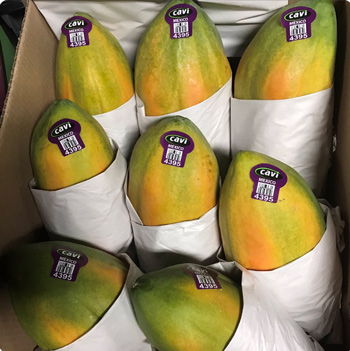
The FDA has updated the Salmonella Uganda outbreak likely linked to fresh papayas imported from Mexico, stating that they have asked Agroson’s LLC, the distributor of the Cavi brand of papayas, to recall that product. Agroson’s has refused to initiate a recall.

USA – Outbreak Investigation of Salmonella Uganda Likely Linked to Whole, Fresh Papayas, June 2019 – Update

FDA

July 19, 2019

The U.S. Food and Drug Administration (FDA), along with the Centers for Disease Control and Prevention (CDC), and state and local partners, are investigating a multistate outbreak of Salmonella Uganda illnesses likely linked to Cavi Brand whole, fresh papayas.

The FDA has asked Agroson’s LLC, the exclusive distributor of this brand, to conduct a voluntary recall of Cavi brand papayas. Agroson’s LLC refused to initiate a recall. FDA contacted wholesale customers of Agroson’s LLC to ensure the fruit was no longer available for sale, has been discarded, or not further processed or frozen.  FDA is doing this to protect consumers as it pursues additional protective and regulatory actions.

Recommendations

Cavi papayas

For Consumers, Restaurants, and Retailers:

Consumers in all states should not eat any Cavi brand whole, fresh papayas and should throw them away. If consumers are unable to determine the brand of papayas, the product should be thrown away. Retailers, restaurants, and other food service providers in all states should not serve or sell whole, fresh papayas under the Cavi brand, which are distributed by Agroson’s LLC.

Consumers no longer need to avoid whole, fresh papayas, with the exception of Cavi brand papayas.

For Restaurants, Retailers, Importers, Suppliers, and Distributors in All States:

The FDA strongly advises importers, suppliers, and distributors, as well as restaurants, retailers, and other food service providers from all states to not sell or distribute whole, fresh papayas from Agroson’s LLC that are labeled under the Cavi brand.

Based on this new information, the hold FDA advised on June 28, 2019 for all imported Mexican papayas is no longer necessary.

Distributors don’t need to withhold Mexican papayas from distribution, with the exception of the Cavi brand.

Research – Reducing pathogenic bacteria during slaughtering and processing

Poultry World

Reducing rates of foodborne outbreaks in humans caused by salmonella and campylobacter continues to be a major task across the globe.

Figures from 2016 showed there were more than 356,000 cases of human zoonoses reported across the European Union with Campylobacteriosis (246,307) and Salmonellosis (94,530) by far the most predominant.

Earlier this month, Ireland reported its highest annual level of campylobacteriosiswith 3,030 cases – an increase of 8.7% compared with 2,786 patients in 2017. The highest rates of notification was in the 0-4 year age group.

Similary, in Holland the incidence of campylobacteriosis increased from 33 cases per 1,000 inhabitants in 2017 to 35 last year, with the country reporting 71,000 cases in 2018.

But now Norwegian firm DECON SFS believes it has manufactured a decontamination unit that can remove more than 99% of pathogenic bacteria during poultry meat slaughtering and processing.

And the results have been so successful that the company has garnered backing from the European Commission’s Horizon 2020 fund through grant support totalling €50,000.

Russia – Moscow: Sandwich vending machines linked to dozens of food poisoning cases

Outbreak News Today

The Moscow Department of Rospotrebnadzor reported this week that dozens of people have been sickened after eating food from vending machines in Moscow, according to a Tass report.

As of Wednesday, at least 51 people developed symptoms of food poisoning and 26 required hospitalization.

“According to the latest data, as of 14:00 on July 17, 51 cases of acute intestinal infections were registered, the increase in the number of registered cases is associated with a late request for medical care for patients who previously consumed products under the Healthy food brand (legal entity Halfi Food Production – TASS’s note.) All the sick are adults. 26 people were hospitalized, six people were previously discharged from the previously hospitalized ones”, the report states.

The outbreak was first recognised earlier this month. Salmonella has been implicated in most cases of illness.

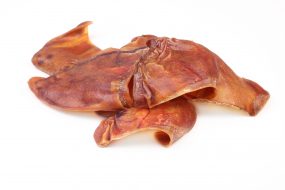
USA – Outbreak of Multidrug-Resistant Salmonella Infections Linked to Contact with Pig Ear Dog Treats

CDC

Latest Outbreak Information
Illustration of a clipboard with check marks on it.
At A Glance
Photo of some pet treats.
  • Since the last update on July 3, 2019, 48 ill people and three additional Salmonella serotypes have been added to this investigation. Additional Salmonella serotypes include Infantis, London, and Newport.
  • A total of 93 people infected with the outbreak strains of Salmonella have been reported from 27 states.
    • Twenty ill people have been hospitalized. No deaths have been reported.
  • Epidemiologic evidence indicates that contact with pig ear dog treats is the likely source of this outbreak.
    • In interviews, 63 (90%) of 70 ill people reported contact with a dog before getting sick.
      • Of 49 people with available information, 34 (69%) reported contact with pig ear dog treats or with dogs who were fed pig ear dog treats.

Recall

  • On July 3, 2019, Pet Supplies Plus recalledexternal icon bulk pig ears stocked in open bins because they might be contaminated with Salmonella.
  • Do not feed recalled pig ears to your dog. Throw them away in a secure container so that your pets and other animals can’t eat them.
  • Even if some of the recalled pig ears were fed to your dog and no one got sick, do not continue to feed them to your dog.
    • Wash containers, shelves, and areas that held the recalled pig ear dog treats with hot, soapy water.
  • A common supplier of pig ear treats in this outbreak has not been identified. Pet owners can take steps to keep their families healthy while feeding pets.
  • This investigation is ongoing, and CDC will provide updates when more information is available.
Advice to Dog Owners

UK – Scotland – Salmonella and E. coli behind six outbreaks each last year in Scotland

Food Safety News

Shiga-toxin producing E. coli and Salmonella both caused six outbreaks last year in Scotland, according to figures from Health Protection Scotland.

Data comes from ObSurv, a surveillance system established in 1996 for general outbreaks of infectious intestinal disease in the country. It does not include those where infection is thought to have been acquired overseas.

The six outbreaks of Shiga-toxin producing E. coli (STEC) in 2018 were due to three different serogroups; three were O157, two were O145 and one was O26. A total of 22 people were affected with three outbreaks recording five cases. A source was not found for any of the outbreaks.

The total is comparable to the number of outbreaks in 2013 to 2017, when there was an average of five and a range of three to nine per year.

In five outbreaks the main mode of transmission was foodborne and in the sixth it was a combination of foodborne and person to person.

RASFF Alert – Foodborne Outbreak Salmonella – Chilled Cooked Pork Preparation

RASFF-Logo

RASFF – foodborne outbreak suspected to be caused by and Salmonella (present /25g) in chilled cooked pork preparation from Romania in Ireland

RASFF Alerts – Salmonella – Frozen Sliced Raw Chicken – Frozen Salted Chicken Half Breasts – Black Pepper – Chicken Meat – White Mustard Seeds – Egg Powder – Dried Whole Chilli – Chilled Swordfish – Chicken Eggs

RASFF-Logo

RASFF – Salmonella (present /25g) in frozen sliced seasoned raw chicken from Poland in France

RASFF – Salmonella (present in 1 out of 5 samples /25g) in frozen salted chicken half breasts from Brazil in the UK

RASFF – Salmonella in black pepper from Brazil in France

RASFF – Salmonella enterica ser. Enteritidis (present /25g) in chilled chicken meat from Belgium, with raw material from the Netherlands in Belgium

RASFF – Salmonella (in 1 out of 5 samples /25g) in black pepper from Brazil in France

RASFF – Salmonella enterica ser. Typhimurium (in 4 out of 5 samples /25g) in white mustard seeds from Poland in Poland

RASFF – Salmonella enterica ser. Bareilly (present /25g) in egg powder from the Czech Republic in the Czech Republic

RASFF – Salmonella enterica ser. Virchow (presence /25g) in dried whole chilli from Vietnam in Finland

RASFF – Salmonella (presence /25g) and high counts of Enterobacteriaceae (27000 CFU/g) and of Pseudomonas spp. (6400000 CFU/g) in chilled swordfish from Sri Lanka in Germany

RASFF – Salmonella enterica ser. Enteritidis (presence /25g) in chicken eggs from France in France