Category Archives: Salmonella

450 sick in Ferrero chocolate Salmonella outbreak

Food Safety News

A Salmonella outbreak linked to Kinder chocolate has sickened more than 450 people, based on the latest figures.

Only 10 cases have been reported in the month since the previous European Centre for Disease Prevention and Control (ECDC) update, bringing the total to 455 as of mid-July.

The outbreak has hospitalized a high proportion of people, mostly children younger than 10 years of age, and some had severe clinical symptoms including bloody diarrhea.

The latest monophasic Salmonella Typhimurium case is from the United Kingdom with a sampling date of June 16. Concerns were previously raised by authorities that potentially contaminated chocolate could still be on sale despite a recall in April.

The UK has the most patients with 128 followed by France with 121. Belgium has recorded 66 sick people, 49 are ill in Switzerland, 34 in Germany, 18 in Ireland and 14 in Austria. There are still four cases in Canada and one in the United States.

Sweden, Spain, Norway, Netherlands, Luxembourg, Italy, Denmark and Czech Republic all have single-figure case numbers.

USA – USDA Announces Action to Declare Salmonella an Adulterant in Breaded Stuffed Raw Chicken Products

FSIS USDA

The U.S. Department of Agriculture’s (USDA) Food Safety and Inspection Service (FSIS) is announcing that it will be declaring Salmonella an adulterant in breaded and stuffed raw chicken products.

“Food safety is at the heart of everything FSIS does,” said Agriculture Secretary Tom Vilsack. “That mission will guide us as this important first step launches a broader initiative to reduce Salmonella illnesses associated with poultry in the U.S.”

“Today’s announcement is an important moment in U.S. food safety because we are declaring Salmonella an adulterant in a raw poultry product,” said Sandra Eskin, USDA Deputy Under Secretary for Food Safety. “This is just the beginning of our efforts to improve public health.”

By declaring Salmonella an adulterant in these products, FSIS will be able to ensure that highly contaminated products that could make people sick are not sold to consumers. Since 1998, breaded and stuffed raw chicken products have been associated with up to 14 outbreaks and approximately 200 illnesses. Products in this category are found in the freezer section and include some chicken cordon bleu or chicken Kiev products. These products appear cooked, but they are heat-treated only to set the batter or breading and the product contains raw poultry. Continual efforts to improve the product labeling have not been effective at reducing consumer illnesses.

Belgium – Delhaize brand Tied Turkey Roast. – Salmonella

AFSCA

Delhaize recall
Product: Delhaize brand Tied Turkey Roast.
Problem: presence of Salmonella.
In collaboration with the FASFC, Delhaize has decided to withdraw these products from the market and to recall them from consumers due to the presence of Salmonella.


Product info:

Name: ROTI FILET TURKEY FICELE
Brand: Delhaize
EAN code: 2223870000000 Best before
date (BBD): 07-08-2022 Marketing
period: 29/07/2022

Delhaize performs hundreds of internal quality checks every day in order to guarantee the quality and food safety of its products at all times.

In the meantime, Delhaize has already taken all affected products off the shelves and tightened checks on the product and the supplier. Customers who have purchased this product are asked not to consume it. Customers have the option of returning the product in question to the point of sale where they purchased it. Reimbursement for each affected item is guaranteed.

Other products of the same assortment are not affected and can therefore be consumed in complete safety. Delhaize would like to apologize for the inconvenience caused.

Advice and information for consumers:

What if you have already purchased the product?
Do not consume the product and return it to your Delhaize store. The products will be refunded to you.

For further information , customers can contact our Customer Service on the free number 0800/95 713 .

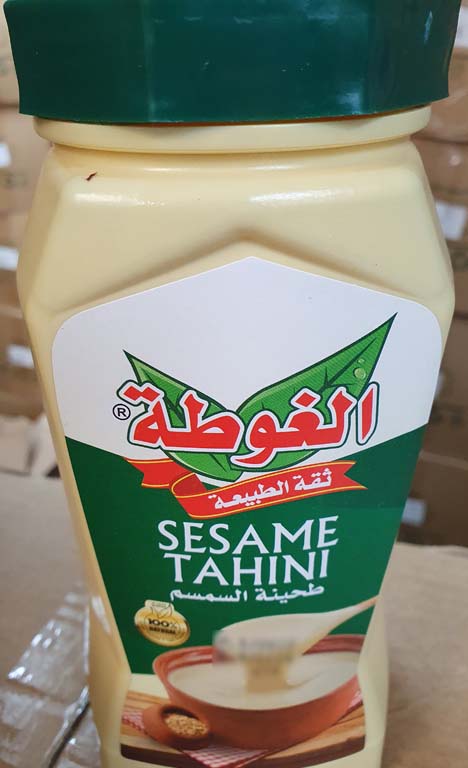
New Zealand – Algota brand Sesame Tahini – Salmonella

MPI

USA – Peas from Wisconsin Farmer’s Market Sicken Six with Salmonella

Food Poison Journal

kswfoodworld Salmonella

The Wisconsin Department of Health Services (DHS), in collaboration with the Department of Agriculture, Trade and Consumer Protection (DATCP) and local health departments, is working to investigate cases of Salmonella infection associated with shelled peas sold at Wisconsin farmers markets. The investigation shows that at least six people were infected with the same strain of Salmonella bacteria after purchasing shelled peas produced by Green Barn Farm Market of Ripon, Wisconsin.  The peas were sold at Green Barn Farm Market farm stands and farmers markets in Ripon, Green Bay, Madison, and Fond du Lac, as well as Green Valley Acres Farm and Company farm stand in Neenah. Shelled peas are loose, no longer in their pod.

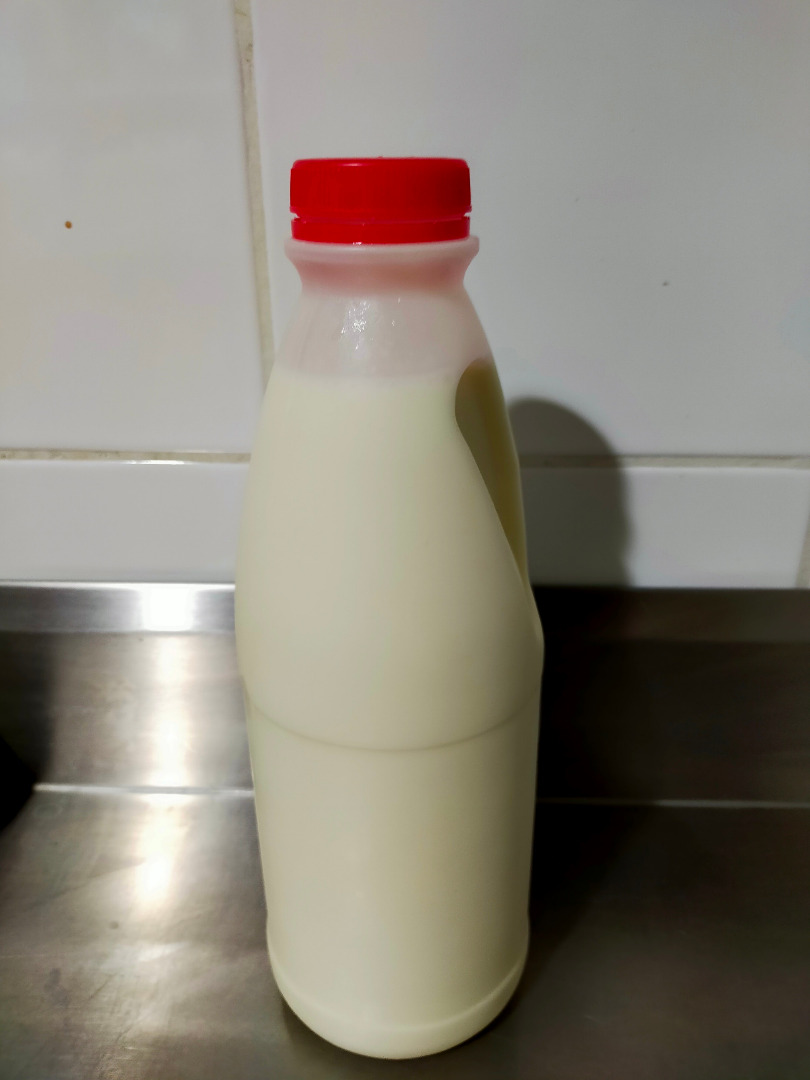
France – Organic raw milk -Salmonella

Gov france

Identification information of the recalled product

  • Product category Feed
  • Product subcategory Milk and dairy products
  • Product brand name The Valentine
  • Model names or references bulk raw milk
  • Identification of products
    Batch
    All lots
  • Packaging bulk
  • Marketing start/end date From 22/07/2022 to 29/07/2022
  • Storage temperature Product to be stored in the refrigerator
  • Further information milk sold in bulk at the store
  • Geographic area of ​​sale producer store GIE LA MUSETTE DE VALENTINE in Bourg les Valence
  • Distributors VALENTINE’S MUSETTE -avenue de lyon – 26500 BOURG LES VALENCE

Practical information regarding the recall

  • Reason for recall Salmonella detection during farm self-checking procedures
  • Risks incurred by the consumer Salmonella spp (causative agent of salmonellosis)

Germany – Tahin Halva in plastic tray with snap-on lid -Salmonella

LMW

Alert type: Food
Date of first publication: 08/02/2022
Product name:

Tahin Halva in plastic tray with snap-on lid

Manufacturer (distributor): Manufacturer: Türk Gida Kodeksine Uygun Üretilmistir.; Isletme Kayit No: TR-42-K003512 – Turkey Importer: WBZ Nord GmbH Banksstraße 1 – 28 20097 Hamburg
Reason for warning:

The product contains Salmonella of serogroup C.

Packaging Unit: 300g
Durability: 11/2023

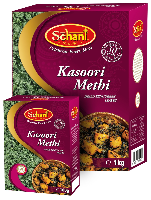
Germany – Schani Kasoori Methi (dried fenugreek leaves) – Salmonella

LMW

Schani_Kasoori_Methi.jpg

Manufacturer (distributor):

Global Foods Trading GmbH Am Winkelgraben 1A 64584 Biebesheim am Rhein

Reason for warning:

Detection of Salmonella spp.

Packaging Unit: 100g and 1kg
Durability: Best before 01/2024
Lot identification: 19FEB22X1/1
Further information:

Salmonella disease manifests itself within a few days after infection with diarrhoea, abdominal pain and occasionally vomiting and a slight fever. The symptoms usually subside on their own after a few days. Babies, small children, senior citizens and people with a weakened immune system in particular can develop more severe illnesses. Anyone who has eaten this food and develops severe or persistent symptoms should seek medical attention and report possible salmonella infection.

It makes no sense to seek preventive medical treatment without symptoms.
Further information on the pathogen can be found here: http://www.infection-protection.de/erregersteckbriefe/salmonellen

Reference is made to the attached customer information.

Manufacturer’s website:

Research – Thermal inactivation of Salmonella enterica and nonpathogenic bacterial surrogates in wheat flour by baking in a household oven 

Journal of Food Protection

Wheat flour has been implicated in recalls and outbreaks linked to Salmonella and pathogenic Escherichia coli. An instructional online video posted on a popular YouTube channel with over 20 million subscribers claimed that safe raw cookie dough could be made from flour baked in a household oven at 177°C (350°F) for 5 min but no evidence in support of that claim was provided. This study was conducted to assess thermal inactivation of two Salmonella strains, as well as Enterobacter aerogenes and Pantoea dispersa in wheat flour during home oven style baking. Wheat flour was inoculated with Salmonella Enteritidis PT 30, Salmonella Typhimurium PT 42 or their potential surrogates at high concentrations (4.8-6.1 log CFU/g) before baking in consumer-style convection oven (toaster oven) at 149, 177, and 204°C (300, 350, or 400°F) for up to 7 min. Flour was heated in aluminum tray with a maximum depth of ~2 cm. Heated wheat flour samples (5 g each) were enumerated in triplicate, and microbial concentration was expressed in log CFU/g. Thermal profiles of the geometric center of the wheat flour pile and air in the oven during the baking were recorded. Water activity of wheat flour samples was also measured before and after baking. Water activity of wheat flour decreased as baking temperature and time increased. Water activity values ranged from 0.30 to 0.06 after 7 min as oven temperature increased from 149 to 204°C. Thermal inactivation kinetics were linear until counts approached the limit of detection for all microorganisms. D-values for Salmonella and potential surrogate strains ranged from 1.86 to 2.13 min at 149°C air temperature, 1.66 to 1.92 min at 177°C air temperature, and 1.12 to 1.38 min at 204°C air temperature. Both Salmonella strains and surrogates showed similar inactivation patterns. Baking of wheat flour in household toaster ovens has potential as an inactivation treatment of pathogenic bacteria in consumer homes, despite its low water activity.

Research – Peroxyacetic Acid Effectiveness against Salmonella on Raw Poultry Parts is not Affected by Organic Matter

Journal of Food Protection

Organic matter (OM) accumulation is common in chill tanks used to decontaminate raw poultry parts during processing. Organic matter negatively affects the antimicrobial activity of chlorine-based compounds, but its effect on the antimicrobial effectiveness of peroxyacetic acid (PAA) on poultry meat has not been described. Therefore, this study evaluated the effect of OM on the efficacy of PAA solutions in simulated post-chill tanks to reduce Salmonella artificially inoculated onto chicken parts. Chicken thighs were inoculated with a five-strain cocktail of poultry-borne Salmonella enterica serovars at ca. 6 log10CFU/ml. Then, the thighs were immersed for 30 or 45 s in PAA solutions (500 or 1,000 ppm) with chicken slurry to simulate OM accumulation (0, 15 or 30 g/L). The thighs were rinsed with neutralizing buffered peptone water (100 ml) and rinsates were plated onto XLD agar. Experiments were performed in triplicate (3 thighs/treatment/replicate). Chemical oxygen demand (COD), total nitrogen (TN), and pH were measured as the water quality parameters of the PAA solutions before and after use. COD ranged from 2,905 mg/L in unused 500-ppm solutions without added OM to 6,290 mg/Lin used 1,000-ppm solutions with 30 g/L of OM. Initial TN was 42.5 ± 2.0 mg/L and 60.9 ± 8.3 mg/L for 15 and 30 g/L OM, which increased by 27 ± 17 mg/L after use. The pH of solutions ranged from 3.16 ± 0.14 to 3.42 ± 0.09 for the 1,000-ppm solutions and from 3.59 ± 0.06 to 3.96 ± 0.06 for the 500-ppm solutions. Mean Salmonella reductions were 0.9 ± 0.1 log10CFU/ml of rinsate for the 500-ppm PAA treatment and 1.1 ± 0.1 log10CFU/ml of rinsate for 1,000-ppm PAA treatment. Exposure time did not have a significant effect on the logarithmic reductions. There was no significant effect of OM concentration (p>0.05) on the reductions, indicating that the antimicrobial efficacy was not affected and that PAA solutions may continue to be reused as long as the PAA concentration is actively monitored.