Category Archives: Salmonella in Eggs

RASFF Alert – Salmonella – Polish Chicken Products – Mechanically Separated Meat -Cumin Powder – Whole Banana Chips – Mustard Seeds – Sesame Seeds – Black Pepper – Tahini/Halva

RASFF

Salmonella enteritidis in chilled poultry meat from Poland in Poland and Belgium

RASFF

Salmonella Infantis in poultry mechanically separated meat from Germany in the Netherlands

RASFF

Salmonella in cumin powder from India in Finland

RASFF

Salmonella Enteritidis in chicken quarters from Poland in the Czech Republic

RASFF

Salmonella in chilled chicken meat from Poland in France, Netherlands, Poland and the UK

RASFF

Salmonella Infantis in chilled chicken leg quarters from Poland in Latvia

RASFF

Salmonella Enterica ser. Enteritidis and Salmonella Infantis in chilled chicken meat from Poland in the Czech Republic

RASFF

Salmonella group C (in 5 out of 5 samples /25g) in chilled chicken hearts from Poland in Lithuania

RASFF

Salmonella spp. in fresh chicken broiler fillet from Poland in Lithuania

RASFF

Salmonella Typhimurium in turkey meat from Poland in Poland and Latvia

RASFF

Salmonella infantis in poultry meat from Poland in Italy

RASFF

Salmonella in whole banana chips from the Philippines in the Netherlands, Belgium, Denmark, Italy, Netherlands , Poland and South Africa

RASFF

Salmonella detected in mustard seed from Russia in Austria, Belgium, Finland, Netherlands, Germany, Spain, Switzerland and The Netherlands

RASFF

Salmonella in black pepper from Brazil in the Netherlands

RASFF

Salmonella Enteritidis in fresh chicken meat from Poland in Slovakia

RASFF

Salmonella Infantis in frozen dumplings from Lithuania in Ireland

RASFF

Salmonella Infantis in chicken from Poland, Latvia, Poland, Netherlands and Czech Republic

RASFF

Salmonella group C in Sesame seeds from Poland in Poland, Ireland, Norway, Spain and the UK

RASFF

Salmonella in Brazilian black pepper in the Netherlands

RASFF

Salmonella in tahini and halva from Syria in Germany, Norway and Sweden.

RASFF Alerts – Salmonella – Polish Chicken – Black Pepper – Tahini and Halva – Polish Turkey – Frozen Basil – Psyllium Fibres – Polish Eggs – Merguez Sausage

RASFF

Salmonella in Brazilian black pepper in the Netherlands

RASFF

Salmonella in tahini and halva from Syria in Sweden

RASFF

Salmonella in chilled pieces of turkey from Poland in Poland and the Netherlands

RASFF

Salmonella Takoradi in frozen basil from Belgium in Finland

RASFF

S. Saintpaul, S. Morehead and S. Freetown in black pepper from Brazil in Germany

RASFF

Salmonella spp in chilled meat from Belgium in Poland

RASFF

Salmonella enterica ser. Enteritidis (in 1 out of 5 samples /25g) in frozen poultry meat from Poland in Belgium

RASFF

Salmonella spp. in chicken neck skins from Poland in Poland, France, Netherlands and UK

RASFF

Salmonella Enteritidis in poultry meat from Poland in the Democratic Republic of Congo

RASFF

Salmonella Enteritidis in poultry meat from Poland in the Democratic Republic of Congo

RASFF

Salmonella enterica ser. Newport in psyllium fibres from India, via Germany in Finland

RASFF

Salmonella Enteritidis in chilled chicken meat from Poland in Poland, Germany and France

RASFF

Salmonella enterica ser. Enteritidis in chilled chicken meat from Poland in Poland, Lithuania, Latvia, Greece, Czech Republic, Netherlands and Romania

RASFF

Salmonella enteritidis in chicken products from Poland in France, UK and the Netherlands

RASFF

Salmonella in chilled Merguez sausage from Belgium in the Netherlands

RASFF

Salmonella Enteritidis in eggs (found on eggshells) from Poland in Germany

RASFF

Salmonella Infantis in chicken from Poland in France, Germany, Latvia, Lithuania, Oman, Poland and Slovakia

RASFF

Salmonella Enteritidis in fresh chicken meat from Poland in Germany, Netherlands, Poland and UK

RASFF

S. Kiambu and S. Minnesota in black pepper from Brazil in Germany

RASFF

Carcasses and elements of poultry meat – salmonella infantis from Poland in Latvia, Lithuania, Germany, France, Czech Republic, Italy, Netherlands and Poland


New Zealand – New Zealand Food Safety places precautionary controls on North Island egg producer – Salmonella Outbreak

MDPI

New Zealand Food Safety has placed movement controls on a North Island egg producer as a precautionary measure after environmental testing indicated Salmonella Enteritidis on the farm.

New Zealand Food Safety has been carrying out tracing and testing of poultry operations after Salmonella Enteritidis was found at an Auckland hatchery that supplies chicks to other operators, earlier this year.

Symptoms of Salmonella illness include abdominal cramps, diarrhoea, fever, headache, nausea and vomiting. It can be serious in people with reduced immunity, frail elderly, children under 2 years, and pregnant women.

New Zealand Food Safety director of food regulation Dr Paul Dansted said to date no eggs had tested positive.  However, it was possible that some eggs could contain Salmonella Enteritidis so it was prudent to provide advice to consumers.

“No product is leaving the farm at present while we carry out more investigations.

“It’s important to note the positive results are not from eggs, but from samples from within the farm.”

“While the risk is low, we are taking this precautionary action as we are not yet in a position to assure consumers that Salmonella Enteritidis is not in some eggs.”

There are key actions consumers can take to protect against Salmonella Enteritidis.

They include:

  • Keep eggs in the fridge after purchase.
  • Cook eggs thoroughly – until the white is completely firm and the yolk begins to thicken.
  • Wash your hands after handling eggs.
  • Consume eggs within the recommended date on the carton.
  • Don’t serve raw eggs to children under 2 years of age, pregnant woman, the frail and elderly, and people with low or compromised immune systems.
  • Keep surfaces and kitchen utensils clean and dry before and after handling eggs.
  • Use clean eggs free from dirt, faecal matter and cracks.

Last month, NZ Food Safety stopped 2 farms from sending eggs to sale after tests found Salmonella Enteritidis on their properties.

Media release: Food safety actions to protect consumers

“We have been conducting tests with the poultry industry and action will be taken where necessary to identify and manage any suspect flocks.”

NZ Food Safety is working closely with the Ministry of Health, which has been monitoring Salmonella Enteritidis cases in humans.

“To date, while there is no proven association between human illness and poultry meat and eggs, we continue to investigate.”

Dr Dansted said NZ Food Safety would continue to work with the poultry industry to assist it to manage the risk of Salmonella Enteritidis in commercial flocks and reduce the risk to consumers.

“Many countries have Salmonella Enteritidis in poultry flocks and manage the risk with on-farm prevention measures. By taking this pre-emptive action with the farm and informing people to handle and prepare food safely at home, we reduce the risk.”

Salmonellosis, the illness caused by Salmonella Enteritidis bacteria, can spread in a variety of ways outside of food, including contact with infected animals, material, or surfaces, and between persons.

If you have health concerns after consuming eggs or chicken, seek medical advice from your doctor or Healthline.

Resources

Frequently asked questions [PDF, 134 KB]

Director-General privileged statement regarding Section 289 of the Food Act [PDF, 837 KB]

Learn more about Salmonellosis – Ministry of Health

Clean, Cook, Chill for home food safety advice

Salmonella symptoms and advice

New Zealand – Salmonella Outbreak

Food Safety News

Officials in New Zealand are investigating a Salmonella outbreak that has sickened 35 people so far this year.

Salmonella Enteritidis sequence type 11 (ST 11) was first detected in 2019 in an outbreak traced to a restaurant in the Auckland region. Since May 2019, the number of patients associated with this strain is 101 and from 2019 it has been found in four other outbreaks.

The majority of people sick from January to April this year live in the Auckland region, according to the Institute of Environmental Science and Research (ESR).

New Zealand Food Safety found Salmonella Enteritidis at an Auckland poultry farm and there has been a rise in infections caused by this strain of Salmonella despite attempts to prevent contaminated eggs reaching consumers.

USA – Salmonella Outbreaks Linked to Backyard Poultry

CDC

Fast Facts
  • Illnesses: 163
  • Hospitalizations: 34
  • Deaths: 0
  • States: 43
  • Recall: No
  • Investigation status: Active
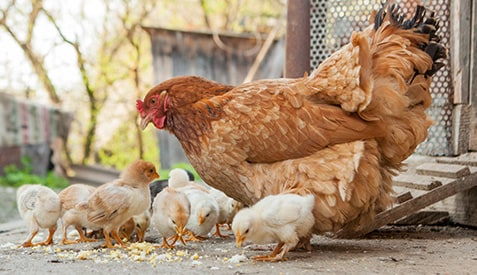
Backyard poultry with chickens eating

Backyard Poultry and Salmonella

Backyard poultry, like chicken and ducks, can carry Salmonella germs even if they look healthy and clean. These germs can easily spread to anything in the areas where they live and roam.

You can get sick from touching your backyard poultry or anything in their environment and then touching your mouth or food, and swallowing Salmonella germs.

What Backyard Flock Owners Should Do
  • Wash your hands
    • Always wash your hands with soap and water immediately after touching backyard poultry, their eggs, or anything in the area where they live and roam.
    • Use hand sanitizer if soap and water are not readily available. Consider having hand sanitizer at your coop.
  • Be safe around backyard flocks
    • Don’t kiss or snuggle backyard poultry, and don’t eat or drink around them. This can spread Salmonella germs to your mouth and make you sick.
    • Keep your backyard flock and supplies you use to care for them (like feed containers and shoes you wear in the coop) outside of the house. You should also clean the supplies outside the house.
  • Supervise kids around flocks
    • Always supervise children around backyard poultry and make sure they wash their hands properly afterward.
    • Don’t let children younger than 5 years touch chicks, ducklings, or other backyard poultry. Young children are more likely to get sick from germs like Salmonella.
  • Handle eggs safely
    • Collect eggs often. Eggs that sit in the nest can become dirty or break.
    • Throw away cracked eggs. Germs on the shell can more easily enter the egg though a cracked shell.
    • Rub off dirt on eggs with fine sandpaper, a brush, or a cloth. Don’t wash them because colder water can pull germs into the egg.
    • Refrigerate eggs to keep them fresh and slow the growth of germs.
    • Cook eggs until both the yolk and white are firm, and cook egg dishes to an internal temperature of 160°F to kill all germs.

Call your healthcare provider right away if you have any of these severe symptoms:

  • Diarrhea and a fever higher than 102°F
  • Diarrhea for more than 3 days that is not improving
  • Bloody diarrhea
  • So much vomiting that you cannot keep liquids down
  • Signs of dehydration, such as:
    • Not urinating (peeing) much
    • Dry mouth and throat
    • Feeling dizzy when standing up

Norway -Monitoring program 2020 – Monitoring and control of Salmonella in live animals, fresh meat and eggs

Mattilsynet

Since 1995, the Norwegian Food Safety Authority has carried out monitoring programs for Salmonella in live animals (cattle, pigs and poultry), fresh meat and eggs. The program documents that the incidence is very low compared to most other countries.

What did we investigate? The aim of the program is to ensure that food-producing animals, fresh meat and eggs from Norwegian domestic animals are virtually free of salmonella. The program also documents the very favorable salmonella situation Norway has, which in turn provides a basis for salmonella guarantees, ie when importing certain animals and certain animal products, the shipment must be examined for salmonella with a negative result in the country of dispatch before it can be sent to Norway. In the program, samples have been taken in herds, in the slaughterhouses and in downsizing companies.
Period: All year
What were we looking for? The samples were tested for Salmonella.
What did we find? In the program for 2020, one positive sample was found among a total of 8,285 from poultry, one positive sample from pigs among 3,245 examined, three positive samples from cattle out of a total of 2,975 samples and four positive samples from a total of 8,690 taken from fresh meat in slaughterhouses and cutting plants. .


The full report can be read here


Canada – Public Health Notice: Outbreak of Salmonella infections linked to eggs

Government of Canada

This notice has been updated to reflect that the outbreak appears to be over and the investigation is winding down. Although the outbreak appears to be over, Canadians are advised to always follow safe food-handling tips if you are buying, cleaning, chilling, cooking and storing any type of eggs or egg-based foods.

In total, 70 laboratory-confirmed cases of Salmonella Enteritidis illness were reported in: Newfoundland and Labrador (27), and Nova Scotia (43). Individuals became sick between late October 2020 and mid-March 2021. Nineteen individuals were hospitalized. No deaths were reported. Individuals who became ill were between 2 and 98 years of age. The majority of cases (71%) were female.

Between October and December 2020, CFIA issued food recall warnings for a variety of eggs distributed in Nova Scotia, and Newfoundland and Labrador. Some individuals who became sick in this outbreak reported exposure to recalled eggs; however, there were a number of ill individuals that did not.

Canada – Public Health Notice: Outbreak of Salmonella infections linked to eggs

PHAC

This notice has been updated to reflect seven additional cases that have been reported in the ongoing outbreak investigation. There are now 64 Salmonella illnesses reported across two provinces. Canadians are advised to always follow safe food-handling tips if you are buying, cleaning, chilling, cooking and storing any type of eggs or egg-based foods.

The Public Health Agency of Canada (PHAC) is collaborating with provincial public health partners, the Canadian Food Inspection Agency (CFIA) and Health Canada to investigate an outbreak of Salmonella infections involving Newfoundland and Labrador, and Nova Scotia. The outbreak appears to be ongoing, as recent illnesses continue to be reported to PHAC.

Based on the investigation findings to date, exposure to eggs has been identified as a likely source of the outbreak. Many of the individuals who became sick reported consuming, preparing, cooking and baking at home with eggs. Some individuals reported exposure to eggs at an institution (including nursing homes and hospitals) where they resided or worked before becoming ill.

Eggs can sometimes be contaminated with Salmonella bacteria on the shell and inside the egg. The bacteria are most often transmitted to people when they improperly handle, eat or cook contaminated foods.

Illnesses can be prevented if proper safe food handing and cooking practices are followed. PHAC is not advising consumers to avoid eating properly cooked eggs, but this outbreak serves as a reminder that Canadians should always handle raw eggs carefully and cook eggs and egg-based foods to an internal temperature of at least 74°C (165°F) to ensure they are safe to eat.

PHAC is issuing this public health notice to inform Canadians of the investigation findings to date and to share important safe food handling practices to help prevent further Salmonella infections.

As the outbreak investigation is ongoing, it is possible that additional sources could be identified, and food recall warnings related to this outbreak may be issued. This public health notice will be updated as the investigation evolves.

Singapore – Recall of eggs from Linggi Agriculture Sdn Bhd (Malaysia)due to presence of Salmonella Enteritidis

Click to access sfa-media-release—recall-of-eggs-from-linggi-agriculture-sdn-bhd-(malaysia)-due-to-presence-of-salmonella-enteritidis0f7f6f5570c847f9b04ed2dd083b8641.pdf

Malaysia – Lay Hong shares fall after Singapore’s eggs recall – Salmonella

New Straits Times

KUALA LUMPUR: Lay Hong Bhd’s shares went down as low as 33.5 sen or 6.9 per cent in early trade after Singapore Food Agency (SFA) directed four importers to recall eggs from the company’s Layer Farm Jeram, after it detected presence of Salmonella Enteritidis (SE).

On Friday, Lay Hong’s shares closed at 36 sen.

In a statement on March 12, SFA explained that the eggs were recalled as a precautionary measure because SE might cause foodborne illness if food was consumed raw or undercooked.

“The recall is ongoing. The farm is also suspended and SFA will lift the suspension only when the farm has rectified the SE contamination issue,” SFA said.